REVIEW · QUEBEC CITY
Historical Lower Town & Neighborhoods Bike Tour
Book on Viator →Operated by Cyclo Services · Bookable on Viator
Pedal through Quebec City’s living past on two wheels. This Lower Town tour blends guided history with easygoing riding through UNESCO-listed streets and along scenic waterfront paths.
Two things I really like: the mostly flat, bike-friendly route that keeps the experience relaxed, and the mix of major landmarks with local-feeling neighborhoods.
One drawback to plan for: it runs outdoors and depends on good weather, so cold or wet conditions can change the vibe (though you’ll be offered a different date or a refund if it’s canceled for poor weather).
In This Review
- Key things that make this bike tour worth your time
- Lower Town on two wheels: why this route feels like the smart move
- Meet-up and start: what you should know before you roll
- Bikes, helmets, and the e-bike choice that can save your day
- Small-group pacing: safety, comfort, and how guides manage the route
- Stop 1: Place de la FAO—friendly streets and architecture cues
- Stop 2: Place-Royale—mural, oldest church, and the feeling of beginnings
- Old Port waterfront: views that make the ride feel worthwhile
- Petit Champlain: cobblestones, small boutiques, and a slower kind of wandering
- St. Charles River bike trail: your “pause button” for the whole day
- Cartier-Brébeuf National Historic Site: French explorers, park setting, and Limoilou feel
- Le Grand Marché de Québec stop: tasting local flavors without overdoing it
- Duration and logistics that actually matter for planning your day
- Price and value: does $138.94 make sense?
- Weather, clothing, and what to bring so you stay comfortable
- Who this tour fits best (and who might want a different plan)
- Should you book this Lower Town & Neighborhoods bike tour?
- FAQ
- How long is the Lower Town & Neighborhoods Bike Tour?
- How much does the tour cost?
- What is included in the tour price?
- Are admissions included for the stops?
- Can I choose an e-bike, and is there an age requirement?
- Where does the tour start?
- How large is the group?
- Is the ride suitable for families and beginners?
- What happens if the weather is poor?
Key things that make this bike tour worth your time
- Small group (max 8 riders): You get questions answered and a pace that won’t leave you behind.
- Classic stops with free admission: Place-Royale and other key sites are included without extra ticket costs.
- Waterfront + river trail time: You spend real energy on bike paths, not just short-town crawls.
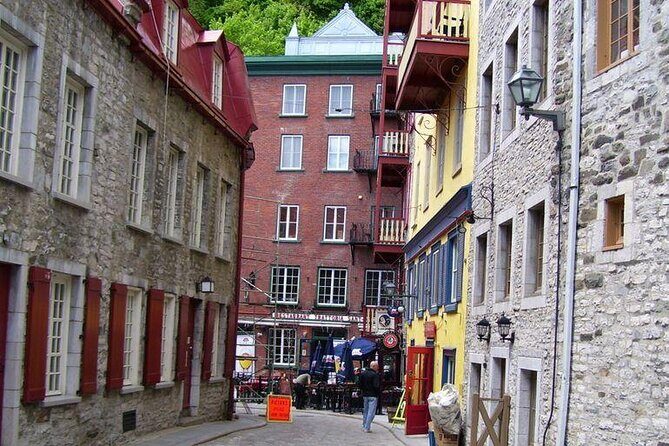
- Petit Champlain on cobblestones: Oldest-commercial-district vibes with boutiques, cafés, and views.
- Farmers market stop: Local producers, bakery items, and a chance to taste Quebec without turning the tour into a shopping trip.
- Optional e-bike: If hills or wind are a concern, you can choose an e-bike (18+).
Lower Town on two wheels: why this route feels like the smart move
Quebec City is gorgeous in photos. It’s even better when you can move through it. That’s where this tour works: you’re not stuck in a vehicle or only seeing the postcard core. You roll through Lower Town—a UNESCO World Heritage Site—where streets, river views, and old landmarks sit close together.
The best part is the balance. You get enough guidance to understand what you’re seeing, but the ride stays light. Most of the time you’re on flat, bike-friendly paths, so you spend less effort fighting terrain and more effort noticing details—stone façades, river curves, and the way neighborhoods evolve as you move away from the busiest streets.
I also like that the tour doesn’t pretend Quebec City is only one “main street.” You start with historic anchors, then shift toward places that feel more local: the Old Port waterfront, Petit Champlain, and a park-side stretch on the St. Charles River in the Limoilou area.
You can also read our reviews of more cycling tours in Quebec City



Meet-up and start: what you should know before you roll
The tour meets at 285 QC-136 in Old Quebec’s Lower Town area. It’s close enough to public transit that you don’t have to plan your whole day around a taxi. You’ll return to the meeting point at the end, so it’s easy to slot into a morning or afternoon.
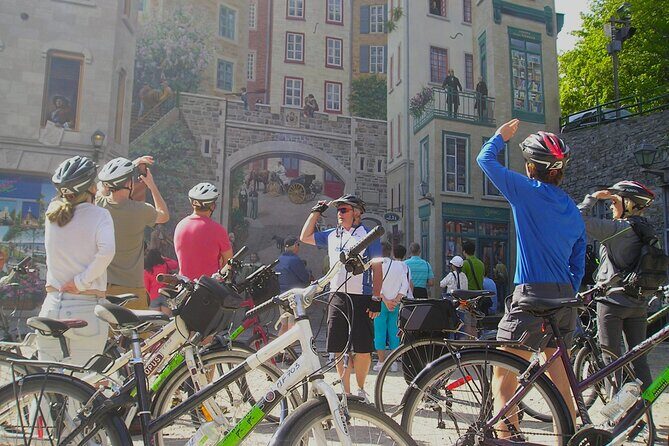
You’ll get a bike fit and a helmet right away. Then there’s a short safety orientation before you start. That matters more than people think. Quebec cobblestones and crowded sidewalks can be a little intimidating if you’ve never ridden a city bike before, so having the rules and route approach explained at the start helps you relax.
Also, your ticket is mobile, and the tour is offered in English. If you’re traveling solo and want to ask questions without a language barrier, that’s a real plus.
Bikes, helmets, and the e-bike choice that can save your day
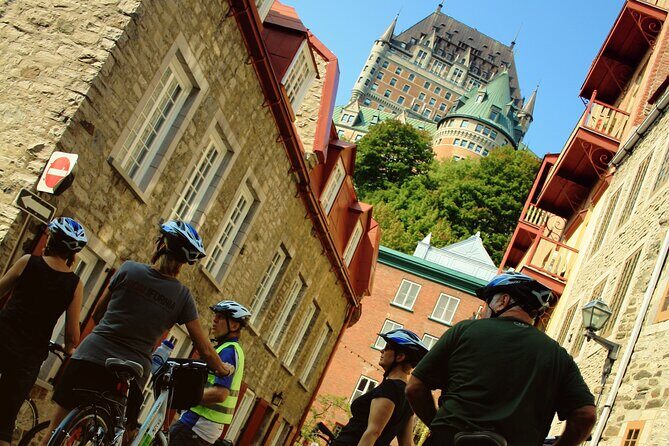
This is a good value tour partly because the basics are covered. Your price includes:
- a qualified guide
- a bike (urban bike or e-bike)
- a helmet
- a water bottle (and you can bring your own too)
- snacks
- a small bike bag installed on the handlebars for personal items
That “snacks + water + bag” package sounds small, but it changes the mental load. You’re not hunting for food halfway through, and you’re not juggling a backpack while trying to ride.
About the bike choice: you can ride an urban bike or an e-bike. The e-bike option is for riders age 18+. One practical tip from past riders: if you want an e-bike, it’s smart to reach out ahead of time so the shop has time to configure the bike for you. Setup time can be the difference between an easy start and a rushed one.
Small-group pacing: safety, comfort, and how guides manage the route
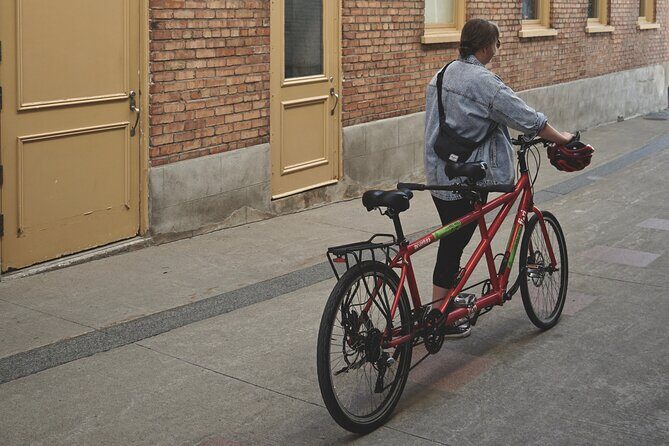
This tour caps at 8 travelers, which is why it doesn’t feel like a conveyor belt. In a small group, your guide can slow down for questions, adjust pace if someone needs it, and keep the ride feeling human.
You’ll also notice the guides are focused on keeping the experience comfortable. Different guides have different styles, but many have been praised for mixing clear instructions with humor and for watching the group’s riding ability. Names that have shown up in the tour’s guide lineup include Raymond, Guy, Luc, Annabelle, Uli, Simon, Denis, Robert, Denny, and Mark—and the common thread is that the ride is managed with safety and pacing in mind.
One important consideration: while the route is described as mostly flat, you still need to be able to ride a bike confidently. Quebec can have busy intersections and short rough patches. If you’re new to biking, bring calm expectations. You’re not training for a race; you’re learning how the city flows.
Stop 1: Place de la FAO—friendly streets and architecture cues
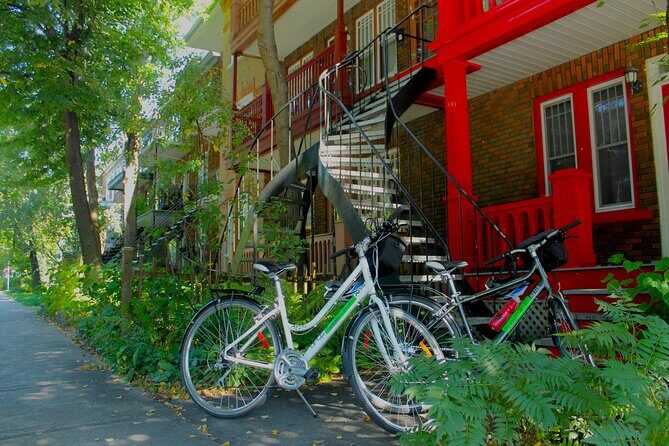
Your first stop is Place de la FAO, where you start pedaling through charming narrow streets with the kind of architecture that makes Lower Town feel distinct from the more modern parts of Quebec City.
This is a good “warm-up” stop. It’s short—about 5 minutes—so it doesn’t interrupt the ride. Instead, it gives you quick context for how the neighborhood looks and how the buildings tell stories about the city’s growth.
Admission here is free, so you’re not making a planning detour. Think of this stop as setting your visual baseline: once you’ve noticed the street rhythm and building style, the later landmarks hit harder.
You can also read our reviews of more historical tours in Quebec City




Stop 2: Place-Royale—mural, oldest church, and the feeling of beginnings
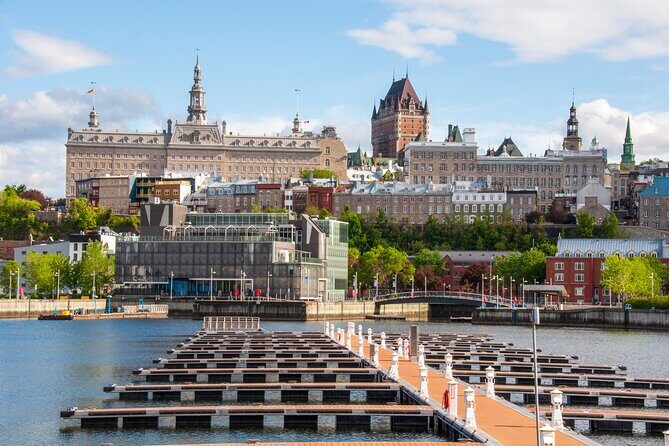
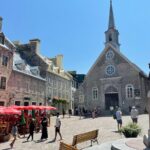
Next comes Place-Royale, often treated like Quebec City’s origin point in visitor conversations. Here, you’ll learn about the first permanent French settlement in North America, and you’ll also see key features such as the Mural of Quebecers and Notre-Dame-des-Victoires, described as the oldest church in Quebec City.
You get around 10 minutes here. That’s enough time to understand the big picture and take a few photos without turning the tour into a long stop-and-start museum day.
Two things make this stop especially useful for your trip:
- It anchors the story. When your guide connects what you’re looking at to why it matters, it helps you make sense of later areas of Lower Town.
- It sets up the contrast. After this, you’ll move toward markets, shopping streets, and river trails, and the “how Quebec built itself” theme keeps running in the background.
Admission is free at this stop too.
Old Port waterfront: views that make the ride feel worthwhile
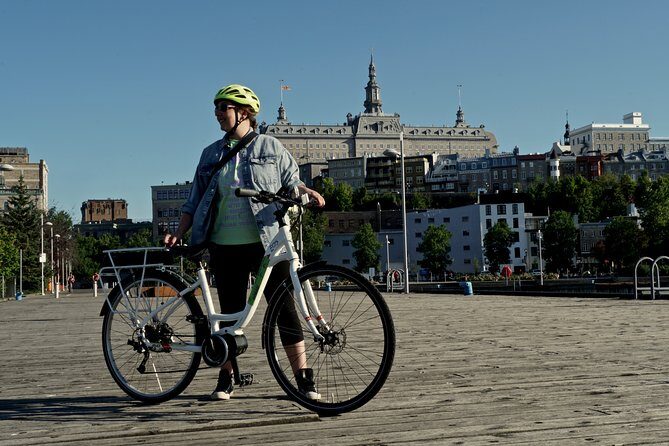
Then you roll along to the Old Port, with a short waterfront pause—about 5 minutes. This is where the city starts opening up visually. You’ll get magnificent views of the St. Lawrence River and strong sightlines toward Château Frontenac, plus you’ll look over the fortified walls of Old Quebec.
This stop is less about ticketed sights and more about orientation. It helps you understand where everything sits relative to the river and where the old city walls fit into the bigger geography.
If you’re the type who gets frustrated by tours that only talk while you’re moving, you’ll probably appreciate this one. The guide’s story is there, but the river views give your brain a break. Even on a grey day, it tends to land well.
Petit Champlain: cobblestones, small boutiques, and a slower kind of wandering
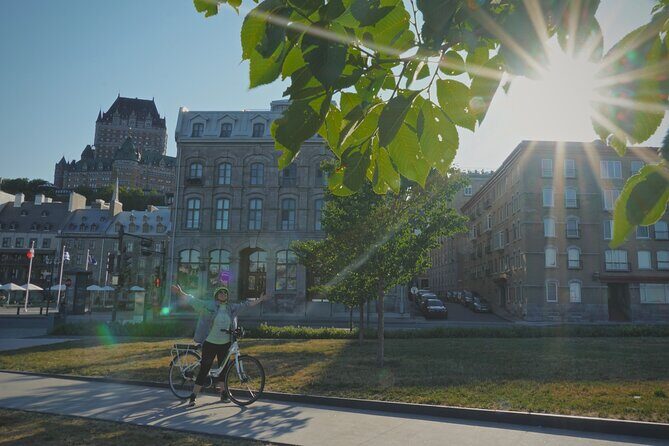
After the waterfront, the tour heads into Petit Champlain, described as the oldest commercial district in North America. Expect cobblestone streets and lots of small places—stone building boutiques, cafés, and restaurants.
This is also where you’ll feel the “tourist-center vs. real neighborhood” difference. You’re still in a historic core, but the atmosphere feels more like walking through a lived-in district than looking at one big attraction.
You won’t have hours to wander on your own (the tour timing stays tight), but you do get enough time to:
- notice the street layout
- browse for 5–10 minutes if you want
- plan a longer return later, if something catches your eye
If you plan to eat during your Quebec City trip, Petit Champlain is where you’ll find plenty of options. Just remember: cobblestones can be slippery or uneven, especially in colder weather.
St. Charles River bike trail: your “pause button” for the whole day
A major highlight is the ride along the St. Charles River bike trail. The tour calls it an oasis right in the downtown area and nearby neighborhoods, and that’s a fair description. The river path gives you breathing room after the older streets.
You’ll pedal through green space and open sightlines, with the city stretching out around you. It’s one of those sections where you can stop thinking and just notice: water movement, seasonal trees, and the way downtown feels less dense when you’re riding rather than walking.
This is also where many riders feel the tour’s rhythm: history stops set the story, then the trail gives you a reset. If you’re traveling with people who don’t love long walking days, this part often wins them over.
Cartier-Brébeuf National Historic Site: French explorers, park setting, and Limoilou feel
Next you’ll reach Cartier-Brébeuf National Historic Site in the Limoilou district. The guide shares the story of the arrival of French explorers, and you’ll get to experience the site as a park setting along the river’s north shore.
Your stop time is short—around 5 minutes—but it’s meaningful. This is the kind of place that benefits from a quick guided explanation. Without context, it can feel like “a nice riverside park.” With context, it becomes part of the larger Quebec narrative you started at Place-Royale.
Because you’re on a bike, you’ll also notice how quickly you can shift neighborhoods. That’s a real advantage of a bike tour: you get to connect the dots geographically in a way that walking alone can’t match.
Le Grand Marché de Québec stop: tasting local flavors without overdoing it
One of the best “do it now” moments is the stop at Le Grand Marché de Québec (the farmer’s market). You’ll have about 20 minutes here.
What makes this stop valuable isn’t just the food. It’s the chance to see producers, bakery items, and artisans in action. Even if you don’t buy anything, you get a strong feel for what people eat and how local products are presented.
Past riders have pointed out tasty details like frozen strawberry drinks, plus the general excitement of meeting passionate local producers. If you’re the type who likes to bring food back into your day—especially on an active outing—this stop hits the right note. You get a break, you get a taste, and then you’re back on the bike.
Admission is free here as well, so you’re paying for the tour, not for the market entry.
Duration and logistics that actually matter for planning your day
The tour runs for about 3 hours. In planning terms, that’s a sweet spot:
- long enough to see real portions of Lower Town and the river trail
- short enough that you’re not stuck outdoors for half a day
It also works well as an early “lay of the land” activity. Many people use it to orient themselves before diving deeper into Quebec City on foot later.
One timing detail: you’ll start at the bike shop location in Lower Town, get fitted and briefed, then ride through multiple stops with short scenic pauses. So even though the total length is ~3 hours, the “time on bike” feels substantial.
Pricing snapshot: it’s $138.94 per person. That’s not cheap, but when you compare it to the cost of renting a decent bike plus paying for a guide for a multi-stop route, the value often makes more sense. You’re paying for convenience, timing, and interpretation—not just transportation.
Price and value: does $138.94 make sense?
Let’s break down what you’re actually buying.
You get:
- a qualified guide who explains landmarks and neighborhoods
- a bike + helmet (either urban or e-bike)
- water and snacks
- a small bike bag
- multiple key stops that have free admission
That’s where the value comes from. You’re not spending extra on site tickets for each stop, and you’re not juggling gear or finding snacks mid-ride. The tour also stays small (max 8), which is a big quality factor in practice.
Where you might feel the price more is if you’re traveling with someone who won’t eat market snacks or won’t care about history. But if you want both movement and stories—and you like seeing neighborhoods beyond the most obvious tourist lanes—this pricing is more reasonable.
Also: if you’re considering an e-bike, plan ahead. One rider noted a $30 upcharge and the need for time to configure the bike. That’s not a surprise cost if you plan, but it’s worth knowing before you show up.
Weather, clothing, and what to bring so you stay comfortable
This is an outdoor ride, and the operator requires good weather. If it’s canceled for poor weather, you’ll be offered a different date or a full refund. That’s good protection. Still, Quebec weather can swing fast.
Practical ideas:
- Wear layers. Even in pleasant months, river-adjacent areas can feel cooler.
- Bring something for wind. The St. Charles River trail is scenic, but it can be breezy.
- Expect cobblestones in Petit Champlain. Good shoes help.
What you don’t need to stress about: you’ll have water and snacks, plus a bike bag for personal items.
If you’re riding an urban bike, it can still feel like “exercise,” but the route is built to be manageable. If you’re riding with kids, remember the child riding rules: kids must be able to ride about 8 miles by themselves, and children between 5 and 7 will use a trail-a-bike pulled by an adult.
Who this tour fits best (and who might want a different plan)
This is a strong choice if you want:
- a small-group bike experience
- a guided overview of Lower Town’s historic core
- a scenic ride with river trail time
- a taste stop at a real local market
It also works well for families with older kids who can handle riding. A past family group with teens and an adult praised the tour for balancing activity with history.
You might consider a different option if:
- you’re dealing with mobility limits that make cycling hard (this tour says most travelers can participate, but it’s still biking)
- you’re hoping for long indoor stops or museum-level time at each site
- you show up with zero confidence riding a bike in city conditions
Should you book this Lower Town & Neighborhoods bike tour?
I think you should book it if you want Quebec City in one focused outing: history at the key anchors, quick neighborhood context, and real green-and-river riding time. The small group size, the included gear, and the free admission stops make it feel like a well-built itinerary rather than a random ride with facts sprinkled in.
If you’re debating between “walk it” and “bike it,” this tour is usually the better time-saver. You get more ground in less fatigue, and your guide helps you understand what you’re seeing instead of just passing by it.
One last check before you go: if you want an e-bike, confirm ahead of time so your bike is ready and configured. And be ready for the tour’s outdoor nature—if the weather turns, it’s set up to protect you, but you’ll still want to dress for reality.
FAQ
How long is the Lower Town & Neighborhoods Bike Tour?
The tour lasts about 3 hours.
How much does the tour cost?
It costs $138.94 per person.
What is included in the tour price?
You get a qualified guide, a choice of urban bike or e-bike, helmet, water, a small bike bag for personal belongings, and snacks.
Are admissions included for the stops?
The listed stops have free admission.
Can I choose an e-bike, and is there an age requirement?
Yes. E-bikes are available, and riders must be at least 18 years old.
Where does the tour start?
The meeting point is 285 QC-136, Québec, QC G1K 3W6, Canada.
How large is the group?
The tour has a maximum of 8 travelers.
Is the ride suitable for families and beginners?
Most travelers can participate, and the terrain is mostly flat and bike-friendly. Children must be able to ride about 8 miles by themselves; children ages 5–7 use a trail-a-bike pulled by an adult.
What happens if the weather is poor?
The experience requires good weather. If it’s canceled due to poor weather, you’ll be offered a different date or a full refund.