REVIEW · QUEBEC CITY
Private 3-hour City Tour of Quebec with driver and guide – Hotel pick up
Book on Viator →Operated by Tour Travel & More · Bookable on Viator
Quebec City hits different when you have a plan. This private, 3-hour tour uses a comfortable vehicle plus a licensed guide to hit the big sights fast, without the stress of figuring out routes and parking. Hotel pickup makes it easy to start, and private pacing means you can slow down when something catches your eye.
I especially like how the tour pairs major landmarks with the stories behind them, so you’re not just snapping photos. You’ll cover areas like Old Québec and the Quartier Petit Champlain while your guide connects the dots from the founding days to modern Quebec. One thing to keep in mind: with only about three hours, it’s best for orientation and highlights, not for long, slow wandering in every street.
You’ll also want to plan for the fact that not every church stop is marked as included for tickets. The good news is that many of the key viewpoints and historic stops are free to access during your visit, which helps you get real value from the time you’re paying for.
In This Review
- Key highlights at a glance
- A smart way to see Quebec City in just 3 hours
- Parliament Hill: starting with power and perspective
- The Plains of Abraham: history with real stakes (1759)
- Château Frontenac and Dufferin Terrace: iconic views, minimal fuss
- Old Québec UNESCO core: why it still feels intact
- Churches and landmarks where you can pause and look closer
- Place Royale: where Quebec was founded in 1608
- Wolfe-Montcalm Monument and the port side of the story
- Quartier Petit Champlain and Rue Saint-Paul: atmosphere you can taste
- How much walking is involved, really?
- Price and value: what $1,045.22 per person buys you
- Who this private Quebec City tour suits best
- Should you book this private 3-hour city tour?
- FAQ
- Is hotel pickup and drop-off included?
- Is this tour private or shared with other groups?
- How long is the Quebec City tour?
- What languages is the tour offered in?
- Are entrance fees included for all stops?
- Is food or drinks included?
Key highlights at a glance
- Door-to-door hotel pickup and drop-off so you’re never hunting for a meeting point
- Private vehicle for the full 3 hours, driven by a professional driver
- A first-timer-friendly route that connects Parliament Hill to Old Québec and the waterfront
- Free access at many stops, so you’re not constantly checking ticket rules
- Quartier Petit Champlain and Rue Saint-Paul time for cafés, shopping, and atmosphere
- Plains of Abraham context for why 1759 still matters today
A smart way to see Quebec City in just 3 hours
Quebec City is the kind of place where your eyes are always busy. One minute you’re looking at stone walls and church towers. The next you’re staring at river views from a wooden terrace. That’s exactly where this private format helps. You get a set route with a guide who can point out what you might miss on your own, and you move between neighborhoods with less walking than a purely on-foot loop.
The “private” part matters most if you want control. If your group includes slower walkers, teens who don’t want long detours, or anyone who just prefers comfort, this tour is designed to work with you. People also tend to enjoy the efficiency here, because the setup helps you see a lot in a short window.
You can also read our reviews of more guided tours in Quebec City



Parliament Hill: starting with power and perspective
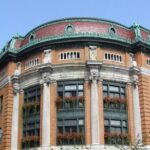
Your first stop is Parliament Hill, where the Parliament Building’s outline dominates the area. It’s a strong visual introduction to Quebec’s civic identity, and the fountain in the forecourt adds a nice sense of place. Even if you’re not a “buildings only” person, this stop is useful because it gives you a quick geography anchor before you move into the older, denser parts of the city.
Practical tip: have your camera ready, but also take a few moments to look around. From here, you’ll get a better sense of how the city’s modern center relates to Old Québec nearby.
The Plains of Abraham: history with real stakes (1759)
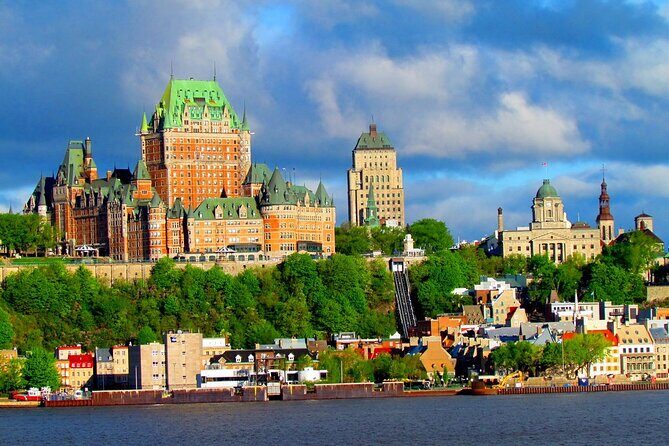
Then comes the Plains of Abraham, one of those locations where the ground itself feels historic. The big date is September 13, 1759, when the battle pitted French troops against English forces. You’ll hear the names Louis‑Joseph de Montcalm and James Wolfe, and you’ll also get a key detail that makes this stop more than a local footnote: the battle was part of a global conflict.
This is where the guide storytelling makes a difference. Instead of just memorizing dates, you understand what was at stake and why the outcome shaped what came next for French North America.
Time reality check: you only have about 15 minutes here, so think of it as orientation plus a meaningful narrative, not an in-depth battlefield visit.
Château Frontenac and Dufferin Terrace: iconic views, minimal fuss
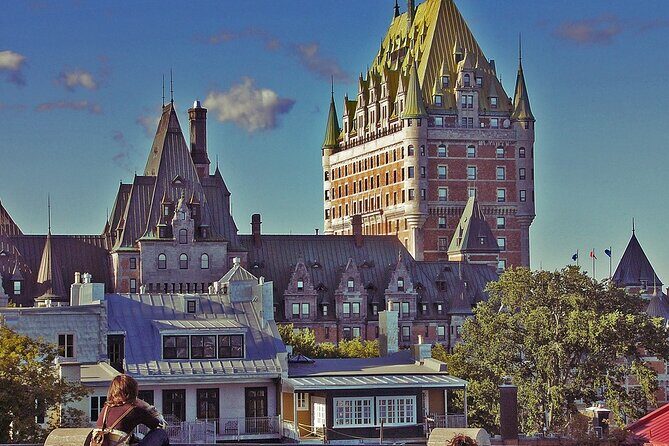
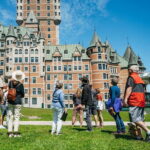
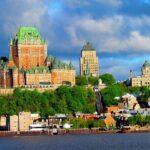
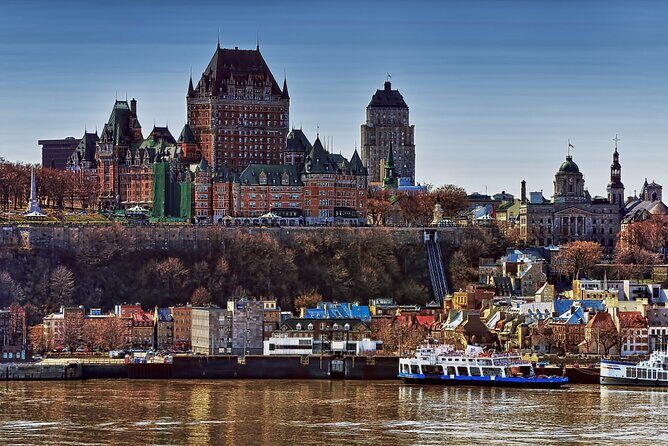
Next, you’ll get a quick look at Fairmont Le Château Frontenac, one of the city’s most recognizable landmarks. Even if you’re not staying at the hotel, the exterior is part of Quebec’s visual identity.
From there, you shift to Terrasse Dufferin, a long wooden walkway next to the Château. This is one of the best places in Quebec City for sweeping views of the St. Lawrence River and the surrounding area. In winter or shoulder season, this terrace can feel especially photogenic because the river and the city sit so close together visually.
Practical tip: bring a layer. Even when the rest of the day feels mild, terrace wind can surprise you.
Old Québec UNESCO core: why it still feels intact
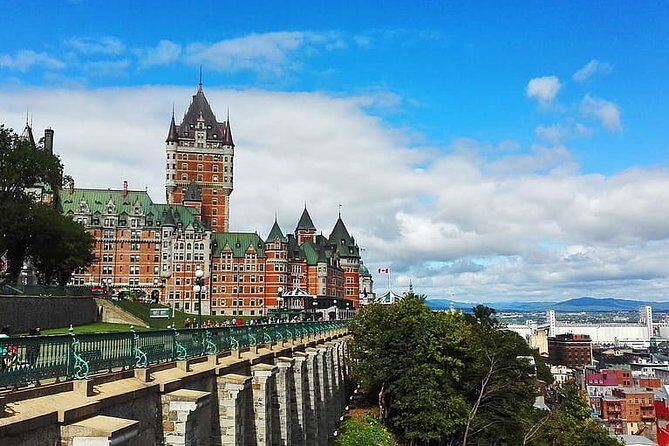
Now you move into the heart of the matter: Old Québec. This area is a UNESCO World Heritage Site designated in 1985, and it’s known for being the most intact fortified town north of Mexico, with colonial architecture that has lasted over 400 years.
This is the part of the tour that gives you the “I get it now” moment. You see the streets and fortification feel as real, not just postcard-perfect. If you’ve heard Quebec described as old-world romance with a side of military fortifications, this is where that idea comes from.
You’ll also get time to enjoy the city’s mix of historic layout and everyday life—shops, café stops, and street-level details that make the place feel lived in.
Time reality check: you get about 45 minutes in Old Québec, which is enough to soak up the vibe and hit key highlights, but not enough to treat it like a full-day walking tour.
You can also read our reviews of more city tours in Quebec City

Churches and landmarks where you can pause and look closer
Two of the stops are churches with strong historical ties:
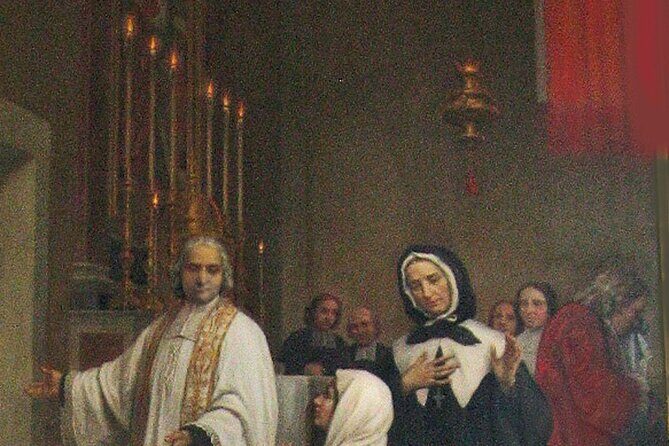
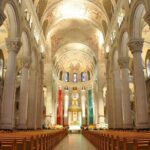
- Cathedral of the Holy Trinity: marked as not included for tickets. It’s described as the first Anglican cathedral built outside the British Isles and serves as the mother church of the Diocese of Quebec.
- Notre Dame de Québec Basilica Cathedral: also not included for tickets. Built in 1647, it was named Notre‑Dame de la Paix and is noted as the first stone church in the city.
- You’ll also pass Notre‑Dame‑des‑Victoires Church, another church stop tied to the early settlement. It was rebuilt in 1763 after severe damage during the Siege of Québec.
Even if you don’t go inside, these places matter because Quebec City’s identity is deeply tied to what these churches represent. The guide helps connect the locations to the city’s timeline.
Practical tip: because some sites aren’t included, decide early whether your group wants to prioritize interiors or prefer exterior views and quick photo stops.
Place Royale: where Quebec was founded in 1608
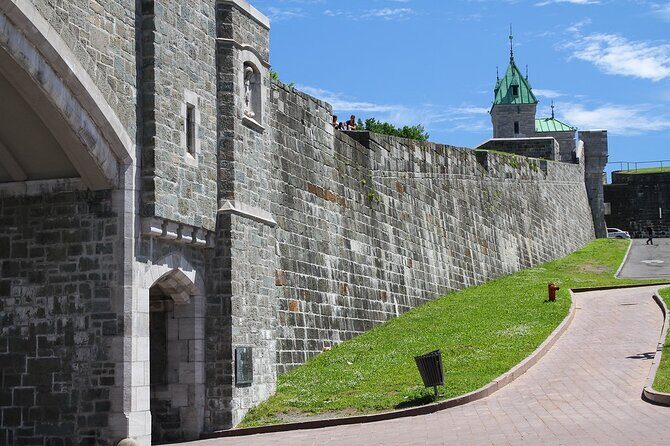
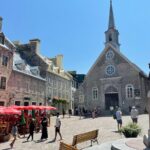
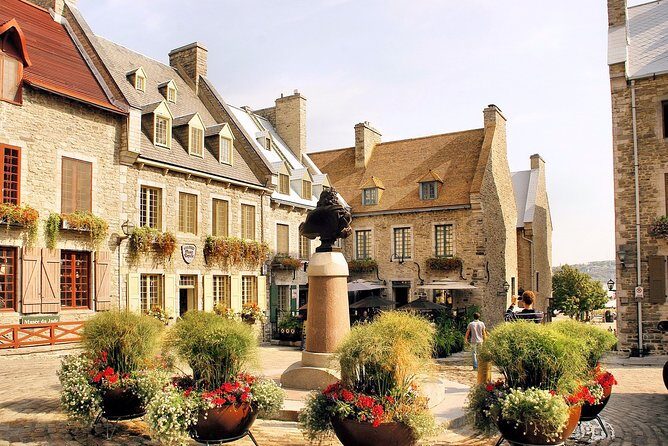
Then you’ll reach Place Royale, one of the most meaningful squares in the city. This is where Samuel de Champlain founded Québec in 1608, and the square reflects the mixing of French and British influences. It also features the oldest stone church in North America, which gives the whole area a strong sense of early permanence.
Place Royale is a great mid-tour reset. It’s compact enough to feel walkable and central, but it still gives you space to pause and take in how the buildings shape the square.
What you’ll appreciate here: the way the guide ties the city’s founding era to what you’ve already seen—Parliament Hill for the modern civic identity, then these early foundations for the long arc of the city.
Wolfe-Montcalm Monument and the port side of the story
On the way through the historic areas, you’ll stop at the Wolfe-Montcalm Monument. It’s described as the oldest monument in Quebec City and the second oldest war monument in Canada, dated 1827. This works as a quick “bracket” for the history you heard at the Plains of Abraham.
From there, your route heads toward Marche du Vieux-Port de Quebec, described as the oldest port in Canada. Even with short stop time, the port area adds a different tone. Old Québec can feel very story-heavy and stone-focused. The waterfront side feels more connected to daily life and trade.
Practical tip: if you’re a foodie at heart, this is the zone where it makes sense to glance at menus and plan what you’ll do next on your own after the tour ends.
Quartier Petit Champlain and Rue Saint-Paul: atmosphere you can taste
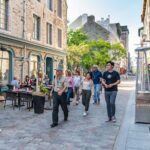
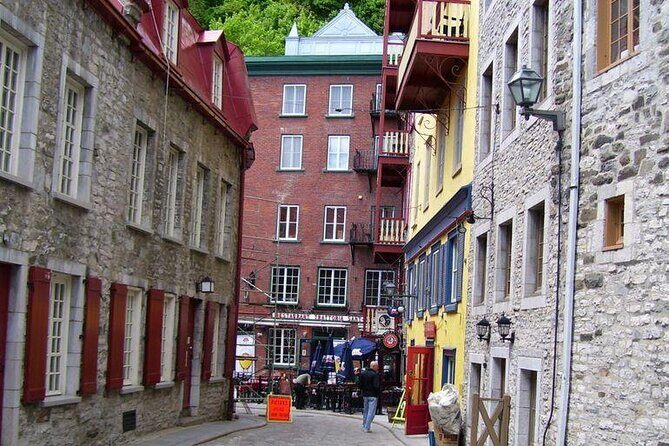
Toward the end, you’ll spend time in Quartier Petit Champlain. This is the part of Quebec City people love for strolling—boutiques, artists, shows, and cafés and restaurants. Even if you’re not shopping, it’s a good place to feel the city’s energy at street level.
You’ll also have a chance to wander Rue Saint-Paul, described as an antique dealers district with very good restaurants. That’s a fun contrast to the more monumental stops earlier. Instead of fountains and fortifications, you’re picking up a sense of daily Quebec: storefronts, snack breaks, and the kind of slow browsing that makes vacations feel like vacations.
And don’t overlook the small “setup” moment at the Fontaine de la Place d’Armes, which is used as the meeting point and tour kick-off. It sounds simple, but having a clear start spot helps you orient faster once the guide begins tying together the route.
How much walking is involved, really?
The tour is built around a private vehicle disposition for three hours. That doesn’t mean you do zero walking—most stops require you to step out, look around, and take in the view. But it does mean you avoid the tiring travel gaps between far-flung corners of the city.
This kind of pacing tends to work well in Quebec City because many of the best scenes are separated by short-but-steep or cobbled stretches. Getting driven between areas helps you keep your energy for the places you actually want to linger.
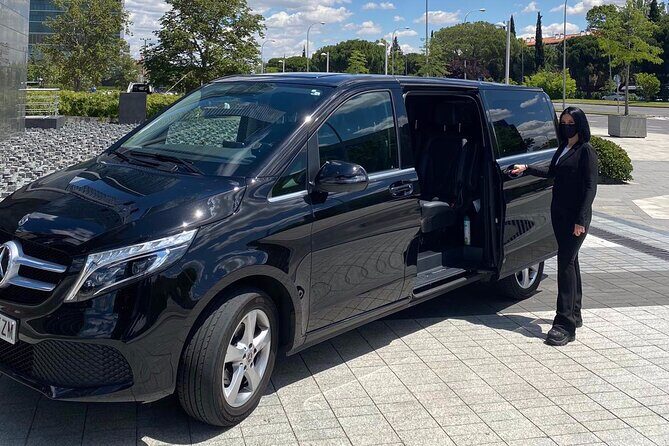
Based on the kind of feedback the tour setup tends to get—like praise for the van and driver being great and the guide being accommodating—this format usually feels smooth and well managed.
Price and value: what $1,045.22 per person buys you
At $1,045.22 per person, this is not a budget option. It’s a premium choice. So the real question isn’t whether it’s expensive. It’s whether you’re buying enough comfort and guidance to justify the cost for your group.
Here’s what you’re paying for, in plain terms:
- Private licensed guide for about 3 hours
- Private vehicle disposition for the same time
- Hotel pickup and drop-off in Quebec
Then look at what that buys in the real world: you get a structured route that hits iconic sights—Parliament Hill, Château Frontenac, Old Québec, Place Royale, and Petit Champlain—plus a guide who connects the dots. Many stops are listed with free access, which reduces the “surprise costs” feeling, though tickets for some churches are not included.
When it feels worth it:
- You’re traveling with a small group that values convenience and wants a fast orientation.
- You have limited time in Quebec City and want to spend more of it outside, not navigating.
- Your group would rather pay for comfort than spend energy figuring out where to go next.
When it might not:
- If your group loves wandering independently and has plenty of time, a self-guided route can be dramatically cheaper.
- If you expect a long, slow deep-dive into every neighborhood, the three-hour cap may feel short.
Who this private Quebec City tour suits best
This tour fits best if you fall into one of these buckets:
- First-time visitors who want the highlights plus the story behind them.
- Groups with mixed mobility who appreciate less transit on foot.
- People who like clear planning but still want flexibility once you’re out in the streets.
- Anyone who’d enjoy having a guide point out what matters—like the historical weight of the Plains of Abraham and the founding importance of Place Royale—without having to research every stop.
If you’re the type who loves reading plaques and discovering on your own, you might prefer a self-guided day. But if you want to get oriented quickly and come away with context, this private format usually hits the sweet spot.
Should you book this private 3-hour city tour?
I’d book it if your priority is a smooth, guided highlights run with hotel pickup, a private vehicle, and a route that makes Quebec City make sense fast. The biggest strength here is the combination of iconic locations and context, plus the practical comfort of not having to coordinate transportation yourself.
I’d skip or rethink it if you’re traveling on a tight budget, you have lots of time for independent strolling, or your group wants deep time in fewer spots rather than a broad sweep.
FAQ
Is hotel pickup and drop-off included?
Yes. Pickup and drop-off are included from your hotel in Quebec, or from a place of your choice.
Is this tour private or shared with other groups?
It’s private. Only your group participates.
How long is the Quebec City tour?
The tour lasts about 3 hours.
What languages is the tour offered in?
The tour is offered in English.
Are entrance fees included for all stops?
No. Entrance fees are not included. Some stops are listed as free, but a few church visits are marked as not included.
Is food or drinks included?
No. Food and drinks are not included.
If you’d like, tell me your travel month and group size, and I’ll suggest how to plan your day around this 3-hour window (what to pair it with for photos, food, and a little extra free time).