REVIEW · QUEBEC CITY
Walking Tour Through Quebec City’s History
Book on Viator →Operated by Cicerone Tours · Bookable on Viator
Old Quebec gets real fast when someone explains it in the street. This 2-hour history walk uses a local guide in period costume to connect key places, from Champlain’s start to the world-famous views over the St. Lawrence.
I especially like the way it mixes architecture with story. You’ll stand at Dufferin Terrace for the river views, then shift into real “how this city worked” details at stops like Place Royale and the Basilica of Notre-Dame de Québec.
One thing to keep in mind: expect a lot of walking with hills and stairs, including steep descents toward the Lower Town. If that sort of effort is an issue, you’ll want to think carefully before booking.
In This Review
- Key things to know before you go
- Entering Old Quebec from Rue Sainte-Anne to Place Royale
- Terrasse Dufferin: river views that set the mood
- The Basilica of Notre-Dame de Québec and the Holy Door connection
- Place Royale: Champlain’s 1608 square with French-British layers
- Quartier Petit Champlain: fairytale streets with real history behind them
- Breakneck Steps (L’Escalier Casse-Cou): the steep photo stop with a view
- How much walking and stairs are you really signing up for?
- Guides in period costume: entertainment plus real answers
- Why this route is a smart first day move in Quebec City
- Price and value: is $24 worth it?
- Who should book this, and who should think twice?
- Should you book this Quebec City history walking tour?
- FAQ
- How long is the Walking Tour Through Quebec City’s History?
- How much does the tour cost?
- Is the tour offered in English?
- Where does the tour start and end?
- What’s included with the tour?
- How big is the group?
- Is it weather dependent, and what happens then?
Key things to know before you go
- Small group (max 20) means your guide can keep the pace human and answer questions.
- Period-costumed storytelling makes the city feel like a timeline, not a list of dates.
- Five classic Old Quebec stops cover the riverfront, founding square, and the charming streets of Petit-Champlain.
- Free entry at the highlighted sights on the route helps keep the day simple and budget-friendly.
- Moderate fitness required due to steep grades and stairs, especially around moving between viewpoints.
Entering Old Quebec from Rue Sainte-Anne to Place Royale
The tour starts at 12 Rue Sainte-Anne and finishes at Place Royale. That matters because it puts you in the heart of Old Quebec early, then ends at the best “linger after the tour” zone—so you can keep exploring without having to re-figure your way across town.
You’re walking the kind of route that matches Quebec City’s layout: higher viewpoints up top, then a gradual pull downhill through the historic core. Plan your expectations like that. This isn’t a flat stroll where you can easily pause for long chats at the edge of the sidewalk.
The experience runs about 2 hours, and the operator notes a maximum of 20 travelers. In practice, that size is big enough to make it lively, but small enough that it doesn’t feel like you’re being swept along.
You can also read our reviews of more walking tours in Quebec City


Terrasse Dufferin: river views that set the mood
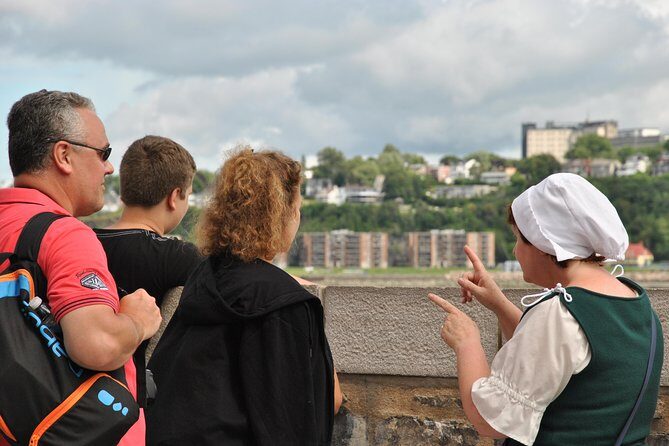
You kick things off at Terrasse Dufferin, a long wooden promenade right beside the Château Frontenac. Even if you’ve seen photos already, you’ll feel the difference standing there: the St. Lawrence River opens up in front of you, and the Upper Town looks dramatic from the wood-plank height.
This stop also works as a warm-up for the day’s theme. Dufferin Terrace isn’t just a pretty photo spot; it shows you how Quebec City controls the riverfront visually and practically. Historically, being able to “read” the river from above is power—then and now.
If you’re sensitive to cold weather, dress for it. This is an outdoor terrace, and the river area can feel breezier than you expect. In warmer months, it’s also a good place to slow down and take in the skyline before you start the denser streets.
The Basilica of Notre-Dame de Québec and the Holy Door connection
Next comes the Basilica of Notre-Dame de Québec, the kind of place that anchors an entire community. The church stands on the same location since 1647, and it’s recognized as a Canada National Historic Site for its architectural and historical value.
This stop is where your guide turns the city into a living record. You’ll hear how the basilica holds the story of Quebecois society over centuries, including:
- resting places connected to four governors of New France
- bishops of the diocese of Québec
- a funerary chapel dedicated to François de Laval
- and the possibility of seeing the Holy Door (depending on what’s available during your visit)
What I like about this moment is the balance. It’s not just “look at the building.” You get a sense of what leaders and institutions meant in daily life—who had authority, who recorded events, and how religion tied into governance.
Drawback to note: basilicas can be echoey and busy. If the group gets loud while you’re inside, your experience may feel rushed. A small tip: bring your attention back to the guide’s key points, not the crowd noise.
Place Royale: Champlain’s 1608 square with French-British layers
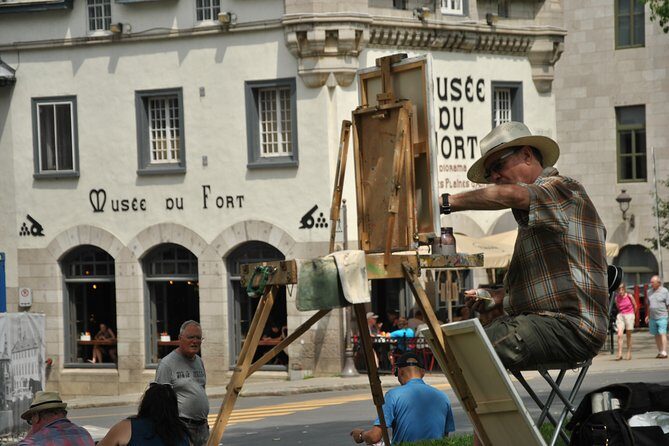
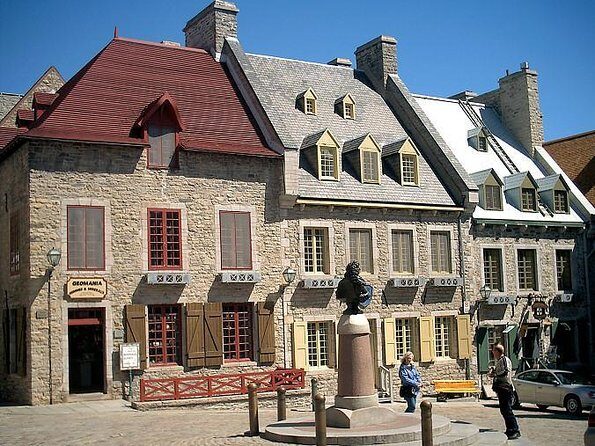
Then you move to Place Royale, the square where Samuel de Champlain founded Quebec City in 1608. This is one of those spots where time feels layered: you can look at the buildings and see French and British influences working side by side.
Place Royale also has the “oldest stone church in North America” detail, which helps you understand why this area still matters. It’s not just historic branding. This is where the early city’s core identity took shape, and the square still holds that center-of-gravity feeling.
The value here is context. If you’ve ever wandered Old Quebec without a storyline, you’ve probably felt the charm but missed the logic. Place Royale gives you a key: it explains why other streets and neighborhoods developed where they did.
What to watch for: this is a popular area. If you want calmer photos, you might find it easiest to catch corners and doorways while the group is listening rather than trying to fight for perfect framing at peak moments.
Quartier Petit Champlain: fairytale streets with real history behind them
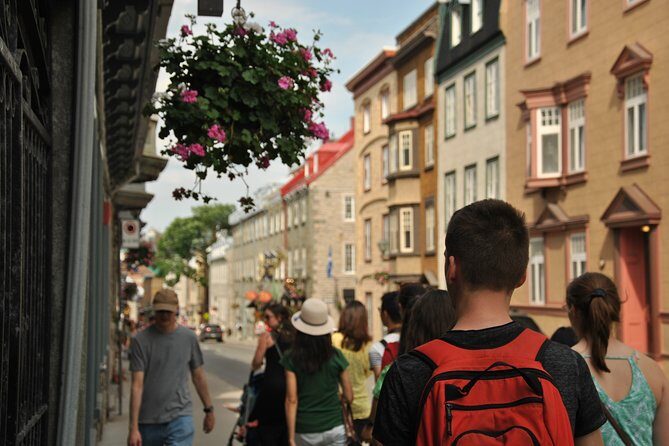
From Place Royale, you head into Quartier Petit Champlain. This is the part most people picture when they imagine Old Quebec: narrow streets, classic façades, and that “how did they keep this so intact?” feeling.
The best value of this stop is not the scenery alone. Your guide connects the vibe to the founding era, so Petit-Champlain becomes more than a postcard. You’re walking streets that feel like they’ve held onto their identity over 400 years of development.
This is also where you’ll likely feel the rhythm change in the tour. Instead of only pausing at landmarks, you move through a small maze of interesting corners. If your group stays together, it’s fun. If you drift off, it’s easy to lose the guide’s story thread.
Practical note: the streets here can be crowded. Keep an eye on the pace and where the group is turning. It’s charming, but it’s still a real street with foot traffic and limited space.
You can also read our reviews of more city tours in Quebec City





Breakneck Steps (L’Escalier Casse-Cou): the steep photo stop with a view

Next up: Breakneck Steps (L’Escalier Casse-Cou). This outdoor staircase is described as the oldest in Québec City, and it’s used the way staircases often are in travel—people stop, look, and immediately take photos.
The reason the steps work so well is the sightline they create. From here, you can see rue du Petit-Champlain from above, which helps you understand how the neighborhood cascades down the hillside. It’s a quick stop, but it adds a lot to your mental map.
The consideration is obvious the moment you approach: yes, it’s steep. Even if you don’t climb all the way down (you might choose just to observe), it still sets expectations for the rest of your day—Old Quebec is vertical.
A smart approach: wear shoes with grip and take the steps one at a time. This is the kind of stair that punishes rushing.
How much walking and stairs are you really signing up for?
The tour is built for people with at least moderate physical fitness. That doesn’t mean you need to be an athlete, but you should plan for hills, stairs, and cobblestone-style surfaces that slow your pace.
In particular, you should expect a downhill-heavy flow at points. One guide-handful of real advice: if you’re doing this early in your trip, save your “long museum day” for later. After a stair-and-slope route, your legs may not want a second round.
My recommendation is simple: bring good walking shoes with traction. Even during good weather, Old Quebec streets can be slippery or uneven. If you usually travel with a walking stick, this is one of those days where you might appreciate it.
Also, the tour is about listening. In windy or noisy stretches, hearing the guide can take extra effort. If you’re hard of hearing or easily distracted, sit closer to the guide where possible.
Guides in period costume: entertainment plus real answers
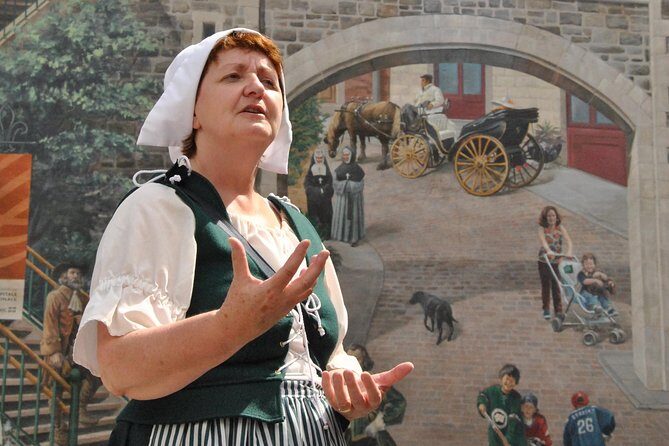
A major part of the appeal is the guide format. The tour uses a local guide in period costume, and guests often describe the storytelling as funny, dramatic, and structured like a narrative.
You may encounter different guide styles depending on who leads your group. Past experiences include names like Keven, Mark, Annabelle, Ives, Guy, Louise, Chantal, and Gary. The common thread is that they’re willing to answer questions and keep the group engaged as you move from site to site.
That matters for value. A guided walk isn’t automatically better than reading a guidebook. It is better when someone helps you connect dots—like why Place Royale is the founding heart, or what the basilica’s role meant in New France.
One balanced note: costumed performance can be very theatrical. Some people love that. If you prefer purely factual tours with minimal drama, it can still work, but you may want to focus on the historical points rather than the acting flourishes.
Why this route is a smart first day move in Quebec City
This tour is a fast way to understand how Old Quebec fits together. After the walk, you’ll have a practical mental map: where the best viewpoints are, where the founding square sits, and how Petit-Champlain connects into the bigger story.
I also like that the tour isn’t trapped inside buildings. You get outside views at places like Dufferin Terrace and the steps, then switch to the interior grandeur of the basilica. That mix keeps it from feeling like you’re only doing sightseeing or only doing talking.
And since the tour ends at Place Royale, you’re left in a place where exploring on your own feels natural. You can extend the evening nearby without planning another route across town.
Price and value: is $24 worth it?
At $24.03 per person, the price is low enough that you can treat it like an investment in orientation. You’re paying for an organized route, a guide, and the storytelling that helps you see the city with less guesswork.
A big part of the value comes from what’s effectively “free time” on the highlights. The tour’s named stops are not framed as costly museum add-ons, and admission at the highlighted sites is listed as free. That makes the total day budget easier to control, especially if you’re also planning meals and other sights.
With a 2-hour duration and a maximum of 20 people, you’re getting a guided experience that’s long enough to feel meaningful but short enough to pair with other plans the same day. It’s a good way to avoid the classic first-day trap: spending hours wandering without a clear order, then realizing you missed the context.
Who should book this, and who should think twice?
This works especially well for:
- Couples who want a guided “starter story” before going off on their own
- History-minded travelers who like architecture and institutions, not just streets and views
- First-timers in Quebec City who want the lay of the land fast
It may be less ideal if:
- You struggle with steep grades or many stairs
- You’re traveling with limited mobility and can’t comfortably handle uneven surfaces
- You strongly prefer tours with minimal performance style
One more practical thought: if you’re traveling as a family with kids, consider the group’s patience for a mostly listening-based format. Some people suggest it suits ages 12+ because it’s two hours of guided explanation, not an activity-heavy scavenger hunt.
Should you book this Quebec City history walking tour?
If you want a guided path through Old Quebec that makes the landmarks click, this is a strong buy. I’d book it when you’re fresh enough to enjoy the uphill/downhill pace, and when you want context—not just pretty views.
Pick it early in your trip so the route becomes your navigation tool for the rest of your stay. If stairs are a concern, plan your personal limits and wear traction-friendly shoes. Otherwise, you’ll come away with a much clearer sense of how Quebec City became what you see today—one story-filled street at a time.
FAQ
How long is the Walking Tour Through Quebec City’s History?
It lasts about 2 hours (approx.).
How much does the tour cost?
The price is $24.03 per person.
Is the tour offered in English?
Yes, it’s offered in English.
Where does the tour start and end?
It starts at 12 Rue Sainte-Anne, Québec, QC G1R 3X3 and ends at Place Royale, Québec, QC G1K.
What’s included with the tour?
You get a local guide and a professional guide. It also uses a mobile ticket.
How big is the group?
The tour has a maximum of 20 travelers.
Is it weather dependent, and what happens then?
The experience requires good weather. If it’s canceled due to poor weather, you’ll be offered a different date or a full refund.