REVIEW · QUEBEC CITY
Old Town Quebec Secrets: Private Exploration Game and Tour
Book on Viator →Operated by Questo · Bookable on Viator
Quebec City has a habit of rewarding slow walking. This is a self-guided Old Quebec game that turns famous sights into a scavenger hunt you can pause, redo, and finish at your pace. I like that it runs offline, so you’re not stuck hunting for cell service in the old streets.
You’ll move through major checkpoints like Place Royale and Notre-Dame-de-Québec, but the route is paced by questions that make you look up, around, and closer than a normal stroll. One thing to consider: because it’s app-driven, a few clues may feel outdated if construction or street changes alter what you’re meant to spot.
In This Review
- Key Highlights You’ll Actually Feel on the Walk
- How This Offline Puzzle Turn Old Quebec Into a Real Walk
- Start Location and How You’ll Find Your Way to Place Royale
- Tourny Fountain: A 1853 Sculptor and a World’s Fair Detour
- Saint-Louis Gate: When Trade Gets Stopped at Night
- The Elm Tree on Rue Saint-Louis and the Cannonball Mystery
- Couvent des Ursulines: Learning in 1639 and Montcalm’s Burial
- The Cathedral of the Holy Trinity: First Anglican Church Outside Britain
- Grande Place to Place de l’Hôtel-de-Ville: One Square, Many Identities
- Séminaire de Québec: Priests, François de Laval, and a City System
- Paul Chevré’s Monument and Jean-Paul Lemieux: Art Across Centuries
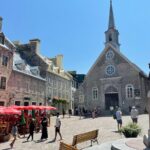
- Place Royale: Champlain’s 1608 Footprint in Your Feet
- Parliament Building and the Hill: 1877 to 1886, Then Back to Street Level
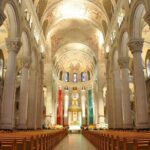
- Notre-Dame-de-Québec Basilica: The Fires, Shelling, and Rebuilds You Can Feel
- Timing That Doesn’t Stress You Out: When to Go and How to Pause
- Price and Value: Why This Costs About the Same as One Coffee
- Should You Book Old Town Quebec Secrets?
- FAQ
- Do I need an internet connection to play this game?
- How long does the Old Town Quebec Secrets experience take?
- What language is the experience offered in?
- Is this a private tour or group tour?
- Where does the experience start and where does it end?
- Can I start the game whenever I want after booking?
- Is there a physical tour guide with you?
- Is it free for children?
- How does cancellation work for a full refund?
Key Highlights You’ll Actually Feel on the Walk
- Offline play means no internet needed while you solve the clues
- Pause and resume at any time, so photos and cafés don’t derail the plan
- A focused loop through Old Quebec landmarks with a built-in reason to slow down
- Mobile ticket gets you into the app flow fast, without printed materials
- Private for your group, with options for larger groups via multiple bookings
- Kids play free, which makes the timing and walking feel easier for families
How This Offline Puzzle Turn Old Quebec Into a Real Walk

Quebec City can be visually loud. Stone, steep lanes, old churches, and those views that keep pulling you off course. This experience gives you a simple job: follow the steps in the app to a sequence of points, then find what the clue is asking for.
The big value is that you don’t just “learn facts.” You hunt for details. That changes how you see a place. Instead of reading a plaque and moving on, you’ll notice the exact gate features, the odd roadside story, and why a square’s name keeps shifting through the centuries.
Two practical perks matter a lot while sightseeing:
- You can play offline, so you’re free to wander without worrying about data.
- You can pause and continue, which is gold in Quebec City when you inevitably stop for hot chocolate, then realize you’ve been standing in place for 20 minutes.
You can also read our reviews of more private tours in Quebec City


Start Location and How You’ll Find Your Way to Place Royale
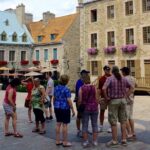
The game begins at 3004 Av. Honoré-Mercier, Québec, QC G1A 1A2, and you’ll end near Rue des Pains Bénits, Québec, QC G1K. What I like here is that you’re not left to guess your route. You get step-by-step guidance in the Questo app to Place Royale, and the experience continues from there through the key Old Quebec clusters.
Because this is private and app-led, it’s a good fit when you want flexibility. You can take the turns without waiting for anyone to catch up, and you can step out of line for a quick photo without feeling like you’re slowing a group.
Also note the timing: it’s listed at about 1 hour 30 minutes. That’s long enough to feel like a real walk, but short enough that it won’t swallow a half-day. If you’re the type who stops constantly, plan closer to 1 hour 45 to 2 hours.
Tourny Fountain: A 1853 Sculptor and a World’s Fair Detour

Your path includes Tourny Fountain, a striking piece for anyone who likes the “wait, that’s older than I thought” feeling. Six copies of the work were designed by French sculptor Mathurin Moreau in 1853, and the fountain design even showed up at the 1855 World’s Fair in Paris.
Here’s what makes this stop work in a game format: you’re encouraged to look closely enough to figure out the clue, not just admire the fountain from a distance. Quebec City has plenty of photo points, but this one pushes you to slow down and read the details in front of you.
Practical tip: if you’re trying to move briskly, this is one of the stops where you might want to pause your pace. Look first, then hunt for the answer. Don’t try to solve while walking.
Saint-Louis Gate: When Trade Gets Stopped at Night
Next up is the Saint-Louis Gate, tied to the French Regime in the late 1600s and then reshaped under British rule. The key story is about control of movement: during the British Regime, the army closed the gate doors at night to restrict travel between the city and outlying areas. That disruption mattered, because it interfered with trade and slowed down development.
In a normal guided tour, you’d hear the backstory and keep moving. In this format, you’ll be scanning the gate area for what the clue is asking. It’s a clever way to make you notice the physical “why” behind the historical “what.”
Consider setting expectations: Old Quebec’s streets and sightlines can be tight. Give yourself a minute to step back, then look again. If you rush, you might miss what the puzzle expects you to see.
The Elm Tree on Rue Saint-Louis and the Cannonball Mystery

If you’ve ever seen the tall elm at the corner of Rue Saint-Louis and Rue du Corps-de-Garde, you’ve likely heard the story of the large cannonball-like object trapped in the tree’s roots. Calèche drivers slow down to point it out. Curious passers-by tend to stop and stare, because it looks impossible.
What the game adds is a structured reason to answer the question instead of only wondering. You’ll circle the area, look for the clue cues, and get the story in a way that sticks because you earned it by observation.
This is also a great stop if you’re traveling with mixed interests. History lovers get the explanation. Architecture and oddities fans get the “how did that happen” factor. Kids often enjoy it because it’s the kind of mystery that feels like a local legend.
A few more Quebec City tours and experiences worth a look



Couvent des Ursulines: Learning in 1639 and Montcalm’s Burial
The experience moves to Couvent des Ursulines, founded in 1639. It’s the oldest institution of learning for women in North America. And the chapel adds weight: it’s where French general Louis-Joseph Montcalm was buried after his death in the 1759 battle that helped decide the fate of New France.
This stop is one of the most meaningful on the route, because it connects daily life, education, and major turning points in Canadian history. The game approach helps here by giving you a specific question to chase, instead of letting you feel like you’re standing in front of something important but vague.
A practical note: religious and historic sites can have quiet rules. Plan to keep your voice down, move respectfully, and treat this as a place to observe, not just a photo backdrop.
The Cathedral of the Holy Trinity: First Anglican Church Outside Britain
You’ll also see the Cathedral of the Holy Trinity, an Anglican church built in 1804. It’s described as the first Anglican church built outside Britain, and it later became a National Historic Site of Canada in 1989.
The architecture detail matters for your visit: it’s in a neoclassic Palladian style, and it’s modeled after St Martin-in-the-field Church in Trafalgar. The game clue here nudges you to look at how the building communicates its origins through design.
If you like architecture, this is one of those moments where it’s worth pausing your phone-and-go. Step back, look at the proportions, then go back to the clue. You’ll get more out of it that way.
Grande Place to Place de l’Hôtel-de-Ville: One Square, Many Identities
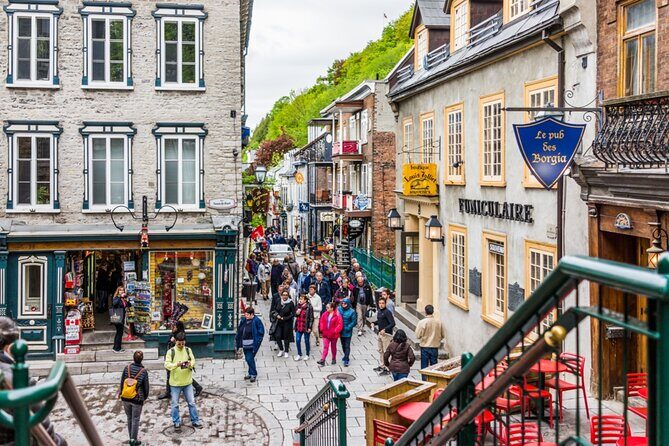
Quebec City’s squares are like time capsules. The game’s route includes a key public square area that’s been called different things over time: Grande Place, Grande Place de la Haute Ville, and Place du Marché. In 1900, it was renamed Place de l’Hôtel-de-Ville after city hall was built, and it carried other names until the mid-20th century.
This kind of stop is perfect for a puzzle format because names and eras are easier to remember when you connect them to a specific spot. When you look around, you’re not only seeing buildings. You’re seeing how the square’s purpose shifted as the city grew.
Tip: after you solve the clue, take 30 seconds to look at the full square again. That re-scan helps you mentally “anchor” the information to the space.
Séminaire de Québec: Priests, François de Laval, and a City System
The route continues with Séminaire de Québec, tied to a Catholic priest society founded in 1663 by François de Laval. The seminary’s goals included training priests, evangelizing Indigenous peoples, and administering parishes across the colony.
This stop matters because it explains how Quebec City wasn’t only a fortress and a marketplace. It was also built around institutions that shaped education, religious life, and governance.
In a self-guided format, this can be easy to skim past because it’s not a single dramatic feature like a gate or a fountain. But the game helps keep you engaged by forcing you to look for what the prompt is pointing you to. If you enjoy piecing history together through observation, you’ll like this section.
Paul Chevré’s Monument and Jean-Paul Lemieux: Art Across Centuries
The experience also includes:
- A monument created in honor of Quebec City’s founder, a work by Paul Chevré, inaugurated in 1898
- A stop tied to Jean-Paul Lemieux (1904–1990), one of Canada’s foremost 20th-century painters, known for five different artistic periods
This is a nice tonal shift. After centuries of colonial and religious landmarks, you get a more modern lens on identity through art. The game structure keeps it from becoming a quick glance. You’ll be scanning the spot again to answer the clue, so the art reference doesn’t fade immediately.
If you’re the kind of traveler who likes museums but dislikes museum crowds, this is a practical compromise: art knowledge with fresh air, in a walking route you can control.
Place Royale: Champlain’s 1608 Footprint in Your Feet
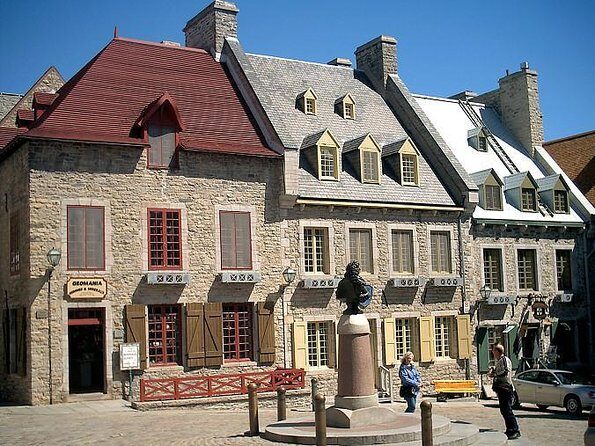
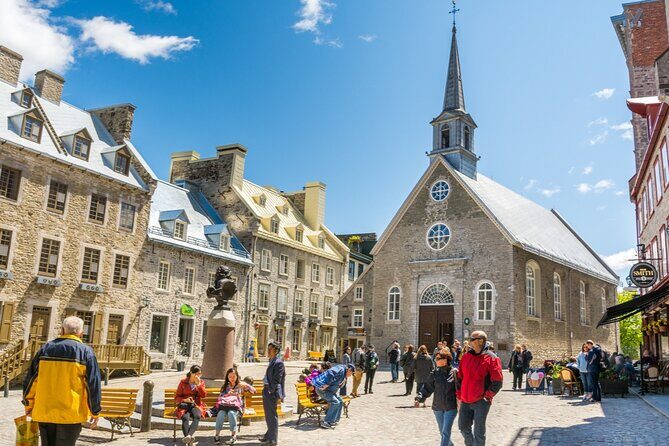
Then comes Place Royale, described as the precise location where Samuel de Champlain built the first permanent French settlement in the Americas. In 1608, his first abitation combined a fort, store, trading post, and residence. That’s why Place Royale is considered the cradle of French North America.
This is the anchor point of many Old Quebec routes. Here it becomes the story center. The game gives you a mission that turns “cradle of French North America” from a phrase into something you can stand near and picture.
Practical tip: if you’re pressed for time, don’t cut corners here. You want a full minute to orient yourself first, then solve. Once you know where you are, everything else makes more sense.
Parliament Building and the Hill: 1877 to 1886, Then Back to Street Level
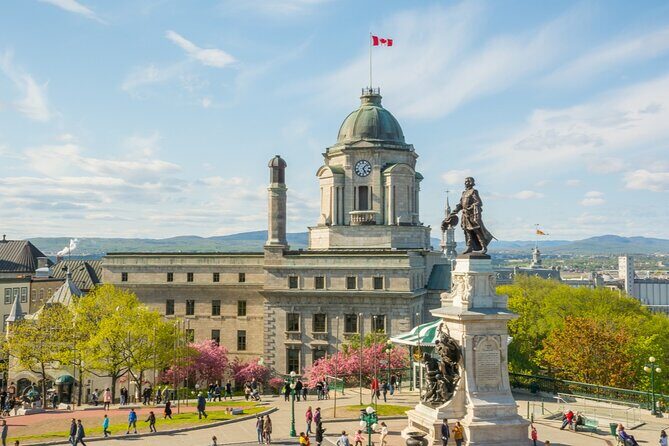
You’ll reach the Parliament Building (Hôtel du Parlement), an eight-floor building in Quebec City that houses the Parliament of Quebec. It includes the Lieutenant-Governor and the National Assembly. The building was designed by architect Eugène-Étienne Taché and built from 1877 to 1886.
The game also points out the slope: it’s built on a hill, so the building slopes downward. It also notes that it was once home to the Jesuit College (Jesuit Barracks) from the 1730s to 1878, and that the city hall was later designated a National Historic Site of Canada in 1984.
This stop is valuable because it ties architecture to layers of use. It’s not just a government building; it’s a location that changed roles as the city changed.
Notre-Dame-de-Québec Basilica: The Fires, Shelling, and Rebuilds You Can Feel
The final major historic stop is Notre-Dame-de-Québec. It has served as the first Catholic parish in North America since 1664. It gained cathedral status in 1674 when it became the seat of the Diocese of Québec, and later became a basilica 200 years afterward.
Its history includes shelling, fires, and multiple reconstructions and renovations. In this game format, that matters because the “why” behind the architecture becomes part of what you’re chasing.
If you’re tired near the end, you might be tempted to rush the last clue. Don’t. This is the place where the stories feel most layered, and the game format gives you a reason to look again before you finish.
Timing That Doesn’t Stress You Out: When to Go and How to Pause
You can play the game at any time listed, with opening hours shown as 12:00 AM to 11:30 PM daily. That wide window is rare for historic experiences, and it’s actually useful.
If you go mid-afternoon, you’ll likely have brighter views and more foot traffic. If you go earlier or later, you might get calmer streets and easier pauses to think while you solve clues.
Duration is about 1 hour 30 minutes. I’d treat that as a baseline, not a promise. If you stop often for photos or you’re solving slowly, add time. The key advantage is that you can pause the game whenever it suits you, so you’re not forced into a rigid group schedule.
Price and Value: Why This Costs About the Same as One Coffee
At $9.29 per person, this is priced like a small add-on that becomes a main event once you’re walking. That’s what makes it compelling. You get:
- a route with multiple major Old Quebec checkpoints
- an app that keeps you moving
- offline play that doesn’t depend on weak mobile data
- private participation for your group
You also get free for kids, which can make it a smart family choice. With the walk length kept reasonable, you can keep little legs in the game without turning the day into a marathon.
Where the value gets shaky is quality control. One drawback that shows up in feedback is that a few clues may be outdated or poorly worded, which can slow you down or make you feel stuck. It doesn’t kill the concept, but it does mean you should bring flexibility. If you love puzzles, you’ll still likely enjoy the walk.
Should You Book Old Town Quebec Secrets?
Yes, if you want a fun way to see Old Quebec that doesn’t feel like homework. This is a strong pick if you:
- like solving puzzles and want history tied to real locations
- want an experience you can do offline
- prefer flexibility over a fixed guided schedule
- are traveling with kids and need something engaging but not too long
Skip it or approach it cautiously if:
- you need every clue to be perfect with zero confusion
- you’re the type who gets frustrated when a puzzle doesn’t match what you see in front of you
- you rely on your phone but you often hit app/tech issues in general
For most people, the balance is right: at $9.29, you’re buying a focused walk plus a reason to look closely at Quebec City’s landmarks, from Champlain’s Place Royale to Notre-Dame-de-Québec.
FAQ
Do I need an internet connection to play this game?
No. The game is designed to play offline, so you don’t need internet access while you’re walking.
How long does the Old Town Quebec Secrets experience take?
It takes about 1 hour 30 minutes (approx.).
What language is the experience offered in?
It’s offered in English.
Is this a private tour or group tour?
It’s listed as a private tour/activity, so only your group participates.
Where does the experience start and where does it end?
It starts at 3004 Av. Honoré-Mercier, Québec, QC G1A 1A2 and ends at Rue des Pains Bénits, Québec, QC G1K.
Can I start the game whenever I want after booking?
Yes. You can play it anytime after booking without rescheduling.
Is there a physical tour guide with you?
No. This experience includes step-by-step guidance through the app, and it notes that a physical tour guide is not included.
Is it free for children?
Yes. It’s free for KIDS.
How does cancellation work for a full refund?
You can cancel for a full refund if you cancel at least 24 hours before the experience’s start time.
If you tell me your travel dates and whether you’re a museum person or a photo person, I can suggest a good time of day to do this walk.