REVIEW · QUEBEC CITY
Private Walking Tour of Old Quebec with Funicular
Book on Viator →Operated by HQ SERVICES TOURISTIQUES · Bookable on Viator
Old Quebec is easier when someone points the way. This private 2 to 3 hour walk strings together the big landmarks plus a funicular ride, so you get both skyline views and street-level history without doing a ton of guesswork. I especially like the included funicular ticket, because it flips the experience from just walking uphill to getting that quick, scenic connector between levels. I also like the small group setup (up to 8) and how the licensed local guide tells stories that help the places click.
The main drawback to plan for: the route packs in a lot in a short time, and some stops can feel information-heavy. If you want extra photo time, rest breaks, or you have hearing issues, say so early so the guide can adjust the pacing and volume.
In This Review
- Key highlights that make this Old Quebec tour worth it
- Why the funicular ride is the smart shortcut in Quebec City
- Upper Town landmarks: Parliament, Tourny Fountain, and Plains of Abraham
- Dufferin Terrace and the funicular connection to Lower Town
- Lower Town walking: Breakneck Steps to Royale Place
- Old Quebec walls, the mural stop, and a walk toward the Old Port
- What makes this tour feel truly private: guide personality and pacing
- Pacing, photos, and hearing: how to avoid the one common frustration
- Price and value: is $119.01 per person fair for Old Quebec plus funicular?
- Who this tour suits best (and who should pick something else)
- Quick practical tips before you go
- Should you book this private Old Quebec walking tour with funicular?
- FAQ
- How long is the private walking tour of Old Quebec with funicular?
- What’s included in the tour price?
- Is hotel pickup available?
- How many people are in a booking?
- How much walking is involved?
- What if the weather is bad or I need to cancel?
Key highlights that make this Old Quebec tour worth it
- Funicular ride included so you experience the height change and the viewpoints without overdoing stairs
- Up-and-down route through both Upper Town and Lower Town, with Old Port near the end
- Historic anchor points like Parliament, Plains of Abraham, the Ursulines chapel, and the city’s walls
- Private local licensed guide for Q&A, custom emphasis, and flexible pacing
- Easy start and finish with hotel pickup in the Old Quebec area and an end near Place Royale
Why the funicular ride is the smart shortcut in Quebec City
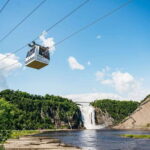
Quebec City is built on a slope. That sounds simple, but in real life it means your calves will do most of the “scenery” unless you plan the vertical part carefully. This tour solves that with a funicular ticket per person, which gives you a change of perspective without turning the day into a stair marathon.
What I like about the funicular here is that it’s not just transportation. It works like a reset button. You go from the wider Upper Town overlooks and landmark streets, down toward the Lower Town lanes, and you feel the city’s layout in your legs and eyes. Even if you’re not into trains, the payoff is views plus better flow.
If you’re the type who likes to stop for a quick look and a photo, the ride helps. You’re not fighting the “which way is down?” problem. The guide keeps the route moving while still giving you moments to look up at what you just saw.
You can also read our reviews of more walking tours in Quebec City


Upper Town landmarks: Parliament, Tourny Fountain, and Plains of Abraham
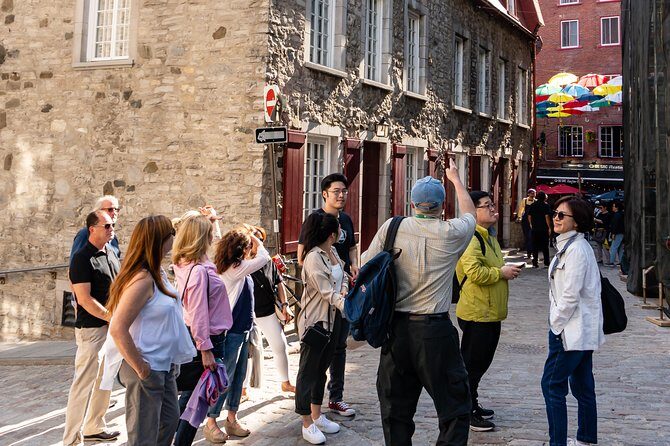
This part is where Quebec City starts to feel like a living map. You’ll be in the Upper Town zone long enough to understand how the historic government, ceremonial spaces, and battlefield memory fit together.
Parliament of Quebec is a natural first stop because it frames the city as more than just old streets and souvenirs. You’re seeing the center of civic power, which helps your later stops make more sense.
Then you’ll hit Tourny Fountain—a small landmark with big “I’m in Quebec City” energy. It’s the kind of place where the guide’s storytelling matters, because the value isn’t the object itself. It’s how it fits into the city’s public spaces and daily rhythm.
From there comes Plains of Abraham, one of the most famous open areas in the region. Expect the guide to connect the space to the people and conflicts that shaped who controlled what. Even if you’ve read about it before, it lands differently when you’re standing in the open area and hearing how that geography mattered.
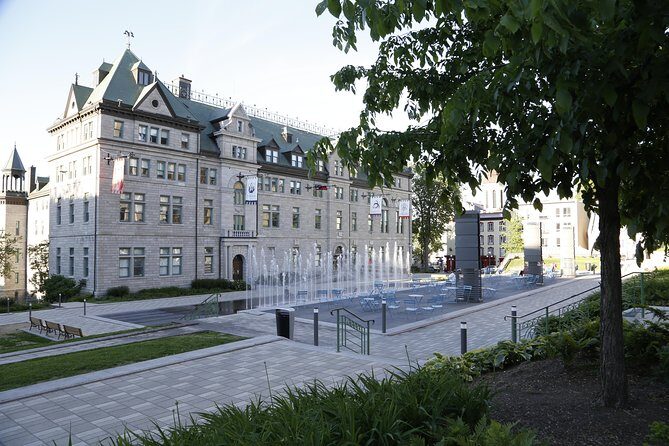
After that, you’ll walk into the religious and cultural touchstones that feel distinctly Quebecois. The Chapelle of the Ursulines is one of those stops where your brain goes from street-level wandering to “wait, this is still part of the city’s identity.” You’ll also pass by civic architecture like City Hall, which reinforces the sense that this city mixes old-world heritage with active public life.
Dufferin Terrace and the funicular connection to Lower Town
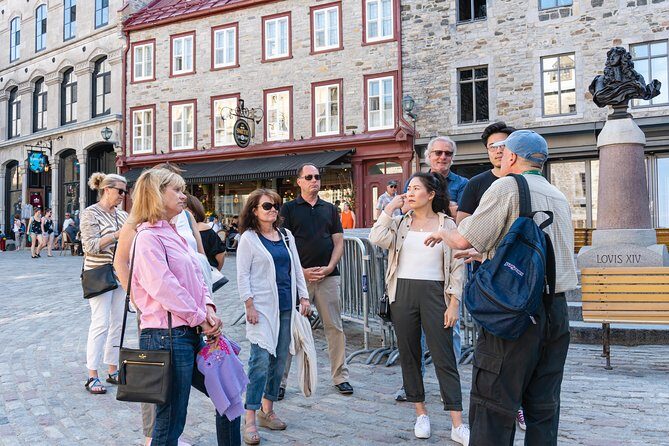
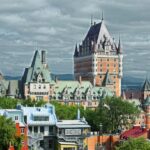
Dufferin Terrace is one of the spots where Quebec City’s views actually do the talking. You’ll see the city’s layers: the old walls and streets below, and the open spaces around the ridge. If you’ve ever seen postcard photos of the view from above the Lower Town, this is the area where it makes sense.
And then comes the key move: the included funicular ride bridges the height difference. This is where you stop thinking of the city as one level and start seeing it as two halves that share a story.
Practical tip: wear shoes you can walk in confidently. This is not a museum-crawl shuffle. It’s a real walking route with some hills and stair sections. Even the people who are totally fine on flat ground often feel it in Quebec’s vertical streets.
Lower Town walking: Breakneck Steps to Royale Place
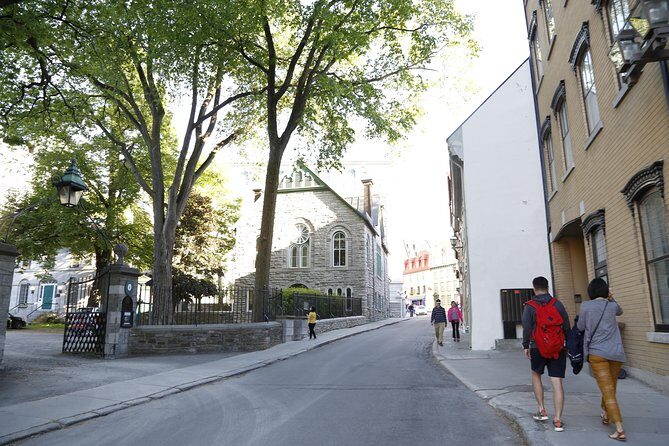
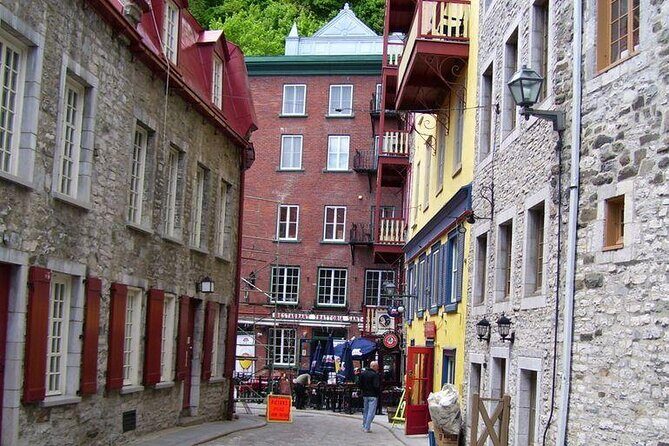
Lower Town is where the atmosphere changes from “ridgetop viewpoints” to “old streets and stone corners.” This is the segment where you feel the city’s age in your feet and senses.
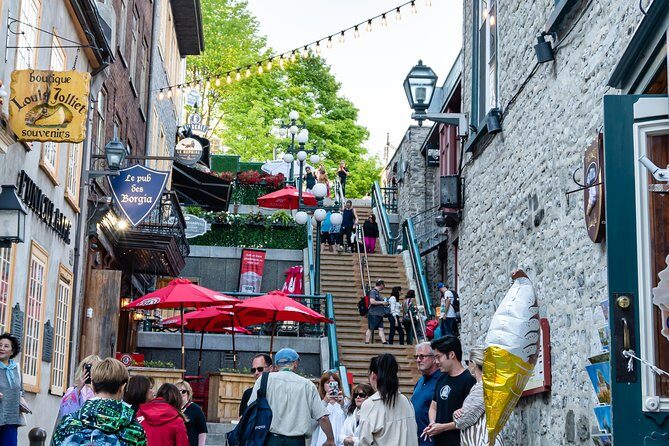
You’ll tackle Breakneck Steps, and yes, the name is doing its job. It’s steep enough that pacing matters. If you take it slow, it’s manageable; if you sprint it for photos, you’ll regret it. The guide’s timing matters here—good guides space the effort so you’re not huffing right as you reach a photo spot.
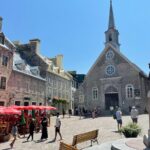
Then you’ll arrive around Royale Place (Place Royale area), which is one of the historic center points for early Quebec City life. Expect the guide to connect the square to the city’s old-world roots and daily street patterns. This is where Old Quebec stops being a list of sights and starts feeling like a place people lived.
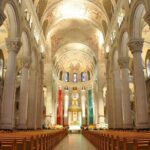
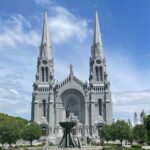
After that, the route brings you to Notre Dame de Quebec. This is a marquee stop, and it’s usually the one that makes people go quiet for a minute. Even if you’re not a church-history person, the setting and scale help you understand why this place is famous.
Old Quebec walls, the mural stop, and a walk toward the Old Port
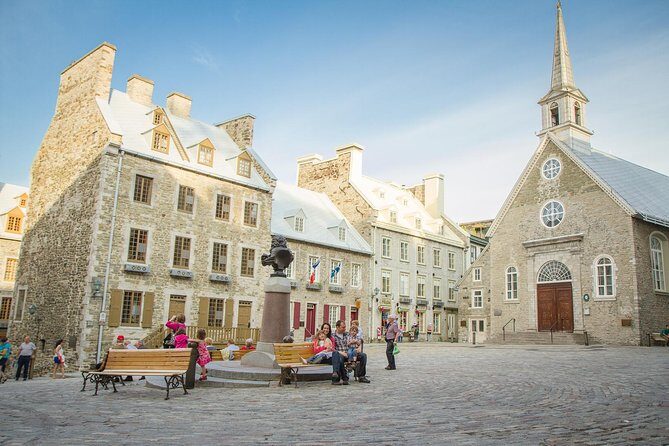
One of the smartest additions is getting to see the gates and walls of Old Quebec. City walls aren’t just a visual feature; they’re a story about protection, power, and what people feared. When you walk by them with context, you start seeing defense lines instead of just stone lines.
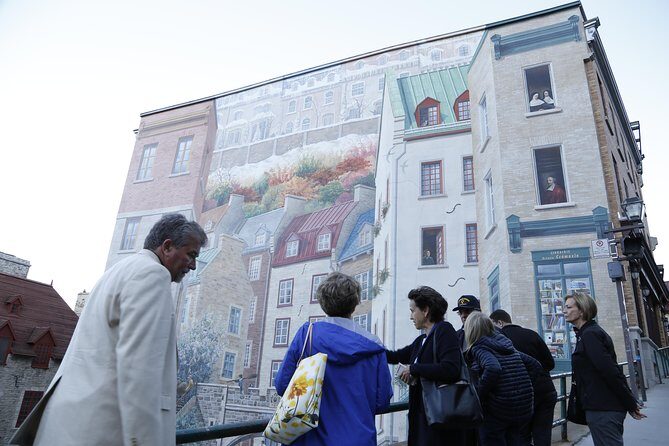
Then there’s a more modern-feeling pause: the Quebec City mural. This is useful because it keeps your brain from treating the whole day as one long “old stone” snapshot. A mural (plus a few other street-level stops) gives you a quick variety break while still staying in the Old Quebec mood.
As you move along, you’ll walk the La Promenade des Gouverneurs area and head toward Old Port. This is where the city’s river connection becomes part of your mental picture. You get a change from narrow lanes and architecture-focused stops into open waterfront energy, which makes the end of the tour feel satisfying instead of abrupt.
The tour typically finishes around Place Royale. If you want to continue wandering after, it’s a great place to do it. You’re not ending somewhere random. You’re landing in the old center.
You can also read our reviews of more private tours in Quebec City

What makes this tour feel truly private: guide personality and pacing
Private tours are only private on paper unless the guide actually uses that flexibility. What stands out from real guide experiences is how often they tailor the day in small but meaningful ways.
For example, guides like Lynn are described as meeting people at the hotel and being especially considerate about needs. Veronica is noted for being friendly, knowledgeable, and flexible, including modifying the tour pace for mobility concerns. Luis has led versions in Spanish for some groups, which is a nice option if you want language comfort rather than only English narration.
Then there’s the storytelling style. Guides such as Sam and Denis are credited with using maps and stories to keep people engaged. Denis in particular is praised for warm, authentic pride in the area, and for adding off-the-beaten-path stops if the group wants them. Pierre and Etienne are also mentioned for sharing practical recommendations beyond the walking route, like restaurant ideas and what to do next.
My takeaway: you’re not stuck with a “read-it-off-a-script” walk. Ask questions. Say what you care about—history, politics, everyday life, photos, food—and the best guides will shape the emphasis.
Pacing, photos, and hearing: how to avoid the one common frustration
Even the best tour can feel too much if you don’t guide the guide. The most common snag here is that there’s a lot packed into roughly 2 to 3 hours, and it can feel a bit on the dry side or hard to follow if the delivery is soft.
Here’s how to set yourself up:
- Ask right at the start how often you’ll stop for photos. If you want more picture time, say it early.
- If you need breaks, request them before you’re exhausted. Quebec’s slopes sneak up on you.
- If you’re sensitive to hearing clarity, politely ask whether you can hear comfortably throughout. Some groups benefit from better audibility.
Also, remember: private doesn’t automatically mean slow. It means you should get customization. So be proactive. The guides listed here have a reputation for being flexible, but you still have to tell them what you want.
Price and value: is $119.01 per person fair for Old Quebec plus funicular?
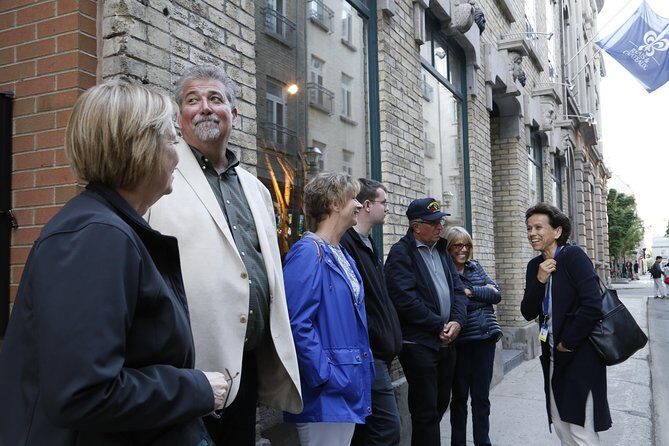
At $119.01 per person, this isn’t a budget group tour, but it is priced like what you’re actually buying: a licensed local guide, hotel pickup in the Old Quebec area, and a funicular ticket included.
Here’s the value math that matters to me:
- You’re paying for time and context. The guide’s job is to make places understandable fast, especially in a city that’s layered vertically.
- You’re getting both Upper Town and Lower Town in one connected walk, plus the funicular ride. That’s part of why the day feels efficient.
- The group size limit of up to 8 keeps the experience closer to “private” than big-bus sightseeing.
For couples and families, it often pencils out well because you’re paying once for a guide rather than juggling multiple self-guided walking days. For first-timers, it can save you from picking the wrong viewpoints or missing key orientation points like the historic squares and wall segments.
If you already know the city well and mostly want casual wandering, you might not need a guided route. But if you want the city to make sense quickly, the price tends to feel reasonable.
Who this tour suits best (and who should pick something else)
This one works best if you want a structured route through major Old Quebec landmarks without doing the planning yourself. I’d also put families here, including groups with kids, because several guides are described as making the experience work for different ages.
It’s also a good fit for visitors who like conversations and questions. Private guides can explain everything from how the city was shaped to what you’re looking at now.
You might choose a different option if you:
- Prefer long, unstructured wandering over guided stops
- Need a very slow pace with minimal stair sections
- Want a heavy focus on museums or indoor time (this route is primarily outdoors walking plus landmark stops)
Quick practical tips before you go
A few small things will make the walk easier:
- Bring comfortable shoes. Hills and steps are part of the Old Quebec experience.
- Dress for weather. The tour runs outdoors, so layers matter.
- Have your end goal in mind. The tour finishes near Place Royale, which is handy if you want to keep exploring afterward.
And if you’re booking in advance, you’re doing the right thing. This experience tends to get reserved, especially when people are planning tight sightseeing schedules.
Should you book this private Old Quebec walking tour with funicular?
Yes, if you want the smartest way to see Old Quebec in one go. The big selling points are the funicular ride included, the connected Upper Town-to-Lower Town route, and the chance to have a guide who can tailor emphasis and answer questions. It’s also a strong choice for first-time visitors who want clear orientation and a finish in a central area.
Book it if you like walking with purpose and you’re okay with a packed 2 to 3 hour schedule. If you want a super relaxed day with tons of pauses, message the guide your preferences early and ask for photo and rest timing.
FAQ
How long is the private walking tour of Old Quebec with funicular?
It runs about 2 to 3 hours.
What’s included in the tour price?
You get a licensed private local guide, a walking tour in Old Quebec, hotel pickup in the Old Quebec area, and 1 funicular ticket per person.
Is hotel pickup available?
Yes, pickup may be available from your hotel lobby or Airbnb if it’s in the Old Quebec area. Otherwise, you’ll meet at a meeting point in Old Quebec.
How many people are in a booking?
The tour is private, and there’s a maximum of 8 people per booking.
How much walking is involved?
There’s a moderate amount of walking, including hills and steps. Comfortable walking shoes are recommended.
What if the weather is bad or I need to cancel?
The experience requires good weather. If it’s canceled due to poor weather, you’ll be offered a different date or a full refund. If you cancel up to 24 hours in advance, you get a full refund; within 24 hours, refunds are not available.