REVIEW · TORONTO
E-bike Toronto’s Dynamic Neighbourhoods
Book on Viator →Operated by Toronto Bicycle Tours · Bookable on Viator
Toronto changes fast when you ride. This e-bike tour stitches together areas that look totally different from each other, from Lower Ossington to St. James Town, and you get a guided way to understand why the city feels the way it does. I especially like the smart pacing between neighborhoods and the fact that the stops are admission-ticket free, so you can spend your budget on the ride, not lineups. The only real consideration: the tour requires good weather, so keep your schedule flexible.
I also like that the experience is built for real streets, not just sightseeing from sidewalks. In the best moments, the guide works with you before you roll into traffic—one guide I heard about, Ryan, made sure people felt comfortable on the bikes first, then took the group out confidently.
At $109.92 per person for about 3 hours 30 minutes, you’re paying for more than a bike rental. You’re also getting guided neighborhood context plus practical extras like a helmet, bottled water, and a granola bar to keep energy steady as you pedal (even with assist).
In This Review
- Key highlights you should care about
- Neighborhoods look different at speed (and that’s the point)
- Price and what’s actually included for $109.92
- Start at St. Patrick, end where you began
- Lower Ossington: from forgotten to globally noticed
- St. James Town: a world within a block
- Bloor Street Cultural Corridor: arts and everyday life in one ride
- Graffiti Alley: the city’s mood in 15 minutes
- Rosedale: fashionable calm and quiet parkland details
- Ontario Place & Trillium Park: waterfront icons, big arguments
- CAMH and Trinity Bellwoods: mental health progress and green breathing space
- Guides make or break an e-bike street tour
- Who should book this e-bike tour
- Should you book Dynamic Neighbourhoods?
- FAQ
- How long is the e-bike tour?
- What’s included in the ticket price?
- Where does the tour start and end?
- Are there admission fees at the stops?
- How big is the group?
- What happens if the weather is poor?
Key highlights you should care about
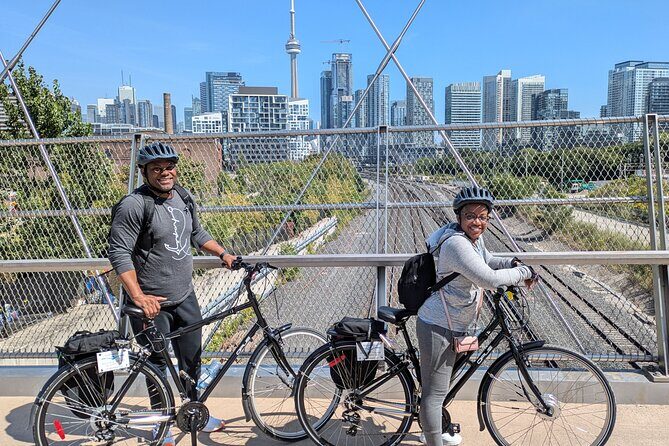
- Small group capped at 8 for a calmer pace and more attention when needed
- Safety-first start on the bike so you’re comfortable before you’re on the roads
- Ticket-free stops across the route so you can focus on sights instead of entry fees
- A neighborhood mix that feels like Toronto, not a postcard from density to design to waterfront change
- Included water and snack for an easy, low-planning ride
- Mental health and community themes at CAMH, not just entertainment stops
Neighborhoods look different at speed (and that’s the point)
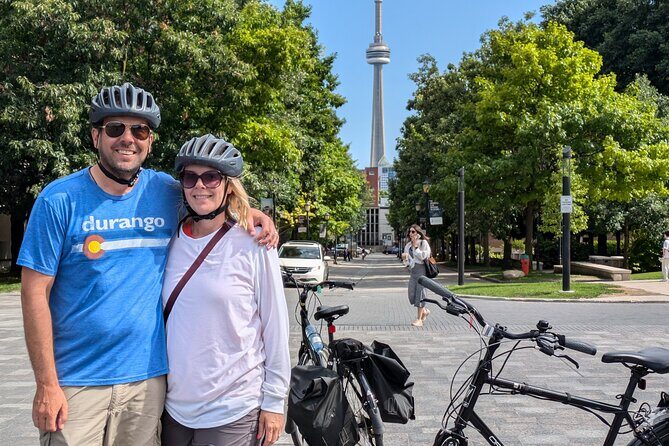
There’s a reason an e-bike works so well for Toronto’s “dynamic neighborhoods” theme. When you ride, you naturally move through the city the way locals experience it: one area shifts into the next, sometimes in a single stretch of blocks.
This tour leans into that. You go from a transformation story at Lower Ossington into the high-density, tightly packed world of St. James Town, then onward to cultural stretches and street-art energy. The route doesn’t ask you to memorize facts. It helps you notice the city: where people cluster, where creativity shows up, and how the waterfront and health institutions fit into everyday life.
And because it’s electric-assist, you’ll have an easier time keeping pace. That matters for a 3.5-hour ride; you want to spend attention on what you’re seeing, not on fighting your legs.
You can also read our reviews of more cycling tours in Toronto

Price and what’s actually included for $109.92
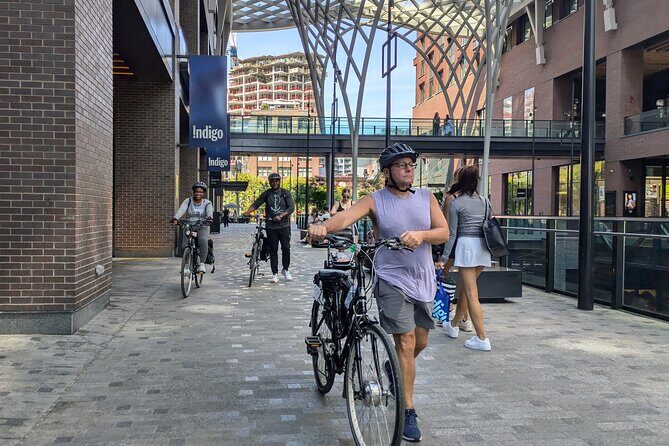
Let’s talk value plainly. At $109.92 per person, you’re not just renting a bike. Your ticket includes:
- Use of an e-bike
- Helmet
- Bottled water
- A granola bar snack
You’re also getting a guided route with multiple stops, each one listed as admission-ticket free. That’s a big deal in a city where you often end up paying entry fees to justify the visit. Here, the cost mostly goes into the experience design: the time on the bike, the guide, and the route that connects neighborhoods efficiently.
One more value point: you’re booked in a fairly steady rhythm. This experience is commonly reserved about 20 days in advance on average, so it’s not just a “maybe someday” thing. If you have dates in mind, lock it in early so you can ride when the weather is best.
Start at St. Patrick, end where you began
The meeting point is 124 St Patrick St, Toronto, ON M5T 2X8. Your ride loops back to the same place when the tour ends, which makes the logistics feel easy—no figuring out how to get from a distant endpoint.
It’s also described as near public transportation, which you’ll appreciate if you want to pair this ride with other Toronto plans the same day. Since the tour is about 3 hours 30 minutes long, you’ll also want to think about what you’ll do after. You’ll likely come back with fresh legs, not tired legs, but still ready for a meal and a slower walk.
Group size is capped at 8 travelers, which helps a lot. Smaller groups mean more flexible pacing and fewer awkward pauses when people need a moment on the saddle.
Lower Ossington: from forgotten to globally noticed
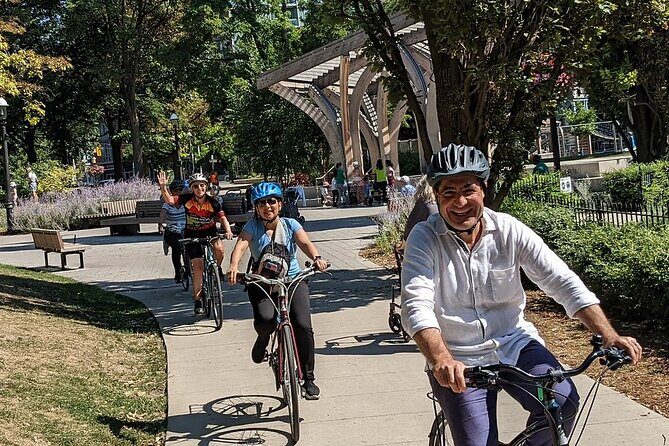
You start with Lower Ossington, a neighborhood often described as a transformation story—from a mostly-forgotten area into a globally recognized hotspot.
On an e-bike, this kind of “then vs. now” neighborhood view lands faster. Instead of reading about change, you’re seeing it unfold at street level: storefront energy, street scenes that feel current, and the kind of area where people actively choose to spend time.
This stop is about 20 minutes, so it’s not meant to be an encyclopedic tour. It’s more like an orientation moment: you learn what to look for, then you carry those ideas forward as the route changes neighborhoods again.
Drawback to note: because it’s a popular-feeling area, you’ll want to stay alert around bike traffic and pedestrians. The tour is designed for roads, but every city has its own street behavior.
St. James Town: a world within a block
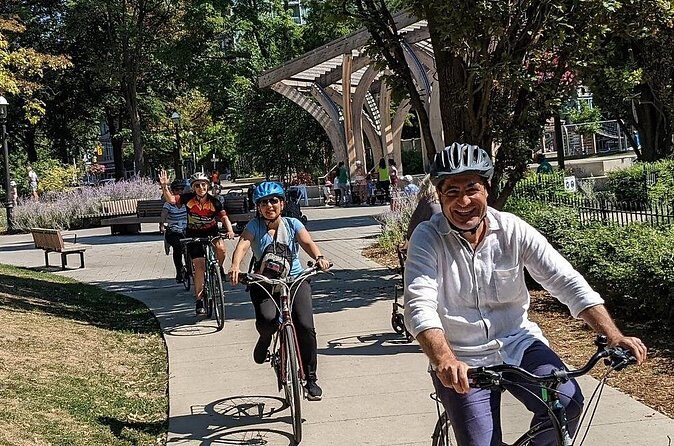
Next is St. James Town, described as a “world within a block.” It’s known for being one of Toronto’s most densely populated neighborhoods, and for its heavy blend of cultures and community services.
This is the stop that helps you understand Toronto as more than attractions. The neighborhood’s story includes how residents and local systems tackle real needs—social services, food, and healthcare—through community-based innovation.
On a bike, density becomes visible. Buildings sit close. Streets feel more like lived-in space than sightseeing corridors. Even if you don’t know the exact history, you’ll feel the difference in how people use the area.
You get around 20 minutes here too, which is a good length: enough time to take in the density and the community feel, without dragging you into long stops when you still want to keep moving.
A few more Toronto tours and experiences worth a look
Bloor Street Cultural Corridor: arts and everyday life in one ride
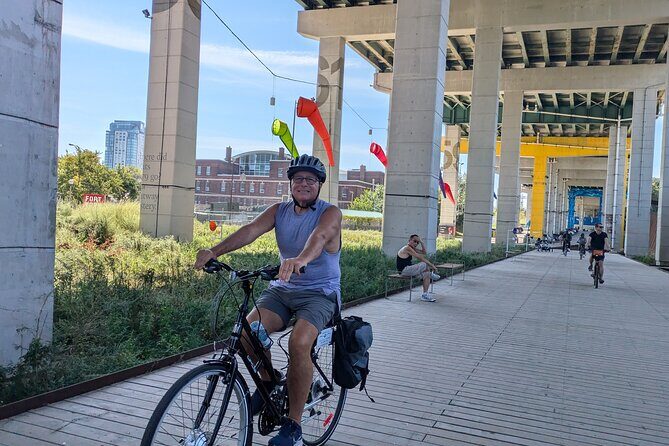
Then you hit the Bloor Street Cultural Corridor, Toronto’s major arts and culture district. This stretch is framed as a mix of museums, cultural centres, performance spaces, and restaurants.
The practical benefit of riding here is that you see the corridor as a working part of the city, not just a museum district. You’re not only looking at institutions—you’re also seeing the rhythm of people moving between culture and meals and daily routines.
Because it’s built as a neighborhood tour, the guide’s job is less about listing venues you must visit later and more about helping you understand what this area means to the city’s identity. It’s the kind of stop that makes you look at a big street and think, this is where communities come together.
If you like arts planning, you’ll probably want to do follow-up visits later—this stop gives you a map of where to aim your next day.
Graffiti Alley: the city’s mood in 15 minutes
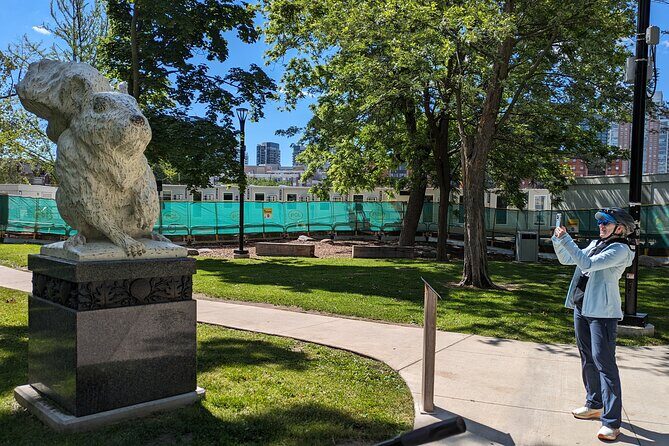
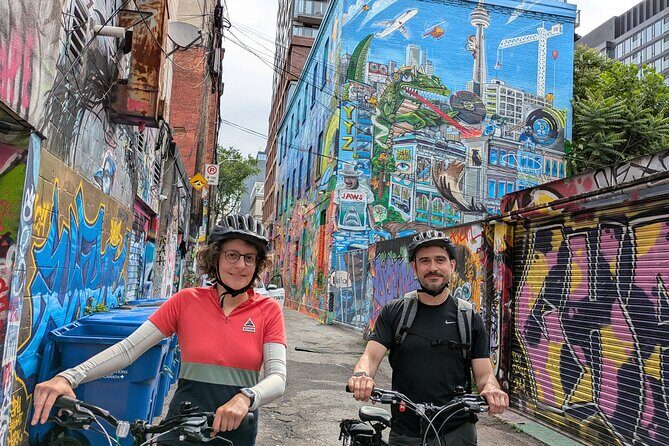
After the culture corridor, you get to Graffiti Alley. This stop is only about 15 minutes, but it’s one of the most direct ways to read the city’s current vibe.
Street art is a language that changes quickly. Even with a short stop, you can pick up the overall feel: playful, bold, political, artistic, or all of the above. The advantage of doing this on a bike tour is that it breaks up the more formal “neighborhood identity” stops with something spontaneous.
Tip for getting the most out of this: slow your eyes down. Don’t just glance. Look at what kind of messages dominate the walls and how the art connects to nearby streets. That takes a few extra seconds, and those seconds are what turn a quick stop into a memorable one.
Rosedale: fashionable calm and quiet parkland details
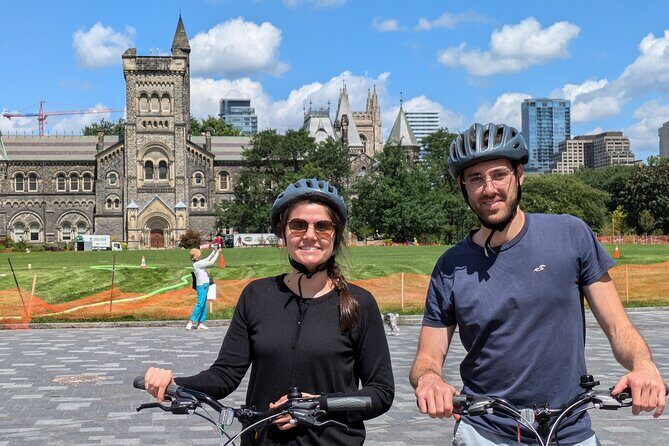
Rosedale is described as Toronto’s most fashionable address, with an affluent, quieter feel and picturesque parkland. It also has subtle changes happening under the surface—more than meets the eye.
This stop is about 20 minutes, which is a solid time for getting a sense of tone. Compared to the denser areas earlier, Rosedale reads calmer and more spacious. The parkland element also matters: even from the bike, you can sense how green space shapes the neighborhood’s pace.
The contrast is the whole point. After you’ve seen density, street art, and cultural corridors, Rosedale helps you experience another Toronto personality—one that feels slower and more controlled, but still changing.
Ontario Place & Trillium Park: waterfront icons, big arguments
Next is Ontario Place & Trillium Park, an iconic waterfront venue that’s in the middle of major transformation—and controversy.
This is a good stop to do by bike because it frames the waterfront as something living and evolving, not just an old postcard. You’re seeing change in real time: what’s prominent now, and how the area feels while it’s being reshaped.
The practical value here is context. Waterfront projects often bring strong opinions, and having a guide help you understand that tension makes the stop feel more meaningful. Instead of just seeing an area under renovation, you’ll connect it to why people care.
This stop runs about 20 minutes. That’s enough time to take in the scale and the atmosphere without getting stuck if the weather is turning.
CAMH and Trinity Bellwoods: mental health progress and green breathing space
Then comes CAMH, the Centre for Addiction and Mental Health. The tour highlights Toronto’s progressive attitude toward mental health and the groundbreaking advancements made by CAMH.
This is one of the stops that adds real depth to the day. It turns the ride from “just neighborhoods” into something that touches health and community impact. You’re not asked to be a specialist. You’re encouraged to see mental health as part of how the city works.
CAMH gets about 15 minutes. That’s short, but it’s long enough for meaningful context, especially in a moving tour where you have to keep a steady flow.
Finally, you end with Trinity Bellwoods, a major green space and cultural heartbeat that keeps changing as the city’s needs change. This stop is about 10 minutes—a quick reset after the urban intensity.
Here’s the smart way to use that time: take a breather. Let your body cool down and let your eyes relax. Green space acts like punctuation at the end of a ride packed with variety.
Guides make or break an e-bike street tour
The strongest praise tied to this experience is the way guides handle the ride itself, not just the talking.
One guide named Ryan is highlighted for being organized and for making the group comfortable before hitting roads. That matters. If you’re new to e-bikes or you’re even mildly nervous about sharing streets, that early confidence-building step turns the whole tour from stressful to enjoyable.
Other praise points include:
- You get a tour that shows another side of Toronto, not only the obvious highlights
- Guides can explain what you’re looking at in a way that clicks fast
- When things happen (like e-bike charging needs), the guide manages it without turning the ride into chaos
Battery changes came up in feedback too. One account mentioned that e-bikes sometimes need attention along the way, including battery swapping. The key takeaway for you: expect that the team knows how to keep things moving if a battery needs switching.
So when you book, you’re not just signing up for an e-bike. You’re signing up for a plan and a guide who knows how to keep people safe and comfortable.
Who should book this e-bike tour
This fits best if you want:
- A fast, fun way to connect multiple neighborhoods in one outing
- A guided route with context, especially for areas beyond the typical tourist checklist
- An easier ride than a traditional bike tour, thanks to electric assist
- A small-group experience (max 8)
If you’re the type who likes to wander, you’ll still get that freedom feel—but with less guesswork. And if you care about understanding the city’s “why,” CAMH and St. James Town add a layer you won’t get from a purely scenic tour.
The one clear caution is weather. Since the tour requires good weather, choose days where rain and strong wind aren’t in the forecast, or book with flexibility so you can switch dates if needed.
Should you book Dynamic Neighbourhoods?
Yes, if you want a value-minded way to see Toronto as a living set of neighborhoods, not a list of landmarks. The price makes sense because you’re paying for guided riding plus included gear and refreshment, and you’re not adding extra admission costs at each stop.
Book it if you:
- Want contrast: dense community areas, cultural corridors, street art, affluent calm, and a changing waterfront
- Appreciate clear guidance on busy streets
- Like small groups and smooth logistics
Skip it (or at least think twice) if your schedule is locked tight on a likely bad-weather day. Also, if you’re uncomfortable riding near traffic, plan to take the first bike check seriously and communicate with your guide right away.
If you’re traveling with a curious mindset, this tour is a strong bet. You’ll come away with a better map of Toronto’s neighborhoods—and more importantly, a sense of how they connect.
FAQ
How long is the e-bike tour?
The tour runs for approximately 3 hours 30 minutes.
What’s included in the ticket price?
Your ticket includes use of the bicycle, a helmet, bottled water, and a granola bar snack.
Where does the tour start and end?
The tour starts at 124 St Patrick St, Toronto, ON M5T 2X8, Canada and ends back at the meeting point.
Are there admission fees at the stops?
The stops are listed as admission-ticket free.
How big is the group?
This tour has a maximum of 8 travelers.
What happens if the weather is poor?
The tour requires good weather. If it’s canceled due to poor weather, you’ll be offered a different date or a full refund.