REVIEW · QUEBEC CITY
Old Québec & French America Private History Walking Tour
Book on Viator →Operated by Quebec 1608 · Bookable on Viator
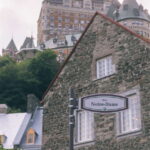
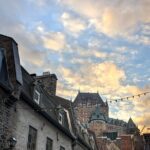
Old Quebec tells its story on foot. You get incredible photo views plus a private guide who ties the sights to Quebec’s French-and-British colonial storyline as you walk.
One possible drawback: this is still about 3 hours of steady walking with short stop times. If you’re sensitive to uneven pavement or cold wind, plan for comfort and slow down when you need to.
In This Review
- Key highlights you’ll feel right away
- How a private Old Quebec walk keeps history readable
- Michel’s prep: maps, genealogy charts, and smarter questions
- La Fresque des Québécois to Place Royale: starting with identity and the early core
- Terrasse Dufferin and the fortifications: where views meet power
- Samuel de Champlain monument to Pierre-Dugua-De-Mons terrace: anchoring names to places
- Governors’ Garden, Ursulines culture center, and the civic pull
- Notre-Dame Cathedral and Parliament: faith and government in the same walk
- Pacing, price, and who this 3-hour tour suits best
- Should you book this Old Québec & French America private history walk?
- FAQ
- How long is the Old Québec & French America private history walking tour?
- What’s the group size for this private tour?
- Where does pickup happen?
- What language is the tour offered in?
- Do I get a mobile ticket?
- Is the tour suitable for everyone in terms of walking?
- What is the cancellation policy?
Key highlights you’ll feel right away
- Private, up-to-10 group means you’re not squeezed into someone else’s pace.
- Michel’s in-the-moment context with maps and genealogy charts makes the names feel real.
- Terrace Dufferin plus multiple viewpoints give you photo chances that match the story, not just postcard angles.
- Fortifications and key monuments help you connect French-era and British-era themes without a lecture.
- English guide + mobile ticket keeps things simple and modern.
- Choice of departure times helps you fit it around your day in Quebec City.
How a private Old Quebec walk keeps history readable

This tour is built for people who like their history with scenery attached. In about three hours, you hit a chain of landmark stops in Old Quebec, and the guide keeps explaining what you’re seeing in plain language.
Two things make it especially good value. First, the private format. You’re not waiting for a slow stranger or rushing past someone who wants one more photo. Second, the focus on French and British colonial history. The tour doesn’t try to cover everything—what it does cover is meant to be memorable, so you leave with a clearer map of how the city’s story fits together.
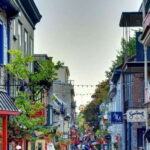
The route also works well if you’re the type who gets lost in Old Quebec’s streets. You get an ordered walk, a sense of direction, and enough breaks to reset between stops.
You can also read our reviews of more walking tours in Quebec City


Michel’s prep: maps, genealogy charts, and smarter questions
A big reason this tour gets a 5-star feel is the guide’s style. The name Michel shows up for good reason: he brings the city’s story to life and times visual aids so they match where you are on the route.
What stands out is that Michel doesn’t rely on vague talking. He brings maps and genealogy charts, and he can line those up with the places you’re standing at. That means questions you might have—who these people were, how families connect, why certain buildings matter—start getting answered right when they’re relevant.
If you’re the kind of traveler who hates being handed a one-hour info dump, this format is more useful. You’re getting quick, targeted context at each stop. It’s the difference between reading a label and understanding why that label exists.
La Fresque des Québécois to Place Royale: starting with identity and the early core
Your walk begins with La Fresque des Québécois, a short stop where the mural acts like a quick visual primer. With only about five minutes on the clock, it’s not meant to be a long art lesson. Instead, it helps set the tone: Quebec City isn’t just buildings—it’s people, language, and identity.
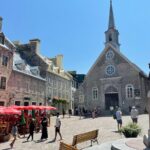
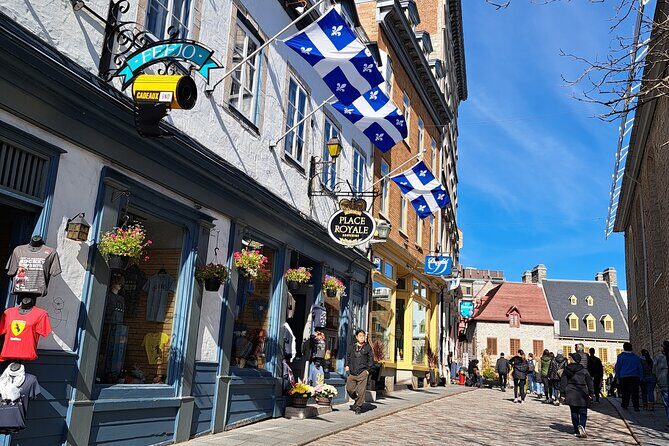
Next is Place Royale. This is a classic starting point for Old Quebec stories. Expect a fast look at the historic feel of the area and photo-friendly angles. The benefit here is pacing. By the time you reach the larger viewpoints later, you’re already oriented to the older heart of the city.
Because the schedule is tight at this stage, you may want to bring a short attention plan. Take a few photos, listen for what the guide connects to the broader French-and-British theme, then keep moving. This tour rewards momentum.
Terrasse Dufferin and the fortifications: where views meet power
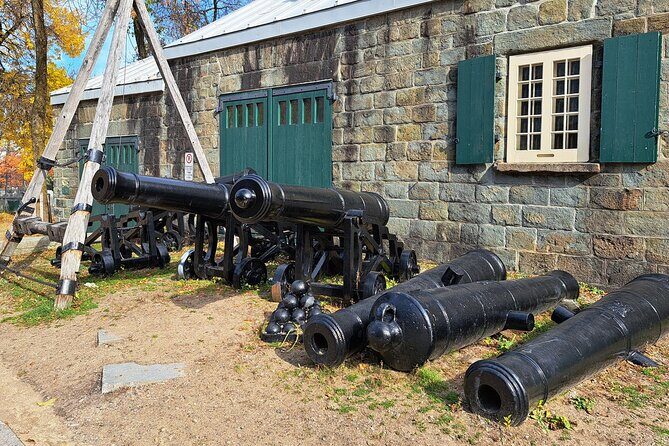
One of the tour’s main selling points is the promise of incredible views and photo opportunities—and it delivers the kind of stops that make your phone storage feel justified.
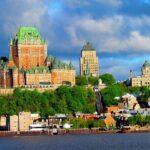
First up is Terrasse Dufferin. It’s a brief stop, but you’re there for a reason. This terrace is the sort of spot where Old Quebec’s height and river/valley views make the city feel dramatic. The guide’s job isn’t just pointing at scenery. It’s connecting why this kind of elevation and positioning mattered historically.
Then comes Fortifications of Quebec National Historic Site. This is where the colonial story gets more tangible. Fortifications aren’t just walls; they’re a clue about who feared what, and why control of territory mattered. You’ll get the kind of explanation that helps you look at stonework and think strategically, not just aesthetically.
A quick reality check: because each stop is roughly five minutes (with a few longer moments), you won’t have a ton of time to linger here on your own. If you love slow wandering, you can still do it—just treat those quick visits as a start, and plan to return later if a viewpoint really grabs you.
Samuel de Champlain monument to Pierre-Dugua-De-Mons terrace: anchoring names to places
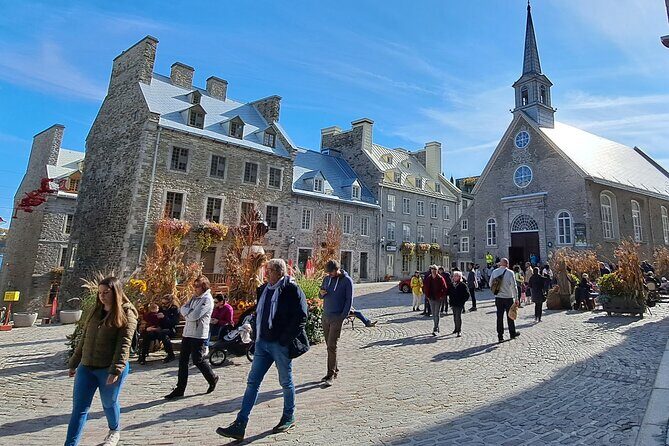
After the fortifications, the tour shifts into monuments and terraces tied to major French names. You stop at the Monument Samuel De Champlain, then later at Terrasse Pierre-Dugua-De-Mons.
These are short stops, but they matter for two reasons:
1) Monuments act like waypoints in the story.
2) Terraces add scale. You’re not just learning about people—you’re also learning the city’s “shape.”
If you’re trying to make French colonial history stick, this is a smart approach. Names are easier to remember when they’re attached to a physical setting you can picture later.
And yes, this is also where you’ll want to keep an eye on weather. Wind can hit those terrace areas hard, and your best photos might come with quick timing. If the light is good, take the shot, then listen while the guide ties it back to the larger theme.
You can also read our reviews of more private tours in Quebec City

Governors’ Garden, Ursulines culture center, and the civic pull
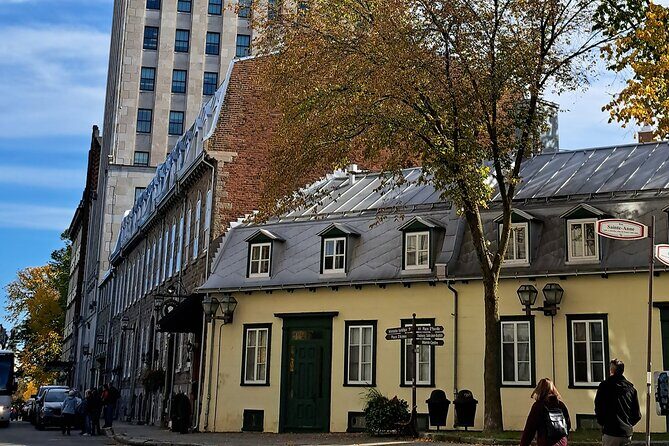
As you move deeper into Old Quebec’s layers, the tour blends nature, religion, and civic life.
You’ll visit Governors’ Garden. Even in a short time, it works as a pause in the walking rhythm. The guide uses it to connect how authority showed up in spaces tied to leadership and public life.
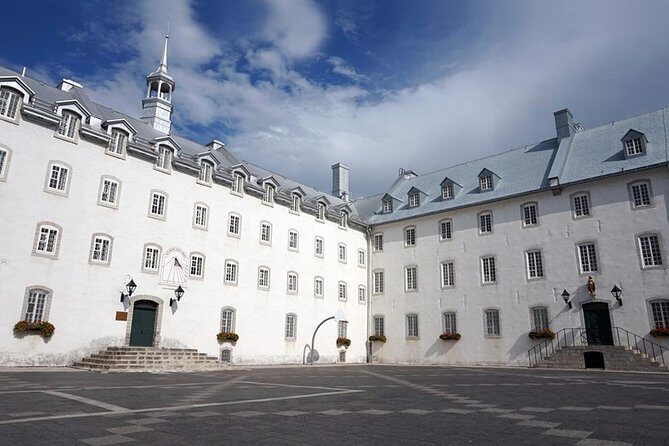
Then comes the Pole Culturel du Monastère des Ursulines. This stop is again brief, but it’s a meaningful shift. You’re no longer only looking at military and strategic themes. You’re seeing how institutions tied to faith and education have their own place in the city’s story.
After that, you head to Hotel De Ville De Quebec and Séminaire du Quebec. These are quick hits, but they help you understand that power isn’t only about who controlled walls. It’s also about who organized communities—through government and learning.
If you like connecting the dots, this part of the route is one of the best. The buildings look different, but the guide keeps them in one storyline.
Notre-Dame Cathedral and Parliament: faith and government in the same walk
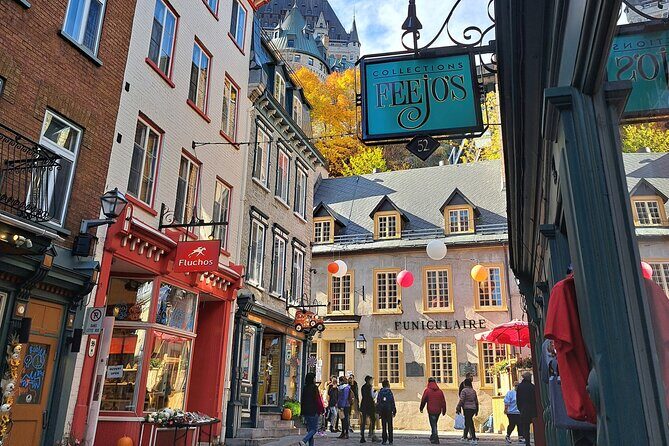
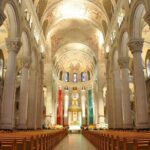
The later part of the tour puts two major themes side by side: Notre Dame De Quebec Basilica Cathedral and Parliament of Quebec.
At Notre-Dame, expect a short stop that focuses on why this kind of religious architecture matters in a city’s identity. Because it’s only around five minutes, don’t expect a detailed interior tour. Treat it like a moment to absorb the cathedral’s role in the overall mix of French-era influence and public life.
Then you reach Parliament of Quebec, where the schedule gives you about ten minutes. That extra time makes sense. Parliament is the big civic endpoint. It’s where the story of governance feels most “modern Quebec,” even though the walk still keeps it linked to the French and British colonial threads you’ve been hearing all along.
By the time you’re done here, the route feels like a loop with a purpose: you began with Old Quebec identity, ran through viewpoints and fortifications, then shifted into institutions—ending with the seat of government.
Pacing, price, and who this 3-hour tour suits best
Let’s talk value, because $213.26 per group can feel like a lot—or like a bargain—depending on how you travel.
This is priced per group up to 10. If you’re traveling as a couple, the cost per person will be higher. If you’re a small group of friends or family, the math looks much better fast. Either way, you’re buying something hard to replicate with self-guided wandering: a guide who explains as you go, while you stand right in front of the exact places tied to the story.
Duration is listed as about three hours, and the itinerary times each stop at roughly five minutes (with Parliament at about ten). That pacing is ideal for people who want a strong orientation in a single afternoon. It’s not ideal for people who need long, quiet time at every site.
It’s also a good match if you want English narration and a private setting. The guide is offering pickup too. If your hotel is in Old Quebec, the guide meets you in the lobby five minutes before the tour time. If your hotel isn’t there, you’ll get help picking an easy meeting point.
In terms of physical comfort, the tour is marked as moderate physical fitness. The route is walk-based, with outdoor segments. Wear comfortable shoes and bring a layer. Quebec weather loves surprises.
Should you book this Old Québec & French America private history walk?
I think you should book it if you want Old Quebec history with a guide who can connect names and themes while you’re still standing in the right spot. This tour is strongest for people who like structure, good photo stops, and quick clarity instead of a long lecture.
Skip it—or at least consider pairing it with extra independent time—if you prefer unhurried wandering with lots of stop-and-start. The schedule is built for efficiency, and the stop times are short.
If your ideal day is: meet your guide, walk a smart route, learn enough to understand what you’re seeing, and leave with better questions than you had when you arrived—this one fits.
FAQ
How long is the Old Québec & French America private history walking tour?
It runs for about 3 hours.
What’s the group size for this private tour?
It’s private, and the group size is up to 10 people.
Where does pickup happen?
If your hotel is in Old Quebec, the guide meets you in the hotel lobby 5 minutes before the tour time. If your hotel is not in Old Quebec, the operator will suggest an easy-to-find meeting point.
What language is the tour offered in?
The tour is offered in English.
Do I get a mobile ticket?
Yes, a mobile ticket is provided.
Is the tour suitable for everyone in terms of walking?
It’s recommended for travelers with a moderate physical fitness level.
What is the cancellation policy?
You can cancel for free up to 24 hours in advance for a full refund. If you cancel less than 24 hours before the start time, you won’t get a refund.