REVIEW · QUEBEC CITY
Quebec City Shore Excursion: Private Walking Tour
Book on Viator →Operated by Tours Voir Quebec · Bookable on Viator
Old Quebec makes more sense on foot. This private shore excursion gives you a local guide and nonstop stories as you walk from the Upper Town down through Old Quebec. I especially like how much you can cover without a bus crowd, and how the guide connects architecture, the city walls, and big events like the Battle of Québec into one walk. The main drawback: you’re on a real walking route with cobblestones and uneven streets, so plan for your feet and pace.
Because it’s private, you can steer the stops a bit. One guide I’ve seen on past tours even tailored the ending around a personal request, and another leaned into literary tidbits tied to Quebec. You’ll get a live commentary in English or French, and you can ask questions as often as you want—just keep an eye on time so you return to your ship.
In This Review
- Key Highlights You’ll Actually Feel During the Walk
- Cruise-Day Timing: How This Tour Avoids the Usual Hassle
- Meeting Point and the First Minutes in Upper Town
- Old Quebec and the Fortifications: The City Walls Aren’t Just a Pretty Backdrop
- Terrasse Dufferin and the City Hall Area: A Great Blend of Views and Meaning
- Place Royale, Château Frontenac Courtyard, and the Feeling of Birthplace
- Plains of Abraham and the 1759 Battle Thread
- Notre-Dame-des-Victoires on Petit-Champlain: A Church Stop That Feels Like a Time Capsule
- Maison Chevalier Finish: Closing the Loop in Lower Town
- Price and Value: Is $99.28 Worth It?
- What the Best Guides Do Differently (How to Get That Experience)
- Getting Around Comfortably: Footwear and Cold-Weather Reality
- Should You Book This Private Quebec City Shore Walking Tour?
- FAQ
- How long is the Quebec City private walking tour?
- Is this tour private or shared?
- Where does the tour start and end?
- What language is the guide commentary offered in?
- What are the main places you’ll visit?
- Can the itinerary be customized?
- Are entrances included?
- How close is this to the cruise port?
- What should I wear for this shore excursion?
- Is this tour covered by your worry-free policy?
Key Highlights You’ll Actually Feel During the Walk
- Private group, not a shared bus tour: it’s just your group with a guide who can adjust on the fly.
- Upper Town to Lower Town in about 2.5 hours: enough time to hit the big sights without feeling stuck all day.
- Fortifications and defense details: you’ll learn what the city walls were built to do, and why they matter.
- Photo stops at classic Quebec City icons: Place Royale, City Hall, and views tied to the Château Frontenac area.
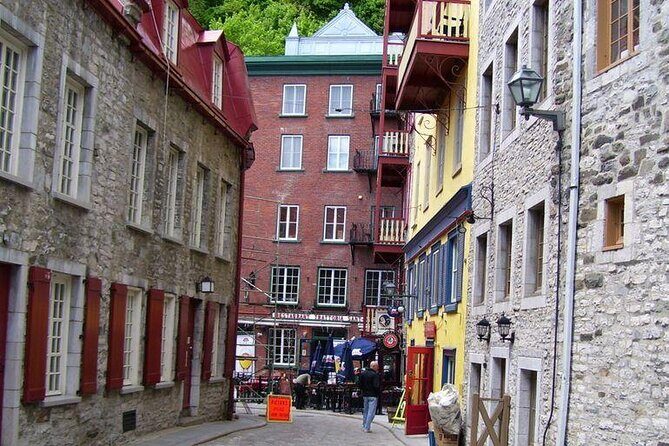
- Old streets with real atmosphere: narrow lanes, stone buildings, and the feeling of French Canada on foot.
- A guide who can customize: if you want different emphasis, you can ask before and during the walk.
Cruise-Day Timing: How This Tour Avoids the Usual Hassle
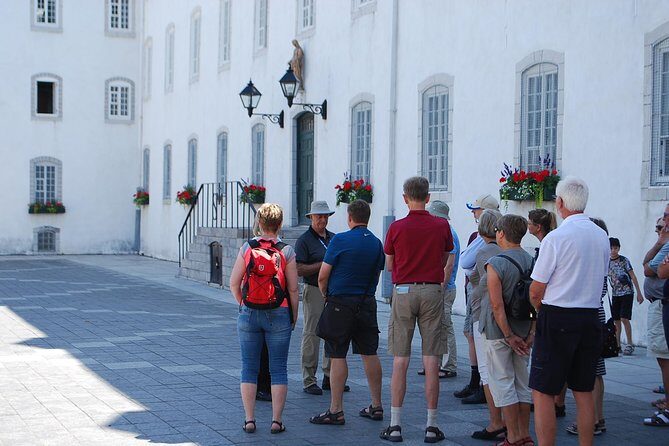
This Quebec City shore excursion is built for cruise schedules, and that’s the whole point. It starts in the Upper Town area, and it finishes near the Maison Chevalier in the Lower Town, so you’re walking in the direction most people want to go anyway.
One practical thing I like: the route is within about a 10-minute walk back to the cruise port. That means you can decide when to head back instead of getting herded onto a vehicle at the last second. Still, don’t treat it like a free-for-all—if you’re lingering for photos, you need to factor that in.
Plan for roughly 2 hours 30 minutes of walking and stories, plus your own photo stops. On a cruise day, that time window is often the difference between a great shore experience and a sprint back to the ship.
You can also read our reviews of more walking tours in Quebec City


Meeting Point and the First Minutes in Upper Town
The start is at 12 Rue Sainte-Anne, Québec, where you’ll meet your guide near the Upper Town area. From the port, the walk to Upper Town is listed as about seven minutes, so you’re not starting miles away after docking.
These first moments matter because Quebec City isn’t flat. As you move through Upper Town, you start getting that layered “top and bottom” feel that’s so unique here. The guide’s commentary usually sets the stage quickly—what you’re seeing, why it’s here, and how it connects to later stops.
If you’re the kind of person who likes to understand what you’re looking at before you take a picture, this is a strong start. If you’re rushing, you’ll still catch the big landmarks, but you’ll miss the context that makes them click.
Old Quebec and the Fortifications: The City Walls Aren’t Just a Pretty Backdrop
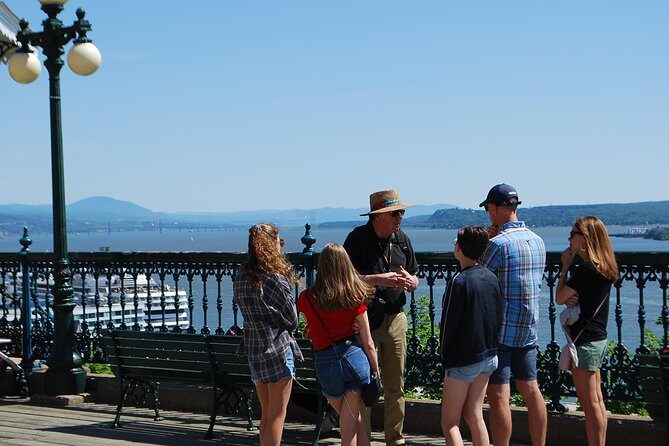
Old Quebec is where you get the European feel people talk about—stone buildings, narrow streets, and alleyways that make you slow down without trying. This is also where the guide’s stories do real work, because the city isn’t just old; it’s also strategic.
A standout part of the walk is learning about the Fortifications of Québec and how they functioned centuries ago. You’ll hear about the defense system of North America’s only remaining fortified city. And you’ll get the bigger scale fact that Quebec City is the only walled city north of Mexico. That detail isn’t just trivia—it helps you understand why these walls were maintained and why they’re such a defining feature.
Here’s what you’ll likely notice on the ground: the walls and the street layout create a sense of “contained space.” The guide’s narration helps you see how people moved, defended, and lived inside that system. It turns a photo location into a story you can walk through.
Terrasse Dufferin and the City Hall Area: A Great Blend of Views and Meaning
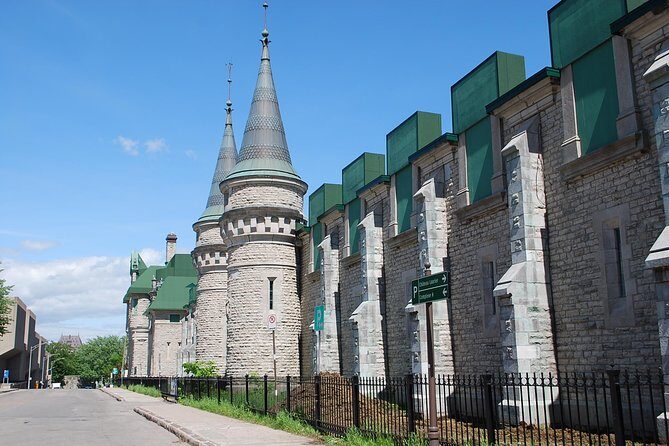
As the walk continues, you pass through La Terrasse Dufferin. This is one of those Quebec spots where the scenery does half the talking, and the guide finishes the job by pointing out what you’re looking at and tying it back to the city’s layout and history.
Then you reach the Hotel de Ville de Québec area and Place d’Armes views. City Hall here isn’t just a building—it’s part of a civic center you can feel in the way the streets open up. With the guide’s commentary, it becomes easier to connect what’s happening in the city today to what mattered in earlier centuries.
This part of the tour is a good break in pace. You’re still walking, but you’re also getting sightlines—places where you can regroup, warm up if it’s cold, and take photos without feeling like you’re sprinting from one corner to the next.
Place Royale, Château Frontenac Courtyard, and the Feeling of Birthplace
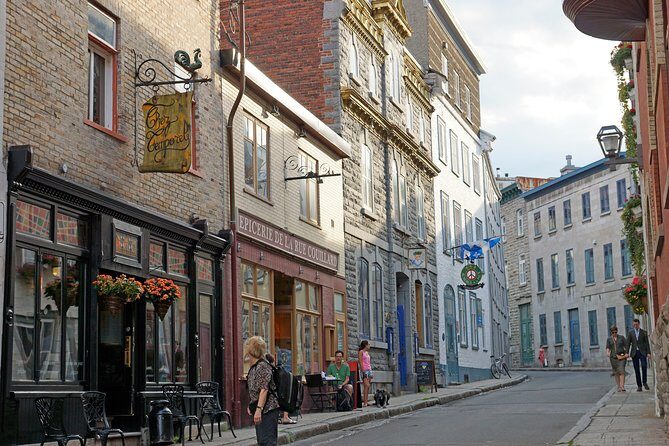
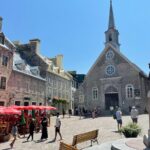
One of the most satisfying segments is the approach to Place Royale. This is often described as the birthplace of French America, and the guide’s narration helps explain why that label carries weight. You’re walking in a space that feels foundational, not just historic.
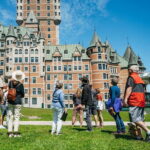
You’ll also pass through the courtyard area connected with the Château Frontenac vicinity. Even if you aren’t going inside, you’ll get the classic photo angle of Canada’s well-known hotel. And because your guide is narrating while you walk, the stop isn’t just a viewpoint—it’s a connection between architecture, power, and identity.
A nice bonus here is that the guide can shape the focus. If you want more on the buildings and symbolism, you can ask. If you’d rather hear more about the military and political side, you can steer that way too. That flexibility is the real advantage of a private guide.
You can also read our reviews of more city tours in Quebec City




Plains of Abraham and the 1759 Battle Thread
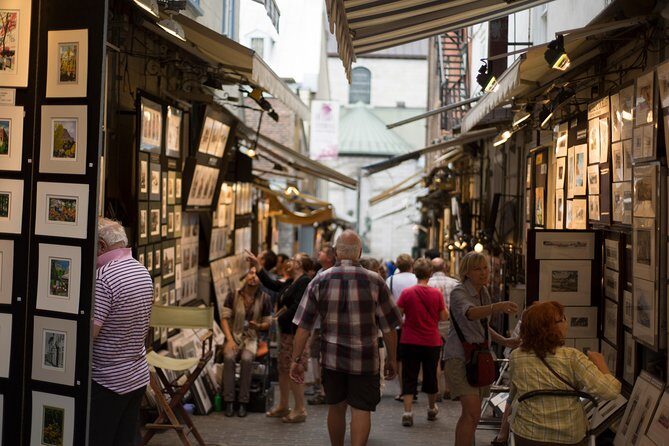
From the Place Royale area, the walk connects toward the stories tied to the Plains of Abraham. This is one of Quebec City’s big memory spots because the famous Battle of Québec between French and English armies took place here in 1759 during the Seven Years’ War.
What I like about including this in a shore walk is that it gives the city a sharper edge. Quebec City isn’t only beautiful; it also has moments that shaped North America. The guide helps you connect the open space to what happened there, so you can look at a field and understand why it mattered.
You don’t need a textbook to enjoy it. You just need someone pointing out the relevant context as you move through the area.
Notre-Dame-des-Victoires on Petit-Champlain: A Church Stop That Feels Like a Time Capsule
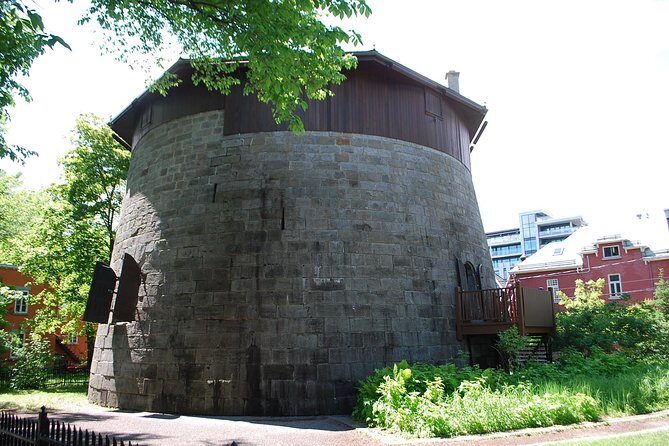
As the tour keeps rolling, you head toward Petit-Champlain and spot the Notre-Dame-des-Victoires Church. This church is one of the oldest stone churches in Canada, and it sits on the very spot where Quebec began.
That detail is the kind that changes how you look at a place. It’s no longer just a pretty stop on a walking route—it becomes a physical marker of where the city started. Even if you’re not into churches, you’ll likely appreciate how the guide frames the site within the larger story of the city’s growth.
This segment also brings you through the downhill charm of Lower Town. The streets here tend to slow you down naturally. If you’re traveling in cooler weather, keep an eye on footing—stone can be slick, and cobbles don’t care how excited you are.
Maison Chevalier Finish: Closing the Loop in Lower Town
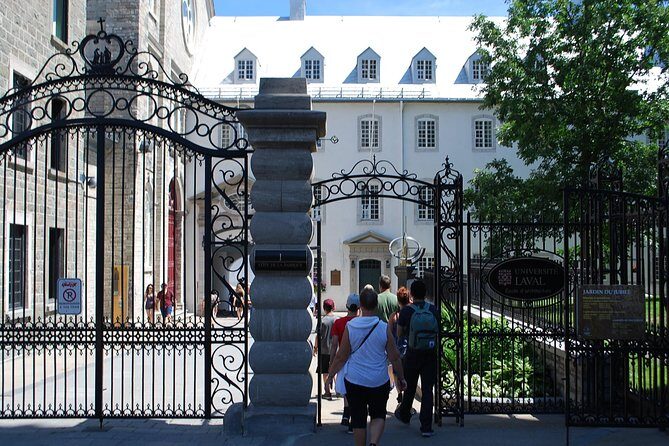
The tour concludes near the Maison Chevalier area, specifically around 50 Rue du Marché-Champlain. Your exact ending can be flexible within the historical district if you ask your guide onsite, but it typically finishes in the Lower Town zone.
One note: the Chevalier House admission is listed as not included, so if you want to go inside, you may need to budget extra time or tickets. That said, even just finishing at that area helps you land in the heart of Lower Town when you’re ready to wander on your own after the guided portion.
This ending is also helpful for cruise days. It puts you close to the port return path, so you can keep the rest of your day casual instead of trying to plan a complicated route back.
Price and Value: Is $99.28 Worth It?
At $99.28 per person, this tour sits in the private-excursion range, so the value depends on what you want from your shore day.
Here’s the value math I’d use: you’re paying for a private, live guide for about 2.5 hours, with commentary in English or French. You’re also getting a walking route that targets major Quebec City landmarks without needing a vehicle, and you can customize what matters most to you.
If you’re someone who hates waiting, doesn’t want to share a guide with a dozen strangers, and prefers to ask questions in real time, a private format can be a smart buy. If your group is small, the cost can feel easier to justify because the guide isn’t being spread across a massive crowd.
Where you should be a bit careful is the expectation. This isn’t a slow, sit-down tour. You’re walking and learning at the same time. If you want maximum comfort or minimal steps, you might feel the pace.
What the Best Guides Do Differently (How to Get That Experience)
One of the best parts of this type of tour is that guides can add personal flavor while still sticking to the route. In past experiences, guides have tailored the tour to match interests, from practical local requests to questions pulled from literature tied to Quebec.
So here’s how I’d use that advantage:
- Start with one or two priorities: walls and defense, major landmarks, or specific architecture.
- Ask one question early about what to look for. Once you know what to notice, the rest of the walk gets easier.
- If you have a special goal for the end of the tour, mention it soon—your guide may be able to help you time it with your return to the port.
Also, keep in mind that a private walking tour only works well if you’re willing to walk. When I hear stories about the experience being great, it’s usually because people were ready for the route and used the guide to shape the visit.
Getting Around Comfortably: Footwear and Cold-Weather Reality
The tour recommends comfortable walking shoes and suitable clothing for the weather. That matters here because Quebec City’s charm often comes with uneven paving.
If you’re prone to sore feet, bring footwear with grip and support. If it’s icy or rainy, take your time on cobblestone and don’t assume every surface is the same.
This is also where mobility planning matters. One past experience described difficulty on cobblestones for someone using a motorized wheelchair, despite assurances of adaptation. The lesson is simple: if your group includes mobility needs, ask very specific questions before you go, and be ready with a backup plan for part of the route.
Should You Book This Private Quebec City Shore Walking Tour?
I’d book it if you want a focused, private guide-led walk through Upper Town and Old Quebec. You’ll get a fast but meaningful overview, and the city walls, Place Royale, and key viewpoints have enough story attached to make the walking feel worth it.
I wouldn’t book it if your group needs minimal walking or fully flat routes. This is a stroll with real terrain, and your enjoyment will depend on your willingness to keep moving.
If you can handle a couple of hours of walking and you like learning while you explore, this is a strong choice for a shore day. It’s also a good fit if you want to avoid bus crowds and steer the tour toward your interests while still seeing the essential landmarks.
FAQ
How long is the Quebec City private walking tour?
The tour lasts about 2 hours 30 minutes.
Is this tour private or shared?
It’s private. Only your group participates.
Where does the tour start and end?
It starts at 12 Rue Sainte-Anne, Québec, QC G1R 3X3, Canada, and ends near the Maison Chevalier area (50 Rue du Marché-Champlain, Québec, QC G1K 4E8, Canada).
What language is the guide commentary offered in?
Live commentary is available in English or French. You should specify your preferred language when booking.
What are the main places you’ll visit?
You’ll see Upper Town, Old Quebec, Terrasse Dufferin, the City Hall area, Place Royale, the area around the Château Frontenac courtyard, Notre-Dame-des-Victoires Church on Petit-Champlain, and you’ll finish near Maison Chevalier. The walk also includes stories connected to major sites like the Plains of Abraham and the Citadelle area.
Can the itinerary be customized?
Yes. The tour is customized, and you can request specific attractions or adjust the focus with your guide.
Are entrances included?
Many stops are listed as free viewing, but the Chevalier House (Maison Chevalier) admission ticket is not included.
How close is this to the cruise port?
The excursion is within about a 10-minute walk to the cruise port, and you decide when you return.
What should I wear for this shore excursion?
Wear comfortable walking shoes and dress for the weather.
Is this tour covered by your worry-free policy?
No, this excursion is not covered by the worry-free policy.