REVIEW · QUEBEC CITY
Quebec City: Observatoire de la Capitale Entry Ticket
Book on GetYourGuide →Operated by Observatoire de la Capitale · Bookable on GetYourGuide
Quebec City looks different from above. One ticket gets you panoramic 360-degree views and a self-guided way to understand what shaped this fortified capital. I like that it mixes big scenery with small, clickable explanations so you’re not just staring out the glass.
Two things I’d plan around: the interactive landmark screens/tablets that help you identify what you’re seeing, and the sense of moving through time via short historical vignettes. One consideration: it’s primarily self-guided, so if you want a long, talkative live guide-style narration, you’ll need to rely on the on-site screens and headset format more than conversation.
In This Review
- Key points to know before you go
- Getting to the Observatoire and Starting at the 31st Floor
- How the Self-Guided Screens and Headset Experience Works
- The Views You Came For: Fortified Streets, River, and Mountains
- Horizons Discovery Trail: History Told Through Sightlines
- Best Time to Visit: Afternoon Orientation or Night Lights
- Price and Value: Why This Ticket Works at About $10
- Who Should Book This Ticket (and Who Might Skip)
- Should you book Observatoire de la Capitale?
- FAQ
- Where is the meeting point?
- What’s the price for the Observatoire de la Capitale entry ticket?
- How long is the experience valid for?
- Is the experience self-guided?
- What languages are available on site?
- Are pets allowed?
- Do I need to reserve in advance?
- Can I cancel for a refund?
Key points to know before you go
- 31st-floor meeting point: plan to get there and start at the top level where the views begin
- Interactive landmark screens: click what you’re looking at for explanations built into the experience
- Horizons discovery trail: a themed route outdoors and inside that connects sights to Quebec identity
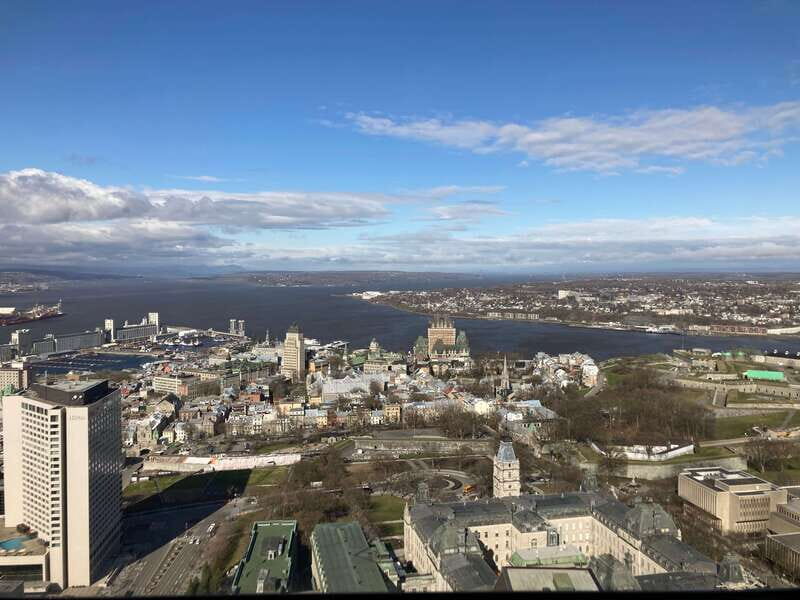
- St. Lawrence River + mountain ranges: you can admire the river and, on clear days, the Laurentian Mountains
- Holiday-friendly timing: evening visits can pair night lights with the same big-picture overview
Getting to the Observatoire and Starting at the 31st Floor
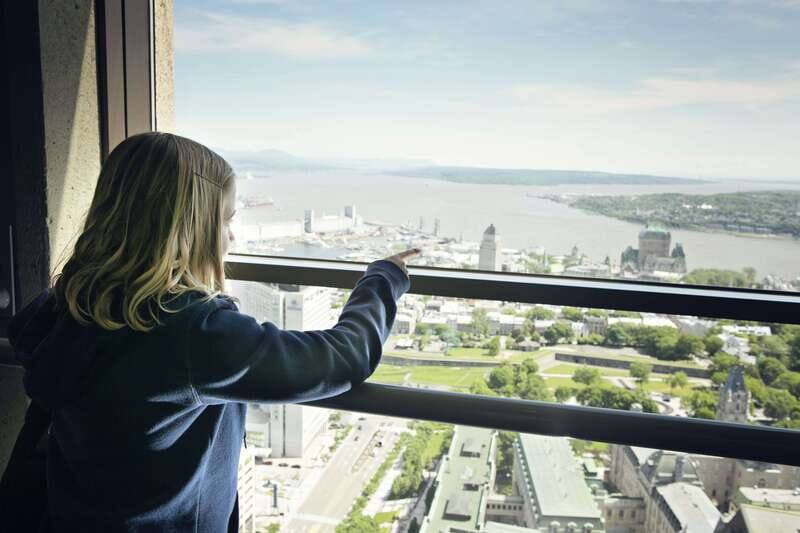
Your visit starts by going to the 31st floor of the building. That matters because the experience is designed from the top down: you arrive ready to look first, then learn while you keep your bearings.
Even though this is an entry ticket, it doesn’t feel like a quick drop-in lookout. The setup funnels you into a self-guided route with screens and a discovery trail, so you’re not wandering around guessing what matters most in the view.
If you hate uncertainty, take a second at the start to orient yourself: where the screens are, where the route loops, and how the outdoor sections connect. With limited room and a small group size (up to 10), the flow tends to be calm rather than chaotic.
A few more Quebec City tours and experiences worth a look


How the Self-Guided Screens and Headset Experience Works
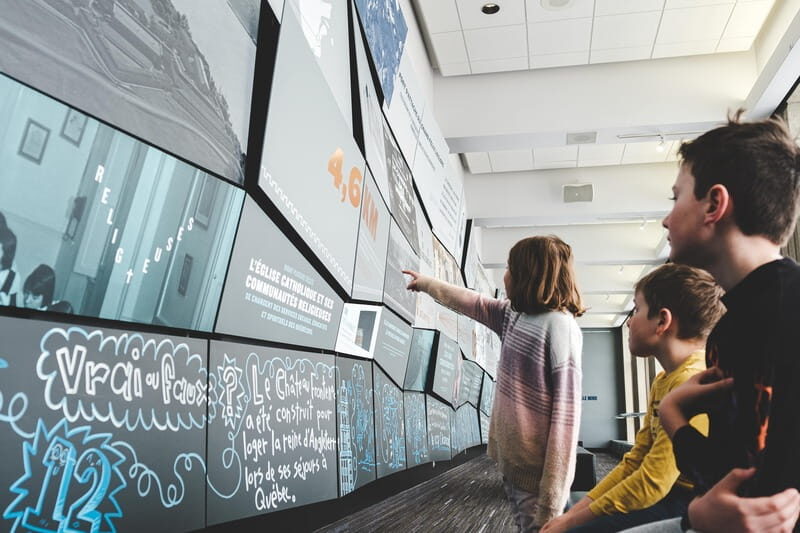
This is not one of those observatories where you just buy a view and call it done. You’ll use interactive tools—landmark screens and touch-style information—so the story follows your gaze.
As you look outward, you can match what’s in front of you with on-screen labels. That keeps the visit from turning into background noise or passive sightseeing. One nice touch is how the system helps you spot landmarks you’ve already seen around Quebec City, which makes the top-level perspective feel like it links back to streets you walked.
Language is also handled in a practical way. The experience is French-led, and the information on interactive screens and signage can be bilingual (and some interactive content includes Spanish). So if your French is rusty, you can still follow along without feeling stuck.
A quick mindset shift helps: go in expecting to learn in small units. You won’t get one long lecture. You’ll get a chain of short, clickable explanations that make the city’s layout and history easier to hold in your head.
The Views You Came For: Fortified Streets, River, and Mountains
The star attraction is the view over Quebec City’s maze of streets and the fortified character that makes the old quarter feel so distinct. From the top, the city’s shape becomes clearer: you can see how the layout supports defense and identity, not just how it looks in photos.
Then you get the big horizontal sweep of the St. Lawrence River. That river is the visual anchor here. It stretches the scene beyond the walls and turns Quebec from a compact historic town into a capital with a wide geographic story.
On a clear day, you may also catch the Laurentian Mountains in the distance. Even when weather isn’t perfect, the outlook still works. One reason this place gets high marks is that the observation deck doesn’t shut down the experience just because the sky is moody.
Think about what you’re trying to understand while you look. If you want orientation, sweep your eyes across the river first, then trace back toward the fortified streets. If you want atmosphere, try turning your gaze slowly and letting the screens help you connect what you’re seeing to what it’s called.
Horizons Discovery Trail: History Told Through Sightlines

The outdoor part isn’t just more looking. You’ll cross the Horizons discovery trail, which is built as a guided loop of themes. The goal is to connect what you see to what shaped Quebec—its capital role and the factors behind local identity.
The wording around this trail emphasizes a “lucid and rhythmic flow” of historical vignettes. In practice, that means you’re not asked to memorize a timeline. You’re guided through a sequence of moments—each anchored to a viewpoint—so the city becomes easier to interpret.
I like this approach because it matches how real sightseeing works. You naturally notice places in your line of sight. Horizons uses that habit and turns it into learning prompts. Instead of reading history first and touring afterward, you’re learning while you’re still actively looking.
If you’re traveling with kids or teens, the format tends to fit how they pay attention: short segments, interactive elements, and lots of visuals. If you’re traveling solo, it’s still valuable because it gives structure to a view that could otherwise feel overwhelming.
Best Time to Visit: Afternoon Orientation or Night Lights

You can make this experience work in more than one way depending on what you want from Quebec City.
An afternoon visit is great for pure orientation. Daylight helps you read the city’s layout and spot key features in the fortified area. It’s also the best window for seeing the river clearly and for catching distant mountain views if conditions are favorable.
For evening, the same viewpoints can feel dramatically different. Holiday lights add a layer of glow to the streets and waterfront, and the city turns into something more theatrical. Staff enthusiasm during the late-day and holiday season is a real plus when you’re trying to choose a time slot.
My practical advice: decide what you’ll remember most.
- If you want to navigate later, go earlier.
- If you want the emotional feel, go later.
And if the weather turns, don’t automatically cancel the plan. The experience is built so the deck views still land even when skies aren’t perfect.
You can also read our reviews of more city tours in Quebec City





Price and Value: Why This Ticket Works at About $10

At $10 per person, this ticket is priced like a true add-on, but it delivers more than a quick view stop. You’re paying for two things in one package: a top-tier panorama and interpretive content that helps you understand what you’re looking at.
Here’s the value logic I’d use when deciding:
- If you only want a skyline photo, it might feel like you’re paying extra for content.
- If you want context—what those streets mean, why the capital looks the way it does—this is where the ticket earns its cost.
It also helps that the experience is designed for a small group (up to 10 participants). That usually means less crowd pressure and more time to stop, look, and click through the details.
Duration-wise, this is a one-day ticket and works as a flexible slot. You can fit it into an afternoon or evening plan without needing a full day reserved for it. That flexibility is especially useful in Quebec City, where walking and weather can affect your schedule.
Who Should Book This Ticket (and Who Might Skip)

This ticket is a strong fit if you want:
- an overview that makes the rest of your Quebec City days easier to understand
- interactive learning without sitting through a long lecture
- a mix of sights and short history cues tied to views
It’s also a smart choice if you’ve already walked some of the old streets and want to see how the geography and fortification play out from above. That top perspective can turn a few hours of wandering into a clearer mental map.
You might consider skipping if:
- you only have a couple of hours and you’re strictly photo-focused
- you prefer guided, live explanation over self-paced screen-based learning
- you’re traveling with pets (pets are not allowed)
Should you book Observatoire de la Capitale?
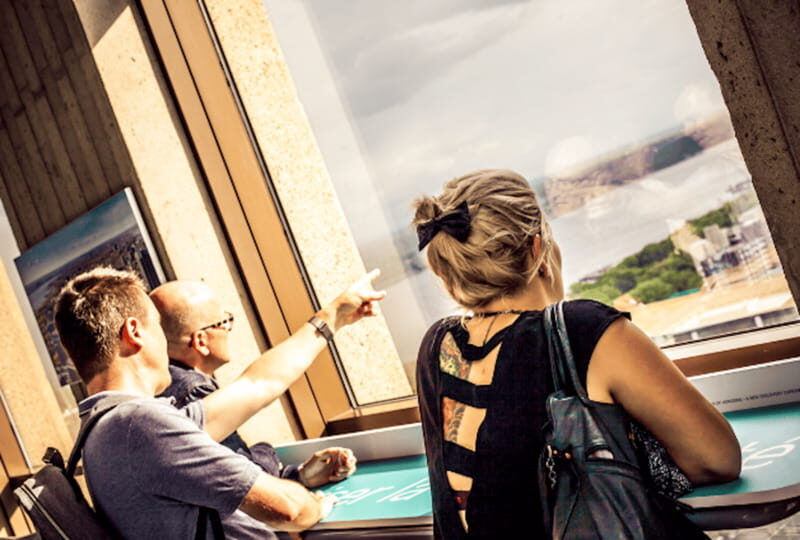
Yes, if you want a high-value viewpoint that also teaches you how to read Quebec City. The best reason to book is simple: this isn’t just a deck. It’s a structured self-guided route with interactive landmark info and a Horizons discovery trail that connects scenery to identity and history.
If you’re deciding between this and another activity, pick the one that matches your travel goal. If your goal is orientation and meaning, this ticket is a solid bet at $10. If your goal is purely hands-on cultural time with long live storytelling, you may prefer something else.
If you do book, I’d schedule it with enough time to slow down. Stand still long enough for the screens to make sense, then let the view do its job.
FAQ
Where is the meeting point?
Please reach the 31st floor of the building.
What’s the price for the Observatoire de la Capitale entry ticket?
The price is $10 per person.
How long is the experience valid for?
The ticket is valid 1 day. You’ll check availability for starting times.
Is the experience self-guided?
Yes. The experience is set up as a self-guided visit using headsets and landmark screens.
What languages are available on site?
The host or greeter is French. Information on screens and signage can be bilingual, and some interactive screens include Spanish.
Are pets allowed?
No, pets are not allowed.
Do I need to reserve in advance?
Yes. Reservation is required.
Can I cancel for a refund?
Free cancellation is available up to 24 hours in advance for a full refund.