REVIEW · QUEBEC CITY
Old Quebec Walking Tour with a Certified Local Guide
Book on Viator →Operated by Urban Horizons Tours · Bookable on Viator
Quebec City history turns into a walk you can feel. I like the small group size and the way the route gives you context fast, especially with guide Jean-Simon’s storytelling. I also like that it’s 100% outdoors, so you’re always moving between iconic sights instead of waiting around inside. One thing to consider: the tour is history-driven, so each stop is brief and you’ll likely want extra free time after for slower wandering.
You’ll start near Parliament and work your way downhill toward Lower Town, hitting the fortified-town gateways, old educational roots, and the views that people come to Québec for. With a maximum of 15 travelers, the pace stays friendly, and you get time to ask questions without the whole group feeling herded along.
At $18.78 for about 2 hours in English, this is a solid “first orientation” pick—especially if you want the city’s why behind the what. The mobile ticket makes it simple to show up, and the tour ends at Place Royale, right where you can keep exploring on your own.
In This Review
- Key things to know before you go
- Why This Old Québec Walk Fits a First-Time Day
- Price and Time: Is $18.78 Worth It?
- Meeting at Fontaine de Tourny: How the Start Shapes the Walk
- Stop-by-Stop Highlights from Parliament to Place Royale
- Stop 1: Fontaine de Tourny (Start by Parliament Hill)
- Stop 2: Parliament of Québec (French Second Empire, Power in Stone)
- Stop 3: St. Louis Gate (Porte St-Louis) and the Fortified Town Mindset
- Stop 4: Pole Culturel du Monastère des Ursulines (Education Roots from the 1600s)
- Stop 5: Aux Anciens Canadiens (French-English Colonial Clues at Street Level)
- Stop 6: Fairmont Le Château Frontenac + Terrasse Dufferin (Views That Explain Why People Return)
- Stop 7: City Hall Area (Three Icons in a Short Stretch)
- Stop 8: Quebec City Mural (A Trompe-l’œil That Tries to Hold Everything)
- Stop 9: Place Royale (The Cradle of French Civilization in North America)
- How Jean-Simon Keeps It Fun, Not Just Facts
- What to Bring (and What the Tour Does Not Provide)
- Who Should Book This Tour (And Who Might Not Love It)
- Should You Book This Old Québec Walking Tour?
- FAQ
- How long is the Old Quebec walking tour?
- What does the tour cost?
- Is the tour in English?
- Is the tour indoors or outdoors?
- Where does the tour start and end?
- How big is the group?
- Do I need to print a ticket?
- What isn’t included?
- Can I get a refund if plans change?
Key things to know before you go
- Certified local guide who shares stories tied to each landmark
- Small group (max 15) helps keep the pace comfortable
- Outdoor-only route with no interior visits, so dress for the weather
- Major sights in 2 hours: Parliament, Porte St-Louis, Ursulines area, Château Frontenac, City Hall area, Place Royale
- Terrasse Dufferin viewpoints included on the way to Lower Town
- Tour ends at Place Royale so it’s easy to continue sightseeing immediately
Why This Old Québec Walk Fits a First-Time Day
Old Québec can be a lot at once. You see stone walls, big churches, famous hotels, and streets that look like they’re from a postcard. What this walk does well is give you a storyline—politics to defense to education to the architecture that tells the French and British colonial mix.
I like that it’s not just “here’s a building.” You get what the location meant at the time and why it matters now. That matters because Québec City’s Old Town looks the way it does for reasons—fortifications, power centers, and cultural institutions. When you understand those forces, you start noticing details on your own the second you step away from the group.
This tour is also a good way to shape the rest of your day. If you do it early, you’ll know where you want to go back—maybe for photos, maybe for a long sit, maybe to explore side streets that suddenly make sense.
You can also read our reviews of more walking tours in Quebec City

Price and Time: Is $18.78 Worth It?
At $18.78 per person for about 2 hours, you’re paying for three things: a trained local guide, a tight route that covers major stops, and interpretation that saves you time. You’re not paying for museum tickets or lengthy indoor visits—so if your goal is to see interiors, this isn’t that tour.
But if your goal is to get oriented and start understanding Old Québec fast, the value is strong. A certified local guide can point out what you’d miss on your own—like architectural clues, how the fortified layout worked, and what each landmark is connected to in the city’s story.
Also, the timing helps. Many people book this around a week ahead (on average, 8 days). If you’re visiting when tours fill up, lock it in early rather than waiting until the last moment.
Meeting at Fontaine de Tourny: How the Start Shapes the Walk
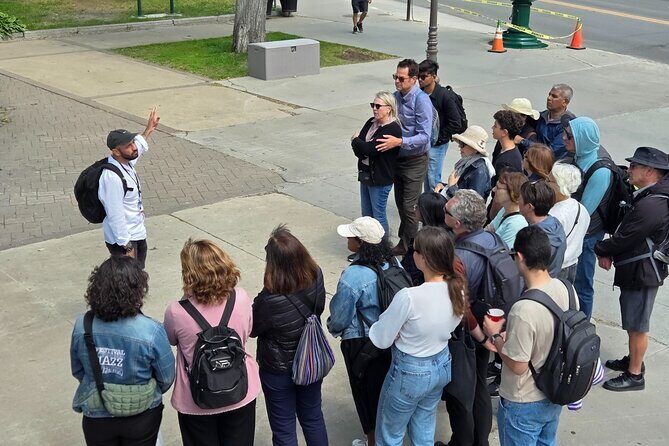
You meet at Fontaine de Tourny, in front of the Parliament Building area (Place de l’Assemblée-Nationale). Plan to arrive at least 10 minutes early to check in. That small buffer matters because the walk starts with a strong orientation point—Parliament Hill—so you don’t want to join late and feel rushed.
From here, the tour naturally tilts downhill toward Lower Town. That’s convenient for sightseeing flow: you see how the city’s power center and fortified layout connects as you move toward Place Royale. Just keep in mind the route is meant for a moderate fitness level, and it’s on foot the whole time.
It’s also English-language only. If you want a clear, easy-to-follow narration, this fits the bill. And because it’s outdoor-only, you’ll be outside for the full experience—so you’ll want weather-ready clothing even on days that look calm.
Stop-by-Stop Highlights from Parliament to Place Royale
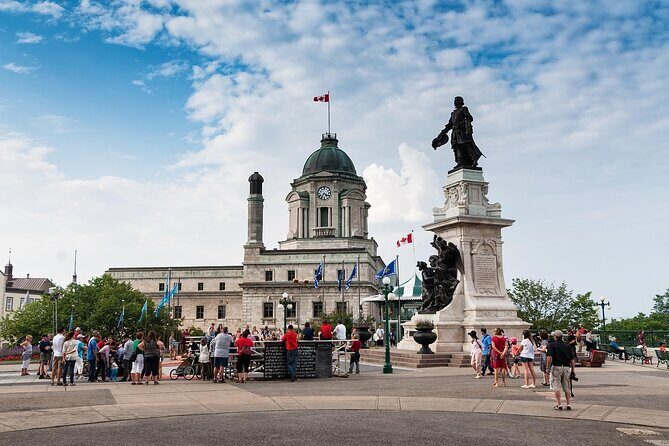
Below is what you’ll experience, and what each stop is really good for—plus what to watch for so you get the most out of the short time at each location.
Stop 1: Fontaine de Tourny (Start by Parliament Hill)
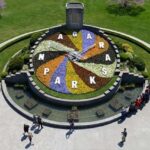
The tour begins at Fontaine de Tourny, directly by the Parliament Building area. This first moment sets the tone. It’s a good “big picture” start because it anchors you in the political heart of Québec, right away.
Why I like this start: the guide can explain the province’s political history without you needing a map in your head first. You’re already in the right zone for the stories to make sense.
Practical tip: arrive early enough to check in smoothly. If you’re even a few minutes late, you might miss the framing the guide gives at the start, and that’s the part that helps the rest of the walk click.
You can also read our reviews of more guided tours in Quebec City



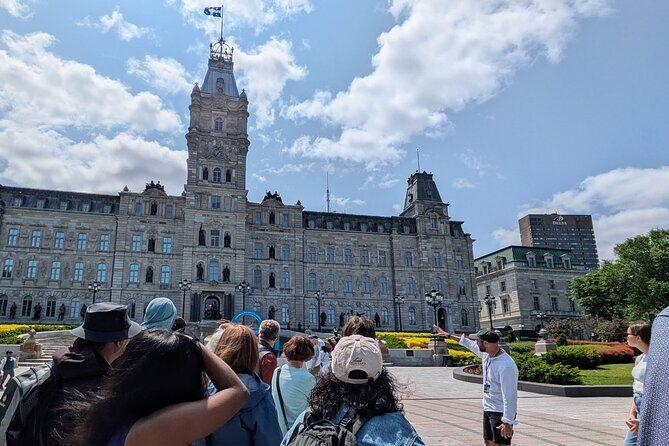
Stop 2: Parliament of Québec (French Second Empire, Power in Stone)
Next up is the Parliament of Québec area. You admire the French Second Empire architecture from the outside, with the guide sharing stories about Quebec’s political history and the building’s role in the province.
This stop is about symbolism. It helps you read the city like a clue trail—how architecture communicates authority, and how Québec’s political identity has shaped public spaces.
The limitation: because it’s outside-only, you won’t get interior details or a museum-style experience here. That said, for many visitors, the exterior storytelling is exactly what they came for—context first, sightseeing second.
Stop 3: St. Louis Gate (Porte St-Louis) and the Fortified Town Mindset
At St. Louis Gate, you step into the fortified-town mentality. The guide points out how this major entrance functioned and why it mattered to Old Québec’s defenses.
This is a great stop if you like the “how did this city survive?” angle. When the guide connects the gate to the walls and fortifications around it, you’ll start noticing defensive logic everywhere as you continue.
Because the group time here is short, treat it like a photo-and-explanation moment. Get your pictures, then listen closely—this is one of the stops where the stories can change how you see the entire area.
Stop 4: Pole Culturel du Monastère des Ursulines (Education Roots from the 1600s)
The tour continues near the Monastère des Ursulines area. Here, you hear about one of North America’s oldest institutions dedicated to education and the French nuns who arrived in the 1600s.
This stop adds cultural depth beyond walls and governments. It’s a reminder that Québec’s history isn’t only military and political. Institutions like this shaped everyday life, not just big events.
Time-wise, it’s brief, so focus on the guide’s thread: how education became part of the city’s identity. That way, the stop feels like more than a name on a sign.
Stop 5: Aux Anciens Canadiens (French-English Colonial Clues at Street Level)
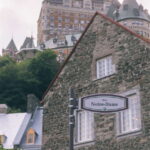
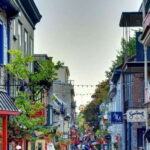
At the Aux Anciens Canadiens corner, you see one of Québec’s older houses and learn how architectural features reflect both French and English colonial heritage.
This is where the walk becomes more satisfying for detail lovers. Houses, not just landmarks, show you the layers of influence. It’s the kind of stop that makes you look up at windows and rooflines in a new way.
Keep expectations realistic: it’s a quick stop designed for exterior observations and a short interpretation. If you want a long look, you’ll likely come back later after the tour ends.
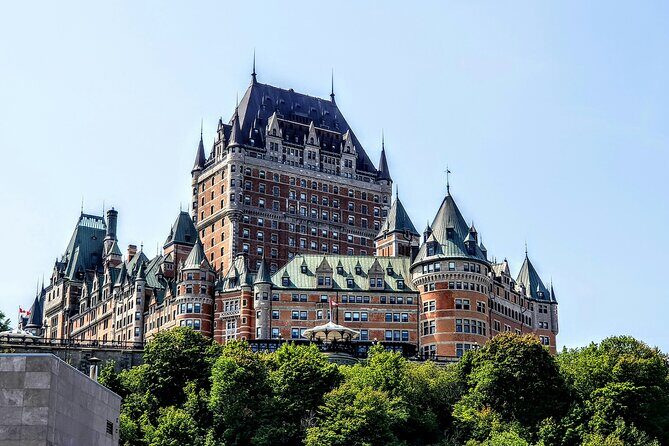
Stop 6: Fairmont Le Château Frontenac + Terrasse Dufferin (Views That Explain Why People Return)
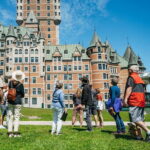
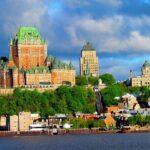
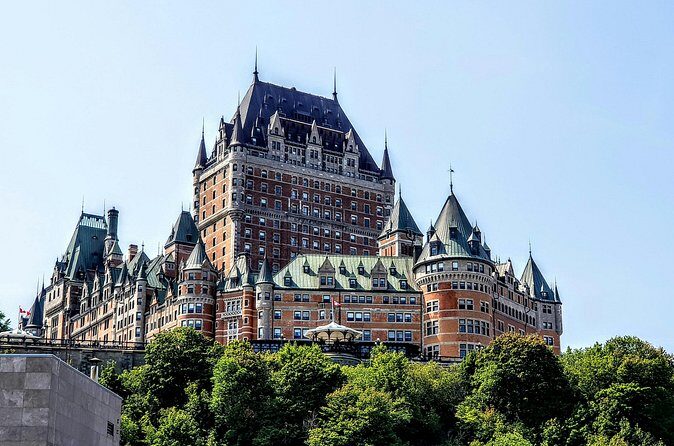
Château Frontenac dominates the skyline, and the guide explains why it’s such a symbol of the city. After that, you stroll along Terrasse Dufferin for scenic views over the St. Lawrence River and toward Québec’s ramparts.
This is one of the highlights for obvious reasons: the views are memorable, and the boardwalk position helps you understand the city’s geography. Seeing ramparts and the river in the same line of sight gives you a mental picture that maps well to what you learned earlier about defense.
A heads-up: boardwalk time is limited. This is where people sometimes want more free wandering, but the tour keeps the pace so you can fit multiple key stops. If views are your top priority, plan extra time before or after the 2-hour walk.
Stop 7: City Hall Area (Three Icons in a Short Stretch)
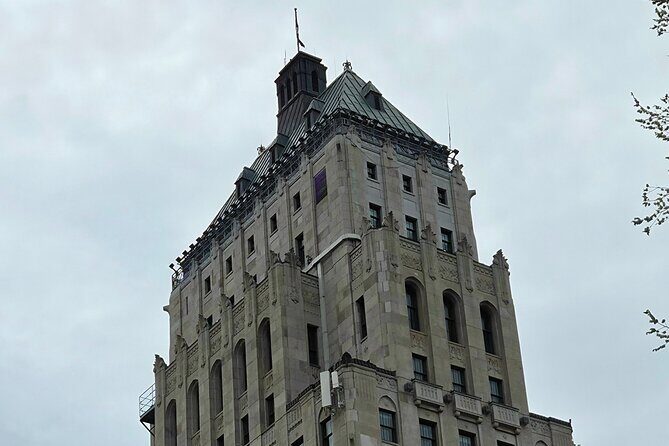
Next you’ll pass the City Hall of Québec City area and learn about three contrasting icons: City Hall, the Art Deco Price Building, and the Notre-Dame de Québec Basilica-Cathedral.
This stop works because it shows how one city can hold very different eras in the same skyline. The guide helps you connect those styles to culture and local identity, so it feels like a story instead of random architecture.
The “watch for” here: because it’s fast, you’ll want to decide in advance what you want to capture—Cathedral angles, the Art Deco look, or City Hall details. Then you can do quick photos without falling behind the explanation.
Stop 8: Quebec City Mural (A Trompe-l’œil That Tries to Hold Everything)
At the Mural des Québécois, you see a large trompe-l’œil that combines famous figures with everyday locals. The guide explains how the artwork compresses Québec City’s history and culture into one scene.
If you like art that tells you something beyond decoration, this stop delivers. It’s also a mental reset: after lots of architecture and institutions, a mural gives you a more human snapshot of the city’s story.
Time is short, so don’t just glance. Pick out one or two elements the guide points to and let those be your anchors. The mural can feel busy if you don’t have a guide-led entry point.
Stop 9: Place Royale (The Cradle of French Civilization in North America)
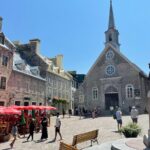
The last stop is Place Royale, often described as the cradle of French civilization in North America. Your guide highlights the 17th-century stone buildings and explains how this historic square supported the colony’s growth.
This is a strong finishing point because it ties together a lot of what you saw earlier: politics, defense, culture, and daily life. Place Royale also gives you a natural transition into the next phase—wandering and picking your own stops.
Since the tour ends here in Lower Town, it’s smart to end with energy. If you’re planning dinner or a longer stroll, Place Royale is a convenient launchpad.
How Jean-Simon Keeps It Fun, Not Just Facts
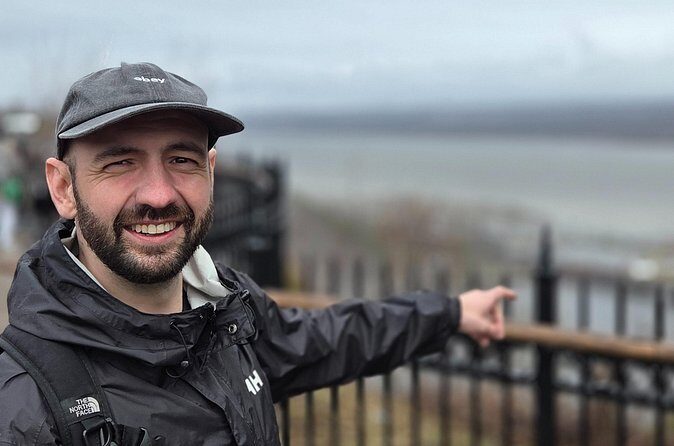
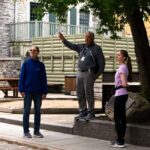
The standout pattern is the delivery. Jean-Simon is described as engaging, entertaining, and quick with stories that make the city’s past feel readable. That matters because history walks can drift into lecture mode. Here, the pacing is built to keep you listening without feeling trapped.
You also get room for questions. The best part isn’t only what you hear—it’s that the guide responds in a way that keeps the group moving forward. English delivery is called out as strong, and that makes a difference if you’re tired and don’t want to work to understand.
The humor also helps. Light jokes and human comparisons keep heavy themes from feeling heavy. And the overall pace feels structured—start on time, short stops, move to the next landmark—without feeling like you’re being rushed.
What to Bring (and What the Tour Does Not Provide)
This experience is outdoors-only, so plan accordingly.
- Bottled water is not included, so bring some or plan to buy it nearby.
- Umbrellas and rain gear are not provided. If rain is possible, pack a light layer plan, not just a shrug.
- You’ll be walking at a moderate pace for about 2 hours. If mobility is a concern, take the moderate fitness note seriously and wear shoes you trust on uneven Old Québec streets.
Also, this tour ends in Lower Town at Place Royale. I suggest you schedule your next activity close by rather than committing to a far-off pickup right after you finish.
Who Should Book This Tour (And Who Might Not Love It)
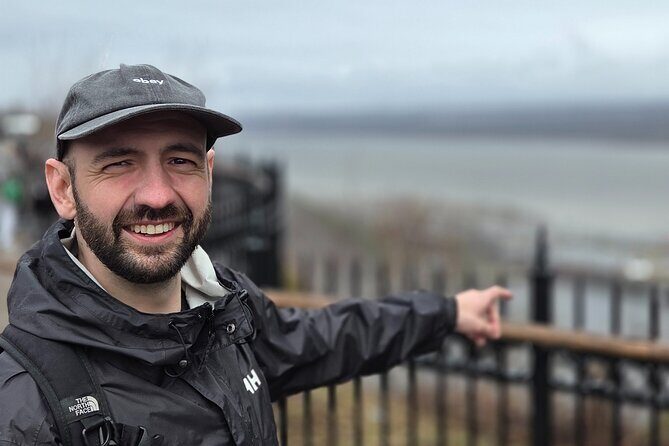
This tour fits best if you want:
- A fast, structured way to understand Old Québec
- The big landmarks plus the “why” behind them
- A guide who keeps things lively and invites questions
- A practical route that ends right in the middle of where you’d want to roam next
It may not be the best match if:
- You want long stays at each viewpoint. Stops are brief, so you’ll need to revisit places later if you want extra time.
- You’re focused on interior sites. The tour does not include interior visits.
If you’re traveling as a couple, with friends, or with family, the group size and easy pacing make it feel manageable. And if it’s your first full day in Québec City, this is an efficient way to get your bearings fast.
Should You Book This Old Québec Walking Tour?
I’d book it if you want a high-signal intro to Old Québec in a tight 2-hour window. The $18.78 price works because you’re buying interpretation, not just walking. And ending at Place Royale makes it easy to continue exploring without needing transport.
I’d think twice if you hate history-heavy narration or you’re craving long unstructured time at a single viewpoint. In that case, you might prefer a slower self-guided day—or plan this tour as your morning and save your afternoons for deeper wandering.
If you want an efficient, guide-led orientation to Québec City’s most famous sights, this walk is a smart move.
FAQ
How long is the Old Quebec walking tour?
It runs about 2 hours.
What does the tour cost?
The price is $18.78 per person.
Is the tour in English?
Yes, the tour is offered in English.
Is the tour indoors or outdoors?
It is 100% outdoors, and there are no interior visits.
Where does the tour start and end?
It starts at Fontaine de Tourny (Place de l’Assemblée-Nationale) and ends at Place Royale in the Lower Town.
How big is the group?
The tour has a maximum of 15 travelers.
Do I need to print a ticket?
You’ll receive a mobile ticket.
What isn’t included?
Bottled water isn’t included, and umbrellas or rain gear aren’t provided. Transportation to or from the meeting and end points also isn’t included.
Can I get a refund if plans change?
Yes. There is free cancellation up to 24 hours in advance for a full refund. If you cancel less than 24 hours before the start time, the amount paid is not refunded.