REVIEW · QUEBEC CITY
Best of Quebec City: Panoramic Bus Tour with Local Guide
Book on GetYourGuide →Operated by Unitours Inc. · Bookable on GetYourGuide
Quebec City moves fast. In just 2 hours, this bus tour gives you a clear sense of where everything is—while your guide adds real stories about French-era landmarks and today’s neighborhoods. I especially liked the UNESCO ramparts pass-by and the chance to get quick, high-value context for sights like the Château Frontenac and the Plains of Abraham. The one drawback: it’s not a hop-on, hop-off tour, so you’re on the bus most of the time and photo stops can be brief.
This is a regular coach tour (not double-decker), with two set departure points: 10 Rue Sainte-Anne or 85 Rue Dalhousie. The guide and driver combo varies by date, and I found it works best when you’re ready to listen while rolling through both Upper Town and the Lower-Town shoreline-adjacent sights. If you’re hoping for lots of walking, long museum time, or flexible stop duration, you may feel a little rushed.
Still, the vibe is exactly right for a first visit. On snowy days, one guide even helped with the practical stuff—scraping window ice before you start—so you can focus on the view. And across guides such as Marte, Martin, Garry, Francois, Valerie, and Daniel, the common thread is storytelling with humor, plus helpful pointers on what to see next.
In This Review
- Key things that make this Quebec City panoramic tour worth your time
- Getting your bearings fast from Rue Sainte-Anne or Dalhousie
- Château Frontenac and the ramparts: the first “wow” hits early
- Plains of Abraham photo stop: a quick look with real context
- Upper Town essentials: Place Royale, the Citadelle area, and big institutions
- Latin Quarter and modern neighborhoods: the city beyond the postcard
- Museum pass-by moments: Fine Arts, Civilization, and the riverfront
- Guide quality makes the difference: what to listen for (and what to watch)
- Transportation comfort: regular bus, no hop-on hop-off, so plan accordingly
- Price and value: why $38 for 2 hours can be a smart move
- Who should book this panoramic tour—and who might skip it
- Should you book this Quebec City bus tour?
- FAQ
- FAQ
- How long is the Quebec City panoramic bus tour?
- Where do I meet for the tour?
- Is this a hop-on hop-off tour?
- What major sights will the tour show me?
- What languages are the live guides speaking?
- Are pets or large luggage allowed?
- Can I get a refund if my plans change?
Key things that make this Quebec City panoramic tour worth your time
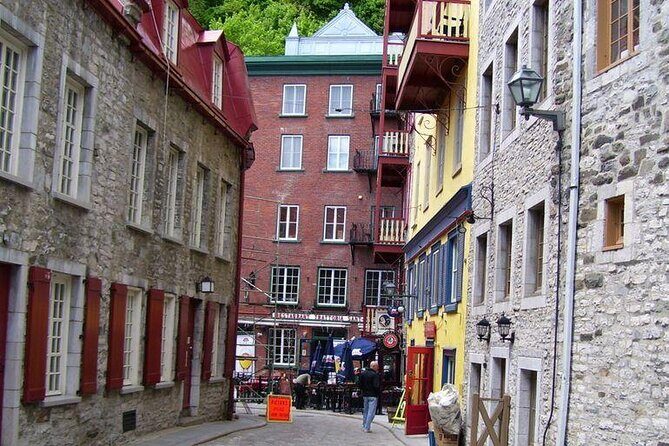
- Two starting points make it easier to join from where you’re staying: 10 Rue Sainte-Anne or 85 Rue Dalhousie
- UNESCO city-defense ramparts are included as a major pass-by stop for context and orientation
- Plains of Abraham photo stop gives you a quick, worthwhile look at one of the city’s best-known historic sites
- Government, religion, and big viewpoints: National Assembly, Notre-Dame de Québec Basilica-Cathedral, City Hall, and Parlementary area sightings
- Château Frontenac views happen early, so you can place the rest of the city afterward
- Local guide + comfortable bus time means no parking headaches and fewer navigation worries
Getting your bearings fast from Rue Sainte-Anne or Dalhousie
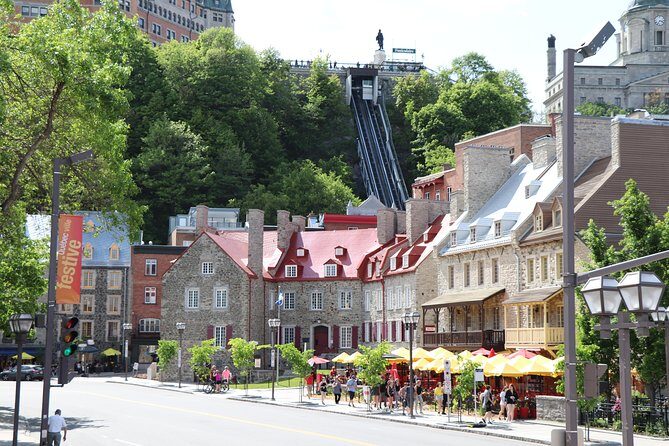
The tour starts at one of two convenient meeting options: 10 Rue Sainte-Anne or 85 Rue Dalhousie. You’ll want to arrive about 15 minutes early so you can find your bus before it pulls away. The bus usually displays Unitours or Quebec Tours, which helps when several tour buses are gathered around the same area.
Once you’re on board, you’ll feel the biggest advantage right away: someone else handles the traffic and the parking. Quebec City’s streets can feel tight and angled, and this route is designed to show you a lot without you doing the mental math of where to go next.
This is also a good format if weather is working against you. Several departures ran in rain, snow, or icy conditions. A bus keeps you moving even when sidewalks get slick, and it turns the tour into a kind of rolling orientation lesson: you see the buildings, then you understand how the city is layered.
You can also read our reviews of more guided tours in Quebec City



Château Frontenac and the ramparts: the first “wow” hits early
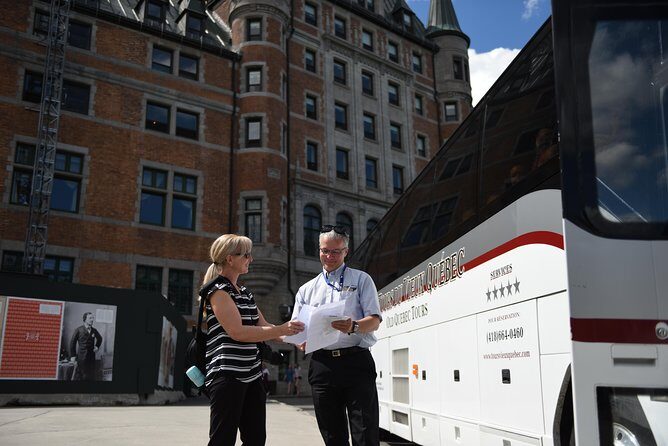
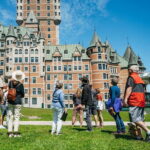
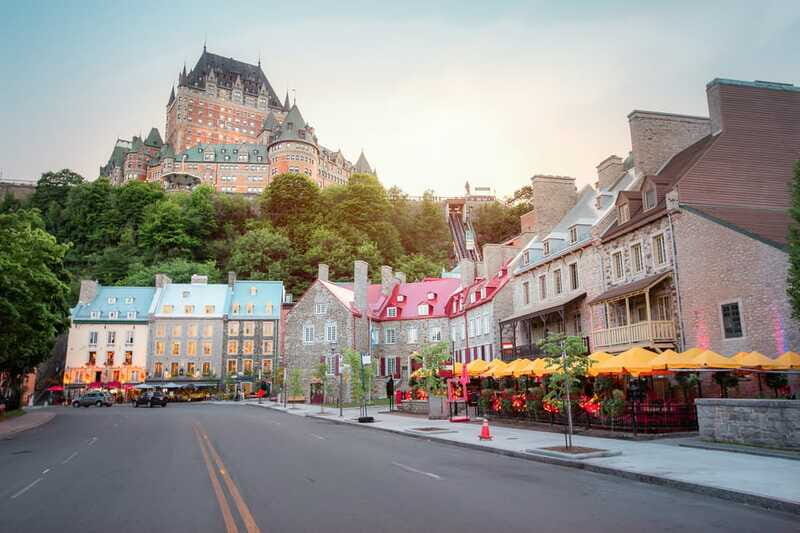
The tour leans hard into the iconic visuals, and it starts by putting you in front of the most famous postcard in Quebec City: the Château Frontenac. Even if you think you already know what it looks like, it hits differently when you see it from the roadway and get a sense of how the city wraps around the hill.
Next, you’ll pass major parts of Old Quebec’s defenses, including the ramparts, which are recognized as a UNESCO World Heritage Site for how they’re preserved in North America. You don’t need to be a history buff to enjoy this section. The practical value is orientation: once you’ve seen the line of the walls and how they cut across views, you’ll better understand why the city feels like it was built to be watched and defended.
If you’re traveling with a camera, keep your eyes up as you roll. The guide’s narration helps you line up what matters before the bus passes. That’s how you get photos that look planned, not accidental.
Plains of Abraham photo stop: a quick look with real context
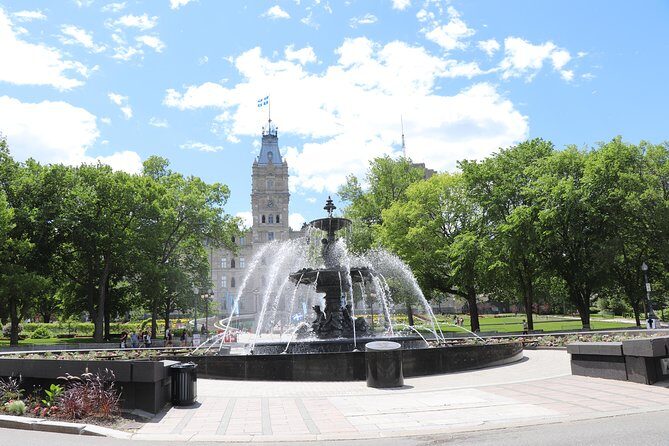
One of the best time-to-value moments on the route is the Plains of Abraham stop. The schedule gives a short photo stop (about 15 minutes), so think of it as a chance to step out, look around, and connect the sight to the story you heard on the way.
This is where the guide’s commentary really pays off. The plains are tied to the Battle of the Plains of Abraham, a key event in Quebec City’s larger political story. Even if you only remember one detail afterward, it helps you read the space like more than an open field. You’ll start noticing how the setting fits the city’s geography and why that area became so important.
Practical tip: wear shoes you can trust. The group doesn’t spend long out of the bus, but conditions can still be slippery on certain days. Grab a quick angle for photos, then return to the bus on time so you don’t miss the next pass-by.
Upper Town essentials: Place Royale, the Citadelle area, and big institutions
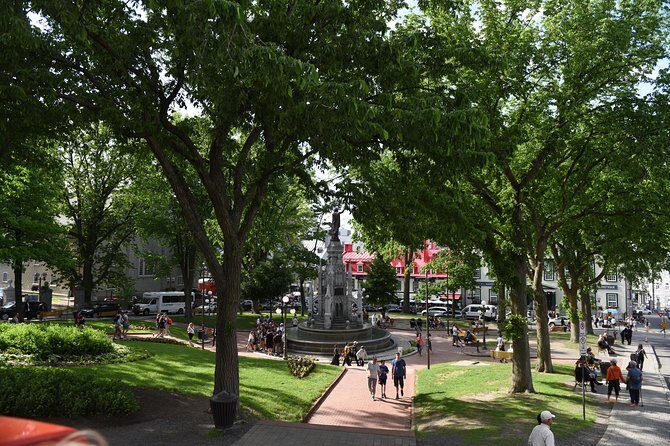
This tour doesn’t try to replace walking Old Quebec. Instead, it shows you where to aim your future feet. That’s why several of the most important stops are pass-by points: you get the view plus the context, then you decide what deserves more time later.
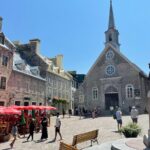
You’ll pass by Place Royale, along with historic and official landmarks around the Old City. The tour also includes sights connected to the Citadelle of Quebec area. You’ll see the kind of architecture and positioning that makes the Citadelle feel like it belongs to the city’s defensive mindset—because it really does.
The guide also brings in the modern political layer of the area you’re looking at, including the National Assembly and other civic buildings. On top of that, you’ll pass by major religious landmarks such as the Notre-Dame de Québec Basilica-Cathedral and see City Hall from the street.
Why this matters: Quebec City can feel like one big historic stage from a distance, but it’s living and working. When you connect these buildings to the city’s layout, your later visits get simpler. You don’t just see things—you understand what part of the day-to-day machine you’re looking at.
Latin Quarter and modern neighborhoods: the city beyond the postcard
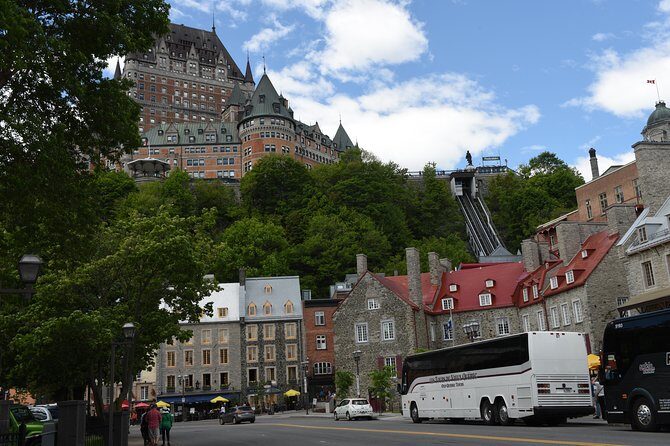
Quebec City is known for its French influence in architecture, and yes, the tour delivers that. But it also moves past the most tourist-saturated pockets so you can picture how neighborhoods function today.
You’ll make sure to cover the Latin Quarter as part of the route. This helps you avoid the all-or-nothing trap of Old Quebec-only travel. Instead, you’ll get a quick sense of where residential life, local streets, and everyday city rhythms sit relative to the major viewpoints.
The itinerary also includes pass-by time in more modern neighborhoods and areas of Haute-Ville (Upper Town). Even without getting out often, these segments give you a map in your head. Later, when you’re choosing where to eat or stroll, you’ll know what you’re aiming for.
And if you like when your guide’s humor mixes with the storytelling, this tour tends to deliver. Multiple guides—like Francois, Jean, Mac, and Daniel—were noted for being funny while still explaining what you’re actually seeing.
You can also read our reviews of more city tours in Quebec City


Museum pass-by moments: Fine Arts, Civilization, and the riverfront
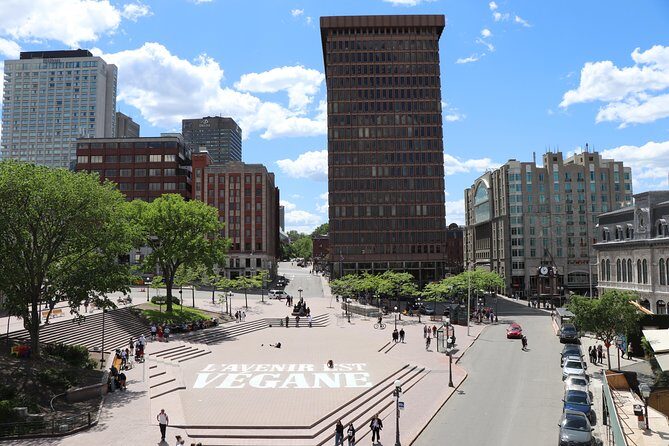
You won’t spend long inside museums on this format, but you will pass by major cultural anchors that are worth knowing. For example, you’ll see the National Museum of Fine Arts of Quebec area from the bus route. You’ll also pass by the Museum of Civilization, another key stop for anyone who wants to go deeper beyond architecture alone.
These pass-by moments are helpful if you’re building an itinerary while you’re already on vacation. You’ll likely decide on your own whether you want museum time, based on what you saw from the road and what the guide emphasized about why that place exists.
Then you’ll get a sense of where the city opens up toward water. The tour includes pass-by views of the St Lawrence River. On clear days, it can feel like the city catches its breath. On gray days, it still gives you a directional cue: you’ll understand how the river shapes the city’s views and the mood of different neighborhoods.
Guide quality makes the difference: what to listen for (and what to watch)
This tour is only as good as the guide, and the feedback pattern here is strong. Guides and drivers such as Marte, Martin, Garry, Francois, Valerie, Yves, Daniel, Jean, and Carol have been praised for being enthusiastic, entertaining, and able to answer questions.
You should expect a mix of:
- stories tied to what you’re seeing (not just names on a list)
- quick explanations of why certain places matter
- humor that keeps the tour from turning into a lecture
That said, a few practical issues can come up. One review noted difficulty hearing the guide at times due to the bus speaker setup. Another mentioned a broken air system on a very warm day, which made breathing less comfortable. Also, on icy days, windows may collect ice unless the driver stays on top of it.
Here’s how you handle this like a pro:
- Bring a warm layer if you’re touring in winter. Even if you’re mostly inside, Quebec wind has opinions.
- If the bus has any kind of elevated seating, take it for easier sightlines.
- Keep your phone ready for photos, but listen for the moment the guide points out the viewpoint you want.
- Ask questions if you can. Several guides were good about answering on the move.
Transportation comfort: regular bus, no hop-on hop-off, so plan accordingly
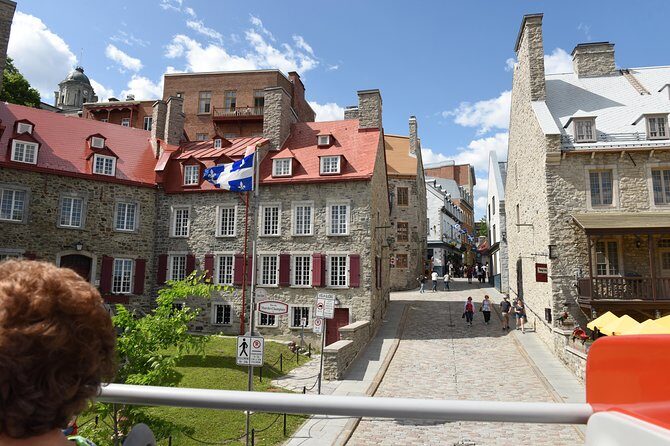
This is a regular bus tour, not hop-on hop-off and not designed for free-form stop browsing. That’s important. You’ll see plenty, but you don’t control the stop length the way you would on a flexible walking tour.
The upside is efficiency. You get a city overview without wasting half a day figuring out routes, parking, and what’s worth revisiting on foot. The bus also handles narrow streets, and drivers are often praised for doing it smoothly.
The downside is simple: if you fall in love with one spot, you can’t just hop off and linger until it’s perfect. You need to treat this as an orientation sweep, not your final stop.
A few rules to keep things easy:
- No pets
- No large luggage or bags
- Wear comfortable shoes, because at least one short outdoor photo moment is part of the experience
Price and value: why $38 for 2 hours can be a smart move
At $38 per person for about 2 hours, the value depends on what you would otherwise spend your time doing.
If you’re spending your first hours in Quebec City trying to figure out where everything is, this tour can save you time and mental load. You’ll see major sites and get context from a local guide, which makes your later choices better. That’s where the real savings live.
Also, the cost includes transportation and a live guide. Compared with cobbling together taxis, self-drive stress, or multiple paid admissions just to understand the city, this is a straightforward way to learn quickly without committing to museum hours.
Is it worth it if you’re already a Quebec City expert? Maybe not. If you’re visiting for the first time or you want a high-level map of how Upper Town and the surrounding areas connect, this price is a fair exchange for having a guide stitch the city together for you.
Who should book this panoramic tour—and who might skip it
I’d book this if:
- it’s your first time in Quebec City and you want a fast orientation
- you want big sights without coordinating traffic or parking
- weather is unpredictable and you want a plan that still works
- you like guides who mix humor with clear explanations
I’d consider skipping if:
- you want lots of time outside the bus or long station-to-station walking
- you’re hoping for a flexible hop-on, hop-off itinerary
- you’re traveling with lots of luggage or have a need to bring items not allowed on board (pets and large bags aren’t part of the deal)
This also suits solo travelers and couples well. The tour is structured enough to feel efficient, but the guide Q&A style can make it feel personal.
Should you book this Quebec City bus tour?
If you want to get your bearings fast, this tour is a strong yes. It hits the major landmarks—Château Frontenac views, UNESCO ramparts, Place Royale, the Plains of Abraham photo stop, and key political and religious buildings—while adding story context you can use immediately.
Book it especially if it’s your first day, if you’re short on time, or if conditions might be rough outside. Then use what you learn here to pick your next steps: which streets to walk, which viewpoints to revisit, and which stops deserve more time on foot.
FAQ
FAQ
How long is the Quebec City panoramic bus tour?
The tour duration is 2 hours.
Where do I meet for the tour?
You can start from either 10 Rue Sainte-Anne or 85 Rue Dalhousie. Arrive about 15 minutes early.
Is this a hop-on hop-off tour?
No. This is a regular bus tour and it is not hop-on hop-off.
What major sights will the tour show me?
You’ll pass by or view key places such as Château Frontenac, the UNESCO ramparts, Place Royale, the Citadelle area, the Plains of Abraham (with a photo stop), the National Assembly, Notre-Dame de Québec Basilica-Cathedral, City Hall, Parliament Hill area, the Museum of Civilization, and the St. Lawrence River.
What languages are the live guides speaking?
The live tour guide offers commentary in English and French.
Are pets or large luggage allowed?
No pets are allowed, and large luggage or large bags are not allowed.
Can I get a refund if my plans change?
Yes. Free cancellation is available up to 24 hours in advance for a full refund.