REVIEW · QUEBEC CITY
Old Québec & French Canada Private History Walking Tour
Book on Viator →Operated by Quebec 1608 · Bookable on Viator
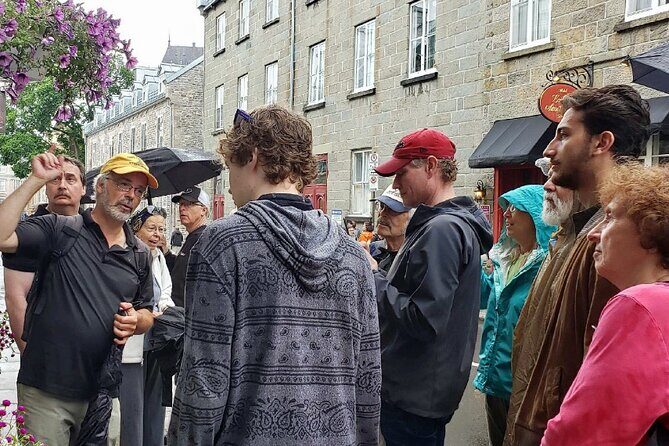
Quebec City keeps receipts in stone. On this private history walk, you follow the city’s story from the founding era through the 1775 invasion and the battles that decided North America’s future. I love how guide Michel Perron (and other guides in the same spirit) brings it to life with maps, timelines, and a real feel for how these events shaped everyday life. I also love the stop-to-stop variety, where you go from fortifications and war memories to major cultural and education landmarks in just a couple hours.
The other thing I like is how the tour connects the dots between Canada and the US, not as a vague theme, but through specific episodes like Benedict Arnold and Richard Montgomery’s failed push in 1775 and the later Treaty-of-Paris shift. The tradeoff? You’re walking and listening, so this is best if you’re happy with moderate walking and you’re okay with a history-heavy route that includes religious sites and monuments tied to conflict.
In This Review
- Key points to know before you go
- A private way to read Quebec City’s French-British-American story
- Museum stop that frames the wars before you hit the walls
- Fairmont’s CPR Hotel: how the 1893 icon fits the Canada story
- Under the boardwalk: St-Louis forts and how old power got buried
- From Louisiana Purchase-era memories to the War of 1812 defenses
- Upper Town vs Lower Town: UNESCO walls you can actually feel
- Cathedral and missionary schools: Catholic institutions that shaped North America
- Women’s education and a first hospital that became a wellness destination
- Champlain’s founding site and the museum district that never finished
- Shopping streets, art and antique blocks, and a museum about Native Americans
- 1775 invasion sites, ramparts, gates, and the stairs you’ll remember
- Price and value for a 2.5-hour private Old Québec walk
- Should you book this private history walk?
- FAQ
- How long is the Old Québec & French Canada private history walking tour?
- Is this tour private, and what group size is it designed for?
- Do you offer pickup in Quebec City?
- What language is the tour offered in?
- What fitness level do I need?
- Is there free cancellation?
Key points to know before you go
- Private, small-group format (up to 10 people) means you can ask questions and keep the pace comfortable
- Michel Perron–style storytelling uses maps, timelines, and visual materials, plus real flexibility for families
- French and British ramparts in plain view help you understand why Quebec controlled the St. Lawrence
- A US-Canada crossover focus highlights 1775–1776 from a Canadian angle, with named figures you’ll recognize
- You hit Upper Town and Lower Town energy—not just one viewpoint, but the full feel inside the Old Québec walls
A private way to read Quebec City’s French-British-American story
If you want Quebec City to make sense fast, this is a smart way to do it. You’re not just looking at pretty streets. You’re learning why the city was fought over, governed differently over time, and rebuilt into what you see today.
The tour is built around big turning points. You’ll hear how early French settlement laid the groundwork, how British control became permanent after major conflict, and how later tensions with the US reshaped defenses. And because the guide ties events to real locations, names like Benedict Arnold and Richard Montgomery don’t stay trapped in textbooks. They land on the ground in front of you.
This also helps if you’re traveling with kids. One standout theme in what guides deliver here is story clarity. The route works for a mix of ages because the guide keeps explaining the why behind each stop, instead of dumping dates nonstop.
You can also read our reviews of more walking tours in Quebec City

Museum stop that frames the wars before you hit the walls
You start at a museum centered on Canada’s military history and the great battles of Quebec City, covering the timeline from early French settlement up through 1776. This matters more than it sounds. When you later stand on ramparts and monuments, you’ll know what each one is reacting to.
In practical terms, think of this as your orientation briefing. The museum sets the emotional “why” behind the buildings you’ll see next: control of territory, control of routes, and control of who gets to rule what. After that, every defensive feature in Old Québec stops feeling random.
A possible drawback: if you’re hoping for a hands-on, interactive museum experience, this tour’s museum role is more about context than a long indoor program. You’re there to get the story straight so your later walking makes sense.
Fairmont’s CPR Hotel: how the 1893 icon fits the Canada story
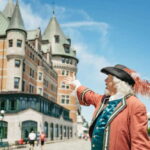
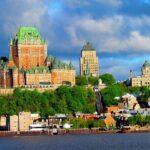
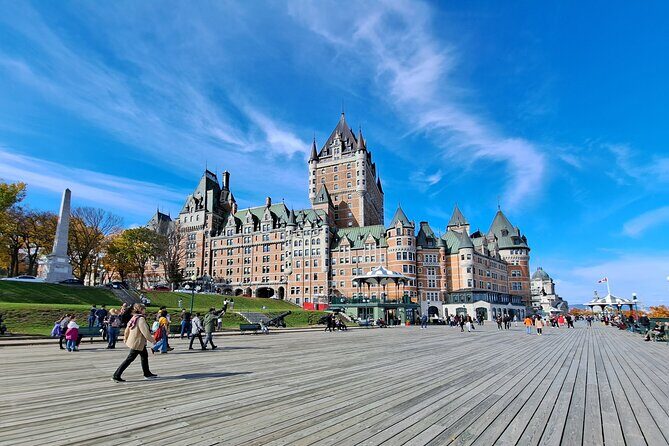
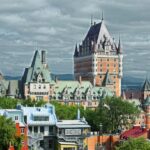
Next you reach the 1893 Canadian Pacific Railway Hotel, now the Fairmont. It’s an architectural landmark and, in this tour, a symbol of the modernizing country that came later.
This stop is a good reminder that Quebec City didn’t just “freeze” in the past. It kept evolving. The guide uses this kind of landmark to connect infrastructure and ambition to national identity. Even if you’re not a railway person, you’ll get the point: big institutions built in the late 1800s helped define what Canada looked like to the world.
What to do here: look at the building as a statement of confidence. Then listen for how the guide positions it against what came before—forts and conflict on one side, and nation-building on the other.
Under the boardwalk: St-Louis forts and how old power got buried
One of the most memorable segments is the boardwalk area tied to the French governors, with Forts and Chateaux St-Louis located under the boardwalk. That detail changes how you see the street level. You’re literally walking near the remains of structures tied to authority, government, and the period leading up to the French & Indian War.
Then the tour follows with a war monument commemorating the French and Indians War. Together, these stops do two things:
1) they show how much of the city’s history sits below what you can easily see, and
2) they put emotion behind the conflict, not just geography.
If you’re the kind of traveler who loves “layers,” you’ll enjoy this. If you prefer to stick only to fully visible buildings, you might wish there were more time for close-up history of the buried pieces. But the payoff is that your understanding of Quebec City deepens quickly.
From Louisiana Purchase-era memories to the War of 1812 defenses
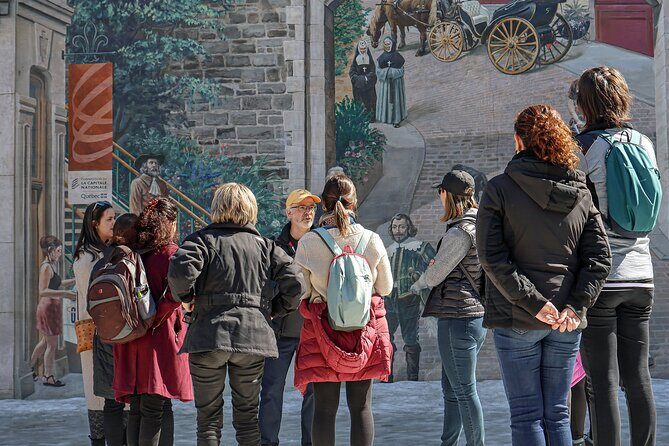
As the tour moves along, you’ll hit several points that connect international events to local construction and local memory. You’ll hear about a British Quebec City memory built in the same year as the Louisiana Purchase, which ties the timeline to 20 years after US independence. This is exactly the kind of connection that makes the city feel less like a bubble.
Then you’ll get to the stronghold added after the War of 1812, built to face the American threat. This is where Quebec’s defensive mindset becomes vivid. The guide’s explanations help you understand why fortifications weren’t “just old stuff.” They were practical answers to real pressure.
And from there, you’ll reach an iconic ground battlefield tied to the French & Indian War. Unlike some famous US battlefields you might know, here the British won—leading into the Treaty of Paris and the shift that made Canada British from 1763 onward.
Tip for your brain: when you hear these war stories, picture the city as a control hub on the St. Lawrence seaway—control the route, and you influence what happens across the continent. That’s the through-line.
You can also read our reviews of more private tours in Quebec City

Upper Town vs Lower Town: UNESCO walls you can actually feel
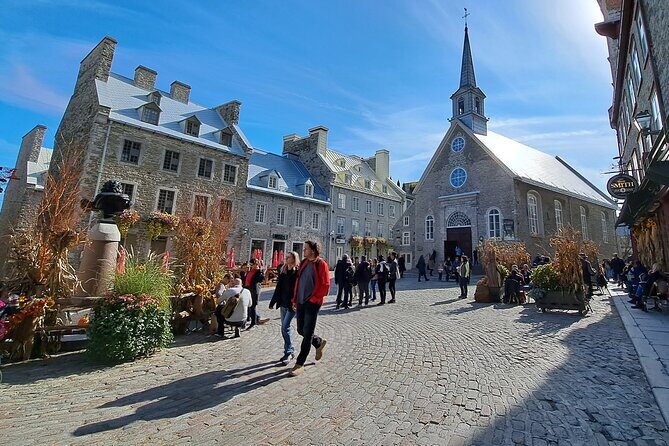
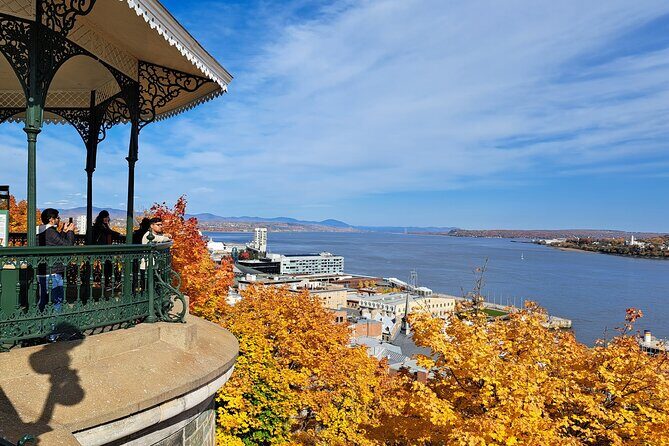
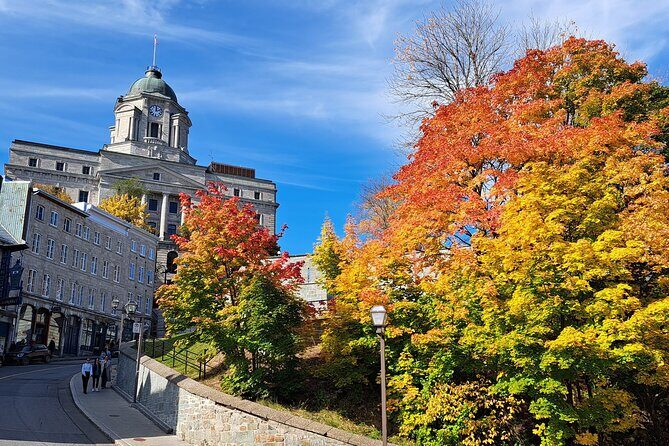
Old Québec is split in a way that’s easy to understand when a guide points it out. Upper Town is mainly the UNESCO World Heritage zone within the walls. Lower Town is where you find Place Royale, Petit-Champlain, and the Old Port district.
This isn’t just naming. The guide uses the terrain to explain how defense and settlement made sense. You’ll see how the city’s layout helped it function under different rules and threats.
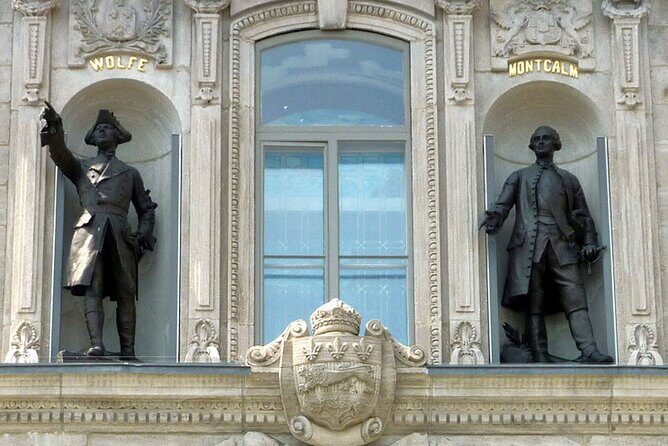
Upper Town stops include the Legislature of the Province of Quebec. It’s a key reminder that Quebec City remains the provincial capital, even if Montreal is the larger metropolis. The guide also uses this kind of civic stop to keep your timeline anchored.
Lower Town is where you get the human-scale feel of older districts. You’ll move toward iconic areas like Place Royale and Petit-Champlain, and the tour helps you connect architecture and street shape to the city’s long occupation—continuous from the founding era.
A practical note: there are stairs and changing grades. The tour is rated for moderate fitness, so bring comfortable shoes and expect some uphill moments.
Cathedral and missionary schools: Catholic institutions that shaped North America
Quebec City’s influence didn’t just come from armies and politics. It also came from institutions—especially religious ones—and this tour highlights that clearly.
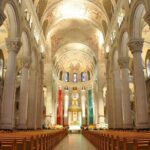
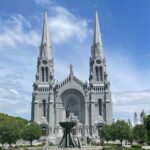
You’ll visit the Founding Cathedral of Catholicism in French America and hear how the diocese connected Quebec City to a territory large as French Louisiana, from Quebec City to New Orleans. It’s an eye-opener because it reframes Quebec as a hub, not just a local city.
Then you’ll hear about the school that trained French Catholic missionaries sent over the continent. The modern footprint you’ll learn about connects to today’s School of Architecture of Université Laval and the high school nearby.
The value here is balance. You’re not asked to agree with anything. You’re shown how institutions worked, how people traveled, and how education and religion were used to extend influence.
If you’re not into religious history, you might want to mentally separate “faith debate” from “historical process.” This tour’s focus is the process: how ideas moved, who taught, and why it mattered.
Women’s education and a first hospital that became a wellness destination
Two major stops focus on care and education: the first school for girls in North America and the world-class museum about French art and Catholic education, plus the first hospital in North America and today’s wellness center and museum.
These are powerful because they show how long-term change happens through daily institutions, not just grand buildings. When the guide talks about these places, you start to see Quebec City as a system that produced education, training, and healthcare—not only a fortress.
What I like about these stops is that they add humanity to the war-and-rampart theme. Even on a history-heavy day, it keeps the tour grounded.
Potential drawback: because these stops are tied to Catholic education and heritage, the framing will be religious-culture specific. If you want purely military or political content, you’ll still get political context, but the tour won’t treat religion as an afterthought.
Champlain’s founding site and the museum district that never finished
A highlight comes when you reach a site connected to Samuel de Champlain’s founding of Quebec City in 1608. You’ll also hear the idea that this is Quebec’s version of Canada’s Jamestown and Williamsburg—birthplace energy with a long, continuous occupation.
Right by that story, you’ll learn about a 1970s Museum District project that was never completed. The guide uses it to show how cities keep changing their plans, even after centuries of occupation. You don’t just get the “old days.” You get the modern consequences of old locations.
Then the tour adds another timeline twist: a 1929 monument tied to a pulp and paper company’s headquarters. It’s linked with the Great Depression and resilience of a Welsh family, now involved in high-end tourism in Quebec City.
If you like history that reaches into the present, these stops are a win. They turn Old Québec from a postcard into an evolving place with different kinds of power across eras.
Shopping streets, art and antique blocks, and a museum about Native Americans
Not every stop is a monument. Some are about how Old Québec became a living district again.
You’ll visit shopping areas tied to an 1980s project aimed at artisan shops in the Old Port area, led by two local architects with a vision for high-end retail in a revitalized zone. That’s a good reminder that preserving history also means keeping neighborhoods economically alive.
Then you’ll stop at a museum with exhibitions about Canada and Native Americans. This is one of the best ways to avoid getting stuck in a single narrative. The guide keeps the city’s story from becoming only French vs British by pointing out who else has always been part of this place.
If you’re worried this will turn into a shopping stop, it won’t. The shopping context is there to help you understand the urban choices behind what you see today.
1775 invasion sites, ramparts, gates, and the stairs you’ll remember
The later part of the tour brings you to sites linked to the failed 1775 American invasion of Canada. You’ll hear about Benedict Arnold and Richard Montgomery, and how both leaders were defeated. The setting is especially memorable because it connects the story to a reclaimed, man-made zone—once water, now usable land across French, British, and Canadian periods.
From there, you’ll see how the area functions now: an old financial district of Canada with today’s art and antique shops in the same overall footprint. It’s a neat way to feel time layering on time.
Then you’ll reach one of the three gates on the French rampart. The guide explains how original military structures with narrow openings and doors were removed, then rebuilt to look medieval again under Lord Dufferin’s Quebec Improvement plan in 1875, influenced by European historicist thinking. That detail makes the ramparts feel more complicated—in a good way. You’re not just seeing defense. You’re seeing how later generations chose to interpret the past.
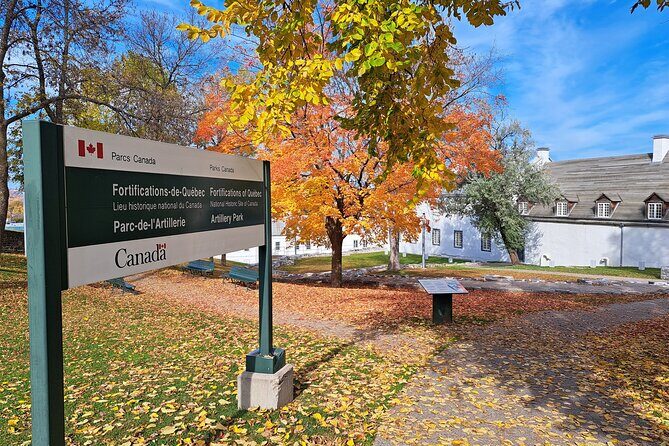
You’ll also take in stairs linking Petit-Champlain and Upper Town, which is both functional and symbolic: the city’s vertical life is part of the story. And you’ll get one more fortification detail—a cannon platform added during King William’s War when Frontenac defeated invaders from Boston led by William Phips.
That last stretch is where the whole tour clicks. The guide’s timeline makes it obvious why Quebec City needed those structures and why the city still carries echoes of those choices.
Price and value for a 2.5-hour private Old Québec walk
At $213.92 per group (up to 10) for about 2 hours 30 minutes, the value depends on how many people you bring.
- If you travel as a family or group, you can spread the cost and get a private guide covering a lot of ground in a short time.
- If you’re just two people, it’s still worth it if you care about storytelling that connects locations to events, because you’re paying for expert interpretation and flexibility—not just movement from A to B.
This tour’s strongest “value lever” is that it’s private and question-friendly. Guides here don’t run like robots. They tailor pace and explanations so the day stays interesting for everyone in the group, including kids.
Should you book this private history walk?
Book it if you want Quebec City to feel legible. This is one of those tours where the city stops being a collection of sights and becomes a chain of cause-and-effect. You’ll get a clear framework for French vs British conflict, the later defensive concerns toward the US, and how religious education and healthcare helped shape life beyond the battlefield.
Skip it (or adjust expectations) if you’re looking for a lightweight stroll with minimal war talk, or if you want lots of time inside multiple buildings. The strength here is interpretation while moving through Old Québec’s core districts, not a slow museum day.
If you’re history-minded and you like guided context more than solo wandering, I’d treat this as your best first serious step into Old Québec.
FAQ
How long is the Old Québec & French Canada private history walking tour?
It runs for about 2 hours 30 minutes.
Is this tour private, and what group size is it designed for?
Yes. It’s a private tour, and the price is per group for up to 10 people.
Do you offer pickup in Quebec City?
Pickup is offered if your hotel is located in Old Quebec. If your hotel isn’t in Old Quebec, the provider will contact you with an easy-to-find meeting point.
What language is the tour offered in?
The tour is offered in English.
What fitness level do I need?
It’s best for travelers with a moderate physical fitness level.
Is there free cancellation?
Yes, you can cancel for a full refund. You must cancel up to 24 hours in advance of the experience’s start time.