REVIEW · QUEBEC CITY
Quebec City Hop-On Hop-Off
Book on Viator →Operated by Unitours · Bookable on Viator
Quebec City is easier when you ride first. Hop on the red, London-style open-top double-decker and get a fast, practical look at the sights you’ll want to see up close. The tour moves through the UNESCO World Heritage area and beyond, with 10-language audio you can follow block by block.
I really like the combo of audio earphones plus onboard Wi‑Fi, because you can keep moving while still learning as you go. I also like that the hop-on hop-off setup fits a short trip: ride the whole loop once, then jump off where you want extra time. One real consideration: on busy days the buses can get crowded and you may face long waits, and the top deck can be cold when the weather turns.
In This Review
- Key points before you board
- How the 2-hour Quebec City loop actually helps
- The best move: ride once, then plan your second round
- Place d’Armes and the Fort Museum: start with the reason Quebec City matters
- De la Couronne (Quartier St-Roch): the walking and food side of town
- Musée de la civilisation and the riverfront: culture plus views
- Practical tip
- Place Royale and Notre-Dame des Victoires: Old Québec without the guesswork
- Vieux-Port and Old Port Market: where the day starts to feel like a trip
- Observatoire de la Capitale and Parliament Hill: your “one-stop viewpoint plan”
- Plains of Abraham and the Musée des plaines d’Abraham: history you can feel
- Downside to plan around
- Citadelle area, Blockhaus traces, and a viewpoint-style promenade
- Museum and art pause: Grande Allée O
- Avenue Cartier shopping and Saint-Jean-Baptiste: a different pace
- Palais Montcalm, Le Capitole, and Parc Canada: culture-and-stroll fuel
- City Hall / Hotel de Ville: a clean finish to the loop
- Onboard audio, Wi‑Fi, and the headset setup
- Price and value: about $46.93 per person
- Logistics that can make or break your day
- When this hop-on hop-off works best (and when it doesn’t)
- Should you book Quebec City Hop-On Hop-Off?
- FAQ
- FAQ
- How long is the Quebec City Hop-On Hop-Off tour?
- Can I hop on at any stop?
- Is the audio available in English?
- Does the ticket include Wi‑Fi?
- What’s the approximate price per person?
- Is hotel pickup included?
- Are there options for 1-day and 2-day tickets?
- Do I need a printed ticket?
- What happens if weather is poor?
- What is the cancellation window?
Key points before you board
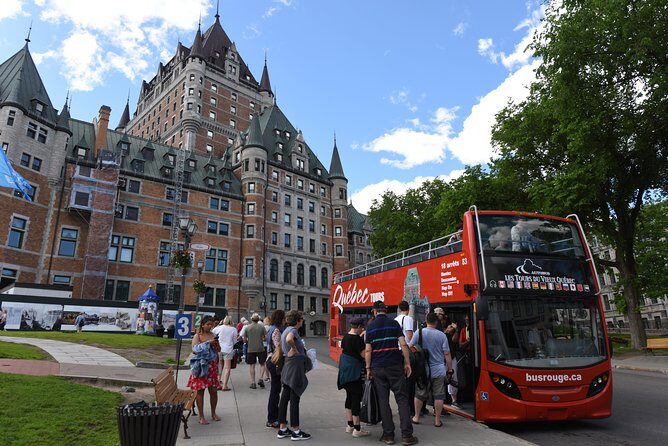
- Open-top views: great photo angles, but bring layers for wind and chill on the upper deck
- 10-language audio: listen via the provided system as you roll past key districts
- 1- or 2-day pass: ideal if you want a first orientation ride plus a second pass for lingering
- Many high-interest stops: Old Québec, Fortifications area, Parliament Hill, Plains of Abraham, Citadelle, Saint-Jean-Baptiste
- Cruise-ship and festival days can be rough: expect the schedule pressure that comes with big crowds
- Mobile ticket only: have it ready before you reach the stop, not at the door
How the 2-hour Quebec City loop actually helps
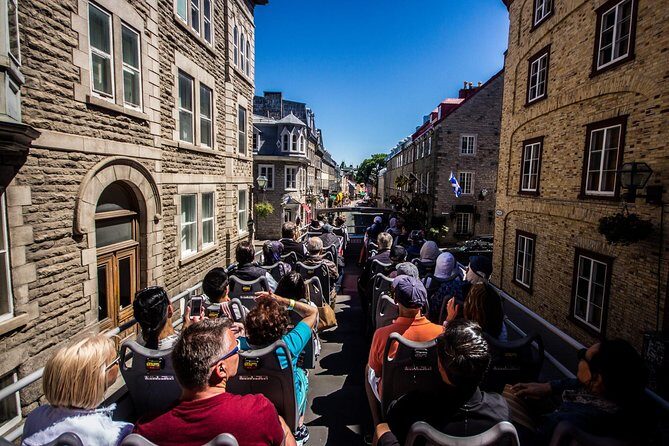
This hop-on hop-off bus is built for orientation. The ride is about 2 hours per loop, so you get a full “big picture” sweep without turning your day into a transportation project. It’s also a smart fit for Quebec City because distances are walkable in pieces, but the city is steep in spots. Using the bus lets you choose where you climb and where you don’t.
The best part is that you don’t have to decide in advance. You can hop on at any stop, listen through the audio as the bus threads through downtown, then hop off when something grabs you—churches, viewpoints, museums, or the areas where you want to wander.
You can also read our reviews of more city tours in Quebec City


The best move: ride once, then plan your second round
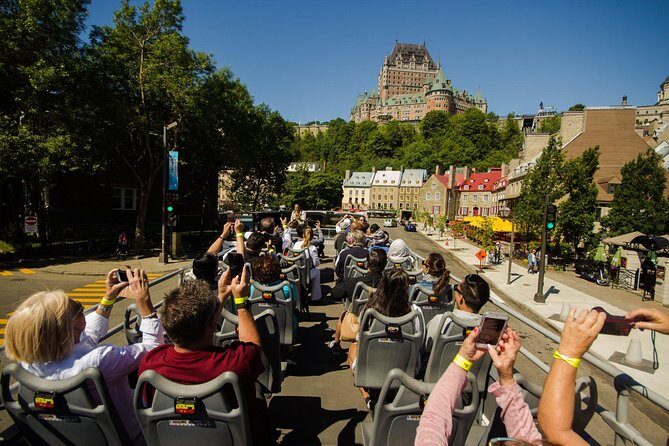
A simple strategy works really well here. I’d do one full loop for context, then use a 2-day ticket (if your schedule allows) to repeat the route and stop longer at the places you care about. That approach matters because Quebec City’s main sights aren’t all clustered in one easy flat zone. With a second day, you’re not wasting time guessing what you should prioritize.
If you only have time for one day, still try to do the full route at least once. You’ll come off the bus with a mental map fast—and then your walking time gets much more efficient.
Place d’Armes and the Fort Museum: start with the reason Quebec City matters
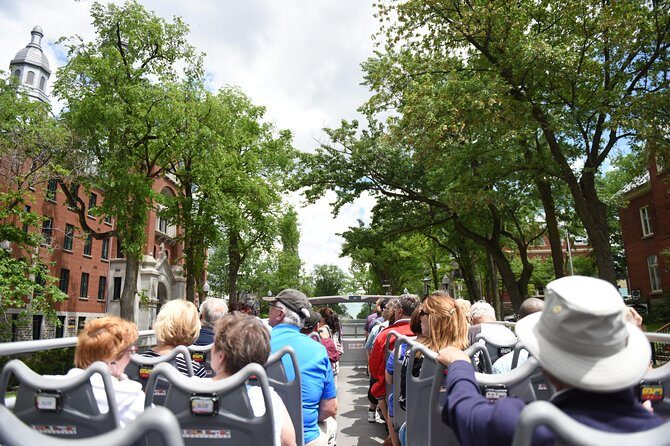
The route’s early stop is Place d’Armes (Fort Museum and Musée de l’Amérique francophone). This is a strong “kickoff” area because it immediately places you in Quebec City’s fort-and-frontier story, and it’s an easy place to decide what kind of visit you want next: military history, old-town streets, or viewpoints.
From here, you’ll also feel the rhythm of the city. The bus gives you the big sights, but the real value is that you can choose when to trade speed for detail—especially later around the fortifications and Plains of Abraham.
De la Couronne (Quartier St-Roch): the walking and food side of town
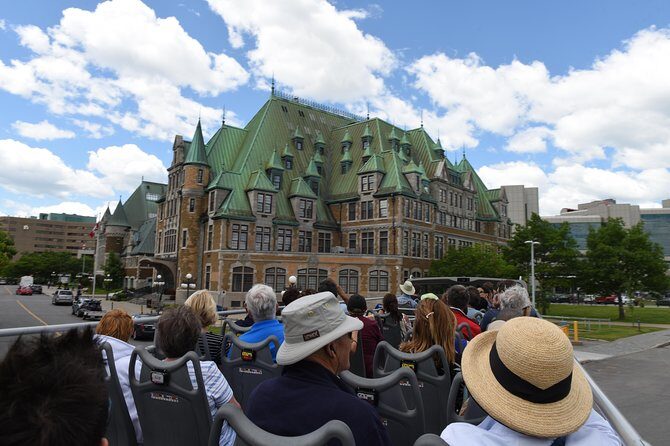
Next up is Quartier St-Roch, near de la Couronne, where you’ll find shopping and more casual restaurant energy. This stop is useful if your plan includes an actual meal break rather than museum-to-museum pacing.
If you’re hoping to mix sightseeing with everyday Quebec City life, this is the zone that helps. You’re also not trapped in the old-town bubble, which can make your overall day feel less rushed.
Musée de la civilisation and the riverfront: culture plus views
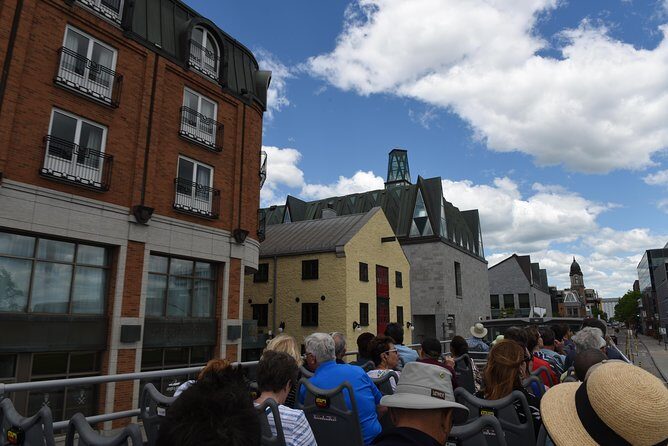
A key stop is Musée de la civilisation (near 85 Rue Dalhousie). Even if you don’t go inside, the area works because it connects museums with riverfront strolling options.
The route also passes by Place de la FAO and the quays/promenade areas, with the Louis-Jolliet Boat and nearby interpretive spots in the broader mix. This part of the ride is where you often start noticing the city’s shape—how the water and lower streets relate to the higher districts above.



Practical tip
If you like photos, this stretch can be a good one to sit upstairs early in the ride while the light and angles are still working.
Place Royale and Notre-Dame des Victoires: Old Québec without the guesswork
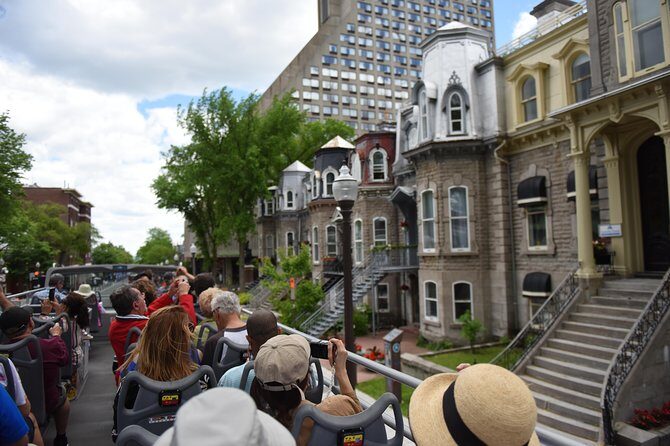
As the bus moves along, you’ll reach the cluster around Place Royale and Notre‑Dame des Victoires Church (near Trav. Québec‑Lévis). This is classic Quebec City territory: historic settings, church facades, and the kind of street atmosphere you’ll want to slow down for.
What I like about having this on the bus route is that it saves you from getting lost trying to connect these landmarks by foot. You can see what’s nearby, then hop off to explore at your pace.
A smaller advantage: the bus route also lists shopping and food stops in this area, which makes it easier to turn a quick look into a proper wander without backtracking.
Vieux-Port and Old Port Market: where the day starts to feel like a trip
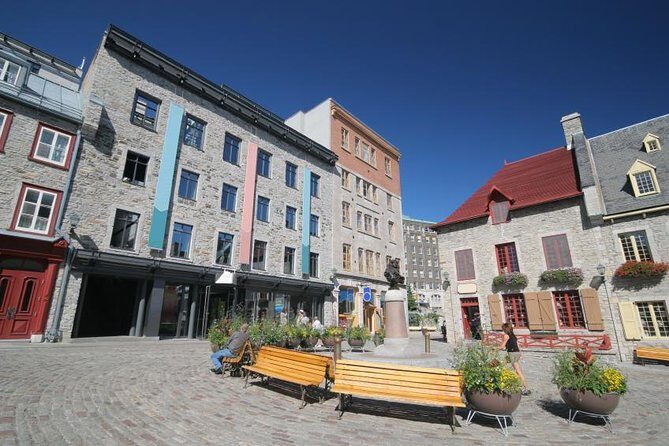
The bus then hits the Vieux-Port area (near 306 Rue Saint-Paul) and the Old Port Market zone. This is the kind of stop where you can do two things fast: enjoy the waterfront atmosphere and decide whether you want to spend time inside markets, shops, or just walking the promenade.
This part also helps you understand Quebec City’s layout. You see how Old Québec’s core connects to the busier port-side streets, and you get a sense of where your best strolling loops might be.
Observatoire de la Capitale and Parliament Hill: your “one-stop viewpoint plan”
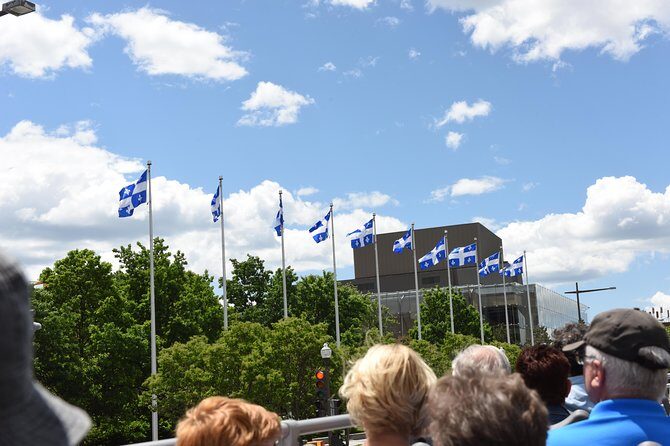
If you want one stretch that feels like the city’s power center, it’s the segment around Observatoire de la Capitale and Colline Parlementaire. The route lists stops near the Parliament buildings, the Fontaine de Tourny, and the Promenade des Premiers ministres.
This is where the bus’s open-top setup shines. You can take in wide views without committing to a long climb right away. Then, if the viewpoints click for you, you can hop off and spend more time in that area.
Plains of Abraham and the Musée des plaines d’Abraham: history you can feel
Next comes Plains of Abraham territory (near Gén.-De Montcalm and around the Plains of Abraham museum area). This isn’t just a scenic stop. It’s the kind of place where the ground itself helps you understand the story the city tells.
The bus makes it easy to connect the Plains with nearby landmarks, especially because it also routes toward the Citadelle area right after. That means you can stitch together military history + views + old-city atmosphere without wasting time in transit.
Downside to plan around
This is also a popular stop. On busy days, you may find buses more crowded right here—so it’s smart to avoid making a tight schedule assumption.
Citadelle area, Blockhaus traces, and a viewpoint-style promenade
The route then pulls through stops that relate to Citadelle and surrounding fortification landscapes, including areas near Monument Confucius, 1 Av. du Cap Diamant, and Vestiges du Blockhaus. You’ll also get a stop connected to Promenade des Gouverneurs.
Even if you don’t go into the Citadelle complex, this section is useful because it gives you the fortification scale. You understand why Quebec City is famous for its defensive setup—and you get the dramatic upper-city angles that make the photos look like postcards.
Museum and art pause: Grande Allée O
One of the route’s helpful additions is a stop near 290 Grande Allée O, with the Museum of Fine Arts listed alongside the Plains of Abraham area. This works for people who want one cultural break without booking extra transport plans.
You can use the bus to reach the museum area, then decide on the spot if you’ll do a quick inside visit or just enjoy the surroundings and keep moving.
Avenue Cartier shopping and Saint-Jean-Baptiste: a different pace
As the route moves away from the most formal historic zones, you’ll hit a more everyday Quebec City feel. Stops include areas near Cinéma Cartier (shopping and restaurants) and then further along toward 175 Rue Saint-Jean and Saint‑Jean‑Baptiste Church.
This is an excellent fit if you want a change of scenery: less fortress energy, more neighborhood wandering. It also helps if you want a place to browse, snack, or grab a drink without feeling locked into museum schedules.
Palais Montcalm, Le Capitole, and Parc Canada: culture-and-stroll fuel
Another notable stop is near 931 Rue Saint‑Jean, where you’ll see Palais Montcalm, Le Capitole, and Parc Canada listed. The bus route also mentions dining and parking in this area, which makes this stop practical when you’re tired and want to sit down for a while.
If you’re the kind of visitor who likes to mix walking with one planned cultural stop, this section gives you options. You can hop off, check what’s on, and still get back on the bus without stress.
City Hall / Hotel de Ville: a clean finish to the loop
The tour’s later stop is at Édifice Thaïs‑Lacoste‑Frémont (City Hall / Hotel de Ville). It’s a good end point because it sits in a central, easy-to-orient location—so wrapping your loop here can make the rest of your day simpler.
Even if you don’t spend much time at City Hall itself, ending here can be convenient for your next plan, whether that’s another walk or heading back toward where you’re staying.
Onboard audio, Wi‑Fi, and the headset setup
The tour uses an audio experience with earphones and is offered in 10 languages. That matters because Quebec City’s street names, districts, and historic references are easier to follow when the narration catches up with what you can actually see outside.
Audio is also a time-saver. You don’t need to stop reading signs mid-walk. You get the story while the bus rolls forward, then you can hop off when you want more detail.
The tour also includes onboard Wi‑Fi, which is a practical add-on if you’re coordinating plans or checking opening hours for a museum you might add on the fly.
Price and value: about $46.93 per person
At $46.93 per person, this isn’t a “budget only” option, but it’s also not hard to justify. The value is in what you buy with your ticket: a 2-hour overview ride, hop-on hop-off flexibility, audio in 10 languages, and onboard Wi‑Fi.
It becomes better value if you use it as intended:
- do the loop to get oriented
- hop off for at least a few highlights
- return to the bus more than once, especially with the 2-day option
If you only ride once and skip most hop-off points, the cost can feel steep. But if you’re planning a sightseeing day where you’ll want both viewpoints and walking breaks, it tends to pay off.
Logistics that can make or break your day
Hop-on hop-off sounds simple, but the real factor is crowding. The route can get packed, and some stops may have longer waits between buses than you’d hope. On a cold day, that can be extra annoying because the open-top deck is great for views but not great if you’re shivering.
A few practical moves that help:
- arrive with your mobile ticket ready before you reach the bus door
- if you’re buying multiple passes online, you might have to handle separate access at the first stop area rather than expecting everything to split automatically
- if you can, plan your most important hop-off moments for earlier in the day
Also, be aware the experience may rely heavily on recording rather than a live guide at all times. That’s not a dealbreaker, but it’s worth knowing if you prefer interaction.
When this hop-on hop-off works best (and when it doesn’t)
This is a strong choice for first-time orientation and for people who don’t want the hassle of taxis or figuring out the most efficient walking routes. It’s also ideal if you want a flexible plan: ride, stop, eat, return.
It’s less ideal when the city is under heavy pressure—think cruise-ship days or festival crowds. In those moments, queues can form, buses can sell out or fill quickly, and you might spend more time waiting than sightseeing.
If you hate lines and hate standing outdoors, you’ll likely have a better day choosing off-peak timing or using the bus more sparingly.
Should you book Quebec City Hop-On Hop-Off?
I’d book it if you want an efficient way to see a lot of Quebec City fast, especially if this is your first visit. The open-top views plus 10-language audio make the route feel informative without turning your day into a homework assignment. Add a 2-day plan and you can turn one overview ride into a paced, personal itinerary.
I’d hesitate if your trip lines up with the busiest days and you’re the type who can’t tolerate long waits. If crowds are your biggest headache, consider building more walking into your schedule and use the bus only for the long jumps between districts.
FAQ
FAQ
How long is the Quebec City Hop-On Hop-Off tour?
It’s listed at about 2 hours.
Can I hop on at any stop?
Yes. You can board at any of the bus stops.
Is the audio available in English?
The tour is offered in English, and the onboard audio tour is available in 10 languages.
Does the ticket include Wi‑Fi?
Yes, onboard Wi‑Fi is included.
What’s the approximate price per person?
The price is listed as $46.93 per person.
Is hotel pickup included?
No. Hotel pickup and drop-off are not included.
Are there options for 1-day and 2-day tickets?
Yes. You can choose between 1- and 2-day ticket options.
Do I need a printed ticket?
The tour uses a mobile ticket. Some situations may require you to get separate tickets printed at the first stop area, especially if you bought multiple tickets online.
What happens if weather is poor?
This experience requires good weather. If canceled due to poor weather, you’ll be offered a different date or a full refund.
What is the cancellation window?
Free cancellation is available up to 24 hours in advance for a full refund.