REVIEW · QUEBEC CITY
Quebec City: Double Decker Express Tour
Book on Viator →Operated by Unitours · Bookable on Viator
Old Quebec feels huge, even on foot. This double-decker express tour compresses the big sights into about one hour, with views from the top deck and guided commentary. You’ll drive past key landmarks and also get a feel for how Quebec City is laid out—Upper Town and Lower Town in one smooth loop.
I love the quick “orientation” value: you’ll spot places you’ll want to revisit later, without burning an afternoon walking. I also like the practical comfort factor, especially the chance to ride high for angles you can’t get at street level.
One thing to weigh: a chunk of the narration uses headsets, and it’s not always delivered like a live, high-energy storyteller. If you’re sensitive to audio quality or prefer a fully interactive guide, plan your seat and headset setup carefully.
In This Review
- Key Things You’ll Notice on This Quebec City Express Ride
- Double-Decker Express: What “1 Hour” Really Means in Old Quebec
- Where You Start: 12 Rue Sainte-Anne and How to Avoid Early-Trip Stress
- The Ride Style: Top Deck Comfort, Timing, and the Heat/Cool Factor
- A note on traffic timing
- Headsets and Narration: How to Get the Audio to Work for You
- Plains of Abraham: The Big Open Space Viewpoint Start
- Grande-Allée and Place d’Youville: Street-Level Classics Without the Long Walk
- Château Frontenac: The “Photo Magnet” Where the Tour Really Lands
- Parliament Building and Tourny Fountain: The Formal Side of Old Quebec
- Manège Militaire and Rebuilt After a Fire: Architecture With a Story
- La Citadelle and Upper Town Views: Getting the Height in Your Head
- Bassin Louise and the City Views: A Pause for Your Eyes
- Old Quebec Split: Lower Town and Upper Town in One Loop
- What You’ll Learn Depends on the Guide (Example Names: Jacques Lemieux, Raymond, Karen)
- Value for $28.22: Why This One-Hour Tour Can Be the Best First Move
- When This Tour Works Best (and When You Should Consider Alternatives)
- Practical Tips Before You Book
- Should You Book the Quebec City Double Decker Express Tour?
- FAQ
- How long is the Quebec City Double Decker Express Tour?
- Where does the tour start and end?
- Is the tour offered in English?
- Do I need a printed ticket?
- How large is the group size?
- Are service animals allowed?
- What’s the cancellation and weather plan if the tour can’t run?
Key Things You’ll Notice on This Quebec City Express Ride
- Double-decker top-deck views that make the city feel instantly legible
- Headset-style narration paired with a lot of drive-by sighting time
- A tight route that helps you decide what to explore next
- Lower Town and Upper Town coverage in one pass around Old Quebec
- Major landmarks on the loop: Plains of Abraham, Grande-Allée, Château Frontenac
- Different guides, different vibes depending on your departure time and day
Double-Decker Express: What “1 Hour” Really Means in Old Quebec
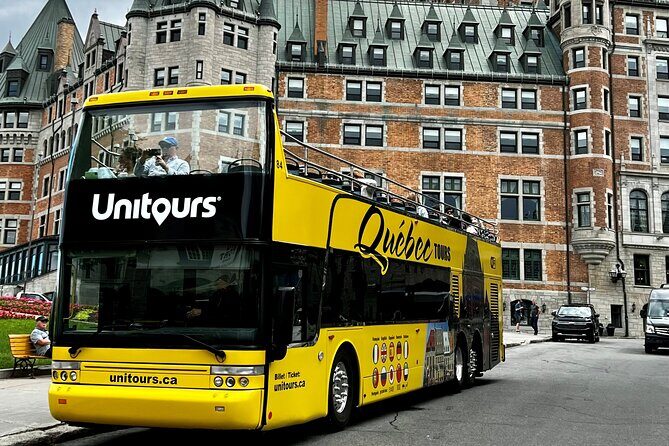
This is built for people who want the highlight reel with minimal hassle. In roughly an hour, you’ll see a run of landmarks that define Quebec City: the historic spine of Old Quebec, dramatic viewpoints around the Plains of Abraham area, and the showpiece views around Château Frontenac. The format is simple: you ride, you look, you listen, and you get your bearings fast.
That speed is the point. Quebec City can feel like a maze once you’re inside the walls. This tour helps you map it in your head—where Lower Town sits, where Upper Town climbs, and how the major monuments relate to each other. Think of it as the “first navigation step” for planning the rest of your trip.
Also, the double-decker layout matters more than you might think. Several stops are best seen from an elevated angle, and the top deck gives you that cleaner, wider city-picture feeling without stopping to shuffle through crowds.
You can also read our reviews of more city tours in Quebec City


Where You Start: 12 Rue Sainte-Anne and How to Avoid Early-Trip Stress
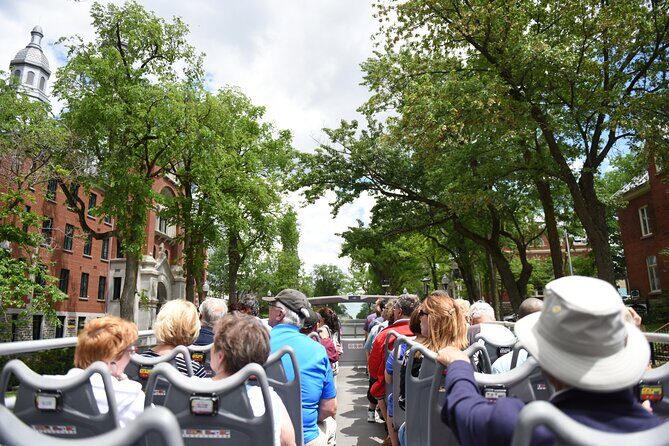
The tour starts (and ends) at 12 Rue Sainte-Anne, Québec (G1R 3X3). Since the route is time-based and you’re not hopping on and off, arriving a little early helps. One practical tip I picked up from the experience vibe: show up early enough to get your headset situation straight before the bus rolls.
You’ll also be dealing with a city that has narrow streets and controlled traffic flow. The driver’s job is not just “drive around.” It’s positioning, timing, and getting everyone through without losing too much time. When roads get busy, you may feel it in the ride pacing.
The Ride Style: Top Deck Comfort, Timing, and the Heat/Cool Factor
This is a double-decker bus experience. On warm days, being up high can feel like a small escape hatch: you get moving air, and you’re out in the open where it’s easier to enjoy long views. On very cold days, you’ll want to bundle up—some riders noted that it can feel chilly depending on conditions and where you sit.
Seat choice is also more important than people expect. If you want clear views from the upper level, watch for anything that blocks sightlines. One tip that came up: avoid one side if branches hang lower on a particular day. If the weather is sunny, bringing sunglasses helps too, because you’ll be looking up and out for stretches.
A note on traffic timing
Because this is a city loop, late-day departures can bring more stop-and-go. That doesn’t mean it’s a bad tour—it just means your “one hour” can stretch when roads get loud and busy. If you want the smoothest experience, earlier departures tend to feel calmer.
Headsets and Narration: How to Get the Audio to Work for You
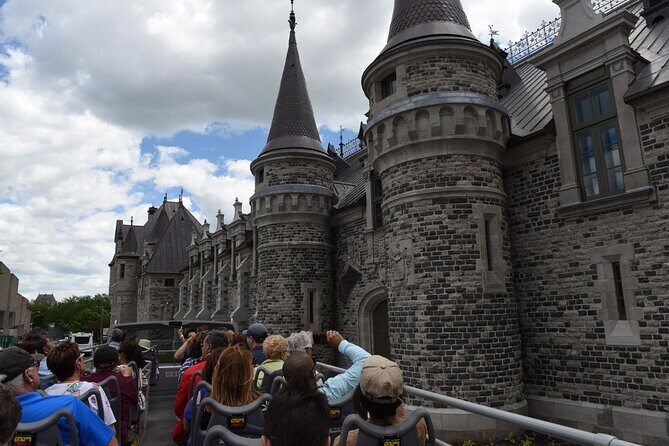
The commentary is delivered through headsets (earbuds). When it’s working well, it’s great: you can hear the facts tied directly to what you’re seeing outside. Several people liked how the headsets made the experience easy to follow.
But here’s the drawback to plan around: some riders found the audio setup confusing, especially if there are multiple earphone insertion points. If you get on, take two minutes right away to confirm you’re plugged into the correct slot and test sound before the bus gets moving too far.
Another consideration: some departures feel like guided storytelling, while others feel more like pre-recorded narration. That’s not automatically good or bad—it’s just a different style. If you’re hoping for lively back-and-forth Q&A, you may find this more “ride with explanations” than “chat with a host.”
Language switching is another detail to know. You may hear narration moving between French and English at times. If you’re not comfortable with both, pick a seat where you can hear clearly and avoid slipping too far into the noise of traffic outside.


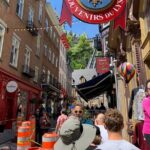
Plains of Abraham: The Big Open Space Viewpoint Start
One of the first highlights on the loop is the Plains of Abraham area. This isn’t just a random scenic stop—it’s a key historic space that helps you understand Quebec City’s dramatic setting. Even from inside a moving bus, you get a sense of how the city and its history sit together on the same ground.
Practically, it’s also a useful “reset moment.” If the street-level lanes inside Old Quebec feel tight, the open area helps the city feel less claustrophobic. You’ll likely get some of your best wide views here, especially from the upper deck.
Grande-Allée and Place d’Youville: Street-Level Classics Without the Long Walk
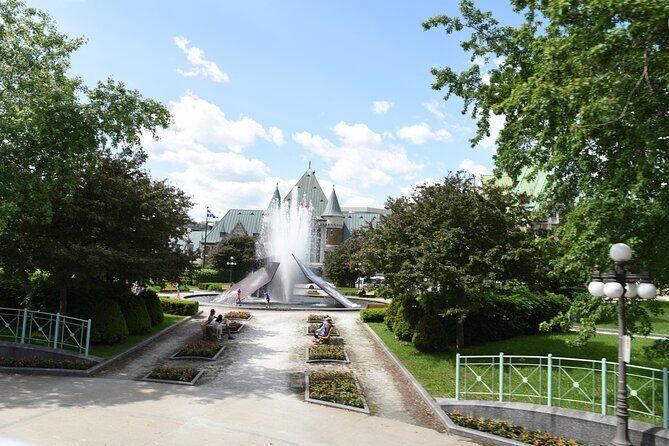
Next on the route: Grande-Allée, one of Quebec City’s most famous streets. It’s the kind of place that looks even better when you’ve seen it from above first, because you can connect the street to nearby monuments and corridors.
Then you’ll pass Place d’Youville. This is the kind of square you’d normally spend time strolling through if you had more hours. On an express tour, the value is that you get to recognize it later, so when you return on your own you already know where you are.
The tradeoff? You won’t linger. That’s not a flaw for this format—it’s just how it works. If you like to stop for photos and hang around, plan to return to your favorites after the tour.
Château Frontenac: The “Photo Magnet” Where the Tour Really Lands
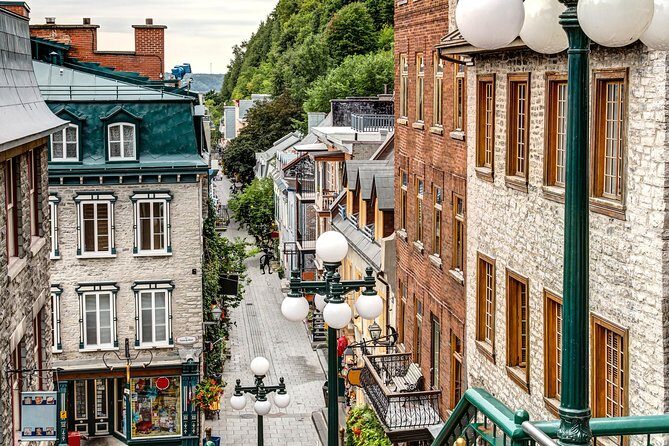
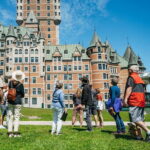
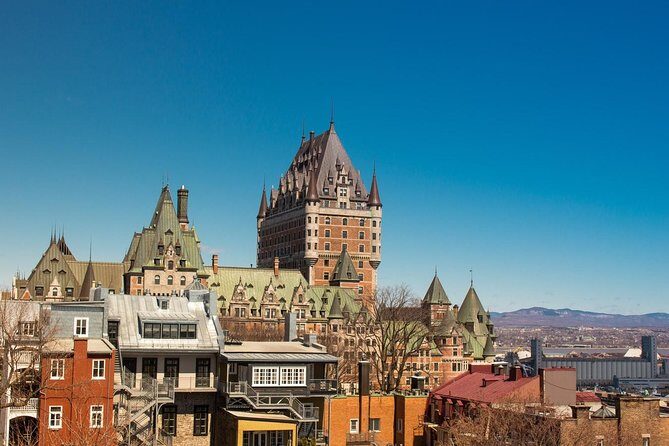
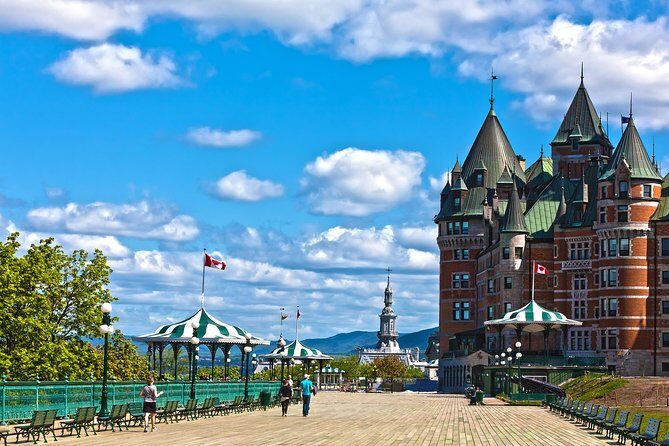
Your tour starts by the Château Frontenac Hotel, which is basically Quebec City’s landmark in one building. From the bus, you’ll get a clear view of its scale and how it anchors the Upper Town skyline.
This is one of the highest-value moments on the route because it gives you a visual reference point. After you’ve seen it from the bus window and/or upper deck, it’s easier to understand why so many streets, views, and overlooks are oriented around this area.
One small practical tip: if you want your best photos, keep your phone ready before the bus arrives at the best viewpoint so you’re not fumbling while everyone else is already aiming out the windows.
Parliament Building and Tourny Fountain: The Formal Side of Old Quebec
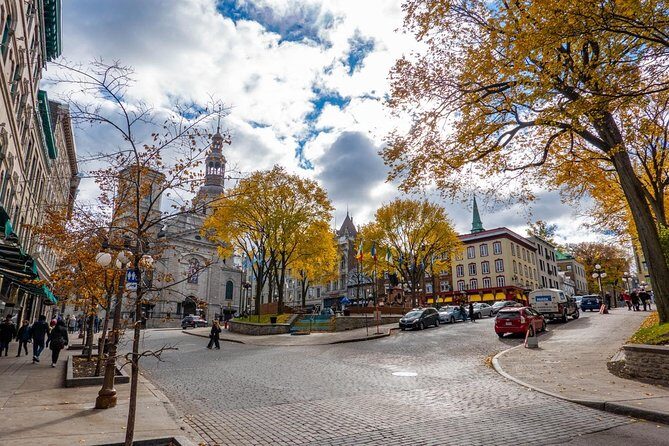
You’ll drive by the Parliament Building, which gives the tour a shift from romantic cobblestones to government-and-institutions architecture. Again, you’re not spending time walking up close, but you’ll get a clean sightline to help you recognize it later.
Then there’s Tourny Fountain. It’s one of those features that’s hard to “get” unless you see it in relation to the surrounding streets. Passing by on the bus helps with orientation: you learn where it sits in the flow of Lower Town and how it connects to the broader Old Quebec area.
If you like architecture details, keep an eye on the angles. The driver navigates tight streets, and the bus window perspective can actually make buildings look more dramatic than you’d expect.
Manège Militaire and Rebuilt After a Fire: Architecture With a Story
You’ll also pass by Manège Militaire, which was rebuilt after a fire. That detail adds meaning to what might otherwise feel like just another historic building. Even on an express tour, the narration tying a landmark to a real event helps the city feel more grounded and less like a museum set.
This is a good example of why the quick drive-by approach works. You don’t need to spend hours to get the story seed. Once you’ve heard the context, you can decide if you want to research more or return on a slower day.
La Citadelle and Upper Town Views: Getting the Height in Your Head
As you move through Upper Town territory, you’ll drive by la Citadelle. It’s the kind of fortress area you can see from many angles, but the bus ride gives you a helpful “map” of where it sits relative to the rest of the city.
Many people remember Quebec City best as a place of height—views down streets that curl and drop, and buildings perched like they’re in a natural amphitheater. This tour helps you feel that geography quickly.
The ride also includes a moment where you’ll drive by towers visible while on the Plains of Abraham route area. Those are the kind of skyline clues that make your later wandering make more sense.
Bassin Louise and the City Views: A Pause for Your Eyes
You’ll drive by Bassin Louise, and the standout is the view—looking back toward the city from that area. Even if you never step out, this type of viewpoint makes the tour feel less like a checklist and more like a set of moments that helps you understand the city’s layout.
If you’re trying to decide what to do next, this is the section that helps you feel the scale. You start to spot how far your walking plans might be, and you can choose an efficient route for later.
Old Quebec Split: Lower Town and Upper Town in One Loop
One of the tour’s smartest design choices is that half the route covers Lower Town and half covers Upper Town. That means you aren’t just stuck in one zone where everything feels similar. Instead, you get variety and a clearer understanding of the climb, the streets, and how the city organizes itself.
If you have limited time, this split is a big win. If you also have limited walking tolerance, it’s even better—you’ll get broad coverage without committing to steep stairs and long routes before you know what you actually want to revisit.
What You’ll Learn Depends on the Guide (Example Names: Jacques Lemieux, Raymond, Karen)
The experience is structured, but the delivery can vary by departure. I noticed strong signals that guide personality really matters.
For instance, some people had standout sessions with guides such as Jacques Lemieux, praising the energy and flexibility when traffic hit. Others mentioned Raymond making the tour more interesting with a warm, story-driven approach. And Karen was specifically named in a positive ride described as informative.
You might get a calm, factual narration style—or a more humorous, animated delivery. The content is tied to the sights, but the tone is what makes it feel fun instead of just informational.
Value for $28.22: Why This One-Hour Tour Can Be the Best First Move
At $28.22 per person for about one hour, this tour is good value when you treat it as planning time. You’re paying for orientation plus major-sight exposure without the fatigue of covering distance on foot. In a city where your first day can get tangled fast, that’s not a luxury—it’s strategy.
It’s also a budget-friendly option compared with many private or longer-guided tours. You won’t get in-depth museum-level detail, but you will walk away with a mental map and several targets for your next walks.
Max group size is 51, which helps keep things from feeling chaotic. And since it’s offered in English (with headsets), language shouldn’t be a barrier.
When This Tour Works Best (and When You Should Consider Alternatives)
This fits you well if:
- You want a fast first look at major Quebec City landmarks
- You like seeing from above on a top deck
- You need a low-effort way to understand Lower Town vs Upper Town
- You’re traveling with kids or anyone who gets tired walking long distances
It may not fit as well if:
- You hate headset narration that feels canned
- You want live, talk-to-you guidance and lots of interaction
- You’re especially sensitive to audio clarity and headset setup
- You’re aiming to spend time stopping and taking your time at each site
If your priority is lingering at one place for photos, a hop-on style might suit you better. This is about coverage, not extended stops.
Practical Tips Before You Book
A few smart choices can make this tour feel smoother:
- Arrive early so you can test the headset and get settled.
- Pick a departure time that isn’t prime rush hour if you hate stop-and-go.
- Bring a light layer. Old Quebec days can swing quickly, and bus temps can surprise you.
- If you want the clearest upper-deck views, pay attention to which side you choose.
Also, the experience runs with a weather requirement. If conditions are poor, you’ll likely be offered another date or a refund, depending on how they handle it that day.
Should You Book the Quebec City Double Decker Express Tour?
Yes—if you want the smartest use of your first hours in Quebec City. This is the kind of tour that helps you stop guessing and start planning. You’ll see the big names—Plains of Abraham, Grande-Allée, Place d’Youville, Château Frontenac, the Parliament Building, and more—while getting a sense of how the city is structured.
If you’re picky about narration style, go in with your expectations set: you’ll get headset commentary and a drive-by format, not a full live dialogue. For most people, that trade is worth it at this price and time.
If you tell me your travel month and whether you prefer morning or afternoon tours, I can also suggest the best time to minimize traffic stress and maximize photo light.
FAQ
How long is the Quebec City Double Decker Express Tour?
The tour is about 1 hour.
Where does the tour start and end?
It starts at 12 Rue Sainte-Anne, Québec, QC G1R 3X3, Canada, and ends back at the same meeting point.
Is the tour offered in English?
Yes. The tour is offered in English.
Do I need a printed ticket?
No. You’ll use a mobile ticket.
How large is the group size?
The maximum group size is 51 travelers.
Are service animals allowed?
Yes, service animals are allowed.
What’s the cancellation and weather plan if the tour can’t run?
You can cancel for a full refund up to 24 hours before the experience start time. If it’s canceled due to poor weather, you’ll be offered a different date or a full refund.