REVIEW · TORONTO
E-bike through Toronto’s Dynamic Neighbourhoods
Book on GetYourGuide →Operated by Toronto Bicycle Tours · Bookable on GetYourGuide
Toronto feels fast in the best way. This 210-minute e-bike tour helps you cover more ground while you learn how different communities shape the city’s next chapter.
I like how the route pushes beyond the usual postcard zones, so you get a more real sense of how people live, work, and play. I also like the small group cap of 8, which makes it feel interactive instead of one-way lecturing. One thing to consider: this isn’t for kids under 16, and you do need to be comfortable riding a bike (e-bike still means pedaling).
If you’re the kind of person who wants the story behind the streets, this is a smart way to do it.
In This Review
- Key Things That Make This E-Bike Tour Worth Your Time
- A 3.5-Hour Toronto Loop That Feels Like City Thinking
- What the Route Teaches You (Stop by Stop)
- Lower Ossington: From Overlooked to World-Recognized Cool
- St. James Town: Diversity You Can Feel in Daily Life
- Trinity Bellwoods: Green Space Where City Energy Softens
- Bloor Street Cultural Corridor: Arts, Performances, and Food From Around the World
- Graffiti Alley: Street Art That Keeps Changing
- CAMH: Toronto’s Approach to Mental Health
- Ontario Place & Trillium Park: Waterfront + Transformation in Progress
- Rosedale: Affluent Streets and the Stories Behind the Pretty
- The E-Bike Factor: Why This Tour Feels Easy (Even When It’s Active)
- Small Group Energy: Better Questions, Faster Conversations
- Price and Value: Paying for Access, Not Just Transportation
- Logistics You Should Know Before You Ride
- A Realistic Consideration: Last-Minute Changes Can Happen
- Who This Tour Is Best For
- Should You Book This Toronto E-Bike Tour?
- FAQ
- FAQ
- How long is the e-bike tour?
- What’s the group size?
- What’s included with the price?
- Are drinks included during any stop?
- Where do I meet the guide?
- What should I wear or bring?
- Is this tour suitable for kids?
- What if I can’t ride a bike?
Key Things That Make This E-Bike Tour Worth Your Time
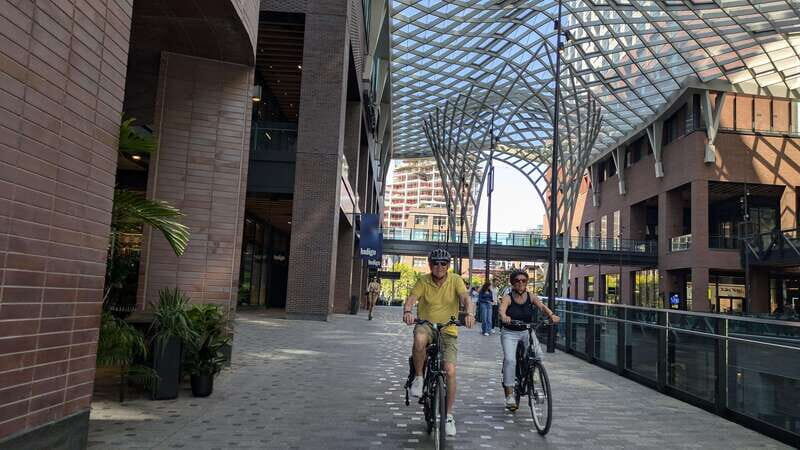
- A guided route built around neighborhoods, not big-name sights only
- E-bikes do the heavy lifting, so you can actually enjoy the ride
- Max 8 people, so the guide can tailor pace and answer questions
- Stop-by-stop local context, from culture and art to mental health and the waterfront
- All the basics included: helmet, water, and a granola bar snack
A 3.5-Hour Toronto Loop That Feels Like City Thinking
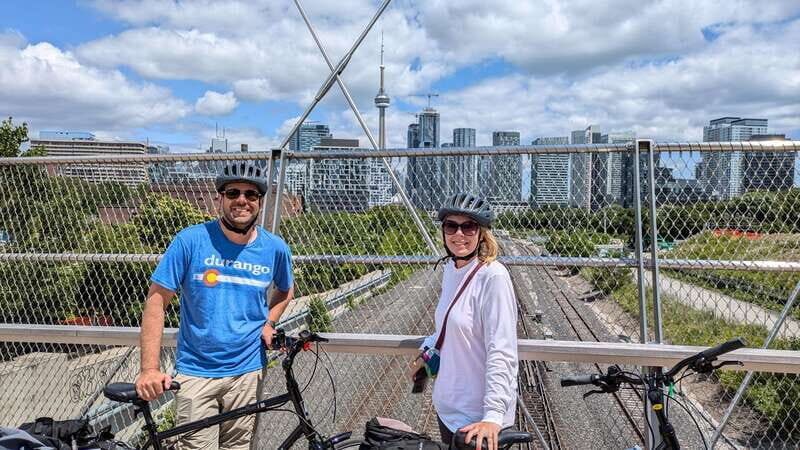
A Toronto day can get weirdly fragmented. One minute you’re on a major avenue, the next you’re staring at a landmark like you’re supposed to “get” it on sight. This e-bike tour keeps things moving so the city makes more sense as a whole.
The e-bike matters more than you might expect. It lets you travel farther with less strain, which means the ride stays fun instead of turning into endurance training. With an itinerary that strings together several distinct areas, that extra ease is what makes the whole experience work.
And the vibe is practical. You’re not being herded from one photo op to the next. You’re cruising between neighborhoods with a guide who explains what makes each one different—how it’s reinventing itself to be more livable, diverse, and sustainable.
You can also read our reviews of more cycling tours in Toronto


What the Route Teaches You (Stop by Stop)
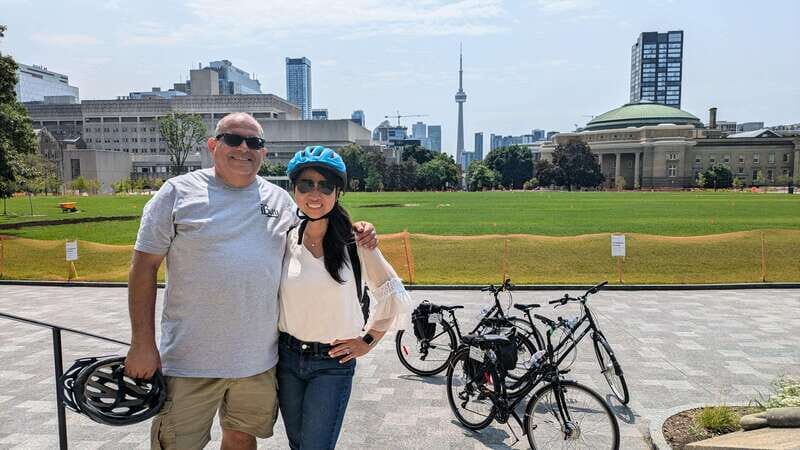
This tour is built around the idea that Toronto changes fast—and that you understand it best by seeing those changes up close. You’ll move from one unique area to the next, with each stop highlighting a different slice of Toronto’s personality. It’s especially good for first-timers who want bearings, or returning visitors who already know the core sights but want the “how locals roll” version.
Here’s what you can expect as you ride.
Lower Ossington: From Overlooked to World-Recognized Cool
Lower Ossington is framed as a neighborhood that used to be overlooked and is now one of the coolest places around. Your time there is about more than walking a few blocks. You’ll see how it earned its global reputation, and you’ll get a sense of why the area draws people in.
Why I like this stop: it shows one of Toronto’s common themes—neighborhood shifts that happen when artists, small businesses, and everyday residents pull a place into the spotlight. You come away with a clearer idea of Toronto’s “reinvention” rhythm.
St. James Town: Diversity You Can Feel in Daily Life
St. James Town is described as one of the most culturally diverse communities in Toronto. The tour’s focus is on the way locals are innovating to tackle challenges connected to food, healthcare, and social services.
This stop works well if you like learning how a neighborhood functions, not just how it looks. You’re not being shown a single museum or landmark. You’re getting context for what people are trying to improve in real life.
Trinity Bellwoods: Green Space Where City Energy Softens
Then you shift into a calmer pocket: Trinity Bellwoods. It’s presented as a favorite green space where city life slows down, and it’s perfect for people-watching.
This is a great pacing reset during a ride-heavy outing. You’ll feel the contrast between built-up streets and open space, and you’ll notice how Toronto doesn’t treat parks as “extra.” Parks are part of how the city operates socially.
A few more Toronto tours and experiences worth a look

Bloor Street Cultural Corridor: Arts, Performances, and Food From Around the World
Bloor Street Cultural Corridor is described as the city’s arts and culture hub. You can expect museums and performance venues, plus flavors from around the world—basically the kind of place where different communities and interests overlap.
Why it matters: this stop connects culture to place. It’s not just “there are attractions.” You’re learning how an area becomes a magnet for creativity, learning, and variety.
Graffiti Alley: Street Art That Keeps Changing
Graffiti Alley is exactly what it sounds like in spirit: the tour highlights the pulse of the city through street art that changes over time.
This is one of those stops where you’ll get more out of it if you slow down and look closely. Street art is often layered—style, messages, and the fact that it’s always evolving. It’s a fast way to see that Toronto’s story is still being written.
CAMH: Toronto’s Approach to Mental Health
CAMH is where the tour gets meaningful and real. You’ll explore Toronto’s progressive approach to mental health, with a focus on inspiring changes at the Centre for Addiction and Mental Health.
I like this stop because it broadens what “city understanding” means. You’re not only learning about entertainment, food, and design. You’re seeing how the city organizes support and change around health and wellbeing.
Ontario Place & Trillium Park: Waterfront + Transformation in Progress
Next is the waterfront area: Ontario Place and Trillium Park. The tour frames it as a beloved venue that’s in the midst of transformation, and the ride helps you experience that waterfront setting as part of Toronto’s present and future.
Even without getting stuck in details, you’ll pick up the key theme: the city keeps upgrading spaces, not just building new ones. It’s a practical lesson in how Toronto plans for livability.
Rosedale: Affluent Streets and the Stories Behind the Pretty
Finally, you glide through Rosedale, described as one of Toronto’s most affluent neighborhoods. The emphasis is on hidden stories behind its picturesque streets.
This can be a surprisingly good ending if you pay attention to contrasts. Earlier stops highlight culture, diversity, and change. Rosedale adds a different angle—how money, architecture, and neighborhood identity all shape what a place feels like on the street.
The E-Bike Factor: Why This Tour Feels Easy (Even When It’s Active)
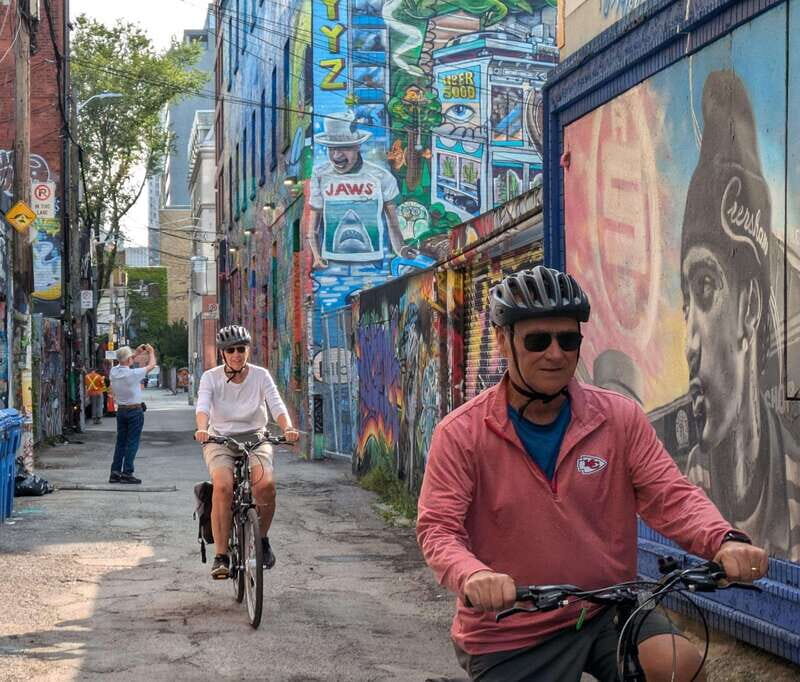
E-bikes are doing two jobs here. First, they help you cover more distance without getting wiped out. Second, they keep the mood upbeat, because you spend more time looking around and less time fighting hills or fatigue.
You’ll still need to pedal and ride confidently enough to stay safe with the group, but the assist makes a huge difference in how the 210 minutes feel. It’s the sweet spot for people who want movement without the stress.
Also, helmet and water are included, plus a granola bar snack. It’s small stuff, but it helps you show up ready and not ration energy.
Small Group Energy: Better Questions, Faster Conversations
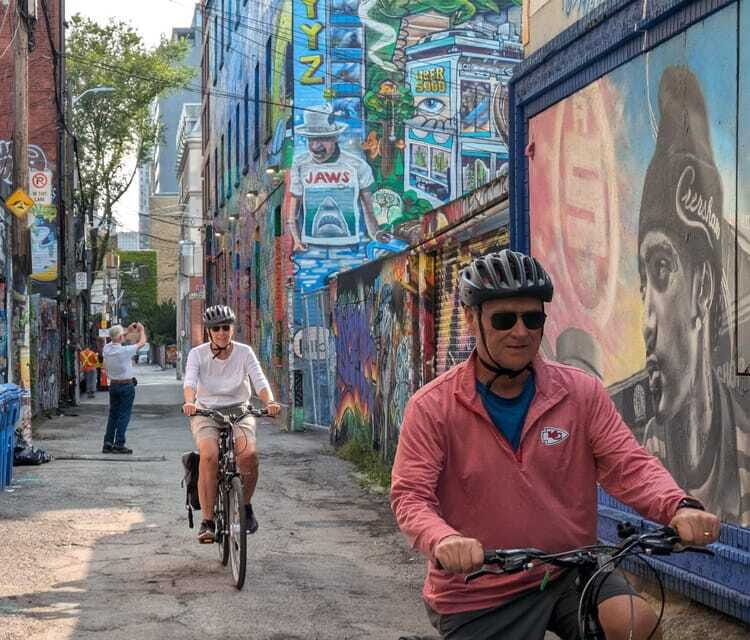
With a maximum of 8 participants, the tour doesn’t feel like a moving classroom. You’re more likely to have back-and-forth moments with the guide, and you can ask questions when something clicks.
In the guide department, one name comes up often: Mariana. People describe her as pleasant, full of useful information, and technically competent with the bikes. That combo matters. A confident guide keeps the ride smooth, and a well-prepared guide keeps the explanations connected to what you’re seeing right now.
If you’re hoping for a tour that feels conversational, this group size is a real advantage.
Price and Value: Paying for Access, Not Just Transportation
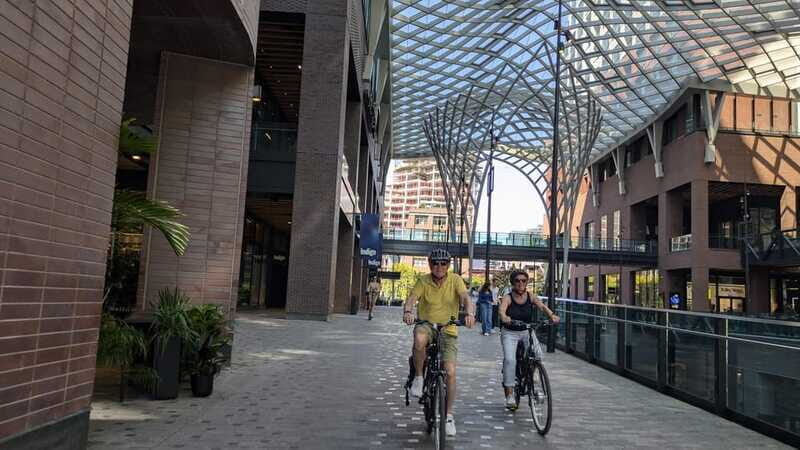
At $107 per person for 210 minutes, this isn’t the cheapest way to see Toronto. But it’s not priced like a hop-on-hop-off bus either.
Here’s why it can be good value:
- You’re getting a guided route through multiple neighborhoods, not just one district.
- E-bike assistance reduces fatigue, so you actually enjoy the full time on the move.
- Helmet, water, and a snack are included, which cuts down on what you need to buy yourself.
- Small group pacing often means you get more from the guide than you would on a larger tour.
One cost note: the tour doesn’t include drinks at a coffee stop, and gratuity isn’t included. If you plan on buying something at the stop, budget a little extra.
Logistics You Should Know Before You Ride
Meet-up point is in a parking garage at 124 St Patrick Street, Toronto (M5T 2X8), about 50m south of Dundas on the west side of the street. The garage door may need to be auto-opened if it’s closed—so get close to it. You’ll enter and follow yellow signs down to P2, section H.
If you’re stuck, there’s a direct number: 416-477-2184.
What to bring is simple: comfortable clothes. If you wear shoes that are easy for riding and walking, you’ll feel better fast.
A Realistic Consideration: Last-Minute Changes Can Happen
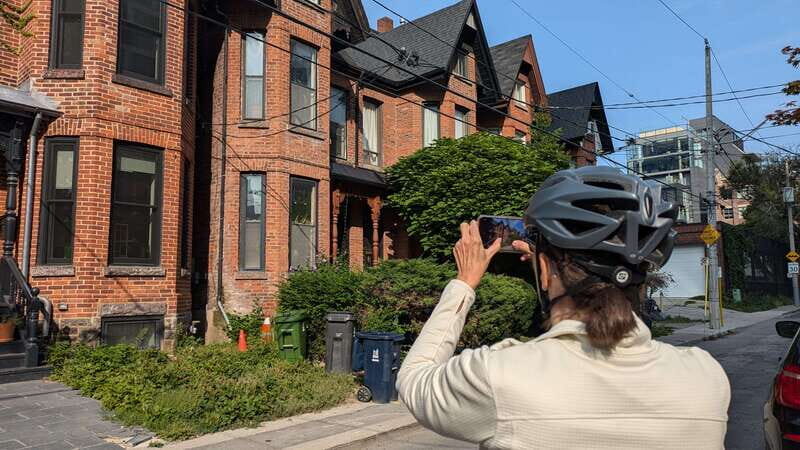
One drawback worth mentioning: at least one recent booking reported a last-minute cancellation close to the tour date, with an explanation involving scheduling misunderstanding or a sick staff member. That’s not something you can control, but you can plan around it.
If your trip is tight, keep one part of your day flexible—or have a backup activity ready—so one change doesn’t ruin everything.
Who This Tour Is Best For
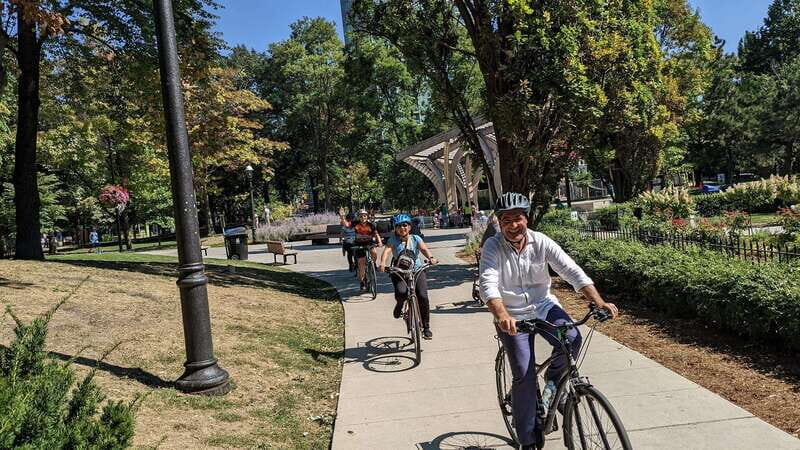
This tour fits best if you:
- want to see multiple neighborhoods in one outing
- like having context for what you see (culture, community, art, mental health, and the waterfront)
- prefer an intimate group where you can ask questions
- want an e-bike option that feels fun, not punishing
It’s not a fit if:
- you’re traveling with children under 16
- you can’t ride a bike confidently, even with an e-bike’s assist
Should You Book This Toronto E-Bike Tour?
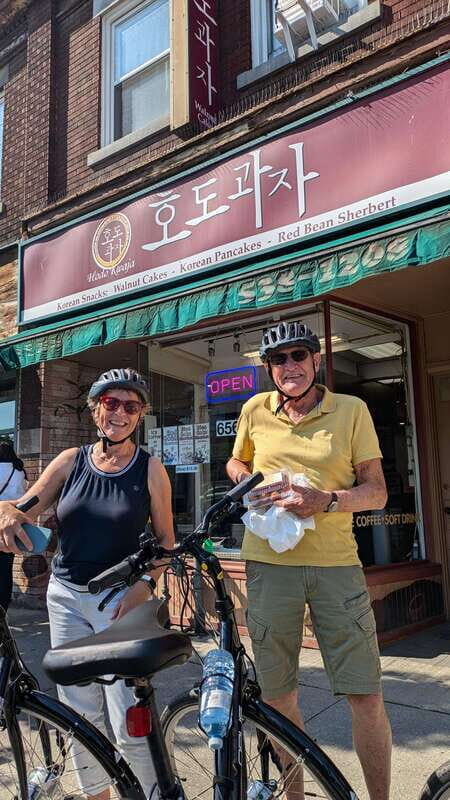
If you want a smart, active way to get beyond the obvious tourist map, I’d book it. The combination of e-bike ease, small-group pacing, and a route built around how Toronto reinvents itself makes it a strong value—especially when you want more understanding than just photos.
I’d hesitate only if your schedule is ultra-fixed and you can’t absorb a last-minute change. If that’s your situation, pick a date with some buffer.
FAQ
FAQ
How long is the e-bike tour?
It runs for 210 minutes.
What’s the group size?
The tour is limited to a maximum of 8 participants.
What’s included with the price?
You get an electric bike, helmet, water, and a granola bar snack.
Are drinks included during any stop?
No. Drinks at a coffee stop are paid by you on the spot, and gratuity is not included.
Where do I meet the guide?
Meet at the parking garage at 124 St Patrick Street, Toronto (M5T 2X8). Follow signs down to P2 level, section H.
What should I wear or bring?
Bring comfortable clothes.
Is this tour suitable for kids?
No. It’s not suitable for children under 16.
What if I can’t ride a bike?
This tour is not suitable for people who can’t ride a bike, since you still need to ride during the experience.