REVIEW · TORONTO
Toronto: Heart of Downtown 3.5-Hour Bike Tour
Book on GetYourGuide →Operated by Toronto Bicycle Tours · Bookable on GetYourGuide
Downtown Toronto looks better at bike speed. This 3.5-hour ride strings together the skyline, the markets, and the lakefront so you get an instant feel for how the city works. You’ll cover a lot of ground while staying on bike lanes and quiet streets with guides who keep the group together.
I especially like the easy pace with plenty of stops to look up, ask questions, and actually absorb what you’re passing. The stories are a big part of it too, and guides such as Carlos, Oscar, and Ryan are known for being safety-first, friendly, and ready with entertaining Toronto history and future-minded tidbits.
One drawback to plan for: it’s a long afternoon in the saddle, and the meeting point is in a parking garage that can take a minute to spot if you don’t follow the yellow signs. If you’re new to city riding, go in calm and expect a few moments of busy-road focus.
In This Review
- Key highlights at a glance
- Getting Set Up at the Dundas Parking Garage
- The Pace and Route Philosophy (Why This Feels Easy)
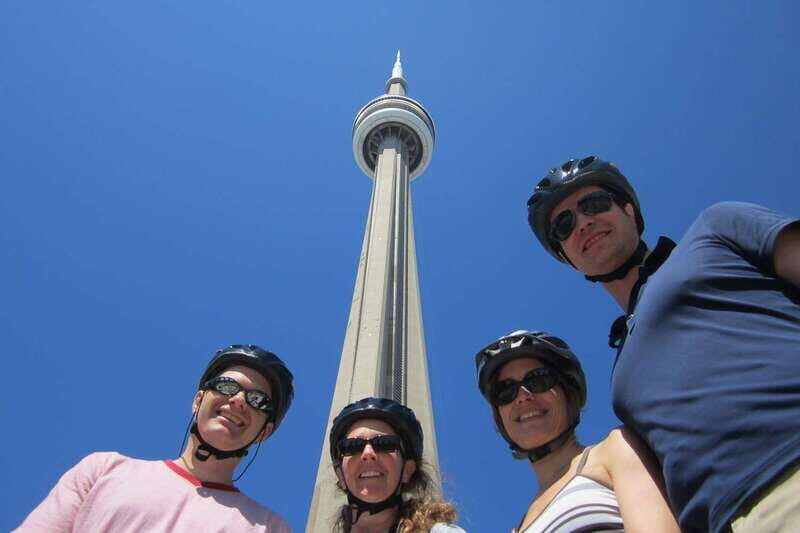
- From the CN Tower Area to Union Station and the Royal York
- Chinatown and Kensington Market: Where the Streets Get Personal
- Eaton Centre, Dundas Square, and Queen Street West: Downtown Energy at Street Level
- Art Gallery and Creative Toronto: AGO and OCAD Stops
- Hockey Hall of Fame, Massey Hall, and Rogers Centre: Sports and Performance Downtown
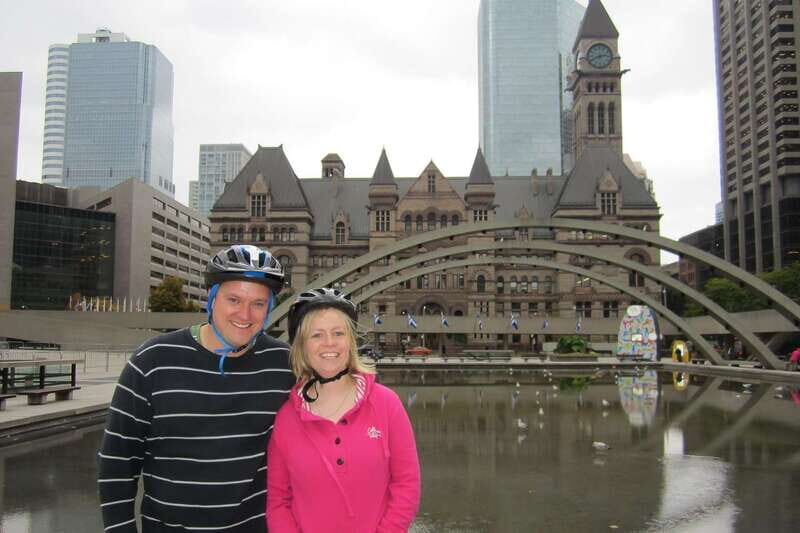
- City Hall, St. James Cathedral and Square, Sherbourne Common, and the Waterfront Pull
- Corus Quay and Sugar Beach: A Lakefront Finish With Real Atmosphere
- Price and Value: What $90 Buys You in 3.5 Hours
- Who This Bike Tour Suits Best (And Who Should Think Twice)
- Should You Book the Toronto Heart of Downtown Bike Tour?
- FAQ
- How long is the Toronto Heart of Downtown 3.5-Hour Bike Tour?
- What’s included in the price?
- Do I need to bring a helmet?
- Is this tour suitable for beginners?
- Where is the meeting point?
- What languages are the guides available in?
- Is there free cancellation?
Key highlights at a glance
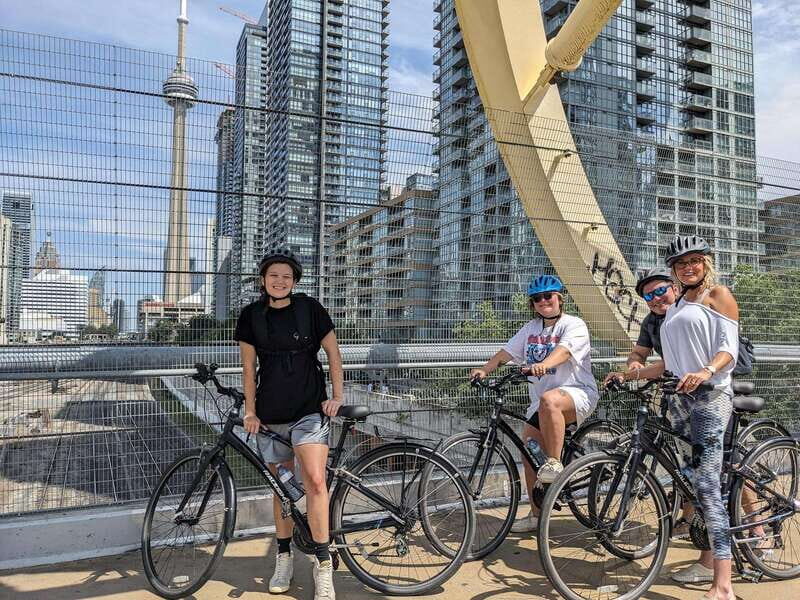
- Beginner-friendly pace with safety instructions before you roll
- Expert local guidance that keeps the group together (Carlos, Oscar, Ryan, and others are frequently mentioned)
- A big downtown sampler that goes beyond what you’ll see from a bus window
- Major sights on and near bike routes, including CN Tower and Harbourfront
- Stops for photos and stories, plus water and snacks to keep energy up
- Comfort extras like helmets, a water bottle holder, and locker space for belongings
Getting Set Up at the Dundas Parking Garage
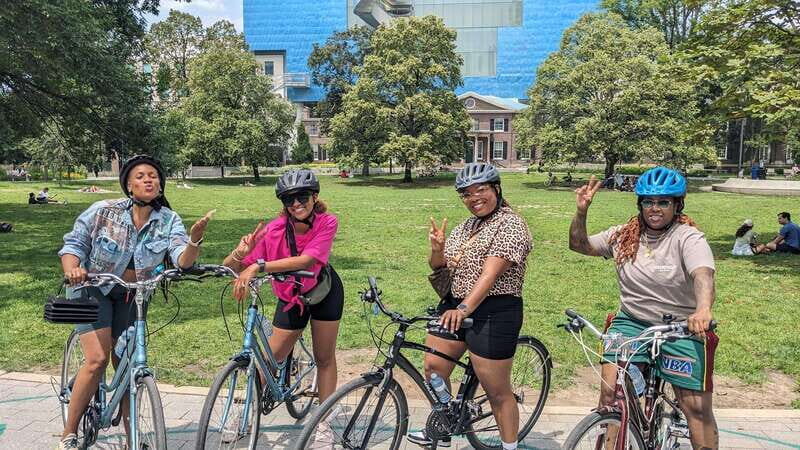
You’ll start at a parking garage about 50 m south of Dundas, on the west side of the street. Enter the garage and follow the yellow signs down to P2, then look for section H. If you’re unsure, call the local partner for directions before you give up and start circling like a confused commuter.
Plan your outfit like you’re going to ride, not dress up. The tour recommends avoiding dress shoes or fancy clothing, and bringing basics like sunglasses, sunscreen, and a camera. You’ll want something you can move in, plus a light layer if the weather flips on you.
For gear, the tour includes the essentials: a bicycle and helmet plus water and snacks. There’s also locker space for items you don’t want to carry. That’s a small thing, but it helps a lot when you’re bouncing between photo stops and markets.
You can also read our reviews of more cycling tours in Toronto


The Pace and Route Philosophy (Why This Feels Easy)
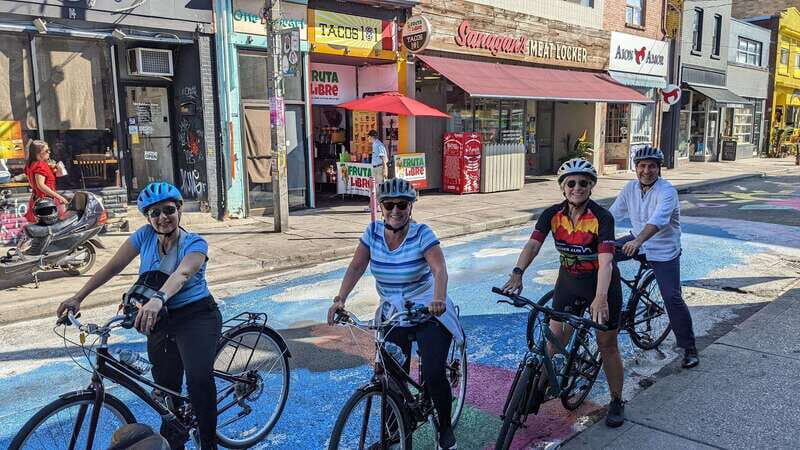
This tour runs about 210 minutes (3.5 hours) at an easy pace with frequent stops. That matters because downtown Toronto is a mix of big intersections, wide sidewalks, and roads that feel fast even when you’re not going that fast. The company keeps the ride practical: quiet streets, park paths, and bike lanes are part of the plan, and helmets are mandatory.
In one description of the ride style, the distance is roughly 15 km spread over about 3 hours, with lots of stops for photos and listening. Translation: you’re not doing a training ride. You’re doing a “see the city in one afternoon” ride.
You also don’t need to be an expert cyclist. The route is designed for beginners while still working for more experienced riders. If you’re nervous, that’s a normal starting point. The guides are big on keeping everyone comfortable and grouped up, so you’re not left behind negotiating downtown alone.
Potential watch-out: it’s not a quick pop-out tour. It’s long enough that you’ll feel it in your legs if you’re coming from a jet-lagged day. Build the rest of your afternoon accordingly.
From the CN Tower Area to Union Station and the Royal York
Your downtown highlights start in the most recognizable zone: the CN Tower area and the classic rail-and-hotel corridor around Union Station and the Royal York Hotel. This is where Toronto hits you visually. Even if you’ve seen photos, the scale is different up close, and cycling lets you take in details you’d miss standing still.
Union Station isn’t just a landmark; it’s a design statement and a transit hub that connects people fast. The value here is orientation. After you ride this stretch, you’ll understand where the big transit lines sit and which corridors feel easy to walk back to.
The Royal York Hotel adds another layer: it’s an anchor for Toronto’s older, more formal side, sitting beside the city’s modern energy. If you like architecture and urban planning (even a little), this is a good place to slow down for a few minutes and look at how the spaces frame movement.
The financial district stops help stitch the story together. Toronto’s downtown isn’t one mood; it’s a stack of eras and roles—business, culture, sports, and everyday life. From the saddle, you can actually see how they overlap.
Chinatown and Kensington Market: Where the Streets Get Personal
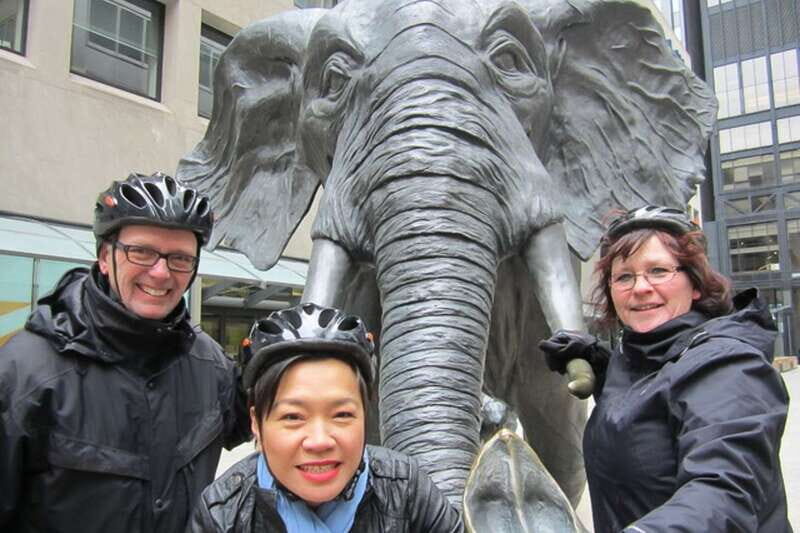
Then you shift from landmark downtown to neighborhood downtown. Expect time in Chinatown and Kensington Market, two areas that feel like they run on local rhythm instead of skyline optics.
Why this is worth it: on a bike tour, you get street-level context. You can notice how the shopfronts, side streets, and pedestrian corners connect. You also get a sense of “what to do when I’m not just sight-seeing,” like where you might want to wander later for snacks or a slower look.
Kensington Market is especially good for that. It’s the kind of place where you can’t fully appreciate it from a bus stop because the texture lives in the blocks between the landmarks. Cycling through makes you aware of that pattern, so you can plan a return without guessing.
A practical note: if you want more time for a quick bite or drink, think about adding it on your own after the tour. One suggestion that came up was that extra minutes at the markets would be nice—so treat the market portion as a taste, not a full browsing session.
Eaton Centre, Dundas Square, and Queen Street West: Downtown Energy at Street Level
The tour also spends time in the high-visibility shopping and square zone: Eaton’s Centre, Dundas Square, and Queen Street West. These stops aren’t subtle. They’re the downtown’s public living room.
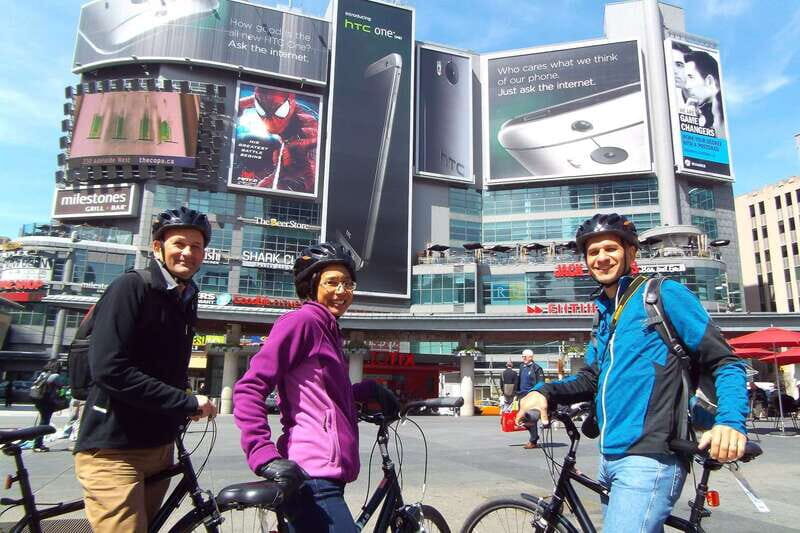
Eaton Centre is helpful because it’s a hub you’ll likely pass by again during your trip, and it’s easier to navigate once you’ve ridden there. Dundas Square gives you a sense of the city’s modern “screen and signal” vibe—big crowds, bright signage, and that downtown feeling of constant motion.
Queen Street West is where the tour starts to feel more like a route, not just a list of sights. You get the sense of which parts of downtown are built for foot traffic and which parts feel like corridors. That’s useful if you’re planning a day of walking after the ride.
If you hate crowds, don’t panic. The guides route you so you keep moving and don’t have to sit in the middle of the busiest pockets for long. Still, these are busy areas, so bring patience and keep your eyes up.






Art Gallery and Creative Toronto: AGO and OCAD Stops
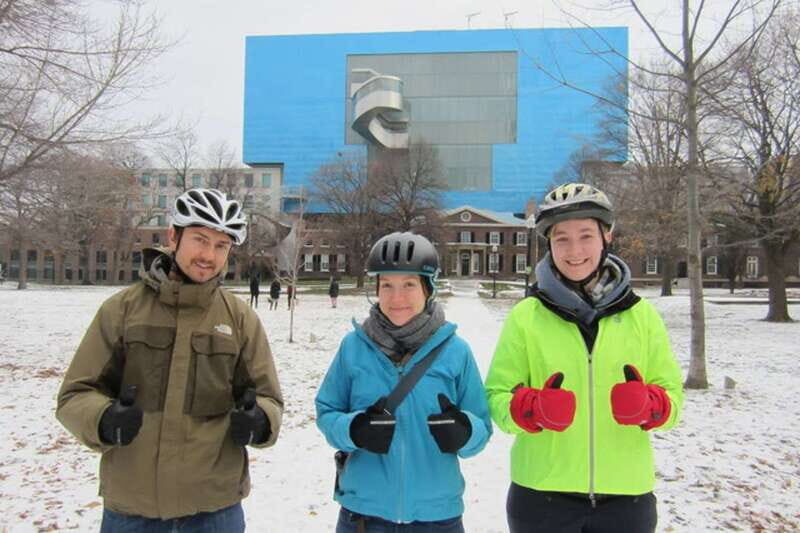
Culture shows up mid-route with Art Gallery of Ontario and College of Art and Design (OCAD). This is a great pairing because it covers two different kinds of creative energy: established art institutions and the school ecosystem that fuels fresh ideas.
On a bike, you can look at the surrounding streets and squares instead of only seeing a building facade. You’ll start noticing how museums sit within the city fabric—where people naturally gather, how the pathways connect, and where the area feels walk-friendly.
If your travel style includes food, streets, and design details, this section helps you decide what to prioritize later. You might leave with a short list of “return on foot” targets, especially if you like gallery spaces, public art, and the way creative districts change over time.
Hockey Hall of Fame, Massey Hall, and Rogers Centre: Sports and Performance Downtown
Next, the tour hits the downtown entertainment loop with Hockey Hall of Fame, Massey Hall, and Rogers Centre, plus stops like Round House Park. If you’re a sports fan, this is obvious. If you’re not, it still works because these venues reveal what Toronto organizes around.
Hockey Hall of Fame is one of those places that defines the city’s identity. Cycling nearby gives you a better sense of the surrounding blocks and how the crowds likely funnel on event days. Massey Hall adds the performance side—music and big-room culture—with a different architectural feel.
Rogers Centre is the modern scale comparison. You’ll see how Toronto balances heritage vibes with shiny big-capacity venues. And Round House Park gives you a quieter contrast, letting you reset your eyes for a minute before the next busy zone.
This is also where you can catch useful “how to plan” information. After you’ve seen the layout, it’s easier to choose which venues are worth a dedicated visit and how you might approach them without wasting time.
City Hall, St. James Cathedral and Square, Sherbourne Common, and the Waterfront Pull
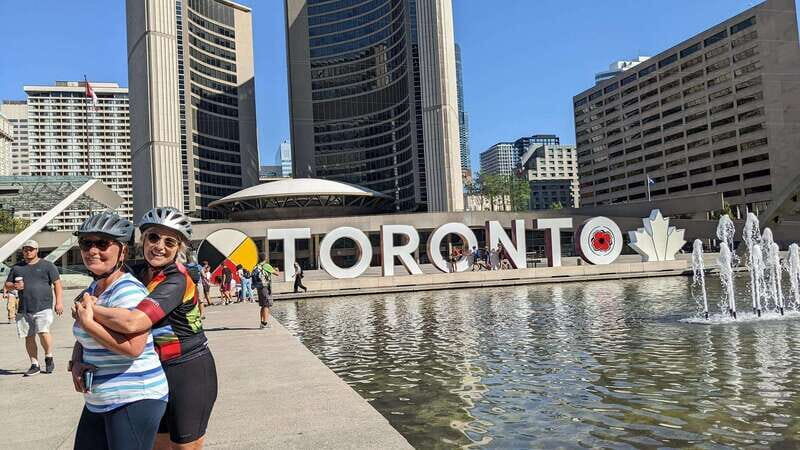
Then the tour turns toward civic Toronto and the lake edge. Expect City Hall, St. James Cathedral and Square, and Sherbourne Common as well as Harbourfront and Lake.
City Hall is powerful even if you’re not into politics. It helps you understand the downtown’s power center and how pedestrian movement connects civic spaces. St. James Cathedral and Square bring in a more historic, reflective contrast—especially good for slowing down and taking in the surrounding public realm.
Sherbourne Common is a useful stop because it’s part of the downtown’s everyday infrastructure, not just the postcard spots. You see where people gather when they’re not chasing an event ticket.
Then you reach Harbourfront and the lake. This shift is one reason bike tours work so well. The lake air changes the whole feel of downtown, and cycling keeps you moving so you get the payoff without just standing in one place.
Corus Quay and Sugar Beach: A Lakefront Finish With Real Atmosphere
The ride’s waterfront mood lands near Corus Quay and Sugar Beach. This is where the tour feels most “Toronto summer,” even if your timing is cooler. Sugar Beach has that casual energy where people hang out, and Corus Quay shows a different side of the waterfront—media, work, and the city’s connection to the lake.
Why it matters: after you’ve spent time on shopping streets and transit icons, the waterfront stops remind you Toronto isn’t only a downtown core. It’s a city that turns outward, and you’ll feel that on the pedals.
If you’re the type who likes planning your next day, this is a perfect point to decide what you want to revisit on foot. The areas around the waterfront are best when you can linger.
Price and Value: What $90 Buys You in 3.5 Hours
At $90 per person, this is not a budget add-on. But the value is strong because you’re buying a bundle: guided route, bicycle and helmet, water and snacks, and a safety-first approach that helps you cover more than walking would in the same time.
The tour also earns its keep by moving beyond a photo checklist. You get:
- Easy cycling plus frequent context stops
- Neighborhood movement through places like Chinatown and Kensington Market
- A downtown-to-lakefront sweep that makes your next days easier
In plain terms, it’s a way to get your bearings fast. One practical benefit that shows up in the pattern of guides’ style: people often end the tour ready to choose what to repeat. If you’re in Toronto for only a couple days, this can save you decision fatigue.
One more value note: guides are frequently praised for being safety-conscious and good at keeping the group together. You’ll spend your attention on the ride and the city, not on worrying whether you’re taking the right route.
Who This Bike Tour Suits Best (And Who Should Think Twice)
This tour is a strong match if:
- You’re visiting Toronto for the first time and want a downtown orientation
- You want exercise without a grind, thanks to the easy pace
- You like street-level city texture: neighborhoods, squares, transit landmarks, and waterfronts
- You want a guide to connect the past/present/future story while you ride
It might be less ideal if you’re dealing with:
- A strict time crunch and only have an hour or two
- Serious balance or confidence issues with city cycling (you may still manage with a beginner-focused approach, but the duration is real)
- A strong preference for doing everything at your own pace without stops
If you can, do it early in your trip. That way, you know where you want to return and where you can skip on later days.
Should You Book the Toronto Heart of Downtown Bike Tour?
Yes—if your goal is a quick, well-guided downtown orientation with real street-level variety. The combination of easy pace, safety-first routing, and a route that spans CN Tower, markets, cultural venues, and the lakefront makes it a smart first-afternoon plan.
I’d book it especially if you like structure without boredom. You get enough stops to digest what you see, plus breaks with water and snacks. And you’ll finish with a mental map of Toronto’s neighborhoods and sight clusters, which is what most people really want from a short tour.
If you’re uncertain about city riding, start calm, listen hard during the safety instructions, and keep your expectations realistic: 3.5 hours is long enough to be fun, not long enough to be overwhelming.
FAQ
How long is the Toronto Heart of Downtown 3.5-Hour Bike Tour?
The duration is 210 minutes (about 3.5 hours).
What’s included in the price?
The tour includes a bicycle and helmet, water, snacks, and tour guide(s).
Do I need to bring a helmet?
No. Helmets are provided, and helmet use is mandatory.
Is this tour suitable for beginners?
Yes. The tour is described as suitable for beginners and advanced riders because it moves at an easy pace and includes plenty of stops.
Where is the meeting point?
You meet at a parking garage near Dundas: about 50 m south of Dundas on the west side of the street. Enter the garage, follow the yellow signs down to P2 level, section H.
What languages are the guides available in?
The live tour guide is available in Spanish, English, and French.
Is there free cancellation?
Yes. You can cancel up to 24 hours in advance for a full refund.