REVIEW · BANFF
Discover the Rockies: 6 Self-Guided Smartphone Audio Tour Bundle
Book on Viator →Operated by Tripvia Tours · Bookable on Viator
Banff gets smarter when you drive with audio. This bundle strings together six self-guided smartphone tours around Banff and Canmore, with 185+ audio stories you can play on your own schedule.
I love how it works with real life travel: no Wi‑Fi during the tour because you download ahead, then audio plays hands-free while you move. I also love the flexibility to stop when something grabs you, skip what you’re not feeling, and let the tour continue later at your pace.
One drawback to plan for: the whole experience depends on your phone and the Tripvia Tours app, so if downloading or GPS behaves badly, the day can feel more frustrating than scenic.
Smartphone audio, no Wi‑Fi needed during the tour
Hands-free autoplay for driving and walking segments
Flexible stop-and-go routing that lets you pause as long as you like
Live GPS navigation for the Banff and Canmore walking tours
Up to 15 people can use one group booking at $35.10
A “best of Banff” mix of towns, viewpoints, nature trails, and park history
In This Review
- A Banff-and-Canmore day that feels self-guided, not self-made
- Price and time: $35.10 per group for a 3 to 6 hour menu
- What you actually get: 6 tours, 185+ stories, and offline-style reliability
- Driving the Rockies without losing the plot: Icefields Parkway plus Calgary to Lake Louise
- Pro tip I’d use: treat it like a pass, not a checklist
- Canmore walking tour: 1 kilometer of boardwalk magic and name stories you’ll remember
- The main drawback for walkers
- Banff walking tour: pavilions, cabins, a park museum story, and Bow River drama
- What to watch for as you walk
- Lake Agnes Tea House Trail and Tunnel Mountain: nature time with story support
- App realities: how to make the audio and GPS feel smooth
- Quick checklist: who this bundle is perfect for
- Should you book Discover the Rockies? My take
- FAQ
- How long is the Discover the Rockies bundle?
- Do I need Wi‑Fi or cell service during the tour?
- What language is the audio available in?
- Is this a guided tour with a person traveling with you?
- What’s included, and what’s not included?
- How much does it cost per group?
A Banff-and-Canmore day that feels self-guided, not self-made

This is the kind of tour that fits how most people actually travel through Banff: you want freedom, but you also want context. With this bundle, your car day can turn into a rotating set of stories—how places got their names, what changed over time, and what to notice as you pass. Then you can park and walk sections with audio running in the background while you navigate.
The big advantage is that you’re not stuck with a rigid schedule. If you feel like stopping for a view, you can. If you’re tired, you can skip ahead. That “choose your own pace” style is the main reason this works so well in a place where parking, weather, and crowds can swing fast.
And yes, it’s hands-free. Audio plays automatically, so you’re not constantly tapping to keep things moving. For a driving-heavy day, that matters more than people think.
Price and time: $35.10 per group for a 3 to 6 hour menu
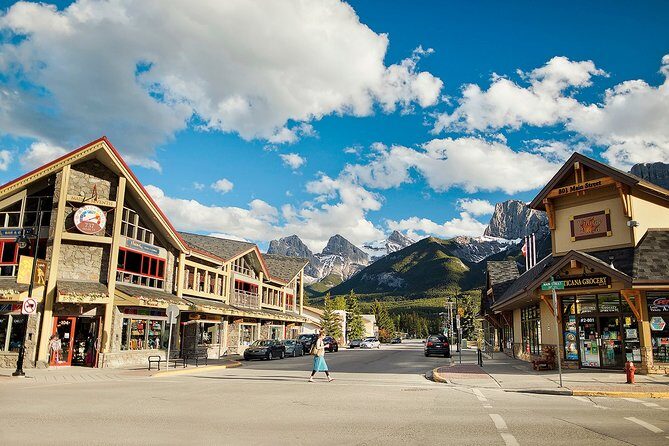
At $35.10 per group (up to 15 people), the value depends on how you’re traveling. If you’re a family or a small group sharing one booking, your per-person cost can feel low for what you’re effectively getting: multiple town walks, major scenic driving, plus nature segments.
For solo travelers or couples, it can still be worth it if you’ll actually use more than one portion of the bundle. If you only plan to do one quick walk and one short drive, your money’s better spent elsewhere. But if you like to park, wander, and keep learning as you go, it turns into a full half-day to full-day style experience.
The total time estimate is about 3 to 6 hours. That’s a useful range because it matches how Banff days really work: quick stops become longer stops once you’re out of the car and the views start winning.
You can also read our reviews of more guided tours in Banff

What you actually get: 6 tours, 185+ stories, and offline-style reliability
This bundle includes driving, walking, and hiking/nature elements, all bundled into one Tripvia Tours experience. You’re looking at six themed tours that cover Banff, Canmore, Lake Agnes Tea House Trail, Tunnel Mountain, and the driving route between Calgary and Lake Louise, plus additional Banff-area routes.
Two practical features do most of the work for you:
- Download on Wi‑Fi before you go so you don’t rely on signal during the tour.
- Lifetime Tour Access in the Tripvia Tours app, so you can reuse the audio later.
Also, the tour is private for your group. That means you’re not negotiating pace with strangers.
Important note: attraction tickets aren’t included. And some recommended places may be closed or inaccessible for seasonal reasons. The audio still helps you understand what you’re looking at, even if you can’t enter.
Driving the Rockies without losing the plot: Icefields Parkway plus Calgary to Lake Louise

This is where the bundle shines for first-timers. The driving portions turn long stretches into a guided-feeling ride, because the audio keeps pointing out what to notice and why it matters.
Included driving tours include:
- Icefields Parkway
- Calgary <-> Lake Louise
While you’re driving, the audio highlights a set of stops and points of interest—often with story-driven “name origin” style details. You’ll hear about mountain-town roots, local landmarks, and how the area’s environment shaped what people did.
A few examples of what you can expect as you cruise:
- A stop tied to how upper hot springs were discovered, with an actual suggestion to stop and visit during your tour.
- Scenic drives through places like Kananaskis Country (learn as you go, no pressure to get out).
- Explanations of why Canmore got its name, plus stories about an iconic mountain and who discovered it.
- A day’s worth of recognizable Banff moments, including mountains with nicknames and the kinds of names that make you look twice as you drive past.
There’s also a mix of “big history” and “small curiosity.” You might hear about an industrial building associated with the edges of Banff National Park. You might get a story about a tunnel through a mountain and what went wrong. Or you might get a moment of humor about a campground and starry sleep.
And yes, there are stops where you’re told to pull over and check something out on your own. The audio is designed so you can treat the day like a playlist: pause for as long as you want, then restart where you left off (at least for some segments, like the Canmore Museum stop).
Pro tip I’d use: treat it like a pass, not a checklist
The bundle encourages skipping what doesn’t interest you. That’s not just nice on paper; it prevents decision fatigue in Banff. If you keep trying to hit every story, the day gets stressful fast. Pick your favorites—mountains, park history, hot springs—and let the rest fade by.
Canmore walking tour: 1 kilometer of boardwalk magic and name stories you’ll remember
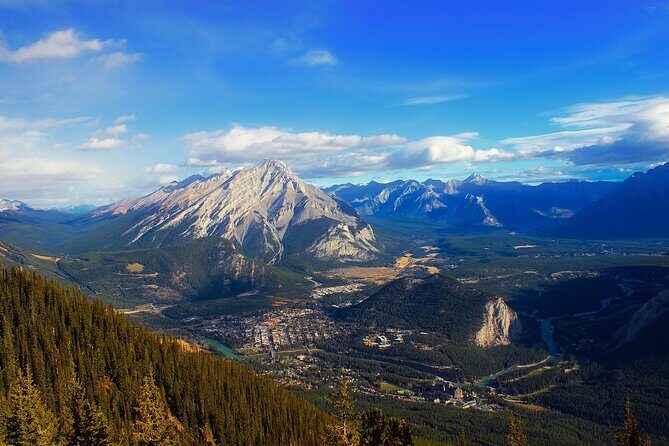
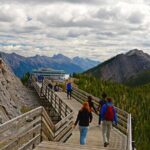
The Canmore Walking Tour is one of the more structured pieces, without feeling rigid. You’ll navigate using a live GPS map and you can spend as long or as little time at each stop. The walking segment is about 1 kilometer, and it includes creeks and ponds with fish swimming, plus forested areas where songbirds might be part of your soundtrack.
This is a smart choice because Canmore is compact and walkable, but it still has enough story density to feel like you saw more than you expected.
Here are the kinds of stops built into the route:
- A push toward the Three Sisters Gallery building, with the audio explaining why it’s worth a peek inside.
- A section crossing railway tracks and talking about the Canadian Pacific Railway and how it shaped Canmore’s development.
- A famous British red telephone box, plus an explanation of what makes those boxes special (beyond the fact you’ve probably seen one before).
- A pair of wildlife sculptures: black bears and grizzly bears, with differences called out in the audio.
- A mountain-name lesson: you’ll get meaning behind names such as Princess Margaret Mountain, Squaw’s Tit, Mount Charles Stewart, Mount Lady MacDonald, and Mount Grotto.
- A coal-mining reminder with coal mining cars and the role mining played early on.
- Stops built around place-and-water: the Bow River is talked about as it carves through Canmore.
And because Canmore isn’t just nature, you also get culture and art:
- A look at a mural of Isabelle Dube and the tragic story behind it.
- A museum stop described as having 10,000+ artifacts and welcoming visitors since 1984.
- A stroll down Main Street toward shops, restaurants, and galleries.
- A mention of a park with a Japanese-city connection (the town of Canmore shares something in common with Higashikawa).
- A set of community landmarks, including an inukshuk and an odd sculpture tied to how Canmore’s name connects to it.
A few more Banff tours and experiences worth a look

The main drawback for walkers
Because it’s a walking tour with live GPS navigation, your phone needs to be workable on foot. If your battery is low or your GPS struggles, you may have to rely more on your own sense of direction. Still, the audio is designed to be flexible about time at each point.
Banff walking tour: pavilions, cabins, a park museum story, and Bow River drama

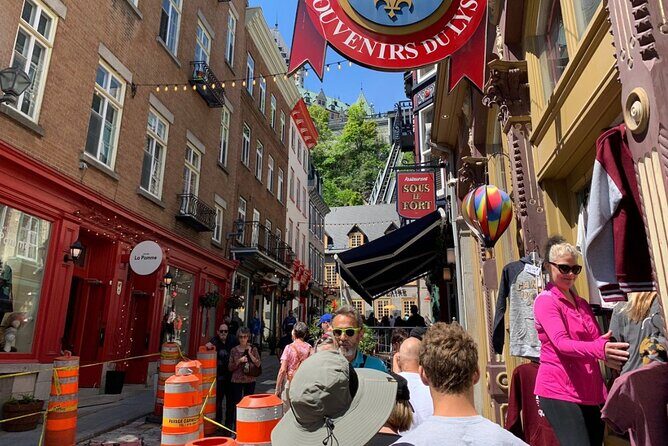
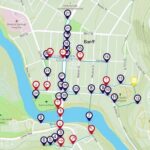
The Banff Walking Tour uses the same idea—live GPS map navigation and no rush. You can spend as long or as little time at each point of interest, which helps a lot in Banff where weather can change your plans in minutes.
This route mixes modern downtown with early Banff history and park-style design. Expect a sequence of stops that layer the town’s story, then give you a reason to look closer at what’s right in front of you.
Some of the most “wait, I didn’t know that” moments include:
- An area tied to a museum where the audio references Indigenous life around seasonal buffalo herds.
- A grand building you’re prompted to stare at (and then learn from the audio about).
- A 4-acre park built in the 1930s with terraced gardens.
- The Cambrian pavilion and Devonian pavilion, tied to ideas about wilderness protection and rustic design within Canada’s national parks program.
- A street-level clue: an elevation marker in the sidewalk that looks like a coin, plus what it means.
- Crandell Peck Cabin, built in 1907 using mostly locally sourced materials.
- The Banff Powerstation, which powered streetlights and homes in 1905.
The tour also takes you through people-and-place stories:
- Mary Schaffer Warren and her Tarry-a-while residence, connecting early exploration, writing, and art of the Canadian Rockies.
- Caribou Corner and the Brewster family coming to Banff in 1886.
- Sculptures and town features, including a “four sentries” sculpture on Banff Ave.
- A church story that starts with earlier St. Paul’s origins in 1887, then connects to the 1930s church you can see.
- A Free Masons connection at the Cascade lodge.
- A museum dedicated to preserving Rocky Mountains history and culture.
- Central park and the “big pile of rocks” feature, explained via the audio.
You’ll also get a very specific park-related history stop:
- A National Historic Site of Canada established in 1895, described as housing taxidermy mounted specimens of animals, plants, and minerals associated with the park.
Then the route continues through important buildings and memorials:
- The Dave Whyte block as one of the oldest remaining intact commercial buildings.
- Harmony Lane, built in rustic National Park style with river stone pillars.
- The Superintendent’s Residence and what a park superintendent is responsible for.
- The Banff Legion and the cenotaph built in 1920.
- A scenic finish at the pedestrian bridge over the Bow River, with a story tied to the man known as Mr. Banff.
What to watch for as you walk
The Banff walking tour is built for “slow looking.” If you treat it like a straight line, you’ll miss some of the best learning points. Let the audio guide your pace and you’ll feel like you’re walking through a timeline.
Lake Agnes Tea House Trail and Tunnel Mountain: nature time with story support

This bundle isn’t only about towns. It includes nature/hiking segments: Lake Agnes Tea House Trail and Tunnel Mountain.
What you can say with confidence from the bundle description is that these are part of the same self-guided day, meaning you can integrate them with your other stops instead of treating them as separate “trip plans.” The audio should help you connect what you’re seeing with the environment and local history, so you’re not just doing a scenic walk without context.
The bundle also notes moderate physical fitness as the baseline for participants. It’s a good fit if you can handle walking and uneven terrain without needing a fully flat route.
One “drawback” angle here: since exact timing for hikes isn’t provided beyond the total tour duration estimate, you’ll want to plan for weather. Banff weather can turn fast, and hiking time can stretch or shrink based on conditions.
App realities: how to make the audio and GPS feel smooth
This is a smartphone audio tour bundle, so the app is part of the experience. The setup is designed for offline-style use: download on Wi‑Fi first, then the tour can run without signal and without data use during the tour.
Still, I’d treat the first 10 minutes as a mini test run:
- Start with the audio downloaded and ready before you leave.
- Make sure you’ve got enough battery for the walking GPS segments and any driving stretches.
- If you notice GPS behavior getting weird, restart the app and try again.
The tour can also feel confusing if you expect signage-based directions. Some points are described through the audio, not through roadside labels. If you want less stress, arrive with time to park and settle in before the first narration begins.
And one important mental model: this is hands-free audio, not a live guide riding along with you. There’s customer service by phone and email, but the day itself is self-led.
Quick checklist: who this bundle is perfect for

This works best if you:
- Want to tour Banff and Canmore while keeping control of your own pace
- Like learning while driving past mountains, rivers, and park edges
- Enjoy short walks with meaningful stop-by-stop narration
- Have a phone ready and are comfortable using a live GPS map on foot
It might be less ideal if you:
- Hate relying on apps for navigation and audio
- Don’t want to download anything ahead of time
- Plan to do only one small stop and skip everything else
Also, you’re using your own vehicle and smartphone/tablet is not included. The bundle is built around you driving and walking yourself.
Should you book Discover the Rockies? My take
I think this bundle is a strong buy if you want a “learn while you roam” Banff day without committing to a full guided group tour. The price is low enough for a group booking to feel like a no-brainer, and the mix of Banff walking, Canmore walking, plus major driving routes is a real value play for first-time visitors.
I’d book it when you’re the type who enjoys details: how places got their names, what you’re looking at, and how the park story connects to everyday scenery. The offline-style design (download first, then no signal needed) is a big plus in a region where reception can be spotty.
If you’re nervous about app performance, do one thing: download on solid Wi‑Fi before you go, keep your phone powered, and start the tour with extra time. If you can do that, this becomes one of the most practical ways to turn Banff into more than just photos.
If you want a simple policy note: you can cancel for a full refund if you do it at least 24 hours before the experience’s start time.
FAQ
How long is the Discover the Rockies bundle?
The total experience is listed as about 3 to 6 hours.
Do I need Wi‑Fi or cell service during the tour?
No. You download the audio on Wi‑Fi before you start, and during the tour no signal is required and no data is used.
What language is the audio available in?
The tours are offered in English.
Is this a guided tour with a person traveling with you?
No. This is a self-guided smartphone audio experience with hands-free autoplay. You provide your own transportation.
What’s included, and what’s not included?
Included: smartphone audio tours (driving, walking, and nature segments), customer service, and lifetime access in the Tripvia Tours app. Not included: tickets for attractions, the smartphone or tablet, and transportation (you use your own vehicle).
How much does it cost per group?
It’s $35.10 per group, with up to 15 people participating under one group booking.