REVIEW · BANFF
Banff: Mount Norquay 2.5 or 4-Hour Guided Via Ferrata Climb
Book on GetYourGuide →Operated by Mt Norquay · Bookable on GetYourGuide
Steel ladders, Rockies, and zero experience required. This Mount Norquay via ferrata lets you climb with a harness system and a professional guide, while a sightseeing chairlift gets you near the action fast.
I love that the tour is built for first-timers: you get equipment, coaching, and a safety setup before you ever commit to the cliffs. I also love the signature moments—like the 30-meter suspension bridge—plus the big, rewarding views from the summit ridge on the Ridgewalker Route.
One consideration: you still spend real time on steep, exposed rock. If your idea of fun is a walk with minimal effort, you’ll probably feel it more on the longer Ridgewalker climb than on the shorter Explorer Route.
In This Review
- Key things to know before you clip in
- Mount Norquay via ferrata: what you’re really signing up for
- Explorer Route vs Ridgewalker Route: choose your dose of height
- Explorer Route (about 2–2.5 hours)
- Ridgewalker Route (about 3.5–4 hours)
- Check-in to chairlift: how the tour sets you up to succeed
- The climb itself: buttresses, ladder holds, and that suspension bridge
- Summit ridge views: the photo payoff on Ridgewalker
- How tough is it really for first-timers (and fear of heights)?
- Price and value: does $145 feel fair?
- What to bring (and wear) so you don’t waste time fidgeting
- Who this tour is best for (and who should skip it)
- Should you book Mount Norquay via ferrata?
- FAQ
- What routes are offered, and how long are they?
- Do I need prior climbing experience?
- What’s included in the price?
- How big are the groups?
- What should I bring or wear?
- What are the age and weight limits?
Key things to know before you clip in
- First-timer friendly via ferrata training with harness lanyards, helmet, and close coaching
- Two routes with different commitments (Explorer: 2–2.5 hours; Ridgewalker: 3.5–4 hours)
- The big thrill is the 30-meter suspension bridge, plus ladder holds on strategically placed buttresses
- Small groups (up to 8) with a 1-guide-to-every-8 setup for personal attention
- High-alpine payoff: you reach about 2,235–2,300 meters with summit ridge photo ops
Mount Norquay via ferrata: what you’re really signing up for
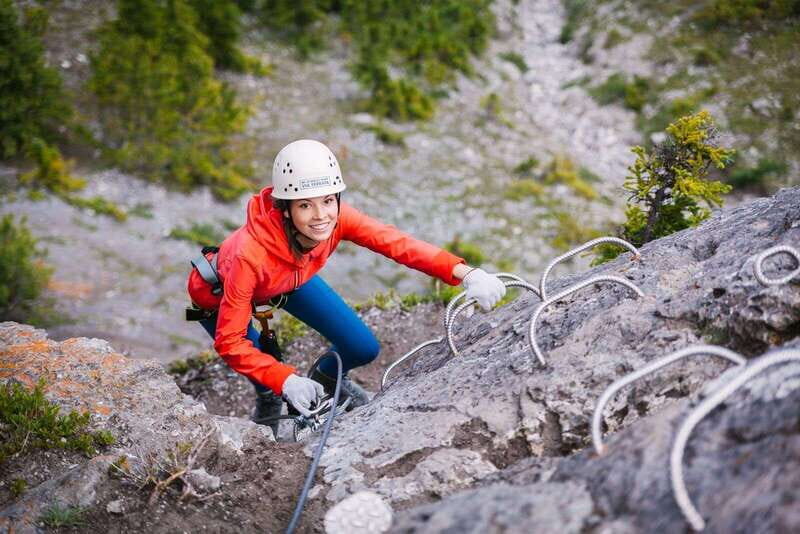
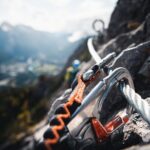
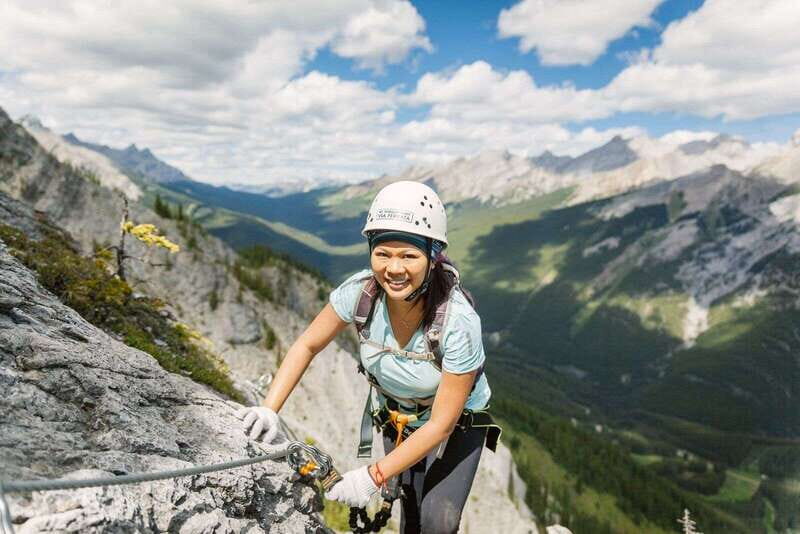
Via ferrata is basically a climb along a fixed route—steel cable, rungs, and ladder-like holds—so you’re not relying on ropes the way traditional climbing works. Here, that means you can focus on technique and confidence rather than figuring things out from scratch. You’ll be harnessed and attached to the line during the active climbing sections, which is exactly why this works so well as a first via ferrata experience.
What makes Mount Norquay special is the combination of accessibility and scenery. You’re close to Banff (about 10 minutes), you ride a chairlift as part of the experience, and you end up with serious mountain views without needing all-day hiking. In other words: you get the adrenaline of exposed climbing with a structure that helps you stay calm and moving.
The vibe is also refreshingly human. Many guides (names you might hear in the line-up include Katsu, Amanda, Zack, Jordan, Alex, Lucy, and Eli) are good at coaching nerves. Several comments point out that the guides keep it safe first, but still fun—jokes, conversation, and lots of encouragement when someone hesitates at height.
You can also read our reviews of more guided tours in Banff
Explorer Route vs Ridgewalker Route: choose your dose of height
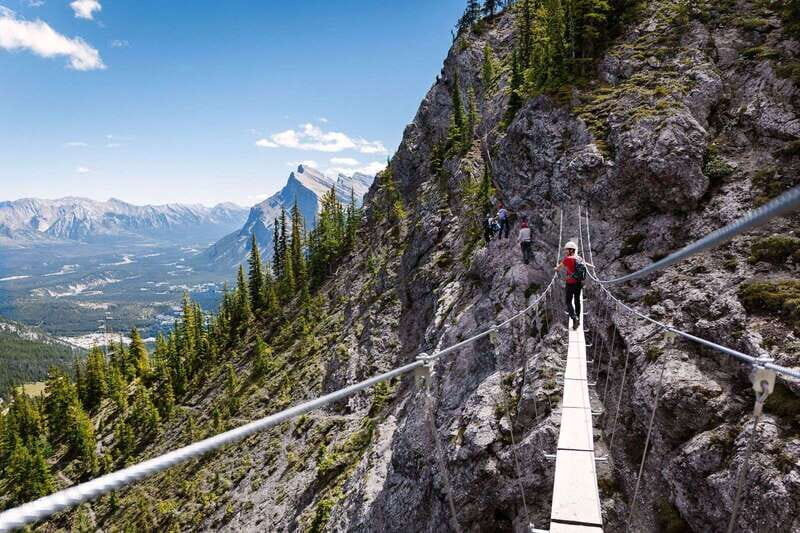
You can do this in two ways, and the route choice changes how long you’ll be on the wall and how high the summit moment feels.
Explorer Route (about 2–2.5 hours)
This is the easier on-ramp. Expect a shorter climb with a few pitches, plus the big landmark: crossing the suspension bridge. It’s about 1 kilometer of route travel and roughly 145 meters of elevation gain. You’ll reach around 2,235 meters above sea level.
If you’re new to via ferrata, this is the smarter pick. You still get the thrill of climbing on ladder-like holds and the adrenaline jolt of exposure, but the total time in motion is shorter.
Ridgewalker Route (about 3.5–4 hours)
This one adds more climbing time and more sustained exposure. Before you head out, you’ll practice on a training wall so the movements feel natural. Then you’ll continue on the Norquay cliffs, with stops along route features like the memorial, sunrise buttress, and vista buttress. You’ll also traverse the suspension bridge again as part of the route.
The Ridgewalker heads toward the Ridgewalker Summit at about 2,300 meters, with enough time at the top to take photos before you descend. You’re looking at roughly 1.4 kilometers and about 260 meters of elevation gain.
If you’re comfortable with heights—or you want the full experience and don’t mind a longer session—Ridgewalker is the one that feels most like a real summit adventure.
Check-in to chairlift: how the tour sets you up to succeed
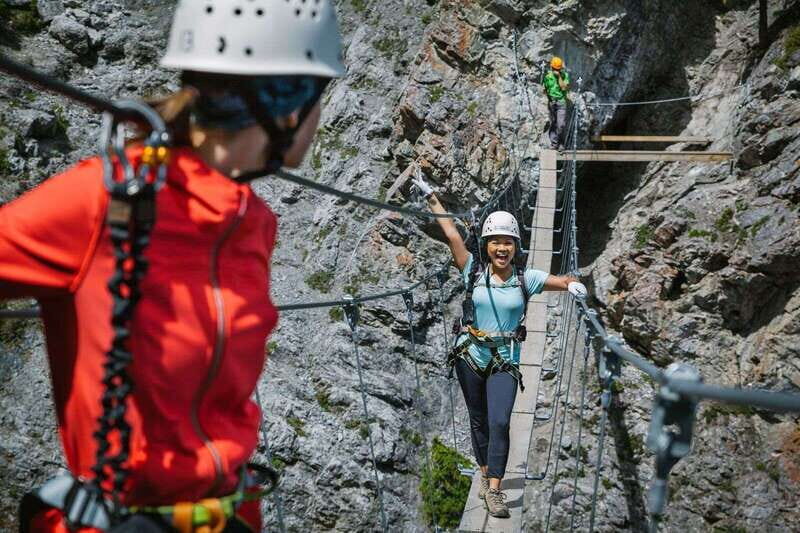
When you arrive at Mount Norquay (the meeting point can vary by option), you check in, meet your guide, and get fitted with the core safety gear: harness, lanyards, and helmet. Then there’s an equipment check. This matters more than it sounds. Getting comfortable with your harness and attachment points early reduces that first-round panic factor.
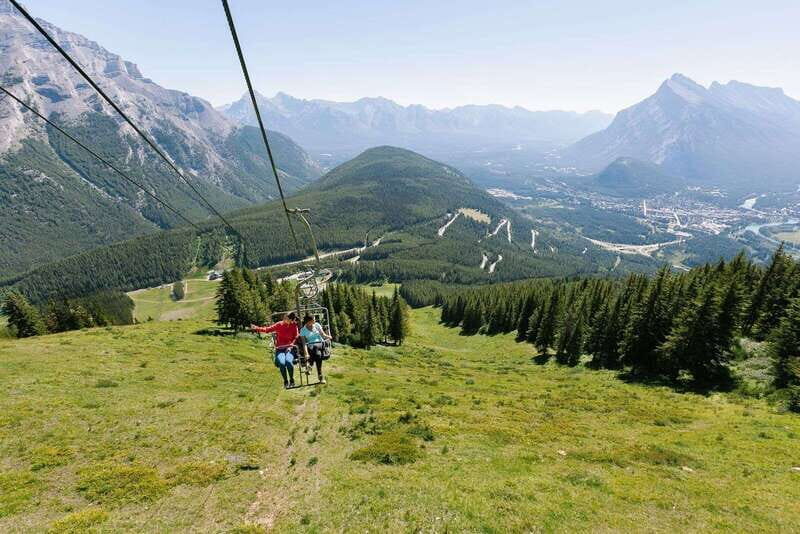
Next comes the chairlift. It’s included, and it’s not just transportation—it’s a psychological reset. You’re already getting your first big views while you’re still on stable ground. Once you’re at the starting area, the route begins with a short walk (around 5 minutes) to the first via ferrata buttress.
Then you get the coaching moment: a brief intro and a training feel for how to move from hold to hold. On Ridgewalker, there’s more practice on a practice wall before the main climb. On Explorer, you’ll jump in sooner. Either way, the goal is the same: help you trust your system and your footing before you commit to the steeper sections.
The climb itself: buttresses, ladder holds, and that suspension bridge
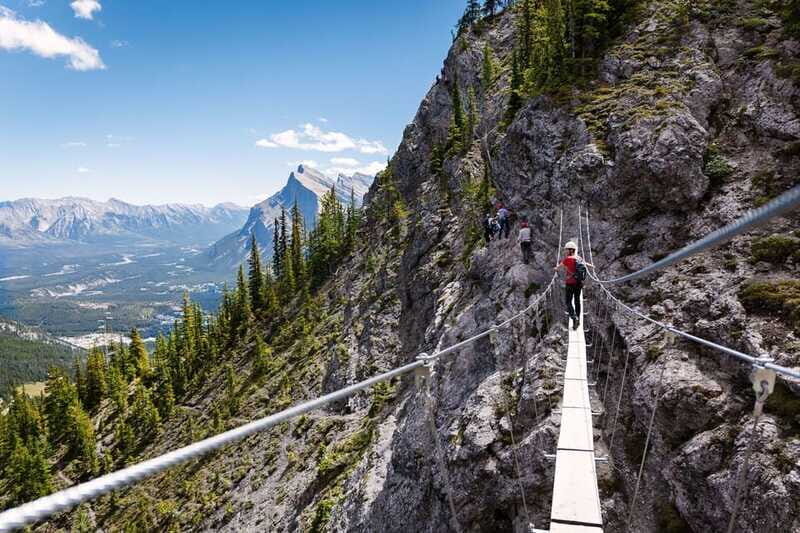
This is where via ferrata becomes its own kind of fun. You’re not “free climbing.” You’re climbing a designed line with steel holds placed to guide you. That’s what makes it feel approachable. Still, it’s not effortless. Your arms and legs both work, and you’ll feel it by the end—often described as a satisfying kind of tired, not a punishing grind.
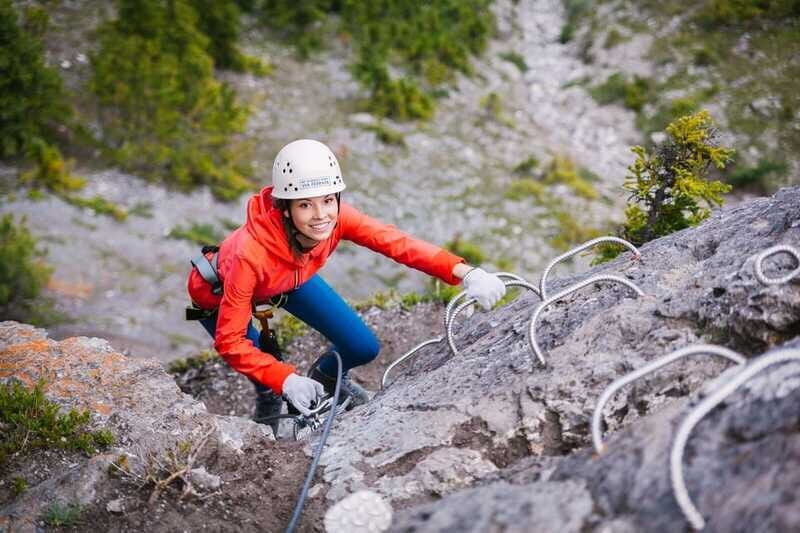
The route uses strategically placed ladder-like holds attached to the cliff. Your harnessed lanyards keep you connected, so you’re usually feeling secure even while you’re exposed. Guides play a key role here: they watch your stance, talk you through where to put your feet, and adjust your pace so the group stays together.
And then there’s the bridge.
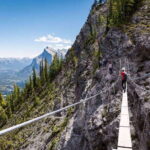
A 30-meter suspension bridge is a signature feature of this tour. It’s the part many people remember most. Walking it changes your brain from problem-solving to pure nerves-to-confidence mode. If you’re afraid of heights, you’ll still be harnessed, but the view and the sway can be intense at first. The good news: multiple guides on this tour are described as calm presences who talk people through the uneasy moments, sometimes with humor or distraction.
Summit ridge views: the photo payoff on Ridgewalker
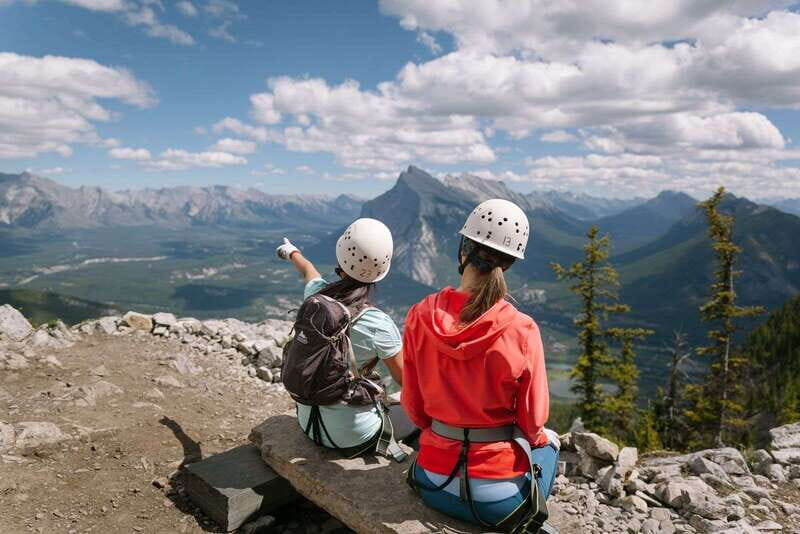
On Ridgewalker, your reward isn’t just the climb. It’s what you see when you’re done with it.
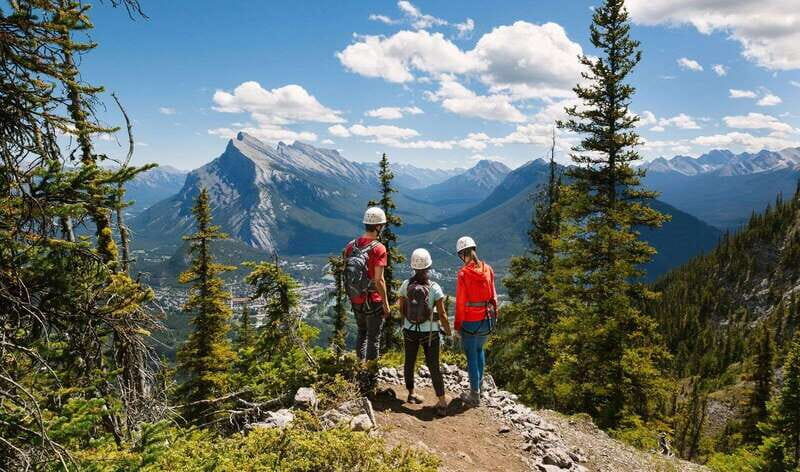
You’ll head up to the Ridgewalker Summit area around 2,300 meters, then pause for photos before descending. The best part of these summit-ridge views is the sense of scale. Banff National Park spreads out beneath you, and you can look back along the cliffs you just climbed. That “I’m really up here” feeling is exactly what via ferrata does well when you choose the longer route.
Also, don’t underestimate the practical side. A few people mention guides helping with photos during the climb. Even if you’re careful, climbing angles and safety constraints make it hard to stop and shoot solo. When your guide helps you capture shots, you get more keepers and less stress.
How tough is it really for first-timers (and fear of heights)?
This tour is marketed for all abilities and requires no previous experience, but your body still has to do climbing work. Think of it as: you’ll be learning technique and coping with exposure at the same time.
In real terms, you’ll be doing:
- sustained climbing on steel holds
- repeated transitions where you move hand-to-foot in a controlled rhythm
- time on steep rock surfaces (not a flat trail)
If you’re fit enough to hike on uneven ground and you can handle a few minutes at a time of steep effort, you can likely do it. Several participants even mention doing Ridgewalker in older age ranges, including one person celebrating a 70th birthday. That’s not to say it’s easy—it’s to say the guide coaching and harness setup can make a big difference.
Fear of heights? You should plan for it, not pretend it won’t show up. Guides here are specifically praised for being patient with nervous climbers and giving step-by-step help when someone feels shaky. If you’re the type who gets spooked, bring that honesty to your guide at the start. You’ll get more support, not less.
Price and value: does $145 feel fair?
At $145 per person, this isn’t a cheap add-on. The value comes from what you’re paying for beyond the scenery:
- Safety gear is included: harness, helmet, and lanyards, plus attachment to the steel cable system during climbing.
- A pro guide is included, with small groups capped at 8.
- You get the chairlift ride to reach the start zone without a long approach hike.
- You can get complimentary hiking boot and rainwear rental (boot sizing can’t be guaranteed, so come prepared if your feet need a specific fit).
For me, the pricing makes sense if you want a guided, safe intro to via ferrata in a place that’s close to Banff and scenic enough to feel worth the effort. If you’re after a low-cost adventure, you’ll find cheaper outdoor activities. But if you want a structured “learn + thrill + views” combo with gear and instruction, this is one of the more direct routes to that outcome.
What to bring (and wear) so you don’t waste time fidgeting
You’ll be happier if you show up ready to move.
Bring:
- snacks
- water
- hiking shoes
- rain gear
Wear:
- suitable hiking footwear approved by staff
- comfortable layers you can climb in
If you forget boots, you can get complimentary rentals, but sizing isn’t guaranteed—so if you know your shoe size is picky, wear your own. Rain gear matters because weather in the Rockies can shift fast, and wet rock can change the feel of the climb.
Also plan to eat after. Snacks and drinks are available for purchase at the Cliffhouse Bistro after your tour. One review notes the food at the top of the lift was a pleasant surprise, which fits the practical reality: you’ll want to refuel once you’re off the wall.
Who this tour is best for (and who should skip it)
Best fit:
- You want a real mountain climbing thrill without needing prior training
- You like guided experiences where someone handles safety setup and technique coaching
- You enjoy views and want a chance to feel like you reached something, not just walked through it
It’s not suitable for:
- children under 12
- people with mobility impairments
- people under 40 kilograms or over 140 kilograms
If you’re deciding between Explorer and Ridgewalker, use this rule of thumb:
- Pick Explorer if you want confidence-building plus the main excitement.
- Pick Ridgewalker if you want more time on the cliffs and a stronger summit moment.
Should you book Mount Norquay via ferrata?
I’d book it if you want an experience that blends three things that are hard to line up elsewhere: beginner coaching, real exposure thrills, and big Banff views—all in a time window that fits a day trip.
If you’re on the fence, lean on this:
- If you’re nervous, Explorer gives you a taste without committing to the longest time on steep terrain.
- If you’re confident with heights or you can handle a longer session, Ridgewalker is the version that most strongly delivers the summit-ridge payoff.
One last practical tip: check visibility. A couple of climbs can be affected by haze conditions. Your route still happens, but the photo and view impact can change with smoke or cloud cover. Either way, the climbing itself is the main event.
FAQ
What routes are offered, and how long are they?
You can choose between the 2.5-hour Explorer Route (about 2–2.5 hours) or the 4-hour Ridgewalker Route (about 3.5–4 hours).
Do I need prior climbing experience?
No. The tour is designed for all abilities, including people with no previous experience.
What’s included in the price?
The price includes a free shuttle bus from Downtown Banff, an expert guide, safety equipment (harness, helmet, lanyards), and the sightseeing chairlift. Complimentary hiking boot and rainwear rental are also available.
How big are the groups?
The tour is a small group limited to 8 participants, with 1 guide for every 8 participants.
What should I bring or wear?
Bring snacks, water, hiking shoes, and rain gear. Wear hiking footwear that staff approve, and arrive at least 30 minutes early.
What are the age and weight limits?
The minimum age is 12. The weight limit is 40 kilograms to 140 kilograms. The activity is not suitable for people with mobility impairments.