REVIEW · BANFF
The Sights of Banff: a Smartphone Audio Walking Tour
Book on Viator →Operated by Tripvia Tours · Bookable on Viator
Banff tells stories best on foot. This smartphone audio walk is a simple way to learn the town while you wander. I love that the app can work offline after you download, and I love the live GPS that plays audio when you’re close. It’s cheap enough to feel low-risk, but do note the app experience can be hit-or-miss and some directions can feel a bit vague.
You’ll start at 12 Banff Ave and follow a town loop with short stops. The route leans into Banff’s built heritage and landmark corners, with things like gardens, bridges, and historic buildings, plus a quick location-based trivia game to keep you paying attention. The best part is that you set the pace: pause, start later, or jump in again along the route.
One possible drawback: if you’re expecting step-by-step street directions on-screen, you might find the interface and navigation less helpful than a map-first guide. On colder days, you’ll also want to plan for shorter listening breaks, because you can end up walking slower than the audio tempo.
In This Review
- Key Things I’d Focus On Before You Go
- Price and Value: Why This Walk Costs Less Than Lunch
- How the Smartphone Audio Walk Actually Works (And How to Use It Smoothly)
- The Walk Starts at 12 Banff Ave: A Town-Spotting Warm-Up
- Stop 1: Buffalo Nations Museum Area and the 5 km Loop Feel
- Stop 2: Banff National Park Administration Building (Stare Time Approved)
- Stop 3: Cascade Gardens and the Terraced-into-a-Hillside Layout
- Stop 4: Banff Pedestrian Bridge and the Mr. Banff Story
- Stops 5–7: Elevation Marker, Cabin Details, and an Inukshuk
- Stops 8–11: Powerstation, Ken Madsen Path, and Historic Residences
- Stop 12: Luxton Home Museum and Pioneer-Family Time Travel
- Stops 13–16: Brewster Family, Four Sentries, Cave & Basin Mural, and the Visitor Centre
- Stop 17: St. Paul’s Presbyterian Church and a Timeline That Starts Earlier
- Stop 18–19: The Stone Fire Monument and Cascade Lodge Freemasons
- Stops 20–22: Museums With Tickets and a Central Park Break
- Stops 23–27: Banff Ave Heritage Blocks to the Legion and Cenotaph
- Timing, Weather, and Foot Traffic: The Real-Life Version
- Who This Tour Fits Best (And Who Might Skip It)
- Quick Checklist Before You Start
- Should You Book This Smartphone Audio Tour of Banff?
Key Things I’d Focus On Before You Go

- Offline audio after download, so you’re not stuck hunting for cell signal
- Live GPS that triggers narration as you approach each spot
- Flexible timing: you can stop and start anywhere along the route
- Affordable price that still feels like a guided experience, not just self-guided notes
- Town-heritage route: many stops are outdoors on Banff Ave and nearby streets
- Trivia moments that break up the walking with a quick game
Price and Value: Why This Walk Costs Less Than Lunch

At $8.22 per person for roughly 1 hour to 1 hour 30 minutes, this is one of those deals that’s hard to beat in a tourist town. You’re paying for the “guide layer” on top of a walk you’d probably do anyway: short audio segments, a live route feel, and a stop-by-stop structure.
You also get a value edge if you don’t want a rigid group schedule. There’s no need to line up with a large tour crowd or race to the next photo spot. You can walk at your speed, linger when something catches your eye, and then resume when you want.
The main thing to keep in mind is that not every stop has its ticket included. Some attractions on the route cost extra, so you’ll want to decide ahead of time whether you’ll pay for those indoor stops—or treat them as exterior photo ops.
You can also read our reviews of more walking tours in Banff

How the Smartphone Audio Walk Actually Works (And How to Use It Smoothly)

This is a private activity for your group only, and it runs through the Tripvia Tours smartphone app. You’ll want to download the tour on Wi-Fi before you start, because the app is designed to play without needing signal during the walk.
Headphones aren’t included, but audio can play from your device speaker too. If you’re near other pedestrians, headphones are the polite option, but the tour doesn’t require them.
Also pay attention to the device rule: the number of travelers you select is the number of devices you can download the tour to. In plain terms, if you and a travel partner want the audio on two phones, select two travelers at booking.
Finally, the biggest usage tip is this: give yourself a few minutes at the start to get comfortable with the app’s map view and stop buttons. Once you understand where you are relative to the stops, the audio becomes less of a technical task and more of a nice background guide.
The Walk Starts at 12 Banff Ave: A Town-Spotting Warm-Up
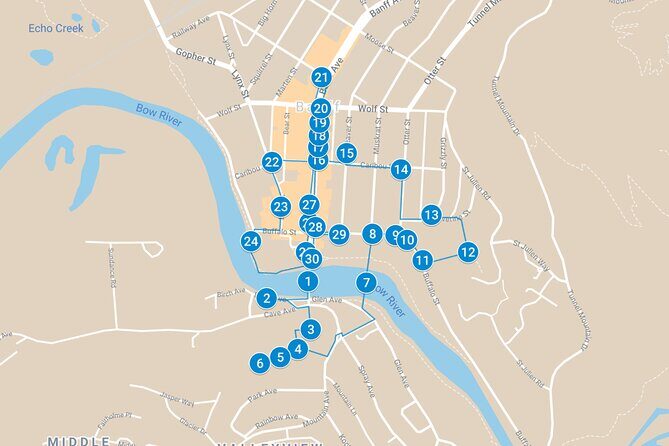
You meet at 12 Banff Ave, and the route ends back at the same place. Banff Ave is one of the easiest corridors to follow on foot, so starting there makes sense: you’re already in the middle of the action, with lots of storefronts and public space around.
Before you begin Stop 1, take a moment to check your phone battery. Even though the tour is offline after download, you’ll still use GPS and your screen. In cold weather, battery drain can be faster—so keep your phone warm in a pocket when you’re not actively using it.
Stop 1: Buffalo Nations Museum Area and the 5 km Loop Feel
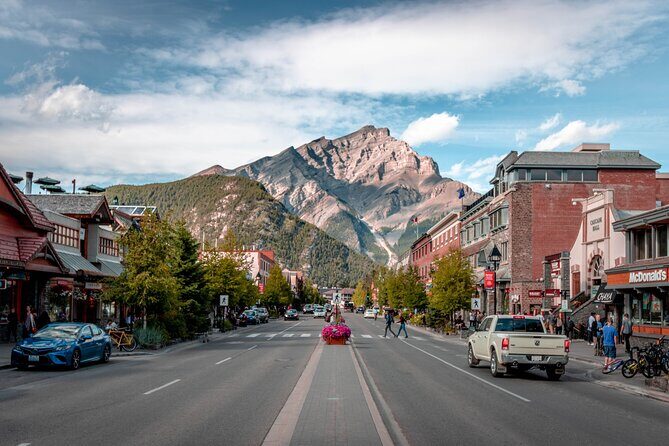
Your tour begins at the Buffalo Nations Museum. This is a strong first choice because it sets the “past and present” tone early. You’ll be exploring Banff’s historical buildings and outdoor sights as part of a roughly 5 km return sightseeing loop.
What makes this stop useful: it frames Banff beyond just scenery. You’ll hear stories tied to landmarks you’ll see later, including the Banff Administration Building, Luxton Home Museum, Central Park, and the Cascades of Time Gardens.
One practical consideration: the museum’s admission ticket is not included. If you’re not planning to go inside, you can still enjoy the area and the audio context, but you may want to budget time for either a quick exterior stop or an optional visit.
Stop 2: Banff National Park Administration Building (Stare Time Approved)
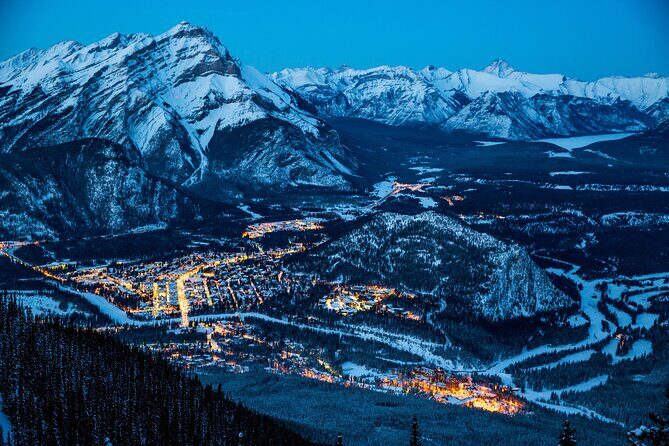
Next up: the Banff National Park Administration Building. You’ll be pointed toward it with narration that helps you read the building rather than just photograph it.
This is a good “slow down” stop. If you pause here with a warm drink nearby, you’ll get more out of the tour when the stories start connecting to other parts of downtown later.
Admission is listed as free for this stop. So you can keep it simple: listen, look up close, and move on when you’re ready.
A few more Banff tours and experiences worth a look

Stop 3: Cascade Gardens and the Terraced-into-a-Hillside Layout
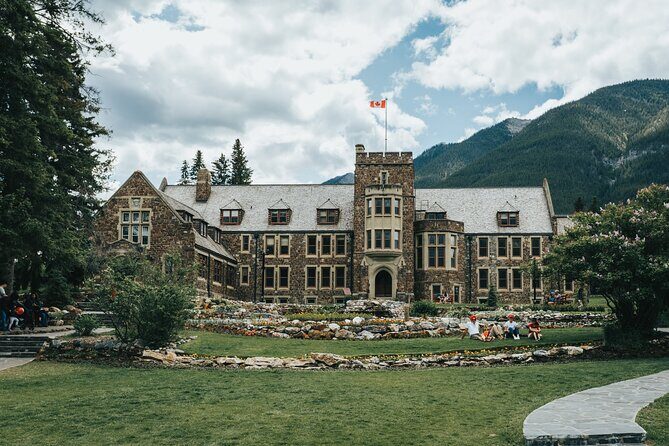
Cascade Gardens are the kind of place where the setting matters as much as the architecture. You’ll be guided to this 4-acre park built in the 1930s, with gardens terraced into a hillside.
You’ll also hear about two points of interest: the Cambrian and Devonian pavilions. If you like your walking tours to include at least one “pause and admire” moment, this is one of the best stops on the route.
Admission is free here. The only caveat: if the weather’s bad, the terraced paths might feel slower underfoot, so give yourself extra time if you’re walking carefully.
Stop 4: Banff Pedestrian Bridge and the Mr. Banff Story

The pedestrian bridge is your Bow River viewpoint moment. You’ll look out over the water, then get the story connected to the man known as Mr. Banff.
This stop works even if you don’t go far afterward because the audio will make the view feel intentional. It’s also a nice break in the walking rhythm.
Admission is free.
Stops 5–7: Elevation Marker, Cabin Details, and an Inukshuk
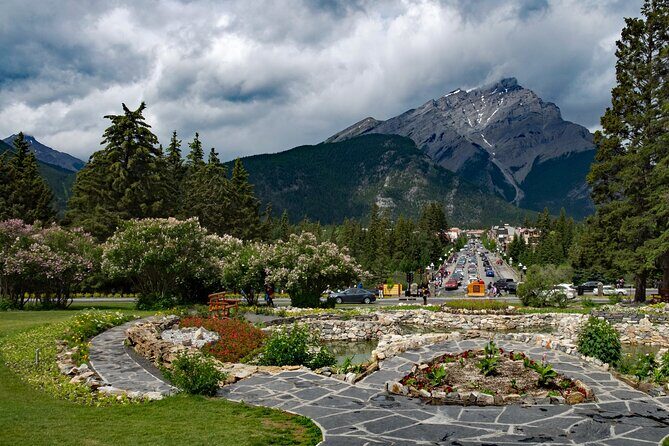
Here the tour starts mixing small town details with cultural and local clues:
- Stop 5 (Buffalo Street & Muskrat Street): you’re asked to find the elevation marker that looks like a coin implanted in the sidewalk, and you’ll learn what it means. These sidewalk markers are exactly the kind of thing you’d miss without a guide.
- Stop 6 (514 Buffalo St): you’ll hear about the Crandell Peck Cabin, built in 1907 by Edward Henry Crandell, using mostly locally sourced materials. Even if you don’t step inside, this is a great “history in the wall” moment.
- Stop 7 (Buffalo Street & Otter Street): you’ll spot an inukshuk and get the explanation behind it.
All three stops are listed as free. These are the kind of short stops that make the whole tour feel worth it, because they turn everyday street corners into learning moments.
Stops 8–11: Powerstation, Ken Madsen Path, and Historic Residences
A stretch of the route covers how the town worked and how people lived there:
- Stop 8 (525 Buffalo St #521): the Banff Powerstation, including how it powered streetlights and homes in 1905. This is a fun reality check: Banff wasn’t always “destination and souvenir shops,” it was infrastructure and daily life.
- Stop 9 (Ken Madsen Path): a shorter history segment that’s more about connecting the dots than giving you a single big landmark.
- Stop 10 (117 Grizzly St): the Tarry-a-while residence, and the story of Mary Schaffer Warren—early explorations, writings, and paintings chronicling the Canadian Rockies. This stop is for you if you like learning how artists and observers shaped how we think about the region.
- Stop 11 (Otter Street & Caribou Street): you’ll get narration about Banff’s climate while you walk to the next point. This is helpful because it affects what you can see and how you’ll feel outdoors.
All listed as free at these stops.
Stop 12: Luxton Home Museum and Pioneer-Family Time Travel
The Luxton Home Museum is an actual historic home, and the tour sets you up to see it as the life of a pioneer family—not just a preserved building.
It’s described as a glimpse into the life of the Luxton family and Banff over nine decades. That time span matters because it helps you understand how Banff changed rather than staying frozen.
Admission is not included. If you want the full payoff, consider adding time for the museum itself. If you’re just passing by, you’ll still get the context from the audio, but your experience will be shorter.
Stops 13–16: Brewster Family, Four Sentries, Cave & Basin Mural, and the Visitor Centre
This section is about “who arrived and what they built,” plus reminders of the big attractions nearby:
- Stop 13 (Caribou Street & Banff Avenue): Caribou Corner, with a story about the Brewster family arriving in 1886 and setting up shop.
- Stop 14 (204 Banff Ave): four sentries sculpture. These public artworks are worth a minute because they mark the town’s identity without needing a ticket.
- Stop 15 (Box 3100): a mural depicting the Cave & Basin site—this is a prompt for the larger story of Banff’s famous origins.
- Stop 16 (Banff Visitor Information Centre): the practical stop. You’ll be pointed to the centre so you can get more ideas for the rest of your trip.
Most of these stops are free. Two have ticket-not-included items later in the route, so this is a good spot to decide if you want indoor time or if you want to keep it outdoors.
Stop 17: St. Paul’s Presbyterian Church and a Timeline That Starts Earlier
St. Paul’s Presbyterian Church is built in 1930, but the story starts earlier with the church being established in 1887. That kind of timeline framing is what makes an audio walk feel more intelligent than a random list of photos.
This is a free stop. It’s also a calmer pause during a walk heavy on streets and shop fronts.
Stop 18–19: The Stone Fire Monument and Cascade Lodge Freemasons
Two short stops that turn up the “details you’d miss” factor:
- Stop 18 (Banff Avenue & Elk Street): a seat at the fire—technically made of stone—paired with narration about the monument.
- Stop 19 (Caribou Street & Bear Street): the old Cascade lodge, home to the Banff Freemasons.
Admission is free. If you like architecture and organizations that shaped the town, these stops can be surprisingly interesting in a short time window.
Stops 20–22: Museums With Tickets and a Central Park Break
You hit a museum cluster here, and this is where you’ll decide what kind of traveler you want to be:
- Stop 20 (Whyte Museum of the Canadian Rockies): you’ll learn what the museum aims to preserve and make accessible about Rocky Mountain history and culture. Admission is not included.
- Stop 21 (Central Park): you’ll stroll through Central Park and hear narration about a big pile of rocks in the middle—yes, really. Free stop, and it’s a nice mental reset.
- Stop 22 (Banff Park Museum): you’ll learn about the National Historic Site of Canada established in 1895, tied to taxidermy specimens of animals, plants, and minerals associated with the park. Admission is not included.
If you skip museums to keep your pace, you can still enjoy the outer context and use Central Park as your breathing spot.
Stops 23–27: Banff Ave Heritage Blocks to the Legion and Cenotaph
The back half of the route is heavy on Banff Ave texture—historic blocks, recognizable names, and public memorials:
- Stop 23 (Banff Avenue & Buffalo Street): the Dave Whyte block, described as one of the oldest remaining, largely intact commercial buildings in Banff. Free.
- Stop 24 (107 Banff Ave): Harmony Lane, built in a rustic National Park style with river stone pillars. Free.
- Stop 25 (Rundle United / Ralph Connor Memorial United Church): you’ll learn about the person behind the church name, and narration includes a playful moment with Don doing his best Mr. Rundle impersonation. Free.
- Stop 26 (Beaver Street & Buffalo Street): the Superintendent’s Residence, and what the Park Superintendent’s responsibilities would involve. Free.
- Stop 27 (Royal Canadian Legion Col. Moore Branch 26): you’ll see the Legion and the cenotaph built out front in 1920.
All listed as free except the museum stops earlier. Ending at the Legion area gives the walk a more reflective tone before you return to the starting point.
Timing, Weather, and Foot Traffic: The Real-Life Version
Even if the route is designed for about 1 hour to 1 hour 30 minutes, your actual time depends on how often you pause.
In warm weather, you’ll feel fine doing the full loop plus a couple indoor stops. In cold weather, your listening pace changes. When temperatures are brutally low, you’ll want to cluster stops close together (or accept that you’ll miss some audio if you push too fast). The tour still works, but the day’s comfort sets the pace.
Also, the route goes up and down Banff Avenue and through multiple street intersections. If you hate street navigation, this can still be okay because the GPS triggers audio near points. Still, it may not always replace good old-fashioned map sense—so keep an eye on your screen and don’t rely on the interface alone if you’re unsure where you are.
Who This Tour Fits Best (And Who Might Skip It)
This is a great fit if you:
- Want a low-cost, low-commitment way to learn Banff’s town stories
- Prefer a self-paced walk over a scheduled group tour
- Like outdoor heritage details: markers, bridges, historic buildings, sculptures
- Want something you can do even when your day is split up
You might hesitate if you:
- Strongly prefer turn-by-turn street directions on-screen (this app can feel less helpful for that)
- Expect every segment to be equally updated and equally clear in the same way
- Plan to rely on your headphones and you dislike speaker audio in public spaces
Quick Checklist Before You Start
- Download the tour on Wi-Fi before you leave
- Confirm your device count matches your group
- Bring a charged battery (GPS + screen drains power faster than you’d think)
- Decide in advance whether you’ll pay for ticketed museum stops
- Dress for conditions, especially if you’re walking during cold snaps
Should You Book This Smartphone Audio Tour of Banff?
If your main goal is to understand Banff beyond photos, I think you’ll like this. The mix of landmarks, sidewalk details like the elevation marker, and cultural prompts like the inukshuk makes the walk feel guided without making you stick to a group plan. The offline setup and live GPS are the core reasons it works well.
Book it if you want a smart, budget-friendly introduction to town heritage and you don’t mind doing it at your own speed. Skip—or keep your expectations modest—if you need rock-solid navigation instructions every step of the way, because the on-screen guidance isn’t always the strongest part of the experience.
If you’re in Banff for a short stay, this is a great way to turn a simple walk into something you’ll remember: a town with stories in the buildings, the streets, and the viewpoints.