REVIEW · ALBERTA
Discover the Lake Agnes Tea House Trail with an Audio Nature Tour
Book on Viator →Operated by Tripvia Tours · Bookable on Viator
Fairmont energy at the start, then serious mountain time. This self-guided audio nature tour takes you from Lake Louise through the Lake Agnes Tea House Trail, with a professional-style guide on your phone and no signal needed after download. I like that it feels structured without feeling scheduled, and I also like the private setup—no random strangers tagging along.
I also appreciate the “you’re really here” feel: live GPS keeps the route clear and the commentary is triggered as you get close to each stop. The only real drawback to plan for is physical effort—this is an all-uphill hike with rocky bits toward the end, and the audio experience depends on your phone and GPS behaving well.
In This Review
- Key highlights you’ll actually feel on the trail
- Price and what you really get for $8.22
- The “no crowds” Lake Agnes experience starts at Fairmont Chateau Lake Louise
- Lake Agnes Tea House Trail: the 7km climb, plus the fun location game
- How the audio stops work (and why GPS matters)
- Stop-by-stop: from Lake Louise power views to Tea House payoff
- Stop 1: Fairmont Chateau Lake Louise
- Stop 2: Lake Louise (including the Nakoda language clue)
- Stop 3: Victoria Glacier
- Stop 4: Banff National Park (and why the date matters)
- Stop 5: Boreal biome
- Stop 6: Wildlife crossing
- Stop 7: Lake Louise and switchbacks
- Stop 8: Castleguard Cave
- Stop 9: Wildlife diversity
- Stop 10: Mirror Lake
- Stop 11: Lake Agnes Tea House
- Stop 12: Lake Agnes viewpoint
- Stop 13: Caste Mountain / Castle Mountain reference
- Stop 14: Mountain Peaks on the way down
- Stop 15: Indigenous people and deep time
- Stop 16: Recreation in Banff National Park
- Stop 17: Lake Louise and glacial melting
- What makes this tour feel better than a standard guided group
- Practical tips so the app and the hike both go smoothly
- Who should book this Lake Agnes audio tour—and who should skip it
- FAQ
- Is this tour private?
- How long is the Lake Agnes Tea House Trail audio tour?
- Do I need an internet connection during the hike?
- Is this tour available in English?
- Are headphones included?
- How much does it cost?
- Where does the tour start?
- What fitness level do I need?
- Can service animals join?
- Can I cancel for a full refund?
- Should you book it?
Key highlights you’ll actually feel on the trail
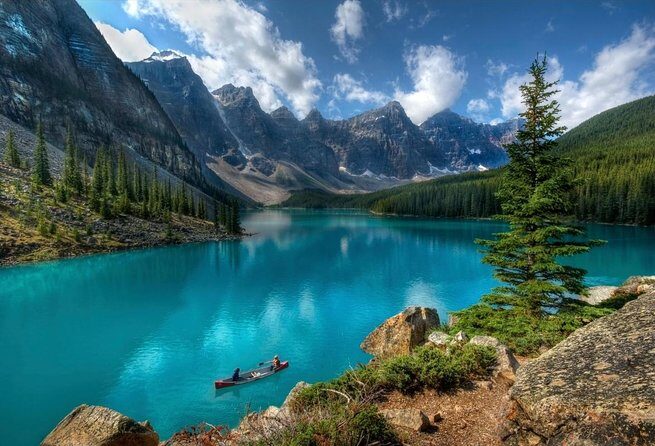
- Private hike, your group only: no other travelers join you
- Download once, use anywhere: audio works without signal after you prep on Wi‑Fi
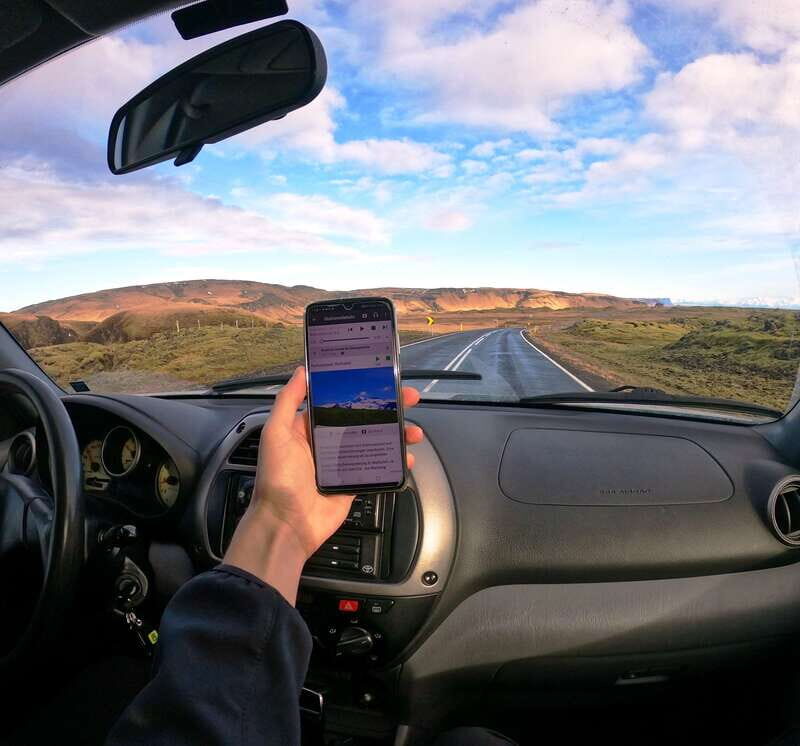
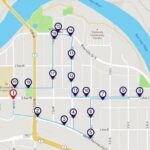
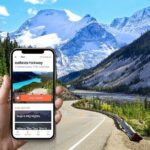
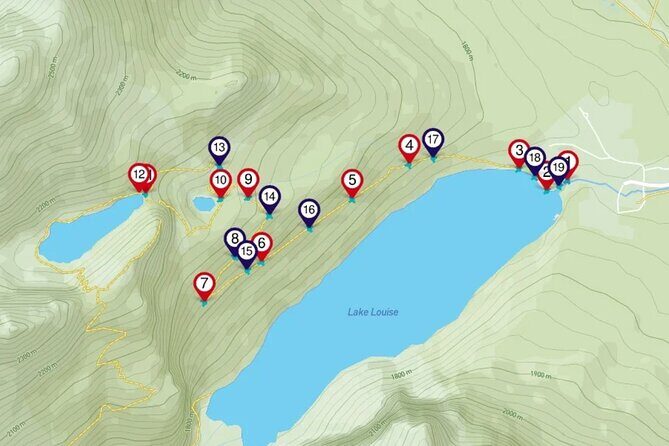
- Live GPS map + auto-play: commentary starts when you near each point of interest
- 7km to the Tea House: a steady climb with big payoff views
- Trivia + a location game: optional but fun when you want a break from staring at peaks
- Stop-by-stop education: glaciers, Banff history, boreal forest, wildlife crossings, and more
Price and what you really get for $8.22
At $8.22 per person for a 2–3 hour outing, this tour is aimed at people who want guided storytelling without paying for a full-on live group tour. You’re basically buying two things: a narrated route and a way to stay oriented using GPS.
That value is especially strong here because the app does the hard work for you. You get a mobile ticket, a live GPS map showing where you are and where to go next, and auto-playing audio at each stop. If you’ve ever done hikes where you’re constantly checking your phone and guessing what to look for, this format is designed to make the hike flow.
One more value point: it’s yours to keep in the Tripvia Tours app. So if you’re the type who wants to revisit a route later (or help a friend with the same trail), you’re not locked into one time slot of a standard guided tour.
A few more Alberta tours and experiences worth a look
The “no crowds” Lake Agnes experience starts at Fairmont Chateau Lake Louise
Your walk begins at 111 Lake Louise Dr, Lake Louise, AB. From the start, the setup is simple: you book, download the tour on Wi‑Fi, then head out on your own timeline.
Here’s what makes that “private” element practical. You don’t have to time your pace to match a larger group, and you’re not stuck listening to the loudest voice in the crowd. You can pause for photos, snack breaks, or just staring at the scenery without feeling like you’re holding everyone up.
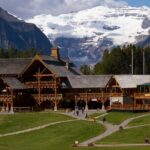
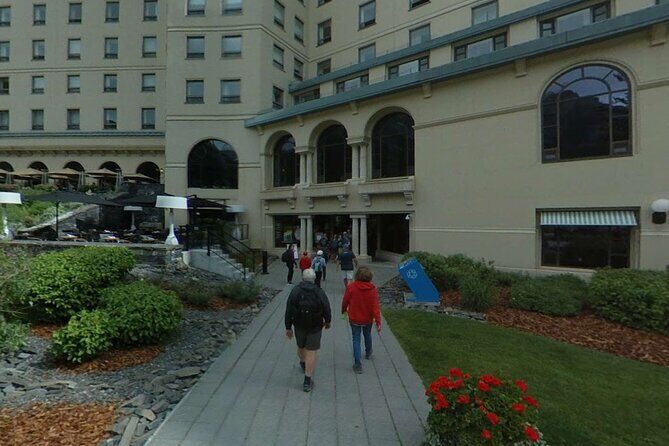
At Stop 1, you explore around Fairmont Chateau Lake Louise while the audio guide runs through the trail toward the Tea House. The key detail: this is a 7km tour on a relatively smooth trail to the famous Lake House. “Relatively smooth” matters—because even when trails are easier underfoot, the area is still mountainous, so you’ll feel the effort in your legs as you gain elevation.
Tip for day-of success: keep your phone charged before you start. You’ll need it for live GPS and audio playback for the whole walk.
Lake Agnes Tea House Trail: the 7km climb, plus the fun location game
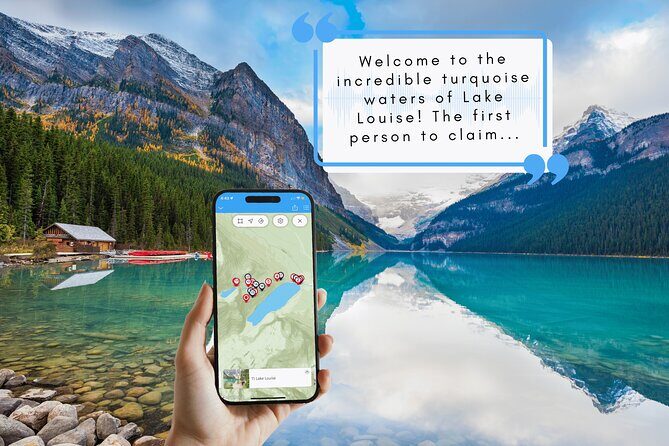
The main promise of this outing is the Tea House hike. The audio guide gives you the “hear it, then see it” approach. As you walk, you’re guided to what to notice—animals and plants, plus some local context and history—so you don’t end up doing the trail on autopilot.
A standout feature is that the tour isn’t just narration. It includes a location game: after the commentary plays, you look at your device and tap your guess at the answer. If you like small challenges during long walks, it’s a nice mental break.
What to expect physically: even if the trail is described as relatively smooth early on, you should treat it as a real hike. The route is all uphill, and toward the end it can get rocky. That matches the “challenge, but worth it” vibe people talk about: you’ll earn the views.
Footwear matters. Wear shoes with solid grip. If you know you get tired on sustained climbs, start slow. The best strategy on this kind of trail is to pace yourself so you don’t feel rushed when you’re near the Tea House.
How the audio stops work (and why GPS matters)
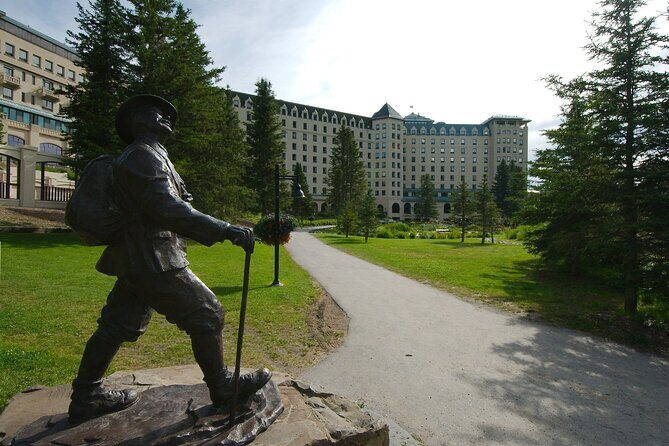
This tour uses a simple system:
- Live GPS map shows your location and where to go next
- Audio automatically plays when you’re close to each point of interest
That automatic behavior is convenient, but it also explains the main “gotcha” with this type of experience: your phone’s GPS and playback can be temperamental. If your audio seems to skip or cut in and out, you can still manage it by using your device controls to play the commentary manually.
If you run into app trouble, the provider offers phone and email customer service. In plain terms: don’t assume the trail is ruined if something glitches—try manual playback first, then reach out if you truly can’t get it going.
Also note what’s not included: headphones aren’t provided. The audio plays from your device speaker too, but speaker audio can be harder to hear in wind or if you’re far from your phone screen. Earbuds help if you have them.
Stop-by-stop: from Lake Louise power views to Tea House payoff
Below is what each point of interest is really about, in the order you’ll encounter them. Use this as your mental checklist so the audio cues land faster.
A few more Alberta tours and experiences worth a look
Stop 1: Fairmont Chateau Lake Louise
This is where you get oriented and start the nature-guided commentary toward the Tea House. The tour frames the hike in a way that helps you notice details instead of just pushing upward.
Expect narration tied to the trail environment and what it supports—animals, plants, and local history. You’ll also learn about major landmarks you’ll see along the way, including Victoria Glacier and views over Lake Louise.
A small practical note: this start sets the tone. If you can, arrive with your phone already downloaded and ready, because the rest of the experience depends on it.
Stop 2: Lake Louise (including the Nakoda language clue)
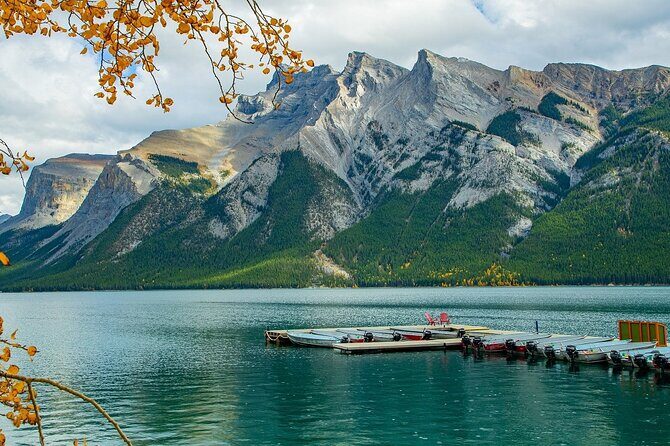
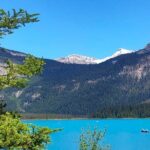
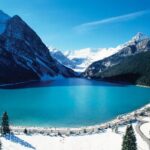
As you continue, the audio zooms in on Lake Louise—also described as the Lake of Little Fishes. The guide also references the Nakoda (Nah-koh-dah) people and gives the area’s name in their Stoney language.
This is the kind of stop that adds meaning to the view. You’re not just looking at water and mountains; you’re learning that the place has a long human connection and a name that came from real language, not just map labels.
Stop 3: Victoria Glacier
The guide explains Victoria Glacier, the backdrop behind the Lake Louise vista. This stop matters because it turns the scenery into a story. Glaciers aren’t just dramatic; they influence the terrain and the character of the water you see below.
Stop 4: Banff National Park (and why the date matters)
You’ll get the overview: Banff National Park is Canada’s oldest national park, established in 1885, and noted as the third oldest in the world.
Why that matters on a hike: it reminds you that this isn’t only about today’s views. It’s a protected region with a long history of conservation and interest.
Stop 5: Boreal biome
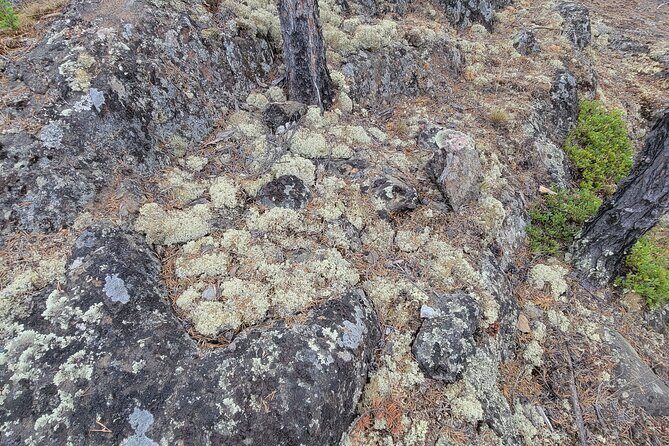
As you climb further, the tour points out the thickening forest and calls this area Banff’s Boreal Biome. It also notes the boreal forest has another name (the audio guide explains it).
This stop is where you’ll probably start to feel like you’re walking through different “worlds” even though you’re on one trail. Forest type changes how the air feels, how light hits the ground, and what kinds of animals and plants you’re likely to spot.
Stop 6: Wildlife crossing
The audio calls out the wildlife crossing structures you might notice from a drive through the park—bridges and underpasses with trees and grass growing on top. The guide compares them to a large pair of spectacles.
This is a very practical nature lesson: the landscape is managed so wildlife can move safely. It’s also a good reminder that environmental design can be part of what you see, not only what you read about.
Stop 7: Lake Louise and switchbacks
This stop focuses on Lake Louise glimpses as you hit the first of many switchbacks. Switchbacks aren’t just a hiking gimmick—they help reduce the incline on mountainous trails, and that shows up in how your body feels as you climb.
You’ll also get a “look through the trees” moment: the turquoise water can peek through before you turn.
Stop 8: Castleguard Cave
Even if you won’t see it on the hike, the audio mentions that the park has caves and highlights Castleguard Cave.
This is a classic audio-tour move done well: you leave with a broader sense of what’s around you, so you’re not stuck thinking you’ve seen everything just because this is one trail.
Stop 9: Wildlife diversity
Here the guide brings hard numbers: up to 310 species of birds and 840 species of plants in this area of Banff National Park.
This stop helps you shift from “I saw a view” to “I’m inside a living system.” The mountain isn’t static; it supports a lot of life, even when you don’t spot it immediately.
Stop 10: Mirror Lake
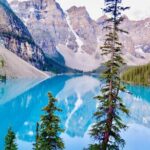
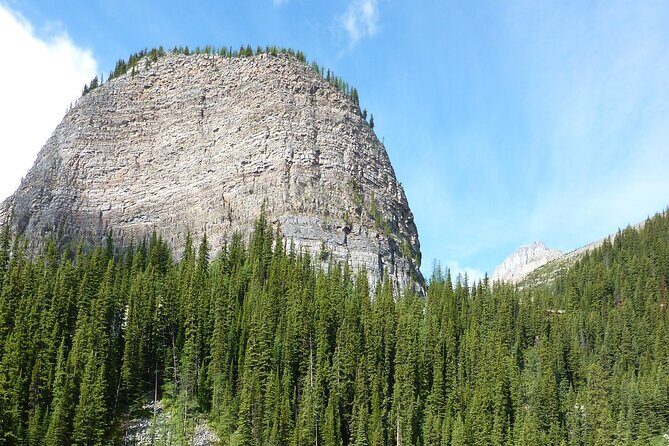
You’ll arrive at Mirror Lake, described as small but picturesque and one of the only stops along the trail to the Tea House. If you look across the water, the audio points you toward Big Beehive Peak, including what it’s known for.
Mirror Lake works because it gives your eyes a break from the constant upward motion. It’s easier to breathe here, and it’s a good photo stop—just don’t spend so long there that your Tea House arrival time slips away.
Stop 11: Lake Agnes Tea House
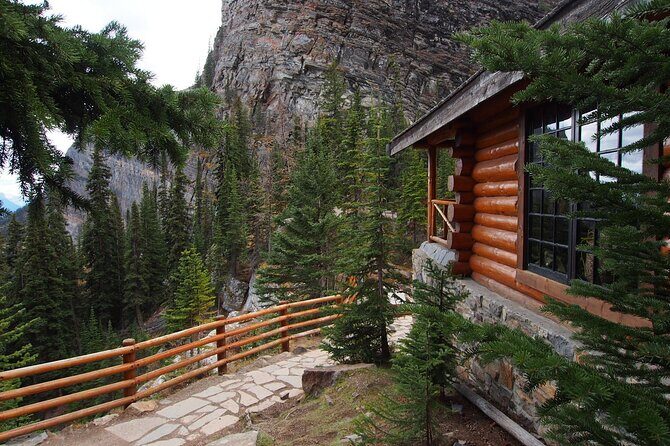
This is the big destination moment. The guide cues you to notice the wooden stairs as a final ascent and tells you you’ll see picturesque waterfall views.
The Tea House is also described as being named for something local (the audio explains that naming detail). At this stop, the vibe shifts: you’re not just climbing to see a postcard. You’re reaching a specific place with its own view and story.
Stop 12: Lake Agnes viewpoint
Once you’re up, the audio tells you about Lake Agnes and gives an elevation of 7,005 feet. It also points out Mount St. Piran and suggests that if you feel energized, you may consider further activity (the audio gives guidance, though details aren’t specified beyond encouragement).
This is the “pause and take it in” stop. Plan for wind. Wind is common in open alpine areas, and it can make phone-speaker audio harder to hear.
Stop 13: Caste Mountain / Castle Mountain reference
The guide calls out Castle Mountain in a way that connects to what you might notice driving the Trans-Canada Highway near the Lake Louise exit. It’s described as having a long, unique façade.
Even on a hike, this kind of stop helps you build a mental map of the region. It’s easier to understand the scale when you connect mountains you see from different angles.
Stop 14: Mountain Peaks on the way down
On the return, you’ll keep getting glimpses of mountain peaks and encouraged to spot differences. This stop is less about a single landmark and more about training your attention.
It’s a nice way to keep your eyes busy on the downhill and maintain the feeling of guided movement rather than just walking back.
Stop 15: Indigenous people and deep time
The audio shifts to Indigenous history, saying there’s evidence of humans in Banff National Park going back as far as 10,000 years. It notes there were at least … (the provided text cuts off the rest, so you’ll just get the core point: very long human presence).
This stop adds weight to the view. You’re not just hiking through nature; you’re walking in a place with deep time and long-standing connection.
Stop 16: Recreation in Banff National Park
Another narrative stop connects to the idea of outdoor activities. This is a “you’re in Banff, so think like a Banff person” section, meant to connect the trail you’re on with the wider park culture of hiking and nature recreation.
Stop 17: Lake Louise and glacial melting
As you return toward the shore, the audio talks about Lake Louise and glacial melting, noting subzero winter temperatures and the lake’s winter behavior (the provided description cuts off details, but the theme is clear).
This is a good wrap-up for the whole glacier thread you saw earlier. It ties the upper-world glacier story to what you notice at the water level.
What makes this tour feel better than a standard guided group
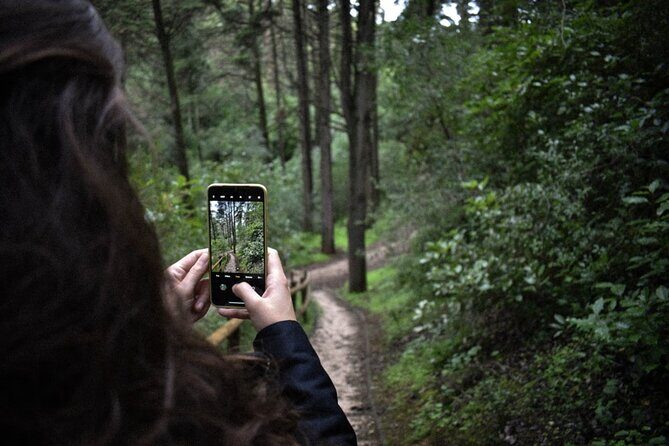
Even though it’s self-guided, the experience is designed like a guided tour: the audio guide cues you where to look, explains what you’re seeing, and keeps you moving via GPS.
In practice, that can feel like a calm middle ground:
- less pressure than a guided group schedule
- more structure than hiking with only a map
- fewer awkward gaps where you don’t know what you’re looking at
The private setup is also huge here. The Lake Louise area gets busy. A personal group format lets you enjoy the trail without feeling like you’re part of a slow-moving line of people.
Practical tips so the app and the hike both go smoothly
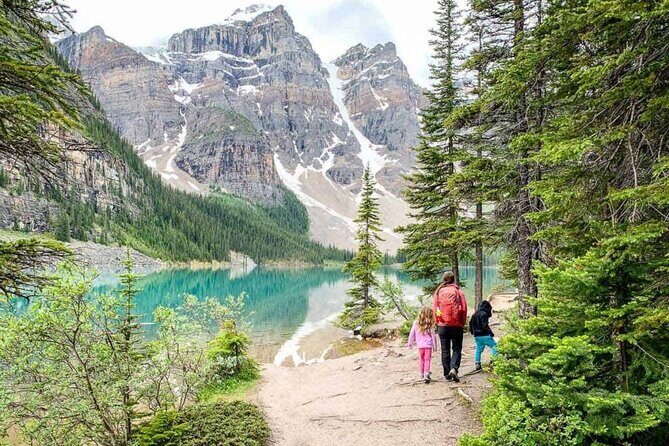
Here are the details that can make or break a phone-based audio tour, and they’re all supported by what this experience is built around.
- Download before you start on Wi‑Fi. The tour is designed to work without signal after download, but the initial prep is key.
- Bring a power source if you can. GPS + audio can drain batteries faster than you expect.
- Don’t count on headphones being included. If you want quiet, bring earbuds.
- Expect an uphill hike and rocky sections near the end. Plan your pace and wear traction-friendly shoes.
- If audio cuts in and out, you can manually restart/play it using your device controls.
Who should book this Lake Agnes audio tour—and who should skip it
Book it if you want:
- a private, self-paced version of a narrated hike
- offline-ready audio with live GPS guidance
- a trail that gives you both big viewpoints and educational stops about glaciers, boreal forest, wildlife crossings, and Banff history
Skip it if:
- you don’t like uphill efforts or shaky footing on rocky trail sections
- you rely on perfect smartphone operation and can’t handle a manual workaround if audio playback glitches
This is also a strong choice for people who enjoy learning outdoors but don’t want to be stuck listening to a group while they stand in the same spot.
FAQ
Is this tour private?
Yes. It’s described as a private tour/activity, and only your group will participate.
How long is the Lake Agnes Tea House Trail audio tour?
The duration is about 2 to 3 hours.
Do I need an internet connection during the hike?
No. You should download on Wi‑Fi before you go. After that, it can be used on a smartphone without signal.
Is this tour available in English?
Yes. The tour is offered in English.
Are headphones included?
No. Headphones are not provided. Audio will play from your device speaker too.
How much does it cost?
It costs $8.22 per person.
Where does the tour start?
It starts at 111 Lake Louise Dr, Lake Louise, AB T0L 1E0, Canada.
What fitness level do I need?
You should have moderate physical fitness. The route is an uphill hike and can include rocky sections near the end.
Can service animals join?
Yes. Service animals are allowed.
Can I cancel for a full refund?
Yes. You can cancel up to 24 hours in advance for a full refund.
Should you book it?
If you want a guided-feeling hike without group crowds and you’re okay with an uphill, sometimes rocky climb, this is a smart way to do the Lake Agnes Tea House Trail. The value mostly comes from the combination of offline audio + live GPS + private pacing.
If your phone is unreliable with GPS, bring the mindset of a backup plan: download early, keep your battery ready, and be ready to manually control audio if auto-play gets weird. That small prep turns this from “tech problem” into “great hike with real guidance.”