REVIEW · BANFF
Wildlife on the Bow | Big Canoe Tour in Banff National Park
Book on Viator →Operated by The Banff Canoe Club · Bookable on Viator
Fast wildlife views start on the Bow.
This Banff big-canoe trip turns the Bow River into a front-row seat for spotting animals and learning how the park protects them, all with no paddling experience required. I like that you get a guided outing focused on real habitat and behavior, not just generic sightseeing, and it’s easy to fit into a busy Banff day. You’ll also be set up for great photos, since you’re traveling from the waterline where animals feed, float, and watch.
Two things I’d put at the top: the guide-led live commentary and the calm, team-style pace of a big canoe. When you’re working together with your paddling crew and your guide connects what you’re seeing to how animals live there, the whole trip feels purposeful.
One consideration: wildlife sightings are hit-or-miss. The Bow can be amazing, but even with good conditions, you may not see every species people hope for.
In This Review
- Key Highlights at a Glance
- A Bow River Canoe That Feels Like Wildlife Watching From the Right Angle
- The 90-Minute Rhythm: Paddle Up, Float Down, Stay Present
- Banff Canoe Club Meet-Up: Where the Tour Starts and What That Means
- On Board with the Big Canoe: Teamwork, Safety, and a Steady Guide
- Wildlife Viewing on the Bow: Elk, Eagles, Beavers, and More
- The Scenery Factor: It’s Beautiful, But It’s Not the Only Story
- Price and Value: Is $69.85 Worth It?
- Who This Tour Fits Best (And Who Might Feel It’s Not Enough)
- Weather, Flexibility, and How to Think About Planning
- Should You Book Wildlife on the Bow?
- FAQ
- How long is the Wildlife on the Bow big canoe tour?
- Where does the tour start?
- How much does it cost?
- Is prior canoe experience required?
- What’s included in the ticket?
- What’s not included?
- What wildlife might you see?
- How big is the group?
- Do I need good weather for the tour to run?
- Is there a cancellation window?
Key Highlights at a Glance
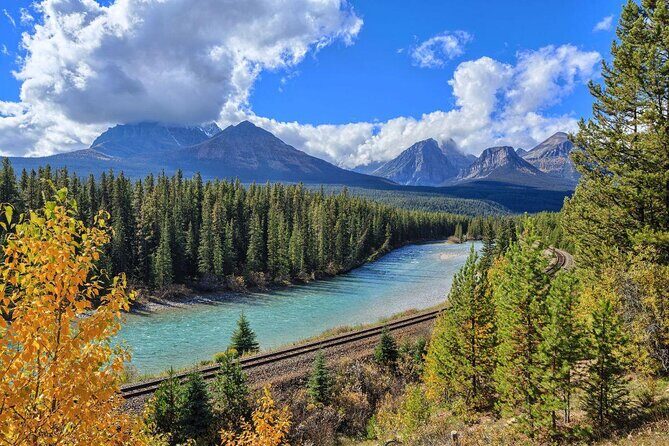
- Big canoe, easy participation: no experience required, paddles and life jackets provided
- Wildlife best practices on board: learn how to handle encounters responsibly
- Fresh perspectives for photos: you’re photographing from the water, not a roadside viewpoint
- Local history from the guide: stories that go beyond the standard guidebook facts
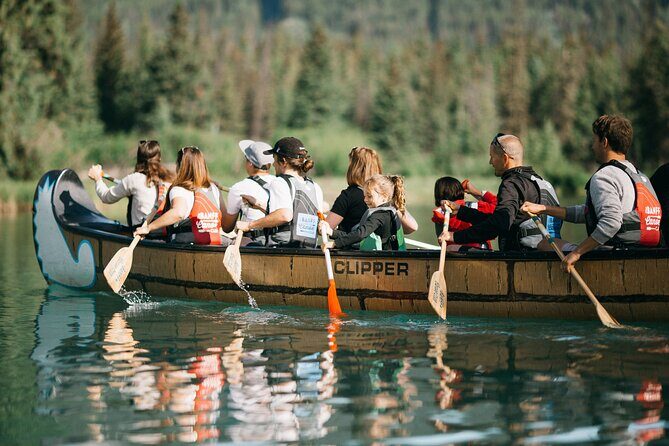
- Group size stays manageable: max 24 travelers, with 12 seats per canoe
- A relaxing rhythm: paddle upriver, then enjoy a leisurely float back
A Bow River Canoe That Feels Like Wildlife Watching From the Right Angle
Banff’s Bow River is one of those places where the views aren’t the whole point—seeing the animals is. From water level, you catch movement you’d miss from shore, and you can watch how animals use the river without constantly straining your eyes uphill or across distances. This tour keeps things simple: you paddle as a group, your guide steers the big canoe, and the onboard commentary is built around wildlife and the conservation reality behind it.
I also like that the experience is designed for beginners and families. You’re not trying to master technique or gear; you’re just learning how to cooperate with your crew so the canoe moves smoothly. That teamwork part matters more than you’d think. It gives the outing structure, and it keeps everyone focused on what’s around them—especially the moments when something finally appears and you want your attention ready.
The other major plus is the guide’s “why.” The best wildlife trips don’t just say what animals you might see. They help you understand how habitat and human activity shape the behavior you’re observing. When the guide talks about animal habitats, behavior, and conservation challenges, it turns random sightings into something you can actually read.
A few more Banff tours and experiences worth a look
The 90-Minute Rhythm: Paddle Up, Float Down, Stay Present
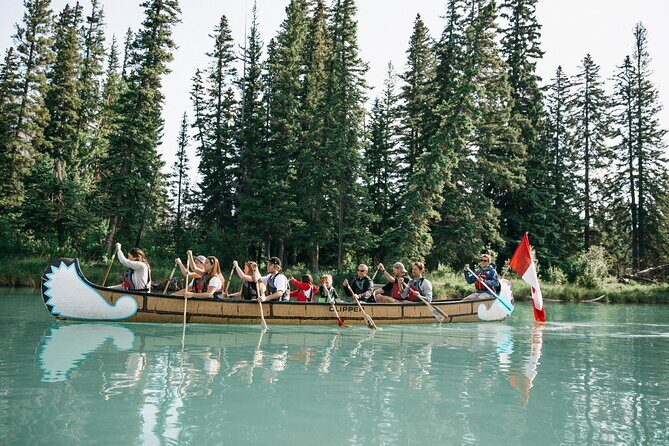
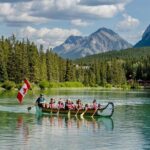
This trip runs about 1 hour 30 minutes, which is a sweet spot in Banff. Long enough to feel like you did an activity, short enough that you’re not burning half your day when you could be hiking, biking, or eating local food. The flow is straightforward: you travel up the river, then enjoy the return float.
That pacing is part of why people find it relaxing. Even if you’re the kind of traveler who gets antsy after a long hike, the canoe rhythm gives you a breather. Your body isn’t under stress, but your eyes stay busy. You’re moving gently through the same corridor where animals cross, feed, and pause—so you’re not just sightseeing from a viewpoint you could reach by car.
If you’re traveling with kids or a mixed-experience group, the structure helps. Most people can participate, and the tour is set up so a range of comfort levels still ends up with everyone paddling together (with the guide handling navigation). That matters for family dynamics. Nobody gets left behind trying to “figure it out” alone.
Banff Canoe Club Meet-Up: Where the Tour Starts and What That Means
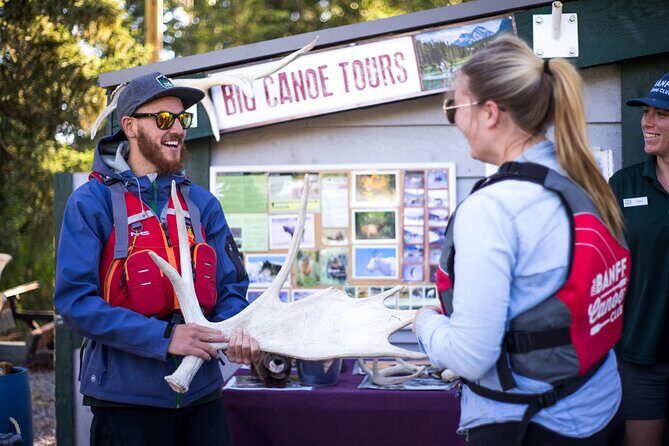
You meet at Wolf Street & Bow Avenue in Banff, and the tour ends back at the same meeting point. That’s practical, because you don’t need a complicated transfer or a different drop-off location to plan around. It’s also described as being near public transportation, which can help if you’re not driving or you’re staying closer to the core.
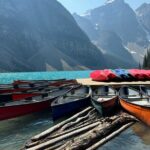
You’ll start your experience at the Banff Canoe Club, where the trip is organized and equipment is handled. That matters because the first few minutes set the tone. Instead of waiting around wondering how the day works, you get a clear setup and guidance so you can quickly shift into “watch mode” for wildlife.
One small reality check: this is water-based. So the tour requires good weather. That doesn’t mean it’s canceled all the time, but it does mean you should treat it like an outdoor experience that depends on conditions, not something guaranteed regardless of the forecast.
On Board with the Big Canoe: Teamwork, Safety, and a Steady Guide
You’ll paddle in a large canoe with 12 seats, and the overall group is capped at 24 travelers. That means it won’t feel like you’re trying to hear your guide inside a crowd. It’s also big enough that the canoe has stability for beginners, while still feeling like an active experience.
Included gear is a big part of the value. You’ll get paddles and life jackets, and that takes away the uncertainty of renting or guessing what’s needed. The tour also includes live commentary on board, so you’re not just sitting there. Your guide is actively teaching while you move through the river corridor.
In the onboard talk, you’ll learn best practice for wildlife encounters and how animals deal with changing pressure from people and the landscape. That topic is handled in a practical way—how to act when you’re close, how to think about behavior, and why conservation efforts matter even when you’re just watching quietly.
From the guide examples I’ve seen mentioned—people like Cam, Nieve, Jacob, C.J., and John—it’s clear the staff style leans friendly and story-based. The key is that the guide doesn’t treat wildlife like a checklist. They connect the species you might spot to the habitats that support them, and the local river story behind it.
Wildlife Viewing on the Bow: Elk, Eagles, Beavers, and More
If you came to Banff for wildlife, this is exactly the kind of setting where you want to spend time on purpose. Canoeing gives you a moving vantage point along a known corridor, so you get repeated chances to see activity near the banks, along the water’s edge, and in the river’s flow.
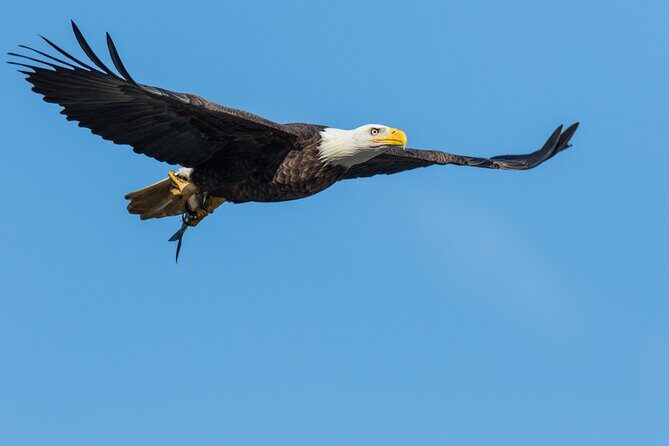
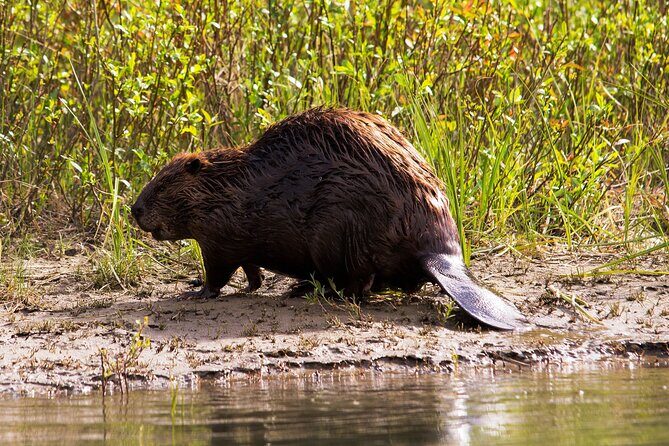
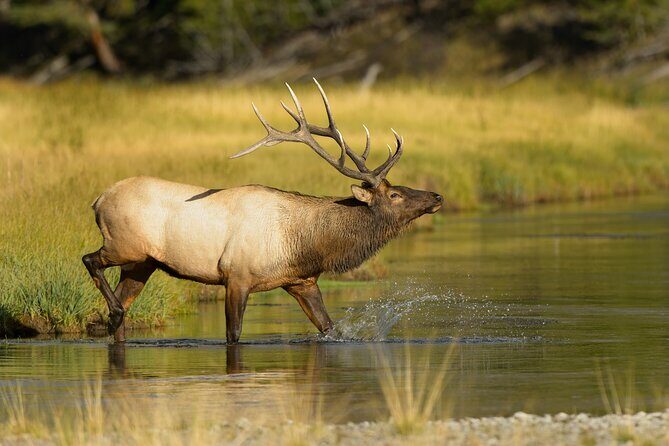
The species you can hope to spot include elk, bald eagles, beavers, and more. Depending on conditions and timing, you might also see animals such as bears, ducks, loon, heron, and weasel. The point isn’t that you’ll definitely see all of them. The point is that your chances are much better when you’re out on the water than if you’re only scanning from shore.
I’d frame it like this: the tour helps you notice what wildlife actually does. Animals don’t show up on cue. What you can control is your attention and your behavior. The guide’s wildlife best practices support that. You learn how to watch without crowding, and how to interpret what you’re seeing in terms of habitat and behavior.
And when the wildlife does appear, the photo potential is real. The river route gives you a practical platform for photographing animals while you’re at water level. That changes the look of your pictures. You’re not trying to shoot through car windows or behind fence lines—you’re closer to the action, with the river as a natural background.
A few more Banff tours and experiences worth a look
The Scenery Factor: It’s Beautiful, But It’s Not the Only Story
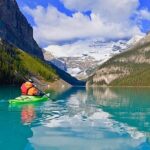
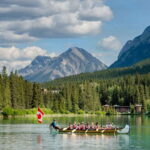
Yes, the views from the water are stunning. Floating on the Bow River gives you a clean, open look at the water corridor, and you can take in the scenery while you wait for movement. One theme that shows up again and again is how breathtaking the river looks when you’re actually on it, not just watching from land.
But I think the scenery works best as a support act to the wildlife focus. If you go in expecting nonstop animal sightings, you’ll be disappointed. If you go in ready to learn and pay attention, the scenery keeps you relaxed while the guide fills in the “what does this mean” parts.
That calm is part of the experience quality. Some people book this as a recovery activity after hiking. The canoe pace doesn’t feel like a grind, and the return float helps your brain slow down, even as you keep scanning for tails, wings, and ripples.
Price and Value: Is $69.85 Worth It?
At $69.85 per person for about 1.5 hours, you’re paying for more than a boat ride. You’re paying for (1) guided navigation on a big canoe, (2) paddles and life jackets, and (3) live interpretation focused on wildlife behavior and conservation.
The value angle is strongest if you care about learning while you watch. If you just want a quick paddle with no guidance, you could probably do something cheaper on your own. But if you want your wildlife sightings to make sense—habitats, behaviors, and best practices—the guide-led commentary changes how you experience the same river.
I also think the group size helps the price feel fair. With a max of 24 travelers, you’re not getting diluted into a huge tour bus vibe. And since the canoe seats are 12 per canoe, you get a more personal sense of teamwork and attention.
So my practical take: this is a good use of money if you’re aiming to connect wildlife watching with responsible behavior, and you want the “easy-mode” version of a canoe day in Banff.
Who This Tour Fits Best (And Who Might Feel It’s Not Enough)
This trip is a strong match for:
- Families and mixed-ability groups that want easy participation
- Travelers who prefer guided wildlife education over guesswork
- People who want a short, calming outdoor activity after other plans
- Anyone who wants a chance to photograph wildlife from the waterline
It’s less ideal if you only care about seeing animals at all costs. Wildlife isn’t guaranteed, and one low-star note is essentially that you might not see much wildlife on a given outing. If you’re that type of traveler, you may want to keep expectations flexible and plan another wildlife option for the rest of your day.
Also, this is not a high-intensity workout. If you’re looking for a strenuous paddle adventure or serious paddling technique training, this isn’t positioned that way. It’s built for relaxed discovery with the guide driving the process.
Weather, Flexibility, and How to Think About Planning
This experience depends on good weather. If conditions are poor enough for cancellation, you’ll be offered a different date or a full refund. Since the tour runs outdoors on water, that flexibility piece matters for planning your Banff days.
I recommend treating this like a “good forecast” activity. If you’re checking plans daily, you’re less likely to get stuck with disappointment. The good news is that the experience is designed to be short and self-contained, so even if you reshuffle dates, the time commitment stays manageable.
Should You Book Wildlife on the Bow?
I’d book it if you want the Bow River as a wildlife platform without the stress of figuring out logistics or technique. The combo of included gear, live guide commentary, and a beginner-friendly big canoe makes the outing feel accessible but not shallow.
Book it especially if you care about learning the “how” and “why” behind wildlife encounters—habitats, behavior, and the real conservation pressures animals face as people interact more with the park. If you’re hoping for a specific animal, keep expectations flexible, but your chances improve when you’re out on the water with a guide actively helping you spot what matters.
If your top priority is seeing animals no matter what, you might still enjoy the river views and guide stories, but you should recognize wildlife sightings are never guaranteed.
FAQ
How long is the Wildlife on the Bow big canoe tour?
It runs for about 1 hour 30 minutes.
Where does the tour start?
You start at Wolf Street & Bow Avenue in Banff, Alberta (and it ends back at the same meeting point).
How much does it cost?
The price is $69.85 per person.
Is prior canoe experience required?
No. The tour is designed so you can join without experience.
What’s included in the ticket?
You get paddles and life jackets, plus live commentary on board (and GST is included).
What’s not included?
Food and drinks are not included, and there is no hotel pick-up or drop-off.
What wildlife might you see?
You can hope to spot elk, bald eagles, beavers, and more. The tour also focuses on wildlife encounters and best practices.
How big is the group?
The tour has a maximum of 24 travelers, and each canoe has 12 seats.
Do I need good weather for the tour to run?
Yes. The experience requires good weather, and if it’s canceled due to poor weather you’ll be offered a different date or a full refund.
Is there a cancellation window?
Yes, you can cancel for a full refund up to 24 hours before the experience starts.