REVIEW · TORONTO
Toronto Graffiti Alley Street Art Walking Tour with an Expert
Book on Viator →Operated by Tour Guys · Bookable on Viator
Graffiti looks different with context. On this Queen Street West alley walk, you hear both sides of the debate and how the City of Toronto and police view graffiti, then you spot notable Toronto writers who shaped the look. A fair warning: the topic is not neutral, so if you hate conflict, keep your expectations realistic—and plan to arrive early because the guide can’t wait.
The meeting point is simple: MEC Toronto at 300 Queen St W, right by the bike racks. Guides such as Jackie, Ulysses, and Robert bring the streets to life with clear explanations and time to ask questions, all in about 1.5 hours.
In This Review
- Key highlights you should care about
- Queen Street West graffiti on foot: why this works
- Start at MEC Toronto: easy meeting, central finish
- Graffiti Alley: what you’ll see and how the guide frames it
- The debate you’ll actually hear: art, damage, and who decides
- Toronto’s named artists and the street-art mix that keeps evolving
- Price and timing: does $29.29 feel worth it?
- Who this tour suits best (and who may want to skip)
- Practical tips for a smoother, better experience
- Should you book this Toronto graffiti alley tour?
- FAQ
- How long is the Toronto graffiti alley street art walking tour?
- Where does the tour meet?
- What time does the tour start?
- Is the tour offered in English?
- Is there a group size limit?
- Is the tour ticket mobile?
- What areas of Toronto does the tour focus on?
- What do we learn during the graffiti alley portion?
- Does the tour end back at the meeting point?
- What happens if I’m late, or need to cancel?
Key highlights you should care about
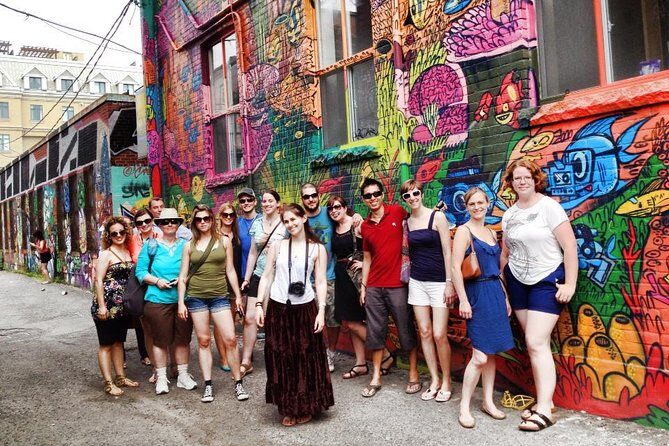
- Queen Street West focus: most of the route centers on the main strip and the alleys on either side
- Real debate, not just pretty walls: you’ll hear viewpoints from property owners, the public, police, and the City
- Graffiti basics + global context: history and major types found around the world
- Toronto artists get named: you’ll learn about notable writers and how styles evolved
- Street-art overlaps show up: some artists mix in with graffiti purists, even when it gets competitive
- Small group energy: max 25 people means more back-and-forth than a big bus tour
Queen Street West graffiti on foot: why this works
Graffiti is one of those topics where everyone has an opinion. This tour is built for that exact tension. You’re not asked to take a side at the start. Instead, you hear how people justify graffiti as art, and how others call it damage to public and private property.
What makes it click is the pacing: you’re walking, looking, and listening at the same time. The route is compact enough that you don’t feel like you’re trudging across the whole city, but it’s still long enough to connect ideas—history, styles, and the social arguments that keep coming up.
I also like that it treats graffiti as culture, not just a photo stop. You’ll learn why the same wall can mean different things to different people: the artist, the neighborhood, the authorities, and the public.
You can also read our reviews of more walking tours in Toronto



Start at MEC Toronto: easy meeting, central finish
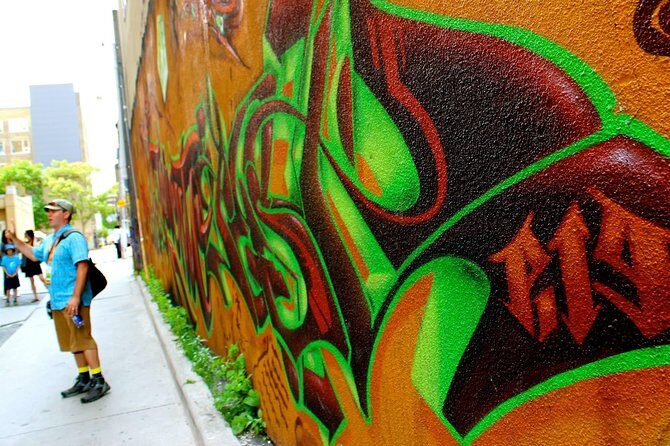
The tour kicks off at MEC Toronto, 300 Queen St W (a large, well-known two-storey outdoor gear store). You meet your guide beside the store near the bike racks. It’s the kind of meeting spot that’s hard to mess up, which matters when you’re doing a walking tour.
This also sets you up for what comes next. The tour ends right back at the meeting point, on Queen Street West. That’s useful because you can immediately switch from guided walking to choosing your own plan—coffee, a meal, or a bit more wandering while the neighborhood is still fresh in your mind.
Group size is capped at 25, so it stays friendly. You’re not squeezed into a crowd. And the tour is offered in English with an English-speaking guide, so you won’t need to decode things on your own.
Graffiti Alley: what you’ll see and how the guide frames it
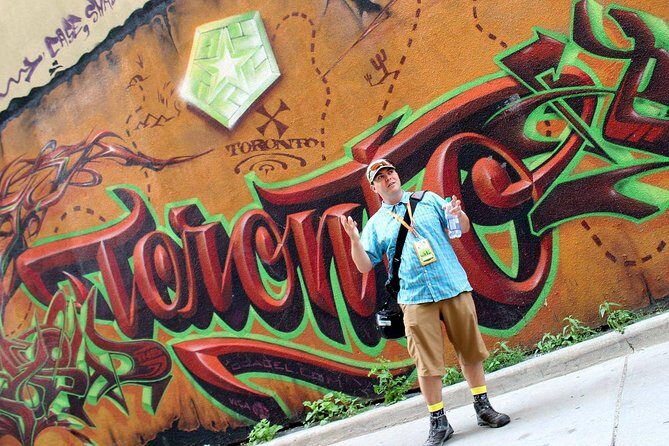
The heart of the tour is the graffiti alley portion. This is where you’re taught how to look, not just where to look. Your guide walks you through the history of graffiti and the main types you’ll see worldwide. That global context helps a lot, because Toronto isn’t floating in a bubble.
As you stroll, the guide doesn’t only point at artwork. You’ll hear about the arguments surrounding graffiti—property owner concerns, police perspectives, the City of Toronto angle, and the general public’s reactions. The tone encourages debate and discussion, so if you’re the type who likes to ask why something is handled one way and not another, you’ll fit right in.
You’ll also get Toronto-specific storytelling. Notable graffiti writers from the city come up, along with street artists who sometimes share the same spaces as graffiti purists. That detail matters because it explains why the walls feel like they’re always changing. Different groups want different things from the same surface, and sometimes they compete for space.
One practical tip: bring your camera. The walk is built for photos, and the best views are often the ones you stumble on while you’re trying to understand the story.
The debate you’ll actually hear: art, damage, and who decides
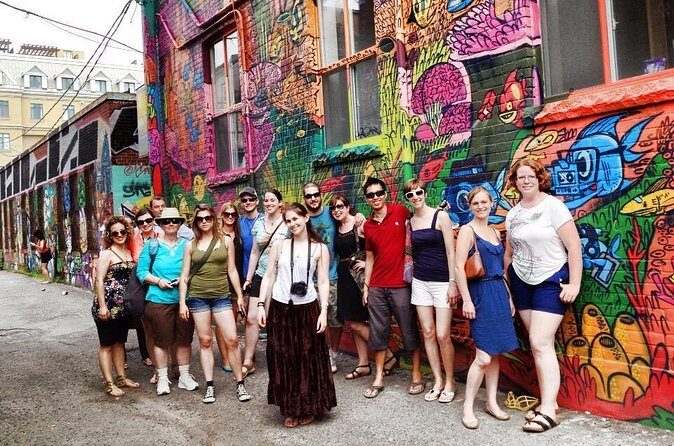
Even if you’re pro-graffiti, it helps to hear the case against it. Even if you hate graffiti, it’s hard to ignore what the guides point out when they explain the craft. This tour spends time on both angles of the divide, which is exactly what makes it more interesting than a simple gallery tour.
Here’s what the guide’s approach adds for you:
- You learn that graffiti enforcement isn’t just personal opinion. It’s tied to how the City, police, and property owners think about disorder, costs, and community impact.
- You also learn that many artists don’t see themselves as vandals. They talk about identity, visibility, and style—plus the way tagging, throws, and bigger pieces evolved over time.
The best part is that you don’t have to pretend this is a tidy conversation. It’s messy. The tour embraces that mess, and it gives you language to talk about it on your own after you leave the alley.
If you’re sensitive to controversial topics, just know the tour leans into discussion rather than staying surface-level. You’ll have a chance to ask questions, but you may also hear strong viewpoints on all sides.
Toronto’s named artists and the street-art mix that keeps evolving
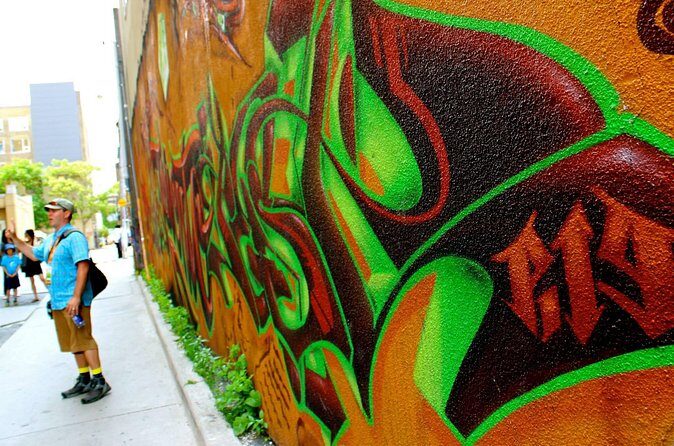
A walking tour only feels valuable if it makes you notice details you would have missed alone. This one helps you do that with names and categories. You’ll learn about notable Toronto graffiti artists and how different styles show up across the neighborhood.
The guides also pay attention to how graffiti artists and street artists sometimes overlap. That can mean similar techniques, shared walls, or even competitive use of the same space. The result is a neighborhood that feels alive—like it’s updating in real time.
One fun detail to keep an eye out for: you’ll be directed to spot things like the Uber birds. It’s the kind of mini-challenge that turns a normal walk into a scavenger-style search for recognizable motifs.
If you’re visiting Toronto and only have a day or two, this is a smart way to get grounded. You’re not just seeing walls—you’re learning the rules of the local street-art universe.
A few more Toronto tours and experiences worth a look


Price and timing: does $29.29 feel worth it?

At $29.29 per person for about 1 hour 30 minutes, this isn’t trying to be a bargain or a luxury experience. It’s priced like a guided walking tour with a focused route and a real subject.
Here’s the value math that makes sense for you:
- You’re getting an English-speaking guide to interpret the art and the debate, which you can’t easily do on your own.
- The time is long enough to cover history, styles, and Toronto context, but short enough to fit into a busy day.
- The central location means you can easily roll into shopping or dining right after, without spending your evening on transport.
Booking typically happens in advance (it’s often reserved about a few weeks out). If you’re traveling at peak times, it’s smart to lock in your preferred day rather than hoping last-minute availability stays open.
Also note the tour leaves on time. That matters because it keeps the schedule tight for everyone. Set an alarm, and aim to arrive a bit early so you can start relaxed.
Who this tour suits best (and who may want to skip)

This works well if you:
- like street art but also want the story behind it
- enjoy walking through neighborhoods and learning what makes them tick
- are curious about how cities handle public art versus public disorder
- travel with teens or older kids who can handle discussion (it’s held up as a family-friendly kind of outing when the group is ready for questions)
It might feel less satisfying if you only want pure aesthetics and zero controversy. This tour is designed for discussion, not for quiet sightseeing.
It’s also a good option if you want a central activity. Queen Street West is a hub, so you’ll likely find it easy to connect the tour with other plans.
Practical tips for a smoother, better experience
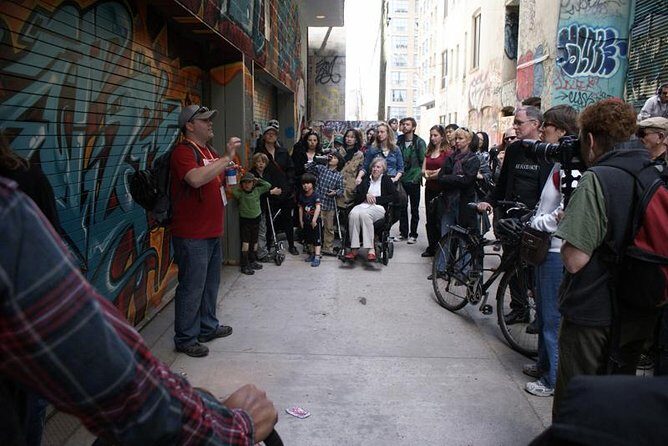
First: wear comfortable shoes. You’re walking through alleys and around the meeting area, and Toronto sidewalks can be more of a workout than you expect.
Second: keep your curiosity active. The tour is structured around debate and discussion, so it’s worth coming with at least one question. Examples you can ask include why certain styles spread, how artists think about visibility, and what enforcement goals look like from the City or police side.
Third: bring a fully charged phone or camera. You’ll want photos, and it’s easy to lose track of time once you’re spotting details.
Finally: be on time. The guide can’t wait, so treat the start like a show—arrive early, get settled near the bike racks, and you’ll enjoy the walk more because you won’t start stressed.
Should you book this Toronto graffiti alley tour?
Book it if you want street art with context, plus a guided way to understand why people argue about graffiti. The price is reasonable for 90 minutes, the group stays small, and the central location on Queen Street West makes it easy to pair with food and exploring right after.
Skip it if you want a quiet photo stroll with zero discussion, or if you’re not ready for a real conversation about property, enforcement, and public opinion.
If you’re on the fence, here’s a simple test: if you’re curious enough to ask why something is controversial, you’ll get your money’s worth.
FAQ
How long is the Toronto graffiti alley street art walking tour?
It lasts about 1 hour 30 minutes.
Where does the tour meet?
You meet at MEC Toronto, 300 Queen St W, Toronto, ON M5V 2A2, near the bike racks beside the store.
What time does the tour start?
The start time listed is 2:00 pm.
Is the tour offered in English?
Yes. It includes an English-speaking tour guide.
Is there a group size limit?
Yes. The maximum group size is 25 travelers.
Is the tour ticket mobile?
Yes. You’ll receive a mobile ticket.
What areas of Toronto does the tour focus on?
Most of the tour centers around Queen Street West and the alleys on either side.
What do we learn during the graffiti alley portion?
You learn the history of graffiti, the main types found around the world, and notable graffiti artists in Toronto. You also discuss the viewpoints of property owners, police, the City of Toronto, the general public, and the artists.
Does the tour end back at the meeting point?
Yes, it ends back at the starting point.
What happens if I’m late, or need to cancel?
The tour leaves on time, and the guide cannot wait if you’re late. You can cancel for a full refund if you cancel at least 24 hours before the experience’s start time.