REVIEW · TORONTO
Toronto: Must Do NonTouristy Street Art Tour by local Artist
Book on GetYourGuide →Operated by Spade & Palacio Non-Touristy Tours · Bookable on GetYourGuide
Street art hits different when a local artist points it out. This 2-hour walk through College West and Dundas West turns ordinary sidewalks into a story map of Toronto’s urban art scene. You’ll spot everything from wheat paste and sticker work to yarn bombing and bigger mural walls, with the meaning and technique explained as you go.
Two things I really like: the focus on real street-art methods (not just pointing at pretty walls) and the fact the route is built for exploring on your own afterward, with a short list of places to eat, drink, and keep hunting for art. One consideration: it’s a walking tour with a zigzag route through streets and alleys, so you’ll want comfortable shoes and a bit of stamina.
In This Review
- Key things to know before your Dundas West street art tour
- A budget-friendly street art route through College West and Dundas West
- Finding the tour start at 1430 Dundas St W (Loveless Café & Bar)
- The first 30 minutes: learning street-art technique before you chase photos
- Little Portugal walk: why the route feels like an outdoor gallery
- Second 30 minutes: a concentrated hit of styles and meanings
- The final zigzag: hidden installations, bigger murals, and how to keep exploring
- The guide makes the tour: local street-artist knowledge (Chloe is a standout)
- What to bring and what to wear for Toronto street walking
- Where to eat and drink after: use the recommendation cheat sheet
- Price and value: why $8 works for a 2-hour art lesson
- Who this tour suits best (and who should double-check mobility needs)
- Should you book this Toronto street art tour?
- FAQ
- FAQ
- Where does the tour meet?
- How long is the tour?
- What does the tour cost?
- What kinds of street art will I see?
- What should I bring?
- Is it wheelchair accessible?
- Are there rules about food, smoking, or alcohol?
Key things to know before your Dundas West street art tour
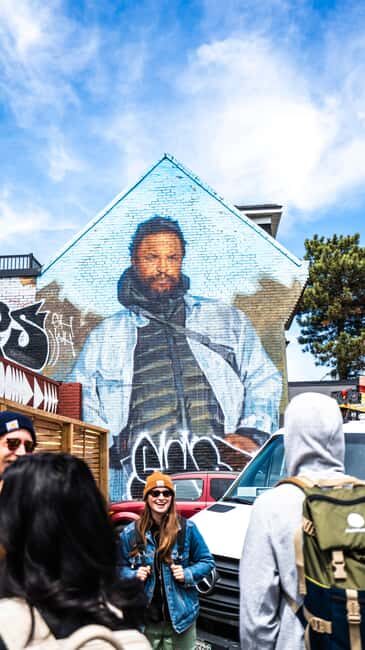
- $8 for 2 hours with a local street artist guide: great value for learning how to look.
- Small group (max 10) means you can ask questions and get actual explanations, not just a lecture.
- A route that mixes Hidden micro-installations with larger mural walls along the Dundas West corridor.
- You’ll learn the difference between styles like wheat pastes, yarn bombing, sticker art, and classic painting/graffiti techniques.
- The guide shares a restaurant and bar recommendation cheat sheet so you can keep the fun going after the walk.
- The tour is designed around the neighborhood’s transformation through municipal/non-profit support, sponsors, and guerrilla art.
A budget-friendly street art route through College West and Dundas West
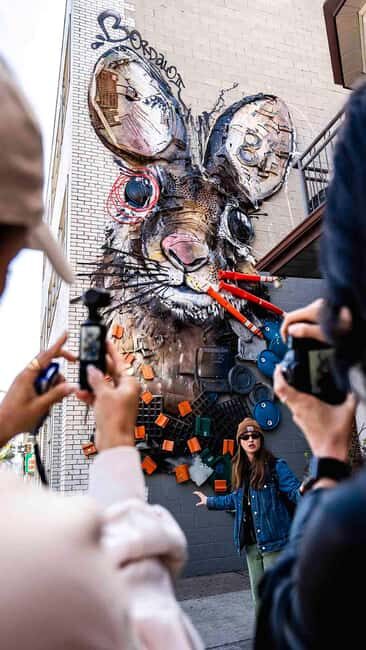
Toronto’s street art isn’t tucked away in a single district. It’s spread out, layer by layer, and that’s exactly why this format works. You’re walking a corridor that has evolved into one of the city’s most important outdoor galleries, and you get a local lens on how the art shows up and why it sticks.
At $8 per person for a full 2-hour guided experience, the value is strong. You’re not just buying photos. You’re buying context: what tools and materials artists use, how styles differ, and how the neighborhood’s support system (including non-profits and sponsors) shaped what you see on walls today.
A few more Toronto tours and experiences worth a look
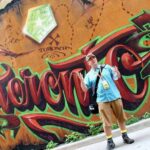
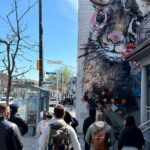
Finding the tour start at 1430 Dundas St W (Loveless Café & Bar)
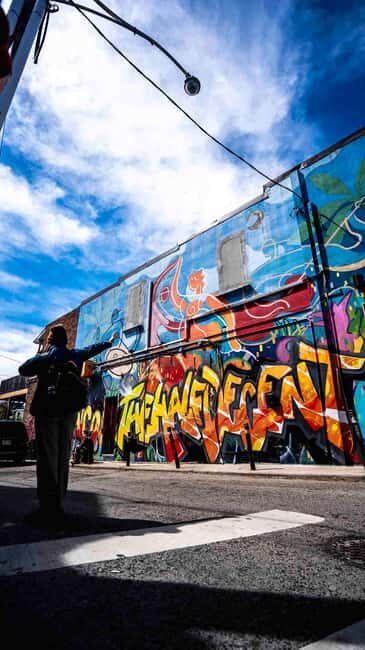
The tour kicks off right in the middle of real neighborhood life, not a tourist plaza. Meet at 1430 Dundas St W, in front of Loveless Café & Bar, on the sidewalk at the Gladstone/Dufferin intersection—not inside the bar.
This matters for two reasons:
- You’ll start quickly, without hunting around.
- You’ll be in the area where the art changes block to block, which makes the later “how to look” lessons feel immediate.
If you’re using transit, it’s easy to plug in. There’s a Dundas West streetcar stop right on the corner. From Dufferin station (Green line), it’s about a 12-minute walk.
The first 30 minutes: learning street-art technique before you chase photos
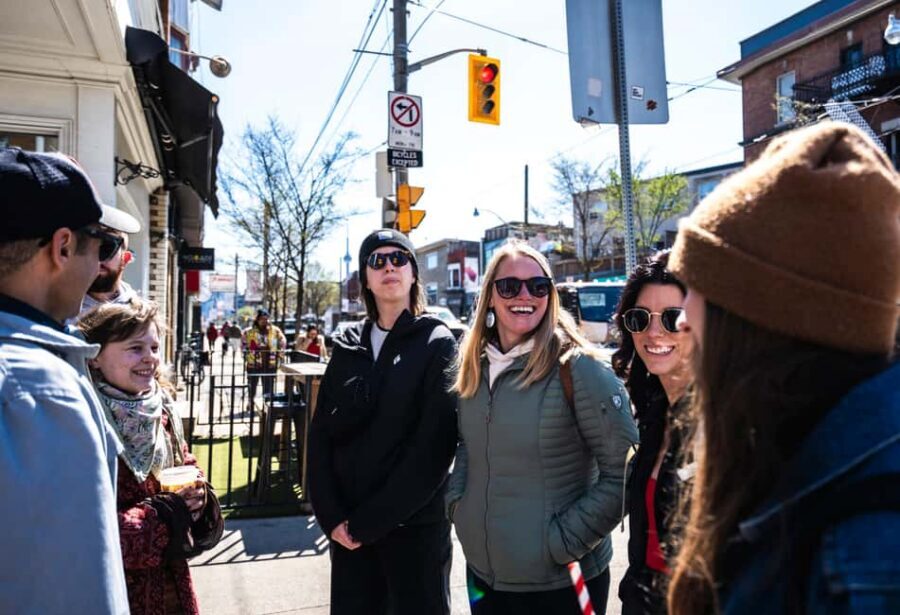
Your first segment is a 30-minute visit near the start point. This is where the guide helps your eyes catch details you’d normally miss. Expect discussion of things like how different mediums sit on a surface, how artists plan composition for narrow alley sightlines, and how styles communicate meaning differently.
This is also the moment I’d treat like a warm-up. If you get your “street art vocabulary” early—words for techniques, what to notice, how to read symbols—you’ll have a better time later when the tour starts moving fast through side streets and between murals.
Practical tip: bring your camera and keep it ready, but don’t just shoot. Slow down and watch how the guide explains choices artists made for that exact spot.
Little Portugal walk: why the route feels like an outdoor gallery
After the first stop, you get about 30 minutes of walking toward Little Portugal. This isn’t filler. The streets themselves show you how the art fits into daily life—storefronts, back lanes, and the transition between blocks.
Walking time also changes your experience. You’re not bouncing between far-apart sites. You’re learning to track style, materials, and scale as the neighborhood shifts.
And since it’s a “zigzag” kind of route through streets and alleys, you’ll probably notice more as you go:
- small tags and stickers that act like signatures
- layered work where older pieces fade or get covered
- larger murals that read more clearly once you’re at the right angle
If the weather is warm, bring water. It can get hot out there.
Second 30 minutes: a concentrated hit of styles and meanings
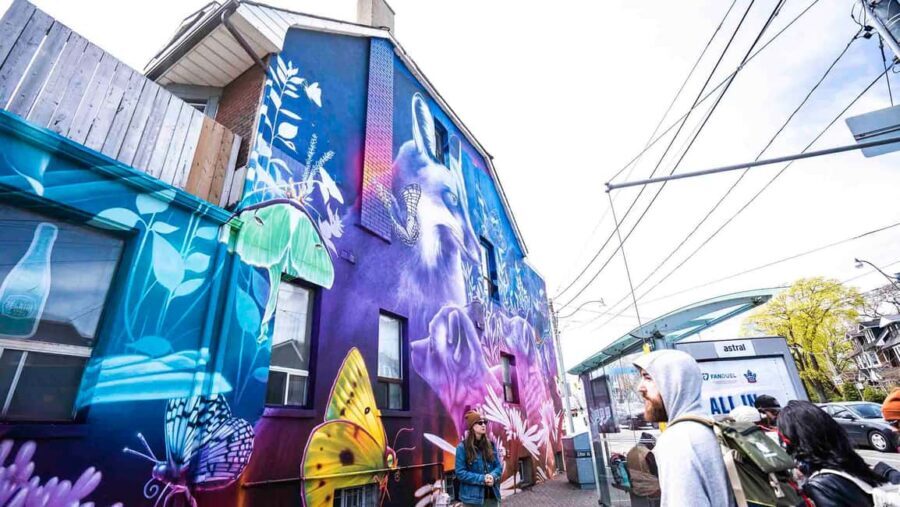
Next comes another 30-minute visit. This part tends to feel like the tour’s “main course,” because you’re moving from looking at murals in general to understanding how style carries meaning.
Based on what the guide focuses on, you should expect a mix of:
- wheat paste work (often paper-based installations)
- sticker art layers
- yarn bombing and other textural interventions
- more traditional painting techniques and graffiti styles in the district
The big takeaway is this: street art isn’t one thing. It’s a toolkit. Each method has its own speed, cost, risk, and artistic personality—and those choices affect what the art can say.
One more detail I’d watch for: the small character-style pieces. People get excited about small figure work—like Sapien-style figures—because they’re easy to miss if you’re only scanning for big murals.





The final zigzag: hidden installations, bigger murals, and how to keep exploring
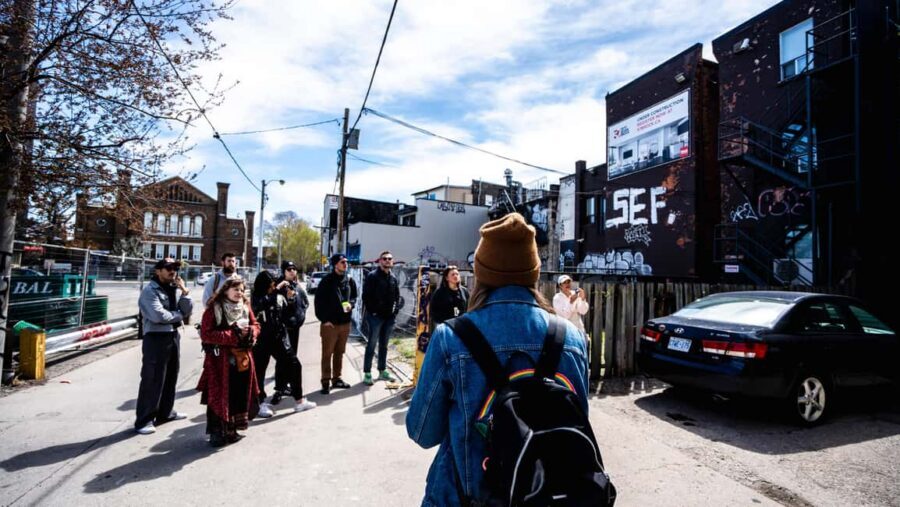
The last part wraps with additional visits and walking. This is where the “outdoor art gallery” idea becomes real. The guide’s approach is practical: you’ll get a sense of where to look next, and how to notice scale changes, materials, and placement choices.
You may see:
- small hidden installations tucked near corners
- larger murals with clear visual structure
- pieces that feel connected to community support, plus guerrilla-style work that looks spontaneous
Don’t leave with only one mental “best mural.” Leave with a new way of scanning. That way, when you walk around on your own after the tour, you won’t need a map. You’ll recognize patterns and techniques faster.
The guide makes the tour: local street-artist knowledge (Chloe is a standout)
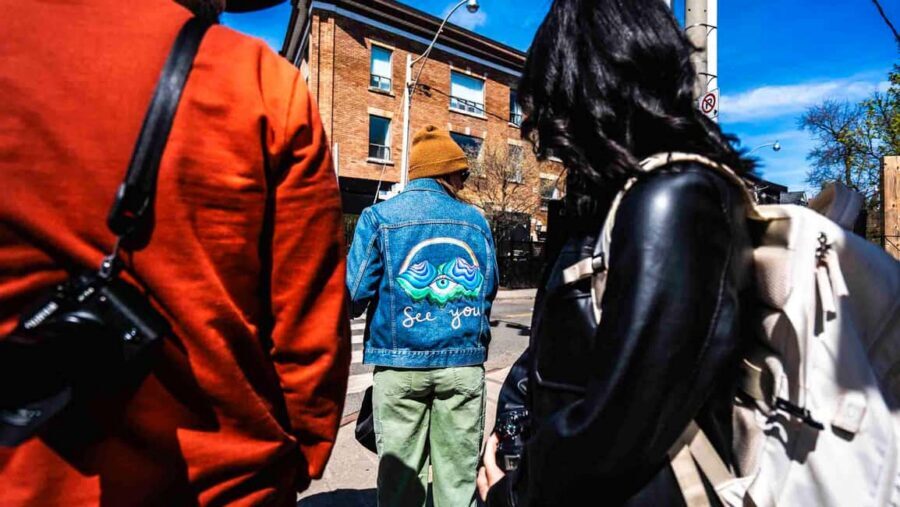
This experience is built around a local street artist guide, and that’s not a marketing line—it’s the whole value. The explanations are tied to what you’re standing in front of, not generic street art facts.
In particular, guides like Chloe have been praised for patient answering and for connecting art to real technique and meaning. If you happen to have her, you’ll likely get extra attention to questions and a more hands-on street-artist perspective—plus the kind of graffiti lingo that makes the art feel less mysterious.
The tour also includes insider-level recommendations—so it’s not just art. It’s a neighborhood plan you can use immediately.
What to bring and what to wear for Toronto street walking
This is a two-hour walking tour, so comfort wins.
Bring:
- Comfortable shoes (you’ll be on sidewalks and in alley-adjacent areas)
- Camera (and enough storage/battery)
- Water, especially in summer
Weather matters. Dress for changing conditions. Toronto can shift fast, and you’re outside the whole time.
Also note the basic rules: no smoking, and no alcohol or drugs, and please don’t litter. It keeps the focus on the art and the neighborhood.
Where to eat and drink after: use the recommendation cheat sheet
One of the smartest parts of this tour is that you get recommendations you can actually act on. You’ll walk away with tips for restaurants, bars, and galleries in Toronto, and it’s designed so you can go straight from art hunting to dinner plans.
A small trick that works well: circle 2–3 places on the list before you start eating. Then you can match your next stop to the vibe you want—casual, lively, or something a bit artsy.
If the list includes places like Martines (it has been singled out by someone who followed the recommendations), that’s a good sign it’s not just generic tourism picks.
Price and value: why $8 works for a 2-hour art lesson
$8 sounds almost too low for a guided walking tour—especially one led by a local street artist. Here’s why it still makes sense.
You’re getting:
- a structured walk over about two hours
- a local guide who explains technique and meaning
- help translating what you see into something you can spot again later
- a practical food-and-art list you can use after the tour
That combination is hard to beat for the cost. If you’ve spent more money on tours that only point at photos, this will feel different. The focus is on teaching you how to see.
Who this tour suits best (and who should double-check mobility needs)
This tour is ideal if you:
- love street art and want to learn the “how it’s made” side
- enjoy walking neighborhoods and exploring on foot
- want insider suggestions for food and what to do next
- like small-group tours where you can ask questions
It’s also best if you’re camera-ready and willing to slow down at corners and walls.
Now, a real consideration: the info you’ll see includes wheelchair accessibility, but it also says it’s not suitable for people with mobility impairments and wheelchair users. Because those statements conflict, I’d strongly suggest you contact the provider before booking and ask what the route is like on the day you plan to go.
Also remember it’s not set up for people who can’t do uneven walking through city streets and alley-adjacent sections.
Should you book this Toronto street art tour?
If you want a low-cost way to understand Toronto’s urban art corridor and you’re comfortable walking, I’d book it. The best reason is that you won’t just see street art—you’ll learn how to read it. And the recommendation list means you can turn the tour into a real neighborhood day, not just a quick photo stop.
If you’re short on time, this still works because it’s only 2 hours. If you’re bringing someone who likes art but doesn’t know graffiti or street-art techniques, this guide-led approach helps it click quickly.
FAQ
FAQ
Where does the tour meet?
The tour starts at 1430 Dundas St W, in front of Loveless Café & Bar, on the sidewalk at the Gladstone/Dufferin intersection.
How long is the tour?
It’s 2 hours total.
What does the tour cost?
The price listed is $8 per person.
What kinds of street art will I see?
You’ll see a range of styles, including wheat pastes, yarn bombing, sticker art, plus more classic painting and graffiti techniques.
What should I bring?
Bring comfortable shoes, a camera, and water in hot weather.
Is it wheelchair accessible?
The information you’ll see includes wheelchair accessible, but it also notes it is not suitable for wheelchair users and people with mobility impairments. You should confirm details with the provider before booking.
Are there rules about food, smoking, or alcohol?
Yes. Smoking isn’t allowed, and alcohol and drugs aren’t allowed during the tour. Littering is also not allowed.
Would you like me to tailor a version of this review for a specific travel date/season (winter cold vs summer heat changes what I’d prioritize)?