REVIEW · TORONTO
Old Town Toronto Highlights 3 Hour Walking Tour | Gratuity-Based
Book on Viator →Operated by Vancouver Toonie Tours Ltd. · Bookable on Viator
Toronto hides a second city underground. This 3-hour Old Town Toronto walking tour links downtown landmarks with the PATH tunnel system, so you see more than the postcard version. Guides like Alex bring the stories to life, from William Berczy’s dog fountain details to the little design choices you’d miss on your own.
I especially like the way the route mixes big “wow” stops with smaller architecture and civic history moments, including Old City Hall’s Renaissance-style details by E.J. Lennox. You’ll also appreciate the practical setup: small groups (up to 30), multiple start times, and an option for Spanish-speaking guides.
One thing to consider: this is a steady walking tour with plenty of talking at each stop, and it can feel like a lot if you want frequent sit-down breaks or you’re managing mobility. The good news is that the PATH helps on bad weather days, and there’s a planned pause near the Toronto Sign.
In This Review
- Key highlights you’ll feel right away
- How this 3-hour route gives you real Old Toronto context
- Starting at Berczy Park: a quirky warm-up with story details
- The Gooderham Building and Front Street: learning to read a skyline
- Old Toronto façades and the Old Toronto Post Office
- Financial District walkthrough: why details like tint matter
- The Path underground: the most practical Toronto lesson on the whole route
- Old City Hall: Renaissance architecture plus the human story behind it
- “Where public service works today” and the Campbell House Museum area
- Entertainment District shift: street art, music venues, and TIFF area context
- Terry Fox’s Eternal Flame stop: the emotional pause in the middle
- Nathan Phillips Square and the Toronto Sign: your planned photo break
- Brookfield Place and the Hockey Hall of Fame angle
- Toronto Union: where the tour turns practical (and questions get answered)
- Guides matter here: the difference between a tour and a good tour
- What it costs and whether it’s a smart value
- Who should book this Old Town Toronto highlights walk
- My practical tips before you go
- Should you book this tour?
- FAQ
- How long is the Old Town Toronto Highlights 3-hour walking tour?
- Where does the tour start, and where does it end?
- Do I need tickets for the stops?
- Is this tour offered in English only?
- Is it a walking tour all the way through?
- What is The PATH during the tour?
- How does the pricing work since it is gratuity-based?
- Is there free cancellation?
Key highlights you’ll feel right away
- The PATH tunnel system connects major downtown blocks underground, with each building owner shaping the look above and below
- Architecture stop list that actually teaches you what you’re looking at (Berczy Park, the Gooderham Building, Old City Hall)
- Local photo moments built in, especially at the Toronto Sign in Nathan Phillips Square
- A strong human-story stop at David Pecaut Square with the Eternal Flame of Hope for the Disabled and Terry Fox
- You get real downtown orientation for transit and where to go next, with advice tied to TTC, GO, VIA, and buses
- Small-group vibe so your guide can keep the tour interactive and your questions don’t get lost
How this 3-hour route gives you real Old Toronto context
This is an easy “orientation” style tour. You start at Berczy Park and work your way through old-town streets, the Financial District, and then into the underground PATH before you finish near Toronto’s biggest public spaces downtown. It’s designed to fit in a single afternoon, not as a multi-day project.
I like that the price point is low ($5 listed), but the experience is still built around a full guide-led walk. In practice, you’re paying for the guide’s time and research, and then you’re expected to add a gratuity separately. That model tends to work best when the guide keeps things moving and adds useful info, and this tour has a long run of very positive guide feedback.
Expect around 3 hours and a lot of steps. One person clocked it near 7 km, which matches the overall structure: quick stops at several exterior landmarks, plus a longer segment under the city.
You can also read our reviews of more walking tours in Toronto


Starting at Berczy Park: a quirky warm-up with story details
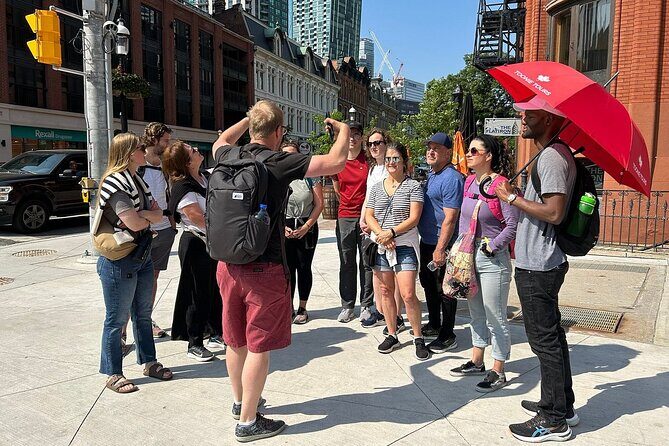
The tour begins at Berczy Park (35 Wellington St E). It’s a smart start because it’s calm enough to set the tone and easy to gather everyone before you head into harder urban terrain.
At Berczy Park, your guide focuses on William Berczy and why the park ended up here. The dog fountain gets special attention—what it is, why it’s whimsical, and the kinds of small “how did they know that?” facts that a guide can point out in minutes. If you like history that feels human instead of textbook-only, this first stop usually works well.
Time here is short (about 15 minutes). The drawback is that if you want long explanations at every location, you’ll need to take notes and save the bigger questions for the guide’s later Q and A moments.
The Gooderham Building and Front Street: learning to read a skyline
Next up is the Gooderham (Flatiron) Building area. This is a great stop for first-time visitors because the architecture is easy to notice, but the reasons behind it take a real guide to explain clearly.
You’ll learn about the Flatiron-style shape and the red-brick look. Your guide also ties it to Front Street and explains how the city managed to build what was described as the most expensive building in Canada at the time. That one detail helps you understand why the area became a power center rather than just a pretty corner.
This is a quick hit (about 10 minutes). If you’re a detail photographer, bring your phone camera quickly and be ready to shoot from a safe sidewalk spot while your guide sets the scene.
Old Toronto façades and the Old Toronto Post Office
As you continue, you’ll hit the Old Toronto area with building façades that show history in layers. The focus here is “read the street” walking: how the neighborhood looks from street level and what stories the buildings are still telling.
One highlight is a stop at the Old Toronto Post Office. The tour points out that this location has appeared in film/TV settings, so you’ll understand why it looks familiar even if you’ve never been. Your guide uses the area’s details to bring the neighborhood feel to life rather than treating it as a backdrop.
This stop runs about 15 minutes. The possible downside is that it’s exterior-focused, so if you’re hoping for inside access here, you’ll be disappointed.
Financial District walkthrough: why details like tint matter
Then comes the Financial District, where the route turns into a “how the city works” lesson. You’ll look up at skyscrapers and hear how the major banks’ headquarters cluster in these downtown blocks.
What I like is that your guide doesn’t just list names. You’ll learn why window tint colors were chosen within these city blocks and get a better sense of what those design choices signal. You’ll also notice the physical feel of downtown: metal surfaces, street-level motion, and the way office districts make a different kind of city pace.
Time is short here (about 10 minutes). If you’re already fascinated by finance, you’ll want to keep walking and ask questions, since the tour only has so many minutes for this zone.
A few more Toronto tours and experiences worth a look


The Path underground: the most practical Toronto lesson on the whole route
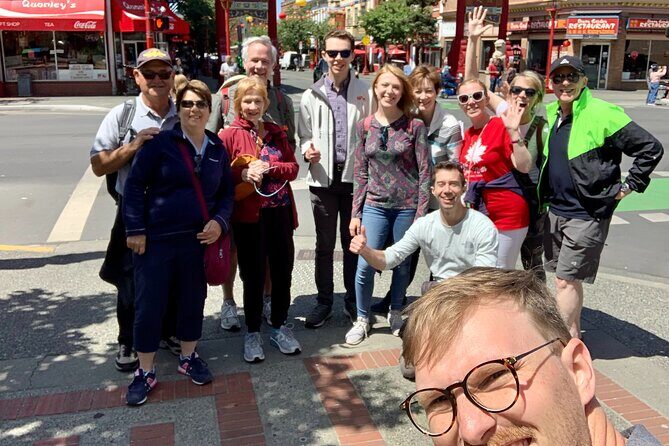
After the Financial District, the tour shifts underground via Commerce Court and into The Path, Toronto’s tunnel system. This is one of the most useful parts of the whole itinerary because it changes how you travel downtown—especially if you visit in winter, rain, or snow.
You’ll walk through a maze of connected spaces where the “feel” varies depending on who owns the building above. The tour frames the differences as intentional: each section’s style reflects the building owner’s choices, so the tunnel system isn’t uniform. That makes your walk more interesting than a simple hallway-to-hallway route.
This stop is about 20 minutes. The main consideration is comfort: underground can feel warmer and more enclosed, so if you get claustrophobic, keep that in mind.
Old City Hall: Renaissance architecture plus the human story behind it
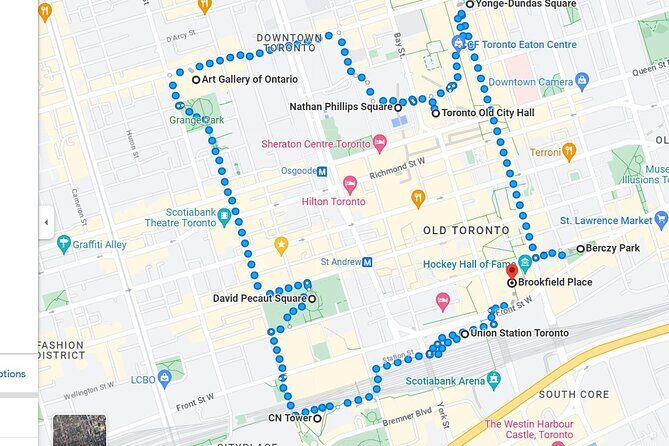
Next is Old City Hall. This is where the tour leans into architecture appreciation, and it’s a strong stop if you enjoy noticing hidden design choices.
Your guide highlights Renaissance-style elements and points out details that can be easy to miss. There’s also a story tied to E.J. Lennox, including the idea that he created the building with a grudge against city councilors—plus how those hidden details lasted long after the original arguments.
Time is about 10 minutes, so you’ll want to stand where your guide suggests. If you drift too far, you may miss some of the “look there” points that make this stop special.
“Where public service works today” and the Campbell House Museum area
The itinerary includes a stop that focuses on where public service works today. The time window is short, and it works best if you treat it like a quick anchor point: you’re meant to understand the civic core of the city, not spend an hour reading plaques.
Then comes Campbell House Museum. You won’t go inside, but the tour frames it as a key historic site—one of the oldest buildings in Toronto, built in 1822. Your guide shares facts and also connects the house to what you can do next if you want to go deeper later.
You’ll hear stories tied to maple syrup and what the Canada Life weather tower looks like in the distance, plus why Court Justice Campbell was legendary. Even without entry, this stop gives you names and threads you can follow on your own afterward.
This is about 15 minutes, and it’s a good pacing break before you hit the Entertainment District zone.
Entertainment District shift: street art, music venues, and TIFF area context
As you enter the Entertainment District, the street vibe changes. Your guide points out murals and brings you into the zone where music venues and performance spaces shape the area.
There are a few short photo-and-story stops here. The tour includes an intimate concert venue known for its acoustics and ties it to the Toronto Symphony Orchestra. It also includes a century-old Beaux Arts-style theatre used for touring plays and musicals. And you’ll learn where the world-famous TIFF festival takes place.
The CN Tower appears overhead in the mix, and your guide helps you time the view for a clearer shot when possible. If the Tower is fogged or blocked by weather, you’ll still come away with a better sense of where it sits in the city grid.
This portion runs about 20 minutes, so it’s not a deep performance history lecture. It’s more like a guided map of what’s nearby and what you might want to see later.
Terry Fox’s Eternal Flame stop: the emotional pause in the middle
David Pecaut Square is your human-story anchor. The tour stops at the Eternal Flame of Hope for the Disabled, using it to talk about Terry Fox—his diagnosis, his athletic background, and how what he did next shaped Canada.
This stop runs about 15 minutes. It’s one of those moments that feels different from the architecture stops because it gives the tour meaning beyond sightseeing. If you tend to rush through downtown memorials, this guided stop keeps you present.
Nathan Phillips Square and the Toronto Sign: your planned photo break
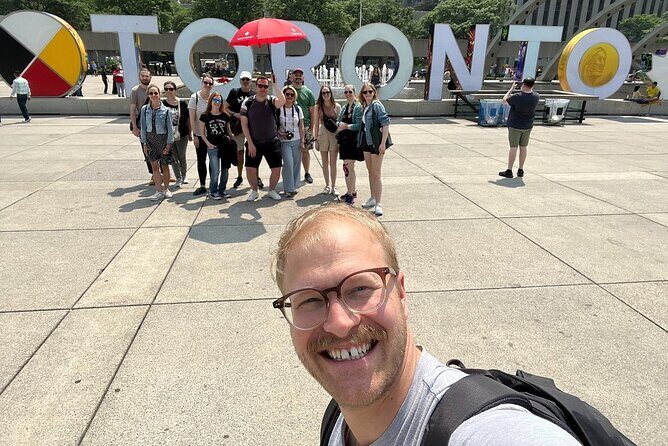
Then it’s over to Nathan Phillips Square. The Toronto Sign is the reason most people want to come here, and the tour builds in time for photos.
This stop is about 5 minutes for the sign photo, then there’s a longer rest window at Nathan Phillips Square. Your guide gives you around 20 minutes total here, including time for the public toilet and a chance to grab something to eat or browse markets if they’re happening.
One useful note from the way the tour is structured: many guides work the snack and water rhythm into the schedule, since walking can add up quickly. If you’re the type who hates running on empty, plan to use this break even if you think you don’t need it.
Brookfield Place and the Hockey Hall of Fame angle
Next is Brookfield Place. Your guide focuses on the building’s high ceilings and the white arches, plus an older banking façade that makes the space feel both grand and rooted in downtown identity.
You’ll connect the stop to hockey and the Hockey Hall of Fame. Even if you don’t go inside that day, the tour helps you understand why this area is tied to Canada’s hockey story.
Time is about 10 minutes. It’s a good pause near the end, and the architecture is easier to appreciate than some purely office-zone exteriors.
Toronto Union: where the tour turns practical (and questions get answered)
The tour ends near Toronto Union, Toronto’s major transit hub. Even though you don’t spend a full hour here, it’s a smart finish because you’ll be standing near the connections that matter if you’re moving around the city next.
Your guide helps answer questions about getting around using TTC, GO Train, VIA Rail, or bus services. If you’re staying in a part of downtown that makes transit confusing, this final stop can save you time later.
Time here is about 15 minutes. After that, you head back to the meeting point.
Guides matter here: the difference between a tour and a good tour
The biggest “value multiplier” on this walk is the guide style. I’m using the guide name examples you’ll see with this tour because they’re part of why people rate it so high.
Alex, for instance, is praised for encouraging conversation and bringing photos into the stories so you can picture what you’re hearing. Joel is noted for being helpful with photos at the Toronto Sign and for mixing history with practical food/place recommendations. Maria and Maya are mentioned for keeping people engaged even on cold days, with Maya also earning extra credit for witty trivia and lots of detail. Henry gets called out for a weather-and-fog Tower moment working out during the walk.
So how do you benefit as a rider? You’ll get more than a list of facts. You’ll learn what to notice on your own later—tint choices, façade details, and how to think about the underground PATH as a real route.
What it costs and whether it’s a smart value
The listed price is $5 per person, and it’s a gratuity-based format. In other words, you’re not paying a traditional fixed tour fee, so the true value depends on how much you get from the guide and how well the tour pace matches your interests.
This setup can be a bargain for a 3-hour walking orientation, especially since the tour includes plenty of stops across multiple downtown zones and explains what you’re looking at in each one. Also, most key sites here are exterior-accessible, so your money goes toward guidance and local context rather than ticket entry.
The main value check for you: if you enjoy walking tours and you’re comfortable asking questions, this likely hits a sweet spot. If you prefer quiet sightseeing with minimal narration, it may feel like too much talk per stop.
Who should book this Old Town Toronto highlights walk
This works best if you want:
- A first-time downtown orientation fast
- A guide-led route that includes both above-ground landmarks and The PATH
- A mix of architecture, civic story, and a couple of emotional moments (Terry Fox)
- A plan for photo time at the Toronto Sign and a scheduled rest at Nathan Phillips Square
It may not be the best fit if:
- You need frequent seating or a slower pace
- You’re traveling with kids who do best with shorter explanations and more walking time
- You’re managing limited mobility and want frequent bench options (the tour is designed for walking, and not every guide may adjust the pace to benches unless you clearly ask)
My practical tips before you go
Wear shoes you can walk in for a long stretch. This is one of those tours where you’ll feel it in your legs by the end, even though each stop is brief.
Bring water. One rider specifically advised it, and it makes sense for a 3-hour downtown walk with multiple photo-and-wait moments.
If the weather is bad, treat the PATH segment like a feature, not a detour. The tour literally routes you through the system where you can move around without getting pounded by rain or snow.
Should you book this tour?
If you’re trying to get your bearings in downtown Toronto and you want a guide to explain what you’re seeing—especially how the city’s underground PATH changes your day—this tour is an easy yes. The guide-led detail level is the reason people keep praising the experience, and the low listed price makes it a low-risk way to learn the city’s layout.
If you want a mostly scenic walk with minimal narration or you need lots of seating breaks, consider timing your day differently or choosing a tour with a slower structure. Otherwise, book it early in your trip so you can use what you learn to plan your next stops.
FAQ
How long is the Old Town Toronto Highlights 3-hour walking tour?
It runs for about 3 hours (approx.), with a stop-by-stop route through Old Town, the Financial District, the PATH tunnel system, and key downtown squares.
Where does the tour start, and where does it end?
It starts at Berczy Park, 35 Wellington St E, Toronto, ON M5E 1C6, Canada. The tour ends back at the meeting point.
Do I need tickets for the stops?
Admission is listed as free for the stops included in the itinerary, and the tour does not require paid entry at each location.
Is this tour offered in English only?
No. It’s offered in English, and you can also choose a Spanish-speaking tour guide.
Is it a walking tour all the way through?
Yes. It’s a walking route across downtown with short stops and one underground segment through The PATH. Plan for a solid amount of walking.
What is The PATH during the tour?
The PATH is Toronto’s tunnel system connecting much of downtown. The tour takes you underground from Commerce Court and points out differences in style across sections.
How does the pricing work since it is gratuity-based?
The listed price is $5.00 per person, and the tour is gratuity-based. The information provided notes that gratuities are expected and that fees paid here are booking fees.
Is there free cancellation?
Yes. You can cancel for a full refund up to 24 hours in advance of the experience start time, based on local time.