REVIEW · WHISTLER
The Great Whistler Walking Tour: Discover Whistler’s Sights, History & Culture!
Book on Viator →Operated by Whistler Valley Tours · Bookable on Viator
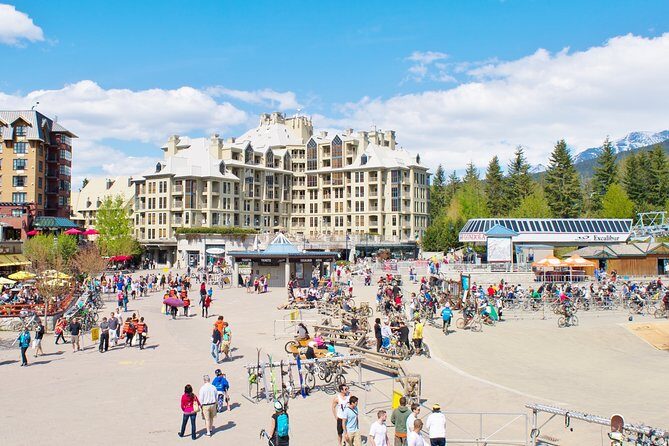
Whistler can feel like a lot of town in a little time. This walking tour gives you a structured way to see the key areas and learn what connects them, without turning your vacation into a scavenger hunt. You’ll bounce between Whistler’s famous village core, the Valley Trail network, and the Olympic heart of town—plus art and culture stops that add real context.
I especially like the photo-op density. The route is built around scenic corners, public art, and Olympic landmarks, so you’re never just walking in a line of shops. I also like that the pace can work for families, with guide Ryan keeping it friendly and clear, and using his 15+ years in the area to point out practical dining and activity ideas along the way.
One thing to consider: two major cultural stops have admission that isn’t included (Squamish Lil’wat Cultural Centre and Audain Art Museum). If you plan to go inside both, your total spend will likely be higher than the base tour price.
In This Review
- Quick take: what you’ll get from The Great Whistler Walking Tour
- Start at Gondola Transit Exchange: easy meeting, easy orientation
- Whistler Village: glacial rivers, public art, and Olympic-area clues
- The Whistler Valley Trail: learning the network you’ll use later
- Blackcomb Village and the local beat: cafes, bars, shops
- Squamish Lil’wat Cultural Centre: Indigenous museum culture and architecture
- Audain Art Museum: a strong art timeline without wasting your time
- Whistler Museum in Florence Peterson Park: archives and a flexible finish
- Olympic Plaza and the Olympic Rings: the photo you’ll actually use
- Price and value: what your $49.89 really buys
- Pace and guide style: why this works as a first day
- Best for you if you want orientation plus culture
- Should you book The Great Whistler Walking Tour?
- FAQ
- How long is The Great Whistler Walking Tour?
- What does it cost?
- Where does the tour start?
- Is the tour in English?
- What kind of ticket do I receive?
- Which stops include admission, and which do not?
- How many people are in the group?
- What if the weather is bad?
- Can I cancel for free?
Quick take: what you’ll get from The Great Whistler Walking Tour
- A tight 90-minute loop that helps you orient fast in Whistler
- Guided photo stops across Whistler Village, Blackcomb Village, and Olympic Plaza
- Valley Trail orientation for year-round walking context, not just sightseeing
- Indigenous culture and art stops where you can choose how deep to go
- Small group size (up to 20) that keeps things conversational
- Olympic Plaza included with the Olympic Rings photo moment
Start at Gondola Transit Exchange: easy meeting, easy orientation
Your tour starts at the Gondola Transit Exchange in Whistler and ends back at the same spot. That matters more than you might think. When you’re new to Whistler, you can lose time figuring out where everything is. Having the start and finish in one place makes the whole thing feel low-stress, like a smart first-day orientation.
The group size is kept to a maximum of 20. That typically means you don’t feel like you’re stuck behind a parade. It also helps the guide keep track of the pace and answer questions as you move.
You’ll want to plan for weather. This experience requires good weather, and if it gets canceled for poor conditions, you’ll either be offered another date or a full refund. Since parts of the route are outdoors, having a day that’s workable for walking is key.
You can also read our reviews of more walking tours in Whistler


Whistler Village: glacial rivers, public art, and Olympic-area clues
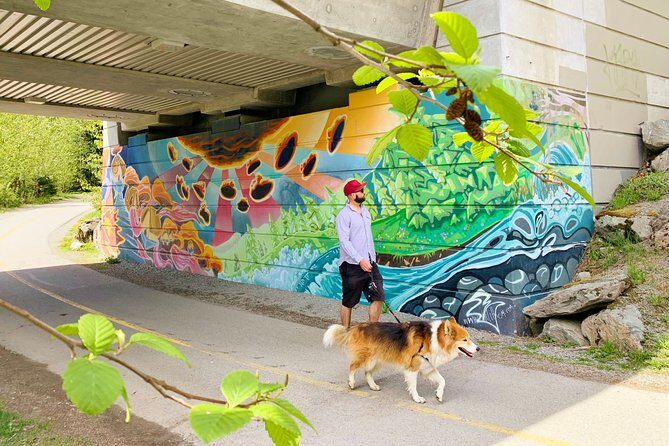
The first stop centers on Whistler itself, with about 20 minutes to explore scenic areas in and around this world-class resort town. What I like about this opening is that it sets a theme: Whistler isn’t just a ski destination. It’s a place shaped by glaciers, local artists, Olympic planning, and historic sites.
During this segment, you’ll hit photo-worthy locations built around glacial rivers, local artwork, Olympic venues, and historic corners. The description also mentions occasional wildlife on the route, which is always a fun bonus when it happens.
A practical drawback here: because it’s a guided walk with multiple stops, you may not have time to linger deeply at every view. This segment is about seeing and learning enough to point you toward what to do next. If you’re the type who wants to park your camera and stay at one spot for 30 minutes, you’ll need to treat this as a spark, then come back later on your own.
The Whistler Valley Trail: learning the network you’ll use later

Next is the Whistler Valley Trail, roughly 30 minutes. This isn’t presented like a long hike. It’s more like a guided introduction to good sections of the trail network and what makes it work year-round.
This is valuable because a trail system can look confusing on a map. A guide can help you understand what the trail connects, what kind of experience it offers through different seasons, and where you might want to continue after the tour.
I also like that this stop adds a change of pace. The Whistler core can be “busy-tourist Whistler” at times. Moving along the trail contextually reminds you that Whistler is also about getting out, stretching your legs, and watching the valley shape the experience.
Keep in mind: you’re still on a timed schedule. Think of this as learning the lay of the land for future walks, not trying to “finish the valley” in one day.
Blackcomb Village and the local beat: cafes, bars, shops
After the trail segment, you’ll spend around 15 minutes in Whistler Blackcomb, specifically the Blackcomb Village area. This is where the tour shows you another side of Whistler, often described by locals as the Dark Side. The idea is simple: same resort town, different vibe.
Here you’ll find cafes, bars, shops, and restaurants—plus it’s also where the Whistler Farmers market sets up twice a week in summer. Even if you’re not there during market days, the stop helps you understand where that local rhythm happens.
The main consideration: this is a short time slice. If you’re hoping for a deep browse or a long snack stop, you’ll likely need to come back. But as a first orientation, it works well. You get a sense of where the energy shifts so you can choose your preferred base area later.
Squamish Lil’wat Cultural Centre: Indigenous museum culture and architecture
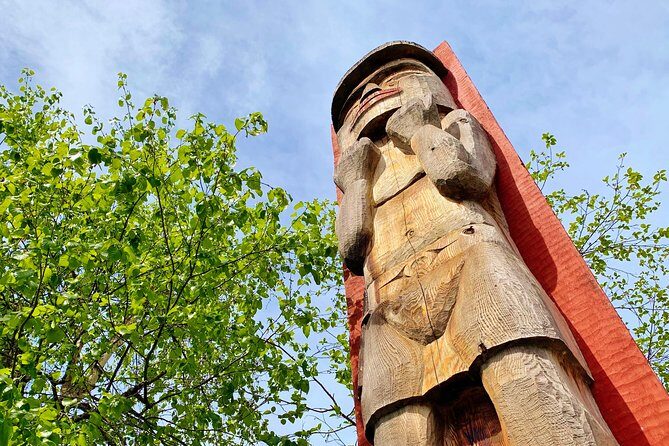
One of the most meaningful stops is the Squamish Lil’wat Cultural Centre, about 5 minutes on the walking portion. This stop is focused on the centre’s architecture and on larger outdoor artwork, and it also comes with the option to return at the end of the tour to fully explore.
Importantly, the admission for this stop is not included. That means you should decide ahead of time if you want to build that extra ticket into your plans. The reason I’d still consider it a worthwhile addition is that it shifts your understanding of Whistler from “resort branding” to lived community culture.
The tour also frames it as an opportunity to meet local First Nations people if you return. Since that option is explicitly mentioned, I’d treat this stop as a “taste now, go deeper if you want” moment rather than a quick picture-and-leave.



Audain Art Museum: a strong art timeline without wasting your time
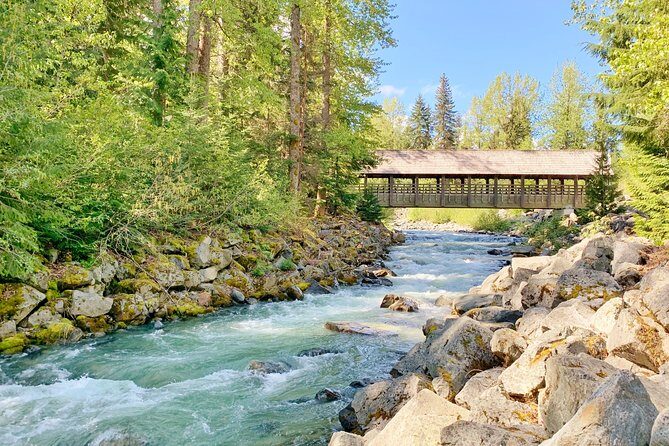
Another culture-focused stop is the Audain Art Museum, around 2 minutes during the walk. Even in such a short window, the focus here is on the museum’s stunning architecture and the way its collections are presented.
Admission to this museum is also not included. The museum is described as having a permanent collection that spans from the late 18th century to the present, focused on celebrated artists from the province. So even if you don’t go inside on the same day, knowing what the museum covers can help you plan a separate visit when you have more time.
The only drawback: a quick stop outside (or around the entry area) won’t replace a full museum visit. If art museums are your thing, you’ll probably want to budget time on a different afternoon. If they’re not, the architectural impact still gives you a reason to remember this part of town.
Whistler Museum in Florence Peterson Park: archives and a flexible finish
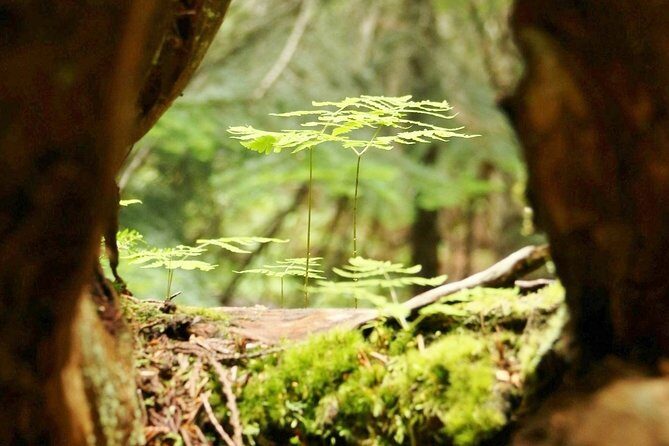
The tour then heads to Whistler Museum, about 5 minutes. This part feels different because it’s described as tucked away in the forested area of Florence Peterson Park and connected with Whistler’s historical archives.
This stop is a “small and specific” one, and that’s often what makes it memorable. The park setting suggests a calmer vibe than the main village blocks, and the mention of local artworks in the area supports that this won’t feel like a generic storefront stop.
You also get flexibility. The tour notes you’ll have the option to finish there or return at a later time. That choice is helpful if you want a quick historical anchor, or if you’d rather end near the Olympic area for photos and then head out for dinner.
Since the tour ends back at the meeting point, this stop’s flexibility can be a real time-saver depending on what you want to do after.
Olympic Plaza and the Olympic Rings: the photo you’ll actually use
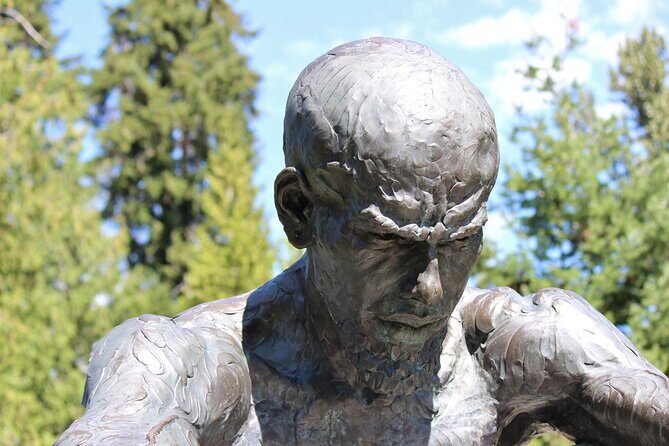
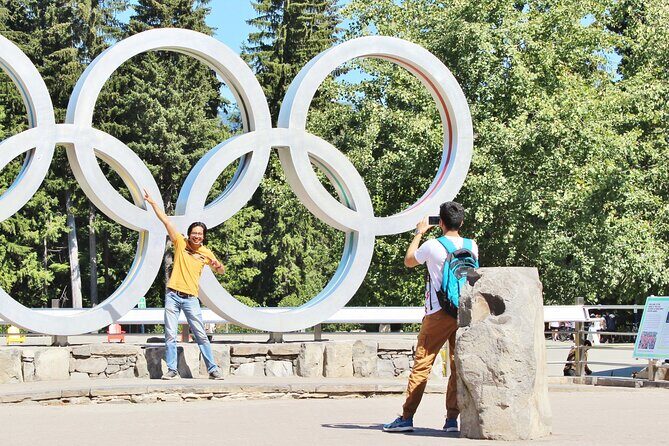
The final key stop is Whistler Olympic Plaza, about 5 minutes, and admission here is included. This is the central hub during the 2010 Winter Olympic Games, and it’s now used for festivals and events throughout the year.
The highlight is the Olympic Rings, one of Whistler’s most photographed sites. If you’ve come for Olympic-era stories, this is where the tour pays off quickly. You get the location and the visual anchor, so later when you see Olympic motifs around town, you’ll understand the context.
This is also a good closing point because it’s easy to connect from here to whatever you do next—dinner, browsing, or catching another view spot.
Price and value: what your $49.89 really buys
The tour costs $49.89 per person and runs about 1 hour 30 minutes. For that price, you’re paying for guided routing, interpretation, and multiple timed stops designed to show you Whistler’s biggest story threads: scenic river areas, the trail context, Blackcomb Village’s vibe, Indigenous culture, and Olympic roots.
Here’s where value can shift: several stops are listed with admission tickets free, including the Whistler Village, the Whistler Valley Trail, Blackcomb Village, and Whistler Museum. Olympic Plaza is included. But the Squamish Lil’wat Cultural Centre and Audain Art Museum are not included.
So think of this tour as two layers:
- The core guided orientation and photo stops that fit nearly any itinerary.
- Optional add-on museum time if you want to spend the extra money for deeper entry.
If you’re the kind of traveler who enjoys architecture and cultural context, it may feel like good value because the guide helps you decide where to invest your attention. If you’re mainly after views and photos, you can treat those two ticketed museums as skip-or-save-for-later.
Pace and guide style: why this works as a first day
The reviews behind this tour’s reputation point to a clear pattern: the tour works well for a “first day in town” mindset. Guide Ryan keeps the walk at a family-friendly pace and explains history in a way that connects to what you’ll see around you.
That matters because Whistler is full of small differences. If someone points out Olympic-era venues, local art placements, and how the trail network fits year-round, you’ll feel smarter while you walk instead of just covering distance.
Also, this isn’t a huge group. With a maximum of 20 people, you’re more likely to get real answers instead of only general statements. It’s the kind of experience that helps you ask: where should I eat next, what should I do tomorrow, and how do I avoid wasting time?
Best for you if you want orientation plus culture
I’d suggest this tour if you:
- Want an organized way to see the main parts of Whistler quickly
- Like short stops that help you decide what to do later
- Care about Olympic context and local Indigenous cultural sites
- Appreciate public art and architecture as part of sightseeing
- Prefer a guided pace you can manage without feeling rushed
It might be less ideal if you want long museum time during the same outing, or if you don’t like walking for an hour and a half with multiple stop-and-go moments.
Also, since the tour is offered in English and you’ll receive a mobile ticket, it fits well for visitors who want simple logistics and clear communication.
Should you book The Great Whistler Walking Tour?
I think it’s a strong choice if it’s your first time in Whistler. It’s the right length to get oriented, and the stops hit both the famous and the meaning-making parts of the town: Olympic Plaza, valley-trail context, Blackcomb Village’s local feel, and culture through the cultural centre and art museum.
If you’re on a tight budget, you can still get a lot from the free-admission parts, then decide later whether to pay for the two museums. If you already know you want those museum visits, this tour can serve as the guided map for where to go and why.
If you have only one free afternoon and you want a plan that mixes photos, history, and practical local pointers, book it. It’s one of the most efficient ways to start your Whistler days with your eyes open.
FAQ
How long is The Great Whistler Walking Tour?
It runs for about 1 hour 30 minutes.
What does it cost?
The price is $49.89 per person.
Where does the tour start?
It starts at Gondola Transit Exchange in Whistler, BC.
Is the tour in English?
Yes, it is offered in English.
What kind of ticket do I receive?
You get a mobile ticket.
Which stops include admission, and which do not?
Whistler Village, Whistler Valley Trail, Whistler Blackcomb, Whistler Museum, and Whistler Olympic Plaza have admission listed as free or included as noted. Squamish Lil’wat Cultural Centre and Audain Art Museum have admission listed as not included.
How many people are in the group?
The maximum group size is 20 travelers.
What if the weather is bad?
This experience requires good weather. If it’s canceled due to poor weather, you’ll be offered a different date or a full refund.
Can I cancel for free?
Yes. You can cancel up to 24 hours in advance for a full refund.