REVIEW · VANCOUVER
Talking Trees: Stanley Park Indigenous Walking Tour Led by a First Nations Guide
Book on Viator →Operated by Talaysay Tours · Bookable on Viator
A forest walk with living stories. In 90 minutes you’ll get a First Nations-led view of Stanley Park’s trees, plants, and land use around Beaver Lake, with personal context from a trained cultural ambassador. I love that you walk at an easy pace on a short loop, and you also get Talaysay Hush Tea as part of the experience. One thing to consider: you need to make your own way to the Stanley Park Bus Loop meeting spot since hotel pickup and transport aren’t included.
The setting is practical and easy to manage. The tour stays in one area of the park, ends where it started, and gives you time to ask questions without rushing. At about $60 per person, the value mostly comes from the human element—walking with a cultural ambassador and learning plant uses that you won’t pick up from a standard nature walk.
In This Review
- Quick reasons this Talking Trees walk is worth it
- Meeting at the Stanley Park Bus Loop and getting oriented fast
- The Beaver Lake walk: short distance, long meaning
- What you notice when your guide points out plants for real life
- The tea and question time: why the format feels different
- Indigenous history in Stanley Park: a wider lens without the hype
- Stop by stop: what each part of the tour actually feels like
- Price and value: what you’re paying for
- Practical tips before you go (so the day stays easy)
- Who this tour is best for
- Should you book Talking Trees?
- FAQ
- Where is the meeting point for the Talking Trees tour?
- How long does the tour last?
- Is the walk strenuous?
- How much walking will I do?
- What does the tour cost?
- What language is the tour offered in?
- Is tea or coffee included?
- Does the tour include hotel pickup or drop-off?
- Is public transportation included?
- Are service animals allowed?
- Can I cancel for a full refund?
Quick reasons this Talking Trees walk is worth it
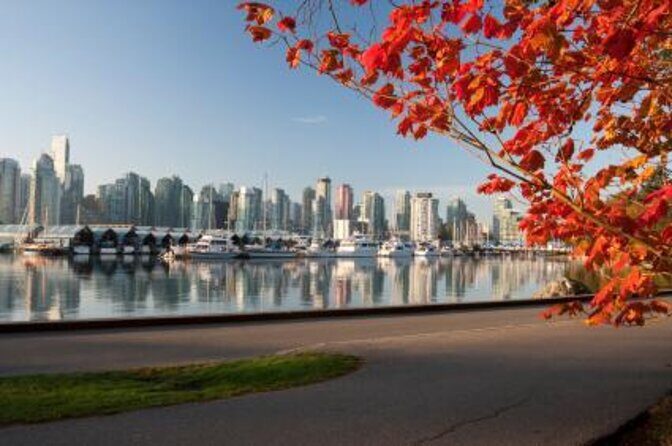
- A First Nations cultural ambassador leads the walk with family and community context, not just textbook facts
- Beaver Lake loop at an easy pace with frequent pauses for interpretation and questions
- Plant-by-plant stories focused on food, shelter, art, and medicine
- A tea (or coffee) stop with Talaysay Hush Tea included
- Real Stanley Park orientation since you start and finish at the Stanley Park Bus Loop by the Mini Train and Aquarium
Meeting at the Stanley Park Bus Loop and getting oriented fast
Your tour starts at the Stanley Park Bus Loop (beside the Mini Train and Aquarium parking area). There’s an open-air wooden gazebo area inside the bus loop where your cultural land ambassador is waiting, and that’s where you check in and meet up with the group.
If you’re driving, the park route is pretty standard: enter from Georgia Street, follow the Causeway, then take the Pipeline Road exit at the roundabout. After that, you’ll go uphill past the Rose Garden and turn into the parking lot near the Mini Train and Aquarium areas.
This matters because it keeps the day simple. You don’t have to solve transfers or hunt across multiple park entrances. When the walk ends, you’re back at the same meeting point, ready to grab a bus, taxi, or your car.
You can also read our reviews of more walking tours in Vancouver


The Beaver Lake walk: short distance, long meaning
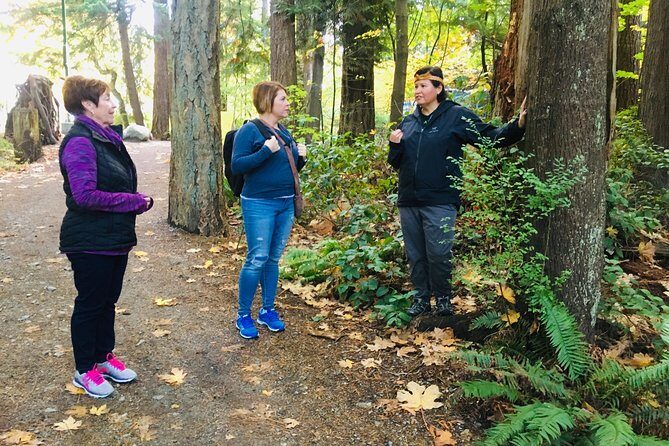
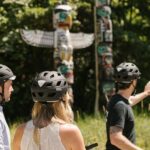
The main part of the experience is the interpretive forest walk around Beaver Lake. The total walking portion is about 90 minutes, and the distance is a little more than 1 mile (around 2 km) at a leisurely pace.
That pace is the point. You’re not doing a workout. You’re moving slowly enough that your guide can stop frequently—so you can look closely at trees, plants, and landscape features, and actually absorb how they connect to Coast Salish First Nations teachings and traditional land management.
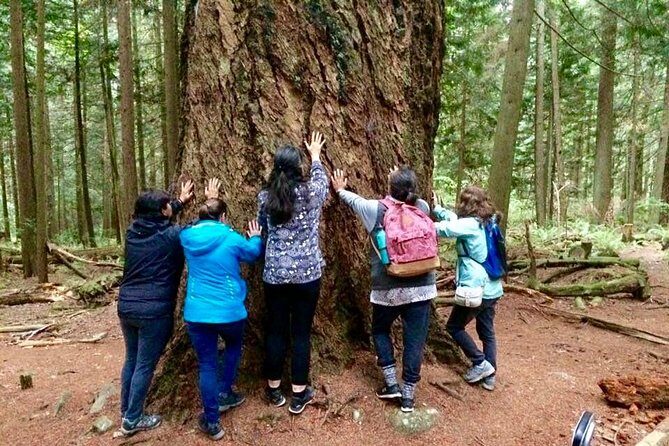
Along the way, you’ll pause at several notable points and get stories tied to how the land has supported community life for generations. Expect interpretation that links what you see in the forest to everyday needs: food and seasonal gathering, shelter materials, tools and technology, and medicinal uses.
What you notice when your guide points out plants for real life
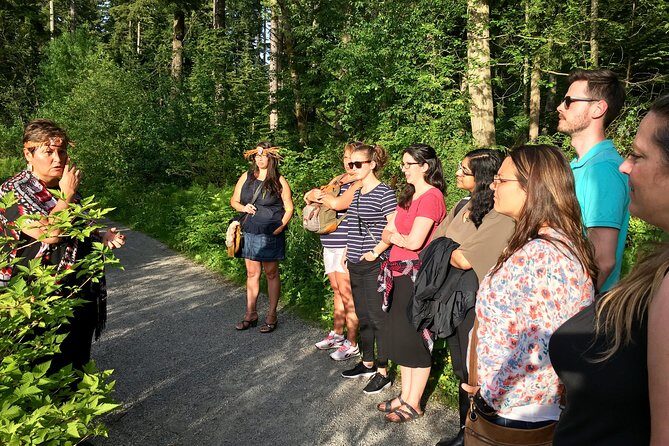
This tour gives you a different set of eyes. Instead of trees as scenery, you start seeing them as resources with specific roles.
Your cultural land ambassador points out local plants and explains what they were used for—food, shelter, art, and medicine. You’ll also learn about how Coast Salish First Nations people lived in this region, alongside later first settlers, and how those histories overlap with what Stanley Park looks like today.
The practical takeaway for me is simple: after this walk, you’ll start spotting plants and thinking, What was this used for? How did people work with it? You’ll probably find yourself noticing smaller details too, like which species grow where, what’s harvested, and why certain plants matter.
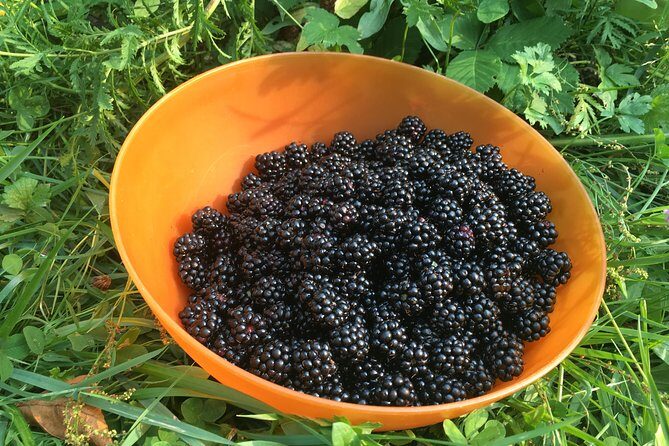
One more detail worth knowing: in the experience, there’s a chance to try natural offerings. Some guides have included berry picking and eating during the walk, so if your tour happens in the right season, you might get a hands-on moment.
The tea and question time: why the format feels different
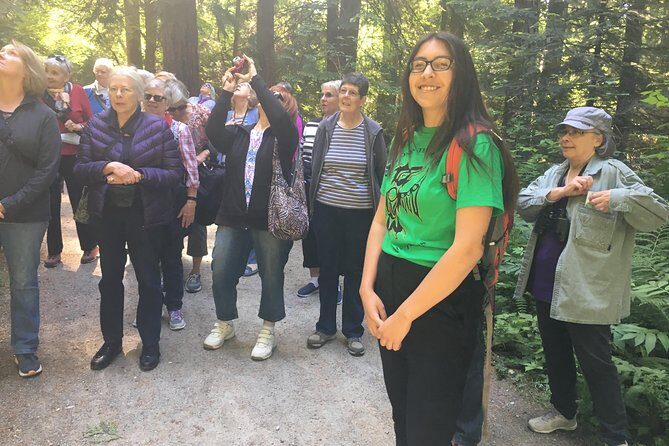
The tour includes coffee and/or tea, specifically Talaysay Hush Tea (an Indigenous tea blend) in a single cup. Reviews also mention tea being served partway through, which can feel like a small reset if the weather is cool or rainy.
More importantly, the structure is built for interaction. The pace stays relaxed, there are regular stops, and your guide welcomes questions. That’s how you end up getting more than a sequence of facts—you get clarifications, personal context, and follow-ups tied to what you’re noticing in front of you.
This can also make the experience feel more personal. The tour has a maximum size of 200 travelers, but several guided walks are described as small-group and question-friendly. Translation: you’re more likely to actually talk than just listen.
Indigenous history in Stanley Park: a wider lens without the hype
Stanley Park is famous for its views and trails, but the Talking Trees walk anchors your time in the Indigenous history of the area. You’ll learn about the Coast Salish First Nations and specific communities connected to this land, including the Musqueam, Squamish, and Tsleil Waututh.
I like that the guide doesn’t present this as one neat timeline. The histories connected to the forest are broad and complex, and you’ll hear them through a First Nations cultural ambassador’s personal story and teachings.
Also, your guide is not just an interpreter of the past. The tour ties land use to knowledge that’s lived and carried—how people managed and harvested resources for generations. When the walk is done, it doesn’t feel like you visited a park. It feels like you gained a framework for understanding what you were standing inside of.
You can also read our reviews of more guided tours in Vancouver


Stop by stop: what each part of the tour actually feels like
Stop 1: Stanley Park Bus Loop (meet-up and start)
You gather in the gazebo area inside the bus loop, meet your cultural land ambassador, and head out together toward Beaver Lake. This part is quick—about 10 minutes.
Practical note: since this is a specific meeting point, give yourself a little extra time. If you’re arriving by car, parking can take a few minutes to sort out.
Stop 2: Beaver Lake Trail (the main story walk)
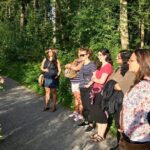
This is the heart of the tour. You’ll follow shaded forest trails, pause at key points, and get storytelling and plant interpretation. The walking portion totals about 90 minutes. Expect frequent stops for observation and discussion.
This is also where you’ll likely notice the guide’s style most clearly—some guides share personal family history and may start with music or drumming, while others focus hard on plant uses and land teachings. Either way, the common thread is the connection between what you see and what it meant.
Stop 3: Stanley Park Bus Loop (return and wrap-up)
After looping around Beaver Lake, you return along the forest trail to the bus loop. This part is about 5 minutes. The tour ends back where you started, so it’s easy to transition to the rest of Stanley Park without hunting for a pickup point.
Price and value: what you’re paying for
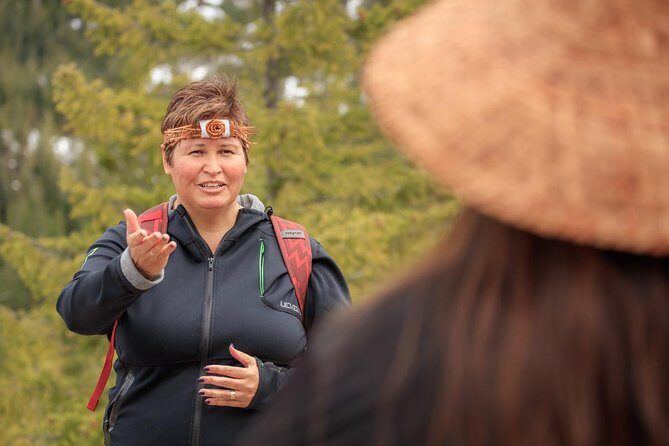
At $60.08 per person for about 1 hour 30 minutes, the cost is mostly buying access to a trained First Nations cultural ambassador and that guided “slow look” time in the forest.
You’re also getting something tangible and human: tea or coffee included. And you’re getting interpretation that goes beyond general park info—plant uses like food, shelter, art, and medicine, tied to Indigenous teachings and land management.
If your goal is simply scenery, you could do Stanley Park on your own. If your goal is understanding how this land has been used and valued for generations, then the price starts to make sense because the guide is the main attraction.
Practical tips before you go (so the day stays easy)
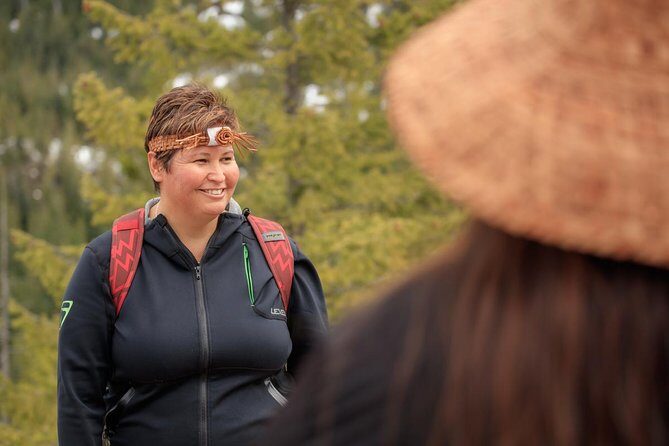
- Bring layers. Even if Vancouver looks mild, the forest shade can feel cooler, especially outside peak season.
- Wear walking shoes. The pace is easy and suitable for most fitness levels, but you’ll still be walking trails.
- Plan to arrive on time. The meeting point is specific and the open-air gazebo inside the bus loop is where you’ll be starting.
- Come ready with questions. This is the kind of tour where your curiosity pays off—plants, harvesting, land care, and how stories connect to place.
- Check timing with your schedule. The tour offers several departure times, which helps if you’re fitting it between meals, museums, or other Stanley Park stops.
Who this tour is best for
This works well for:
- Anyone who wants more than a standard nature walk in Stanley Park
- Adults and families looking for an easy outing that still feels meaningful
- People who care about Indigenous history presented through lived connection and teachings
It’s also a solid option if you’re not after strenuous hiking. There are accounts of seniors using a cane enjoying the walk comfortably, because the pace and route are designed to stay accessible.
Should you book Talking Trees?
I’d book it if you want Stanley Park to mean more than postcards. You’ll get an easy Beaver Lake walk, tea included, and plant-focused storytelling rooted in Coast Salish histories and land knowledge. The guide is the value engine here—expect personal context, space for questions, and details that make you see the forest differently.
I’d think twice only if you’re looking for a long hike or want a purely general overview of park sights. This tour is intentionally short, slow, and story-based. That’s the trade-off—and for the right traveler, it’s the whole point.
FAQ
Where is the meeting point for the Talking Trees tour?
The tour meets at the Stanley Park Bus Loop, inside the open-air wooden gazebo area beside the Mini Train and Aquarium parking area.
How long does the tour last?
The total experience is about 1 hour 30 minutes, including time to walk to the main area and return.
Is the walk strenuous?
No. The tour is described as easy level and appropriate for all fitness levels, with a leisurely pace and regular stops.
How much walking will I do?
The walking portion loops around Beaver Lake and takes about 90 minutes in total, covering a little more than 1 mile (about 2 km).
What does the tour cost?
The price is $60.08 per person.
What language is the tour offered in?
The tour is offered in English.
Is tea or coffee included?
Yes. Coffee and/or tea is included, including Talaysay Hush Tea (an Indigenous tea blend) in a single cup.
Does the tour include hotel pickup or drop-off?
No. Hotel pickup and drop-off are not included.
Is public transportation included?
No. Public transportation to get to the meeting location is not included, though the meeting point is near public transportation.
Are service animals allowed?
Yes, service animals are allowed.
Can I cancel for a full refund?
Yes. You can cancel up to 24 hours in advance for a full refund.