REVIEW · VANCOUVER
Ancient Trees of Vancouver Walking Tour
Book on Viator →Operated by Ancient Trees of Vancouver · Bookable on Viator
Ancient trees in the middle of the city. This walking tour guides you through Stanley Park’s last old-growth giants, using archival-style visuals like old maps and about 120-year-old postcards, brought to life by Colin Spratt, a BC Big Tree Committee member.
I especially like the small group size (up to 10 people), which keeps the stops unhurried and makes it easy to ask questions as you spot very old Douglas fir, western red cedar, and Canada’s best-known maple giant. One drawback to note: there’s no pickup or drop-off, so you’ll need to make your own way to Ferguson Point (7501 Stanley Park Dr).
In This Review
- Key points
- Why This Stanley Park Tree Walk Feels Like a History Class
- Meet Colin Spratt, Big-Tree Seeker and Storyteller
- The 3-Hour Plan: What You’ll Do and How the Time Feels
- Stanley Park’s Old-Growth in One Walk
- The Trees Themselves: Douglas Fir, Western Red Cedar, and a Maple Giant
- How the Past is Brought In: Maps, Photos, and Postcards
- What to Expect on the Ground: Walking Style, Stops, and Comfort
- Who This Tour Suits Best (and Who Might Skip It)
- Value: Is $56.33 Worth It for 3 Hours?
- Should You Book Ancient Trees of Vancouver?
- FAQ
- Where does the tour start?
- How long is the walking tour?
- How many people are in each group?
- Is the tour offered more than once a day?
- Is pickup or drop-off included?
- What is included in the experience?
- What language is the tour in?
- Is the tour admission free?
- Are service animals allowed?
Key points
- Max 10 participants keeps the walk calm and question-friendly
- Colin Spratt brings a big-tree seeker’s perspective plus conservation focus
- Old maps and ~120-year postcards/photos help you see change over time
- Big tree lineup includes ancient Douglas fir, western red cedar, and a famous maple
- Ecology taught with real examples like nurse logs and how old-growth survives
- 3 hours on Stanley Park trails with morning and afternoon departures
Why This Stanley Park Tree Walk Feels Like a History Class
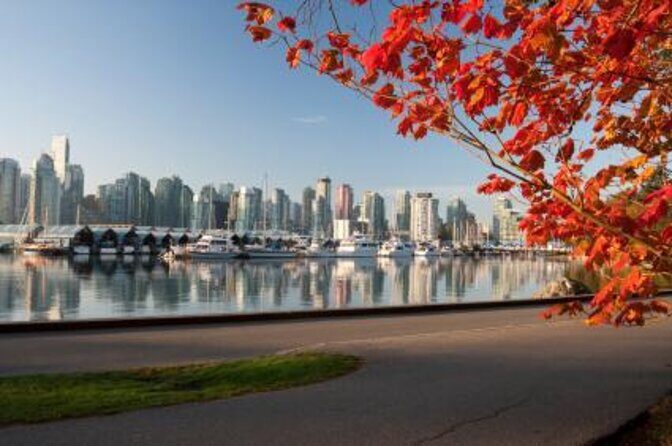
Stanley Park is famous. This tour is different because it treats the forest like a living document. You’re not just looking at trees. You’re learning how people, seasons, and climate nudged this place over centuries, and how the oldest trees still hold clues today.
What makes the experience click is the mix of time scales. You’ll hear stories that stretch back to the Coast Salish presence long before the park became what it is now, and then you’ll shift to what old-growth forests do right now—how they support life, and what modern threats push against.
You also get a guide who can point at one tree and then connect it to the bigger system around it. That turns a walk into a slow, satisfying kind of noticing. And in a city full of quick stops, it’s refreshing to spend a few hours learning how the ground level ecosystem actually works.
You can also read our reviews of more walking tours in Vancouver
Meet Colin Spratt, Big-Tree Seeker and Storyteller
Colin Spratt is a big-tree seeker, and he’s part of the BC Big Tree Committee. That matters, because you can feel the difference between someone who read about trees and someone who spends time with them. He has a way of identifying what you’re seeing and explaining why it’s important without turning it into a lecture you’ll forget by dinner.
In plain terms, he helps you see the forest as a network. You’ll hear how old trees can shelter new life, including the idea of nurse logs—fallen trees that help seedlings take root. You’ll also learn why many ancient trees look odd up close, like hollowness. He explains how those cavities can become habitat, including how hollow cedars can serve as homes for animals.
Then he brings in the human side. You’ll hear how First Nations communities viewed cedar as the tree of life, and how its fibers and bark were used in everyday life—things like textiles, longhouses, canoes, clothing, and rope. It’s not just facts. It’s a way of understanding why these trees mattered and still matter.
The 3-Hour Plan: What You’ll Do and How the Time Feels
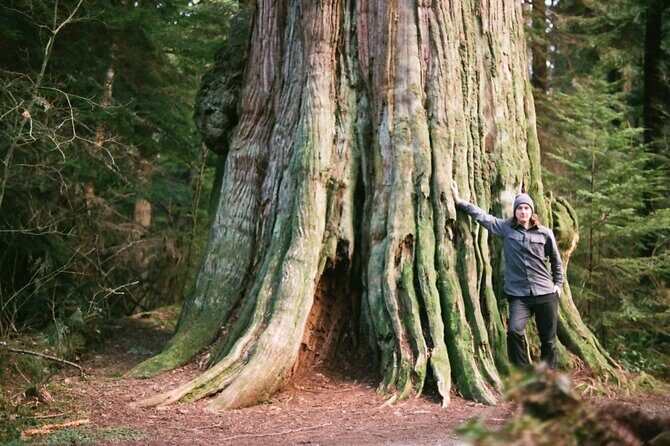
This is an approximately 3-hour guided walk in Stanley Park, and it ends back where you start. The focus stays on the same theme the whole time: ancient trees, plus the history wrapped around them.
You begin at Ferguson Point (7501 Stanley Park Dr). From there, you’ll follow the park trails with an expert guide who stops often enough to keep the story moving. This is a walk with frequent “look here” moments—tree by tree, feature by feature.
The pacing is one of the tour’s hidden strengths. With a small group, you’re not rushing to hit a checklist. People can ask questions without the whole group feeling stalled. Several folks highlight that the walk is easy and accessible on standard park paths, which makes it a good option if you want forest time without committing to a heavy hike.
The tour is also offered in both morning and afternoon. That’s useful because you can match your energy level, your weather window, and your other Vancouver plans.
Stanley Park’s Old-Growth in One Walk
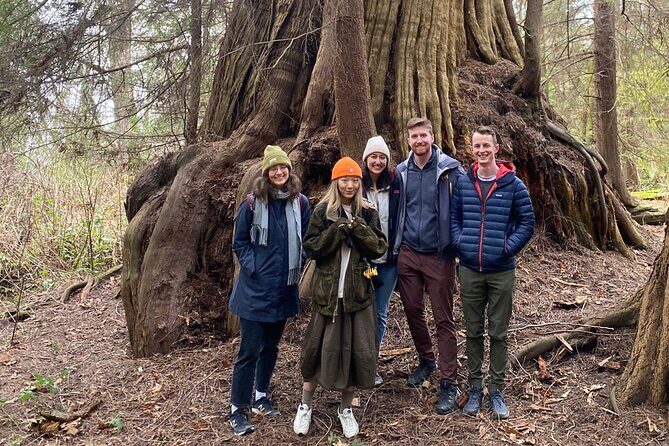
Stanley Park holds onto remnants of old growth that most urban areas simply can’t. The tour is designed to point you toward the biggest, oldest examples and explain what you’re looking at.
You’ll hear about towering Douglas fir trees with ages cited around 600 years, plus western red cedar giants with ages reaching about 1,000 years. There’s also a special nod to the largest known maple tree in Canada. The point isn’t name-dropping species. It’s understanding why these particular trees are markers of time—and what that age means ecologically.
Old-growth forests do a lot for the web of life. You’ll learn why they matter for biodiversity, and you’ll also hear about threats facing old-growth forests today. In a city where it’s easy to assume nature just regenerates on its own, this makes you think differently.
You’ll also get history that goes beyond the park’s modern postcard image. The tour touches on the Coast Salish inhabitants who lived here for thousands of years before Stanley Park became an urban park. It’s a reminder that this wasn’t empty wilderness waiting for a city. It was a long-used landscape with deep knowledge.
The Trees Themselves: Douglas Fir, Western Red Cedar, and a Maple Giant
This is the part I think most people are waiting for, and it delivers. The guide helps you see the differences that matter, not just the differences that look pretty from far away.
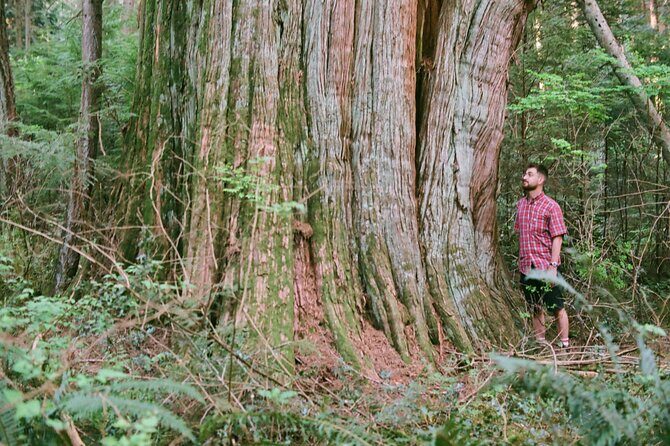
Douglas fir can be tall and strongly structured, and you’ll hear about how their age is estimated and what traits signal age and significance. The tour also highlights that cedars—especially ancient western red cedars—can be enormous and sometimes even hollow. That hollow space isn’t just a spooky detail. It’s part of how old trees remain useful in the ecosystem.
One cedar may be referred to by a nickname like grandfather tree. Whether you call it that or not, you’ll learn the logic: ancient trees often show features that link them to survival and renewal. You might hear about how fallen trees can become the next generation’s foundation through nurse logs. You might also learn about “tree spikes,” described as crown shapes that develop on the oldest cedars—signals of long-lived growth.
And then there’s the maple. The tour spotlights the largest known maple tree in all of Canada, which gives you a nice change of pace from the conifers. It’s easy to forget that old-growth stories aren’t only about fir and cedar. This helps you notice the full variety of the forest.


How the Past is Brought In: Maps, Photos, and Postcards
A great nature tour teaches you how to look. This one also teaches you how to place what you’re seeing in time.
Old maps and photographs are used to tell the story of how Stanley Park changed, and how the forest has persisted even as the surrounding world evolved. You’ll also see the value of archival postcards—simple images that can show what visitors thought was worth seeing long ago.
That historical material does two things for you. First, it makes the trees feel more than scenery. Second, it explains why the same spot can tell different stories depending on what decade you’re standing in.
This is also where the tour’s conservation angle shows up. You see that old-growth isn’t just “there.” It exists because of choices people made and threats they responded to. When you connect the past visuals to what’s standing today, the survival story becomes easier to understand.
What to Expect on the Ground: Walking Style, Stops, and Comfort
This tour is designed around a guided walk through Stanley Park trails. Most of the time, you’re moving at a comfortable pace with stops for viewing and discussion. It’s not framed as a rugged trek, and the emphasis is on easy-to-manage park walking rather than long-distance endurance.
Still, bring real-world basics. Wear shoes you can trust on uneven paths. Bring water, especially if you’re going in the morning sun or during warmer months. If you’re the kind of person who likes to take photos, plan a little extra time for it because ancient trees can trigger the classic problem: you’ll want to keep looking.
The group is capped at 10, so you get a human-sized experience. That matters when the guide points out tiny details like tree shapes, growth patterns, and features like hollowness. In a larger group, you’d usually miss those. Here, you’re more likely to see them clearly.
Also keep in mind the meeting location: Ferguson Point. There’s no pickup or drop-off, so you’ll want to factor in transit time and parking options if you’re driving.
Who This Tour Suits Best (and Who Might Skip It)
I’d recommend this tour if you want a break from the usual Vancouver checklist. It’s a strong fit for people who like nature plus stories—especially stories that connect ecology, Indigenous history, and conservation.
It’s also a great choice if you’re traveling with people who don’t all love the same things. Someone who wants science gets nurse logs and ecosystem explanations. Someone who wants local history gets Coast Salish context and the park’s transformation. Someone who just likes looking at big trees gets Douglas fir, cedar giants, and that maple standout.
If your idea of a tour is mostly viewpoints, skyline photos, or indoor exhibits, you might find this more slow and reflective than you expected. This is a walking tour that asks you to pay attention. If you don’t like that style, you’ll probably feel restless after the first hour.
If you have kids, it can work well as long as they’re okay with an outdoor story walk. The key is curiosity, not energy levels. A guide who can keep the questions moving makes a big difference.
Value: Is $56.33 Worth It for 3 Hours?
At $56.33 per person for about 3 hours, this isn’t a bargain price. It also isn’t trying to be. The value comes from what you get that self-guided wandering usually misses: a guide with specialized focus and the ability to translate old-growth details into something you can actually understand.
You’re paying for multiple layers at once: expert guidance, a small group setting, and narrative support through old maps, about 120-year postcards, and photographs from archives. You also get a conservation-minded lens, plus an Indigenous history perspective that treats cedar as a meaningful resource rather than a background fact.
And because the group stays under 10, the guide can slow down. That’s part of the cost. In other words, you’re not just buying “a walk in a park.” You’re buying interpretation—tree by tree, story by story.
Should You Book Ancient Trees of Vancouver?
Book it if you want to see Stanley Park with new eyes. You’ll come away thinking about what old-growth forests do for the living world, and you’ll likely remember specific details—like nurse logs, hollowness in ancient cedars, and cedar’s cultural role as the tree of life.
I’d also book it if you care about guided context. The archival maps and postcards help you understand change over time, and that turns a few hours outdoors into a real learning experience.
Don’t book it if you’re hoping for a casual stroll with zero focus, or if getting yourself to Ferguson Point is a hassle you don’t want to manage. This tour is small-group and story-driven by design.
If your schedule is flexible, you can also feel calmer about committing. The experience offers free cancellation up to 24 hours in advance, so you’re not stuck if weather or plans shift.
In short: if ancient trees and thoughtful storytelling are your kind of travel, this is a tour you’ll be glad you didn’t skip.
FAQ
Where does the tour start?
The tour starts at Ferguson Point, 7501 Stanley Park Dr, Vancouver, BC V6G 3E2, Canada.
How long is the walking tour?
The tour lasts about 3 hours.
How many people are in each group?
The group is limited to a maximum of 10 travelers.
Is the tour offered more than once a day?
Yes, there are both morning and afternoon tours for flexibility.
Is pickup or drop-off included?
No. You’ll need to get yourself to the meeting point, and the tour ends back there.
What is included in the experience?
You get an expert guide (Colin Spratt), a walking tour, and old maps plus old postcards and photographs to help tell the history of the forest.
What language is the tour in?
The tour is offered in English.
Is the tour admission free?
For the Stanley Park stop, the admission ticket is listed as free.
Are service animals allowed?
Yes, service animals are allowed.