REVIEW · MONTREAL
Rabbis, Writers and Radicals: Montreal Jewish History Walking Tour
Book on Viator →Operated by Museum of Jewish Montreal · Bookable on Viator
Montreal’s Jewish past walks right beside you. This 2-hour Montreal Jewish history walking tour helps you read the neighborhoods behind the headlines, with a local guide bringing the themes of rabbis, writers, and radicals to life on the streets. I like that the tour stays family friendly while still packing in real context, and I also like how the guides answer questions on the spot, with past groups led by Emily, Vivien, Serafina, Hannah, and Sofia. One possible drawback: the pacing and clarity can vary by guide, and a few people noted it can feel lecture-like or hard to follow if you’re far back.
You also get a practical, low-key setup: it uses a mobile ticket, runs with a small group (max 20), and is offered in English. The route starts and ends at different points around the Plateau and Mile End, so it’s not as simple as meeting at a single landmark. Plan on some walking with moderate physical fitness, and keep your expectations aligned with a history narration walk, not a museum-style slow browse.
In This Review
- Rabbis, Writers, and Radicals: Why This Walk Feels Different
- What You’ll See Along the Plateau and Mile End Route
- How the Guides Turn Facts Into a Walking Story
- Timing, Route Flow, and How to Plan Your Day
- Value Check: Is $24.03 Worth It?
- Family Friendly, But Still History-Forward
- Small Group Size: The Ceiling That Helps You Hear and Ask
- Should You Book This Montreal Jewish History Walking Tour?
- FAQ
- How long is the Rabbis, Writers and Radicals walking tour in Montreal?
- What does the tour cost?
- Where do I meet for the tour, and where does it end?
- Is the tour offered in English?
- Is the tour family friendly?
- How large is the group?
- Is the museum itself part of the tour during the walk?
- What’s included in the ticket?
- What’s the cancellation policy?
Rabbis, Writers, and Radicals: Why This Walk Feels Different
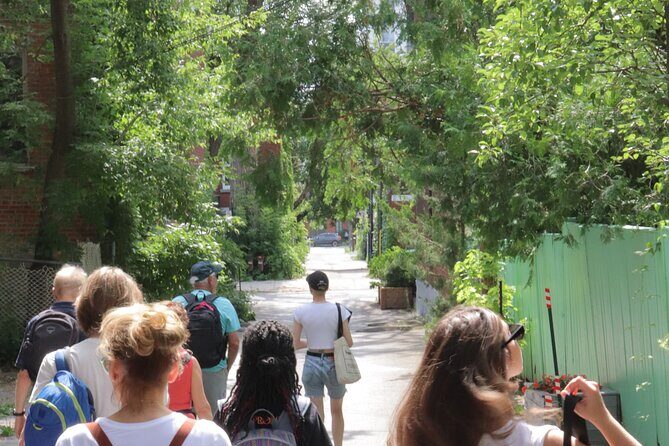
If you usually picture Jewish history as something that happened far away, this tour nudges you into a different frame. Montreal’s Jewish story isn’t only about big dates and famous people. It’s also about writers, teachers, activists, and community life shaped by politics, ideas, and day-to-day survival.
The best part of this walking format is that it makes the subject feel local. You’re not staring at a timeline in a room—you’re moving through the Plateau and Mile End streets where that culture left traces in businesses, institutions, and community networks. And because the tour focuses on people and movements, not just buildings, you come away with a clearer sense of how ideas spread in real neighborhoods.
What You’ll See Along the Plateau and Mile End Route
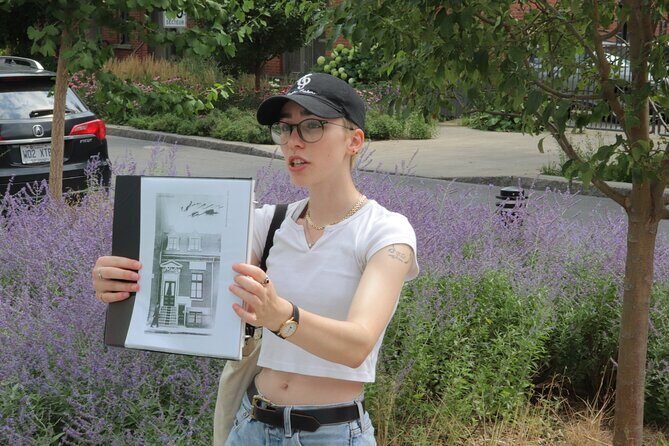
You won’t get a single “look here” museum moment. Instead, you’ll walk through a chain of stops that build themes as you go. Your ticket lists the exact start and end points, and the tour begins and ends at different locations around the Plateau and Mile End rather than at the museum building itself.
Here’s the kind of story you can expect to hear as you move from stop to stop:
- Jewish immigration and community formation in Montreal, with an emphasis on how new arrivals made a life.
- Religious and scholarly traditions—the rabbis side of the title—framed as part of how communities organized themselves.
- Writing and public expression, where words become tools for belonging, debate, and survival.
- Radical politics and activism, including discussions that came up in past groups such as debates connected to Zionism and anti-Zionist Jewish perspectives, and the lasting impact of local legal pressure (including references like padlock laws).
Because the tour is about connections, not just objects, you may find some stops emphasize the “why” more than the “what’s still standing.” One helpful way to approach it: treat the route like a guided reading of the city—each stop is a paragraph, and the narration ties the paragraphs together.
A practical note: the actual physical remnants can be limited. If you’re hoping for lots of intact historic storefronts with plaques, you might feel slightly short on visuals and wish for more explanation of how each spot connects. On the other hand, if you like people-centered history—who lived here and what they argued about—you’ll likely find the street-by-street structure rewarding.
You can also read our reviews of more walking tours in Montreal



How the Guides Turn Facts Into a Walking Story
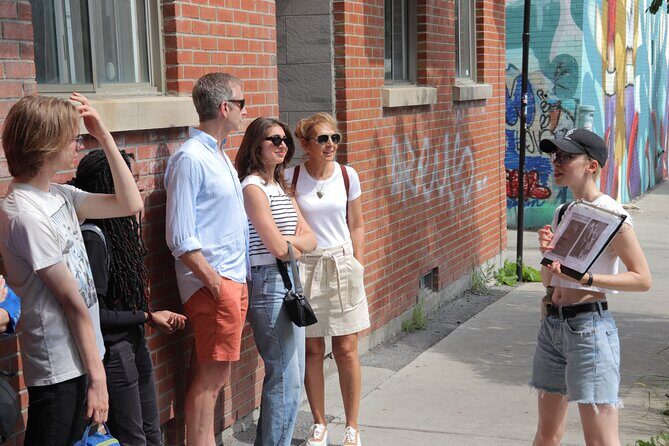
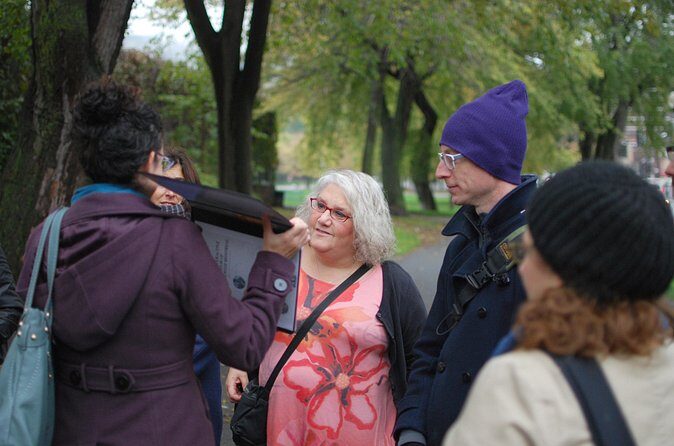
The tour’s biggest strength is the people delivering it. Past departures have been led by guides including Emily, Vivien, Serafina, Hannah, and Sofia, and many comments focus on how clearly the guide managed the group and kept momentum.
You can reasonably expect three things from a strong session:
- Good pacing for mixed groups. Some groups have included seniors, and the guides have adjusted speed without turning the walk into a drag.
- Strong question handling. When the guide can talk off-script, it turns the experience into a conversation instead of a lecture.
- Personal or place-based observations. A few people noted that guides sometimes added lived perspective, which makes the story feel less like a textbook and more like Montreal.
Still, there are two watch-outs. First, a few people said a guide spoke quickly, which can matter if you’re not fluent or you simply process slower in a noisy outdoor setting. Second, on any walking tour, sound drops with distance—if you’re at the back, you may miss details unless you can hear well.
My advice: if you’re hard of hearing, arrive early and position yourself where you can clearly catch the guide’s voice. If you’re unsure about your listening comfort in English outdoors, this is the one detail to take seriously.
Timing, Route Flow, and How to Plan Your Day
This experience is about 2 hours on foot. With a moderate physical fitness level, it’s a good fit for most people who can walk through neighborhoods at a steady pace. You won’t need special gear, but you should wear comfortable shoes, especially if Montreal weather is doing its usual unpredictable thing.
Meeting points are also worth planning around. The start and end locations are not identical, and they’re in different spots around the Plateau and Mile End. Your ticket will list the exact locations for your departure. That matters because the route may not finish at the museum entrance—even though the Museum of Jewish Montreal is on 5220 St-Laurent Boulevard.
If you want to extend your day, you can use the museum exhibitions as a follow-up. The exhibitions at 5220 St-Laurent Boulevard are open to the public Thursday, Friday, Saturday, and Sunday, and beginning in late May 2024 they also open on Mondays. That’s a simple way to turn a great walking guide into a deeper second step.
Value Check: Is $24.03 Worth It?
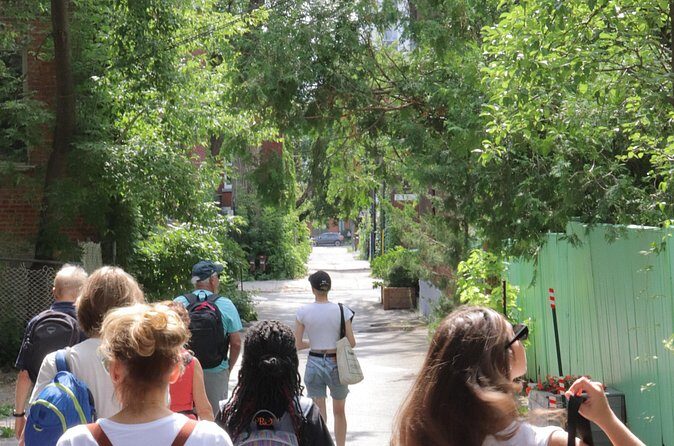
At $24.03 per person for about two hours, this tour lands in the “good value” zone—especially if you want a guided entry into a neighborhood-based story. You’re paying for:
- a local guide (the tour’s only included feature),
- narration that connects people, politics, and community life,
- and a structured route that saves you from piecing it together yourself.
If you’re comparing it to a museum ticket, remember this isn’t trying to be a full exhibit. It’s a guided route that gives you a framework, and that can make museum visits later feel more meaningful. If you’re already planning time at the Museum of Jewish Montreal, this walk can work like your orientation—then you can point to what you just heard on the streets.
Where it’s not the best fit is if you want an ultra-structured, event-by-event chronology with lots of dates and names. Some people have said parts felt like separate pieces rather than one tightly stitched narrative. That doesn’t mean the tour is bad—it means you should match it to your learning style. If you like ideas and themes, you’ll probably enjoy it. If you need a strictly chronological script, you might want to pair it with a book or museum time afterward.
Family Friendly, But Still History-Forward
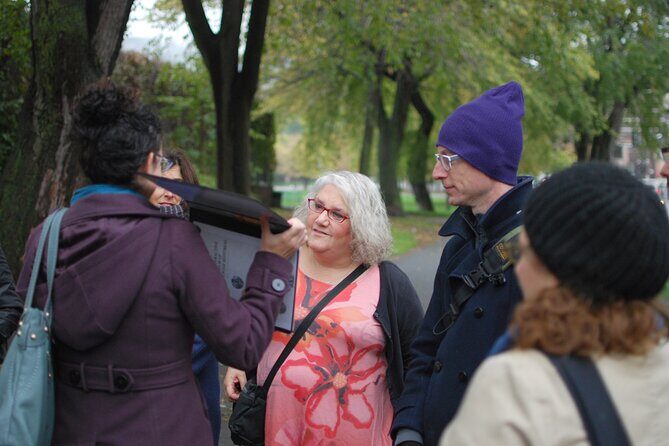
This is billed as family friendly, and that’s a meaningful detail for Montreal. Not every history experience in the city works with mixed ages. Here, the walking format and the focus on community life give parents an easier time keeping kids oriented.
That said, it’s still a serious history tour. You’ll hear about community politics, legal pressure, and ideological debates. If you’re bringing younger kids, it may help to frame it as a story of how communities talk, argue, and build institutions in a new place.
For grandparents and seniors, the key is that guides have previously adjusted pace for the group. If you’re traveling with older relatives, this is one reason the tour can feel manageable rather than exhausting.
You can also read our reviews of more historical tours in Montreal






Small Group Size: The Ceiling That Helps You Hear and Ask
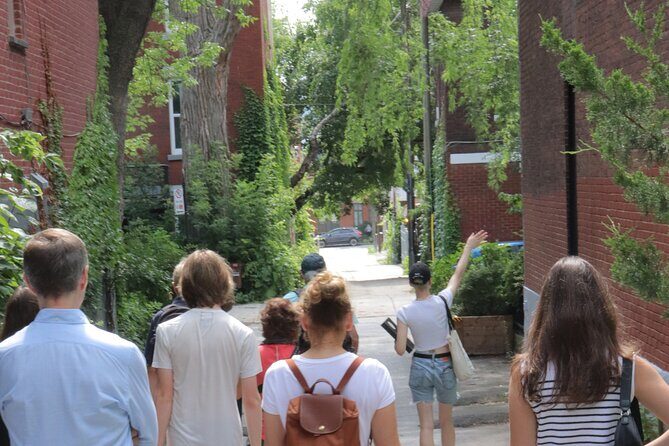
The group size max is 20 travelers. That number matters more than you might think. Smaller groups tend to mean:
- less crowding around the guide,
- better chances to hear questions,
- and a smoother experience when the route narrows.
If you’re the type who asks questions as you walk, a smaller group usually means the guide has enough time to respond. If you’re shy, it still helps because you’re less lost in a large pack.
Should You Book This Montreal Jewish History Walking Tour?
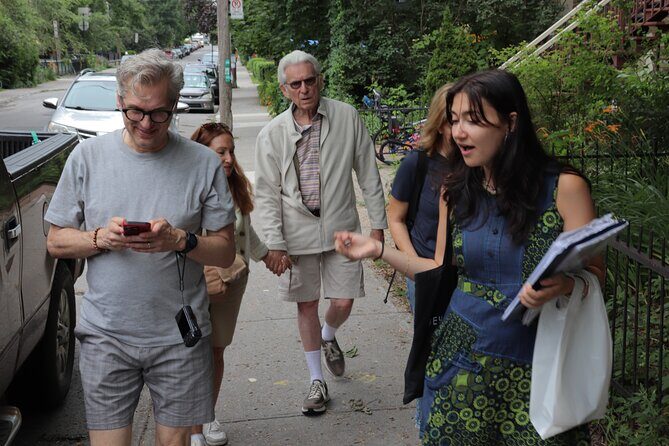
Book it if you want a neighborhood-based way to understand Montreal’s Jewish past and you enjoy themes like community building, writing, religious life, and political movements. It’s also a smart choice if you plan to visit the Museum of Jewish Montreal after, since the walk can prime you for what you’ll see inside.
Skip (or consider pairing differently) if you need a tightly chronological history lecture with lots of dates, or if you know outdoor audio is hard for you. In those cases, you might still find value, but you’ll want to manage expectations and position yourself well to hear the guide.
If you do book: show up with curiosity, bring good walking shoes, and don’t be afraid to ask a question early in the tour. The whole point of this format is that the city story becomes clearer the more you engage with the guide.
FAQ
How long is the Rabbis, Writers and Radicals walking tour in Montreal?
It runs for about 2 hours.
What does the tour cost?
The price is $24.03 per person.
Where do I meet for the tour, and where does it end?
The listed start point is 4129 Boul. Saint-Laurent, Montréal, QC H2W 1Y7 and the end point is 5220 Boul. Saint-Laurent, Montréal, QC H2T 1S1. Your ticket also states that the tour begins and ends at different locations around the Plateau and Mile End neighborhoods.
Is the tour offered in English?
Yes. It is offered in English.
Is the tour family friendly?
Yes, it is described as family friendly.
How large is the group?
The tour has a maximum of 20 travelers.
Is the museum itself part of the tour during the walk?
The tour is not described as starting or ending at the museum building. However, the Museum of Jewish Montreal exhibitions at 5220 St-Laurent Boulevard are open to the public Thursday, Friday, Saturday, and Sunday, and starting late May 2024 they are also open on Mondays.
What’s included in the ticket?
A local guide is included.
What’s the cancellation policy?
Cancellation is free, and you can cancel up to 24 hours in advance for a full refund. If you cancel less than 24 hours before the start time, the amount paid is not refunded.