REVIEW · MONTREAL
In the Shadow of the Mountain: Montreal Jewish History Walking Tour
Book on Viator →Operated by Museum of Jewish Montreal · Bookable on Viator
Montreal has an untold Jewish map. This 2-hour walking tour starts at the Museum of Jewish Montreal and uses mobile technology to animate Jewish community stories in the city. I like how it’s led by museum staff, not generic guides, so the facts feel anchored and the pacing stays thoughtful.
Two things I especially liked: first, the tour brings you a real sense of what life was like for Montreal’s Jews across the early to mid 1900s, with concrete details along the walk. Second, guides like Avery and Nama (on different departures) use primary-source style material like photos and documents to help you connect what you see on the sidewalk to what happened before.
One thing to consider: while the tour is outdoor-focused, the museum interior space is currently closed, so don’t count on going inside during the experience. Also, you’re walking for about two hours with a moderate fitness level requirement, so wear comfortable shoes.
In This Review
- Key Takeaways Before You Go
- Why This Tour Starts at the Museum of Jewish Montreal
- The Mobile Technology Layer: How the Past Gets Animated
- Your Two-Hour Walk: What the Route Feels Like
- Understanding the Big Theme: Hope vs. Reality in Jewish Montreal
- Mount Royal’s Name in Yiddish: Tur Malka and Why It Matters
- What You’ll Do Along the Walk (and What You Might Skip)
- Guide Quality: Why This Feels More Personal Than Typical Tours
- Pricing and Value: Is $24.02 Worth It?
- Who This Tour Is Best For
- Quick Planning Tips So You Get the Most Out of It
- Should You Book This Jewish Montreal Walking Tour?
- FAQ
- How long is the tour?
- Where does the tour start and end?
- What language is the tour in?
- Is a mobile ticket used?
- Is hotel pickup included?
- How big is the group?
- Can I cancel for a refund?
Key Takeaways Before You Go
- Museum-led storytelling gives this walk a stronger historical backbone than most neighborhood tours
- Mobile technology adds moving visuals that make past events easier to picture
- Small group size (max 8) means more time for questions and a calmer pace
- Mount Royal’s Yiddish nickname, Tur Malka ties local geography to Jewish poetic identity
- English-only experience makes it easy to follow without translation friction
- Two-hour format fits well into a morning schedule if you plan your day around walking
Why This Tour Starts at the Museum of Jewish Montreal
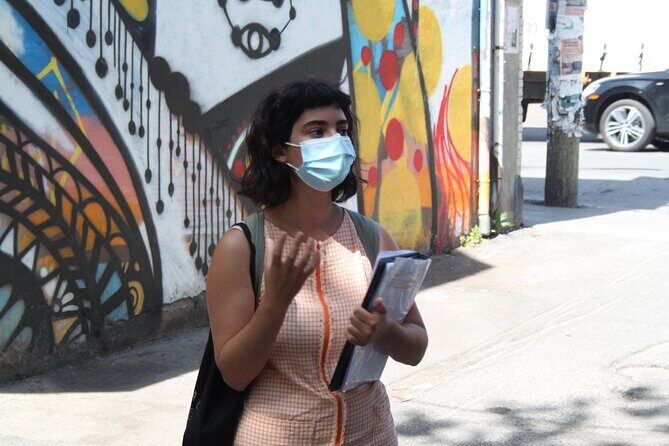
Starting at the Museum of Jewish Montreal is a smart choice because it sets the tone right away: this isn’t a casual stroll with a few facts. You begin with context, then move out into the neighborhoods where those stories played out. Even if you can’t go inside the museum during your tour (the interior space is currently closed), the outside meeting point still functions like a launchpad for the walk.
What I like is the “from idea to street” rhythm. You’re not only learning names and dates; you’re learning how people understood their new surroundings, and how Montreal shaped their choices. That makes the walk feel like it has a spine, not just stops that pass by.
You also get a clear focus on Jewish Montreal as a city-building story—how communities interpreted both cultural and geographic conditions while trying to make Montreal home. That framing helps you notice things you might otherwise skip: street-scale neighborhood patterns, how people clustered, and why certain locations carried symbolism.
You can also read our reviews of more walking tours in Montreal



The Mobile Technology Layer: How the Past Gets Animated
This is not a purely lecture-style tour. A key part of the experience is the use of mobile technology to animate and illustrate historical events. In practice, that matters because it turns “here is what happened” into “you can picture how it looked and felt.”
The tour’s goal is to surface previously lost or lesser-known stories of Jewish Montreal, and the mobile component supports that by adding extra interpretive layers while you’re walking. Think of it as a way to give your brain an image to attach to the landscape. Without it, history can feel like it’s living only in your head. With it, the story keeps pace with your feet.
You should also pay attention to how the mobile elements connect to what the guide is saying in real time. When a guide like Avery or Nama brings out primary-source-style photos and documents, the mobile layer typically helps you tie those artifacts to the buildings and streets you’re seeing outside. It’s the difference between collecting information and building understanding.
Your Two-Hour Walk: What the Route Feels Like
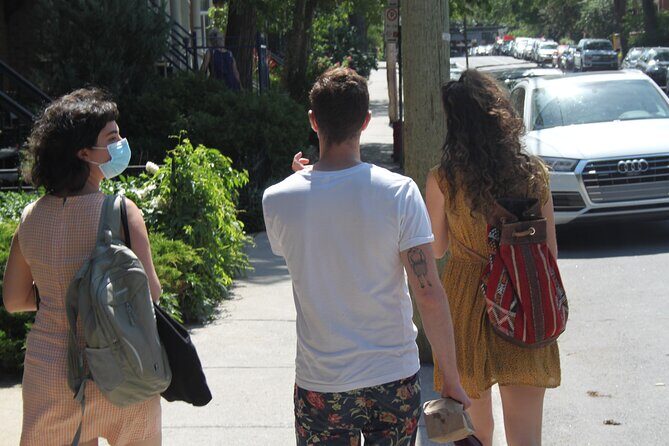
You’re looking at about two hours on foot, with a moderate fitness level. For most people, that’s a comfortable morning distance, especially because the tour runs at different departure times. The pace is set for walking, learning, and stopping to look—so don’t plan to sprint between major sights after this.
One helpful detail: the tour can go farther than you expect if your group’s energy is good. In one group experience, the walk went as far north as Fletcher Park across from Mont Royal. That’s a valuable clue for planning. Even if you can’t predict every street, you can expect enough distance that comfortable shoes matter.
The itinerary also stays focused: it traces Jewish Montreal history as it unfolds in the city, starting with arrivals and then following how the community embraced Montreal over time. Instead of trying to cover every era, the walk builds a narrative arc—how people interpreted their new environment, what they hoped for, and what real life ended up demanding.
If you enjoy tours where you’re reading the city like a map—looking at buildings and streets as evidence—you’ll probably like the way this one guides your attention.
Understanding the Big Theme: Hope vs. Reality in Jewish Montreal
The tour doesn’t just list cultural facts. It emphasizes the gap between dreams and everyday realities, which is where the story becomes more than dates on a page. Jews in Montreal had to respond to cultural and geographic conditions while trying to make Montreal their home. Those constraints shaped community life, language, institutions, and how people imagined belonging.
I found this theme useful because it stops the story from becoming purely celebratory. You learn about how people interpreted the environment around them, and you also learn how their visions met the push-and-pull of city life. That’s often the difference between a tour that informs and a tour that actually changes how you see a neighborhood.
The guide’s job is to keep that theme in view as you walk. You’ll notice it especially when discussions shift from arrival and settlement to the lived texture of community life—social expectations, cultural adaptation, and how Montreal functioned as both a home and a challenge.
This is also why the “previously lost or unknown stories” angle matters. When you’re shown how different voices understood Montreal, you start to realize that even a familiar city can have stories hiding in plain sight.
Mount Royal’s Name in Yiddish: Tur Malka and Why It Matters
One of the most memorable pieces of this tour’s content is the nickname Tur Malka. The name is linked to early 20th-century Yiddish poets, who used it for Mount Royal. The tour frames it as a poetic claim—Montreal’s major landmark took on symbolic meaning for the community, almost like it became theirs in language, not just in geography.
This kind of detail is more than trivia. It’s a way to understand how identity gets anchored. When a place gets a name rooted in culture and literature, people aren’t only seeing the landscape; they’re assigning it meaning. That’s part of how communities make a city feel like home.
So even if you’re not a history person, you can still track the emotional logic: the city becomes something people can talk about, write about, and use to express belonging. When your guide ties the walk back to Tur Malka and Mount Royal, you’re left with a mental image that lasts beyond the tour.
If you like poetic history—how language and identity travel—you’ll likely enjoy this section a lot.
You can also read our reviews of more historical tours in Montreal






What You’ll Do Along the Walk (and What You Might Skip)
The tour is interactive, which means you’ll likely be doing two things at once: listening to the guide and watching for visual cues around you that match the story. The mobile component is designed to support that, and the guide’s stops keep the narrative moving.
Here’s what you can generally expect your experience to feel like:
- You’ll start at the Museum area and then move into historic Jewish neighborhoods as the guide narrates the community’s arrival and growth.
- You’ll stop periodically to take in buildings and surroundings while the guide connects them to earlier events.
- You’ll use mobile visuals and/or animated illustrations to bring the past closer to the present.
- You’ll finish back at the starting area, keeping the structure tight rather than sprawling into a long day.
What you won’t do (based on the info provided): you shouldn’t plan on museum interior access. The museum’s interior space is currently closed, and the tour is described as outdoor-focused in that context. If you’re hoping to spend time inside the museum itself, this walk is still worthwhile, but it won’t replace a full museum visit.
Also, the tour includes only a local guide. You won’t have hotel pickup or drop-off, so treat this as a “show up and walk” experience that depends on you getting to the meeting point area.
Guide Quality: Why This Feels More Personal Than Typical Tours
The strongest repeated theme here is that the guides connect well and stay prepared. I saw this come through in how guides handled questions and how they personalized the experience in smaller groups. For instance, one group of only three people meant the guide could answer detailed questions and tailor the tempo to the moment.
When a guide is enthusiastic and prepared, history becomes a conversation. Guides like Avery and Nama are described as knowledgeable and personable, and they also bring in photos and other primary-source style material to enhance the buildings and stories you’re seeing.
That matters because Jewish Montreal history spans multiple layers—migration patterns, community institutions, language, and everyday life. A good guide helps you keep those layers straight without turning it into a textbook.
If you like tours where you can ask follow-up questions instead of racing through a script, the small group cap is a real plus.
Pricing and Value: Is $24.02 Worth It?
At $24.02 per person, this tour sits in the range of budget-friendly attractions, but it’s not just “cheap.” You’re paying for museum staff–led interpretation, a mobile technology layer, and a guided narrative built around an organized learning outcome.
Here’s why the value feels solid:
- You get museum-level guidance, which usually costs more than typical neighborhood walking tours.
- The mobile tech component adds production value and helps you understand the story more clearly than plain narration alone.
- You’re getting about two hours of structured learning without needing extra transportation.
The main cost you’re paying is time and walking effort, not money. If your schedule already allows a morning walk, the price looks even better. If you hate walking or you’re hoping for lots of indoor museum time, then $24.02 may feel less like a bargain and more like you’re paying for outdoor interpretation only.
Who This Tour Is Best For
This is a great fit if you want to do one or two things in Montreal that go beyond the standard postcard loop.
You’ll especially like it if you:
- enjoy city walking tours that teach you how neighborhoods evolved
- like guided context that connects buildings to real people and real constraints
- want a focused slice of history rather than an all-day marathon
- appreciate primary-source style details like photos and documents
- want something small-group with room for questions
You might think twice if you:
- need lots of indoor museum time (the museum interior is currently closed)
- don’t tolerate moderate walking well
- want a broad, stop-by-stop list of every major landmark (this tour is more narrative than checklist)
Quick Planning Tips So You Get the Most Out of It
A few practical things will help you enjoy the tour more.
Wear comfortable shoes. You’re walking for about two hours, and the route can cover enough distance that tired feet will slow down your attention. It also helps to dress for Montreal weather since it’s an outdoor walk.
Arrive ready to use mobile tech as part of the experience. That means keeping your phone charged and your attention on the guide. The best moments usually happen when the explanation lines up with what you’re seeing outside.
Finally, come with curiosity. Jewish Montreal history is not only about big events; it’s about everyday adaptations and community meaning. If you approach it like a story you’re piecing together block by block, you’ll feel the payoff.
Should You Book This Jewish Montreal Walking Tour?
I think you should book this tour if you want a meaningful, small-group introduction to Jewish Montreal that uses more than just facts. The combination of museum staff leadership, mobile technology, and guided storytelling about hope, reality, and identity makes it feel like you’re reading the city with intention.
Skip it or pair it differently if you’re mainly looking for indoor museum time or you’re unwilling to walk for about two hours. But for most people, it’s a smart way to spend a morning: structured, thoughtful, and paced well for learning without feeling exhausting.
If you’re excited by the idea of Tur Malka and how people turned Mount Royal into more than a landmark, this is one of the better bets in Montreal for connecting place to story.
FAQ
How long is the tour?
It runs about 2 hours.
Where does the tour start and end?
The tour starts at the Museum area on St-Laurent and ends back at the meeting point. The provided addresses are 4129 Boul. Saint-Laurent for the start and 4040 Boulevard St-Laurent for the tour start/end.
What language is the tour in?
It is offered in English.
Is a mobile ticket used?
Yes. The experience includes a mobile ticket.
Is hotel pickup included?
No. Hotel pickup and drop-off are not included.
How big is the group?
The tour has a maximum of 8 travelers.
Can I cancel for a refund?
Yes, you can cancel for free up to 24 hours in advance of the experience start time for a full refund.