REVIEW · MONTREAL
Old Montreal: Self-Guided Tour from Place D‘Armes to Old Port
Book on Viator →Operated by VoiceMap Audio Tours · Bookable on Viator
A good walk beats a rushed checklist. This self-guided Old Montreal audio tour takes you from Place d’Armes to the Old Port with offline GPS audio. I like the price for how many major sights you pass, and I also like that you can stop and linger without herding or waiting. One thing to consider: it’s self-guided, so you’ll need your own smartphone and headphones to get the audio working.
Old Montreal is full of layers, and this route helps you notice them in the right order. You’ll get practical directions to the start at Place d’Armes, then you’ll move through landmarks like Notre-Dame Basilica and the Clock Tower with audio context in English. A possible drawback: you’ll want to plan for entrance tickets at any museum you choose to step into, since those aren’t included.
In This Review
- Key Highlights at a Glance
- Old Montreal in One Go, Without Waiting for Anyone
- Getting Oriented at Place d’Armes (You Start With the Big Picture)
- Notre-Dame Basilica: When the Audio Helps You Look Up
- Montreal City Hall: Second Empire Looks Like a Power Statement
- Château Ramezay: A Building That Switches Hands
- Notre-Dame-de-Bon-Secours Chapel: The Sailors’ Church Moment
- Bonsecours Market: From Institutions to Retail Space
- Place Jacques-Cartier: Rest, People-Spot, and Keep Moving
- Pointe-à-Callière (Museum of Archaeology and History): The Birthplace Theme
- The Site of Montreal’s First Hospital: Early Medicine, Mission Influence
- Old Port Promenade to the Clock Tower: Finish With River Views
- Price and Value: $11.99 for a Short, Thoughtful Walk
- What You Need for It to Work (Don’t Get Tripped Up)
- Best Uses: Who This Tour Fits (and Who Might Want Something Else)
- A Quick Reality Check on Pacing
- Should You Book It? My Decision Checklist
- FAQ
- FAQ
- How long is the Old Montreal self-guided tour?
- Where does the tour start and end?
- Is the tour self-guided or led by a guide?
- What language is available?
- Do I need a smartphone and headphones?
- Are museum entrance fees included?
- Can I use the tour offline?
- Is there lifetime access to the tour?
- What’s the cancellation policy?
Key Highlights at a Glance
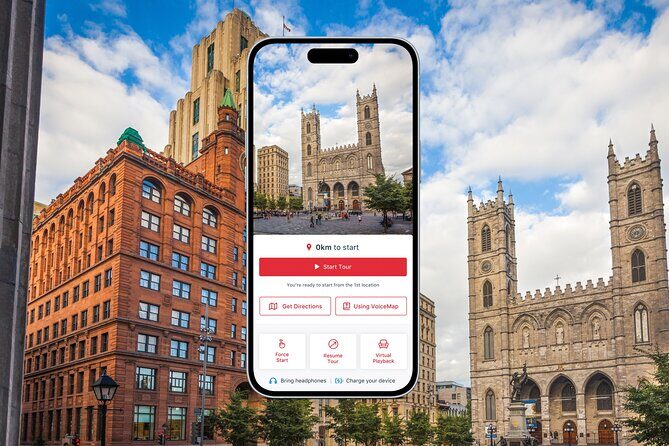
- Audio you can replay forever: Unlimited lifetime use before and after your booking date.
- Offline access included: Audio, maps, and geodata are available without data roaming.
- Major monuments in a short walk: Notre-Dame Basilica, City Hall, Château Ramezay, and more.
- Hands-free pacing: You can pause for a photo or a snack break whenever you want.
- Ends with a view: The Clock Tower stop frames the St. Lawrence River area.
Old Montreal in One Go, Without Waiting for Anyone
This is the kind of Old Montreal experience I recommend when you want history, but you don’t want to feel rushed. The core idea is simple: you follow a GPS-enabled, self-guided audio route and stop when you want. Instead of matching a guide’s talking pace, you match the street pace—slow near the cathedral, quicker when you’re just crossing to the next square.
You’re also paying for more than narration. The deal includes offline audio and maps, plus a virtual playback option so you can listen like an audiobook from anywhere. That’s handy if you want to pre-load your understanding before you walk, or if you want to review the route later while planning another day in Montreal.
The length is also reasonable for a first pass through the neighborhood—about 1 hour 15 minutes to 1 hour 30 minutes. It’s long enough to get meaning out of the key sights, but short enough that you can still do dinner and wander afterward.
You can also read our reviews of more guided tours in Montreal



Getting Oriented at Place d’Armes (You Start With the Big Picture)
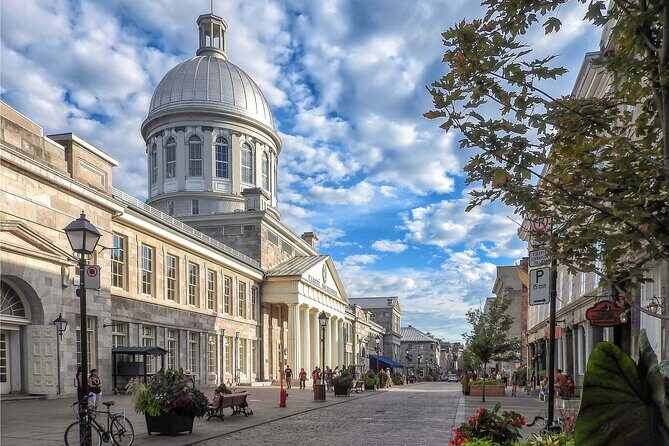
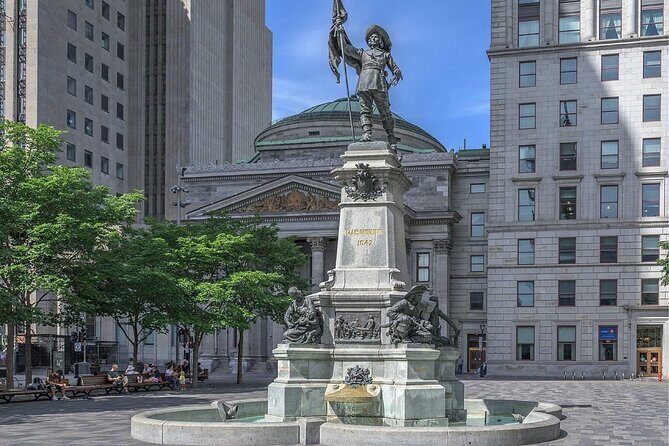
You begin at Place d’Armes, at the intersection of Côte de la Place d’Armes and Rue Saint-Jacques. This square is a smart starting point because it gives you a quick overview of Old Montreal’s layout. The audio context helps you read what you’re looking at right away: the statue of city founder Paul de Chomedy, views toward the Bank of Montreal, and the nearby old Saint-Sulpice Seminary.
Why this matters: if you start somewhere random, Old Montreal can feel like one long photowalk. Starting here helps you build a mental map fast, so later stops feel connected instead of isolated.
Also, this is a nice moment to set your expectations about the architecture. You’ll be seeing different styles and eras right away, and the audio nudges you to look past the postcard version of Montreal and into the details.
Notre-Dame Basilica: When the Audio Helps You Look Up
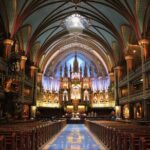
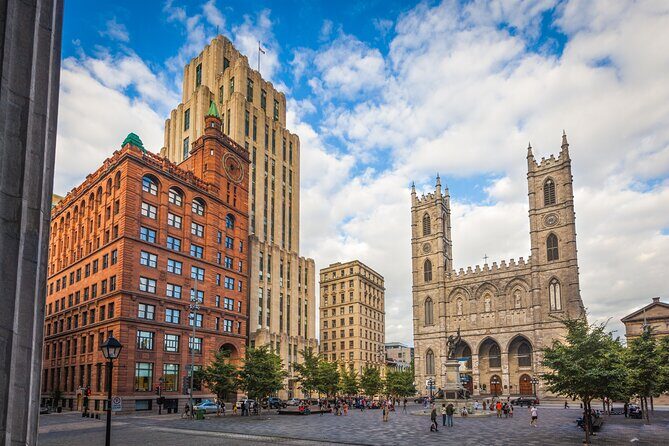
Next up is Notre-Dame Basilica, described as Canada’s most famous church and one of the most visited monuments. Even if you’ve seen photos, what makes this stop special in real life is the contrast: Gothic Revival exterior cues, then a different experience inside once you settle in.
The audio guide points you toward what to notice—its architectural style and the interior highlights. In practice, this is exactly the kind of stop where self-guided audio shines. A guided tour can feel like you’re constantly moving. With this format, you can linger for just a few extra minutes if you’re still absorbing a façade detail or the mood inside.
Two practical considerations:
- If you want to go inside any church or museum, you’ll need to plan for tickets or entrance fees, since they’re not included.
- If you’re traveling during a busy time, build in a little buffer so you don’t feel pressured to rush the interior.
Montreal City Hall: Second Empire Looks Like a Power Statement
As you continue, you’ll pass by Montreal City Hall, known as an impressive example of Second Empire architecture. This is another spot where audio context helps. Without a bit of framing, you may just register it as a big historic building. With the narration, you’re prompted to understand why it matters—this building has hosted important events in the city’s history.
What I like about including this stop: it broadens your view beyond church-and-market Montreal. You start to see the civic side of the city—how government and public life shaped the neighborhood.
If you’re the kind of traveler who enjoys architecture, this is one of the easiest places to get value because the building is prominent and easy to spot along your route.
Château Ramezay: A Building That Switches Hands

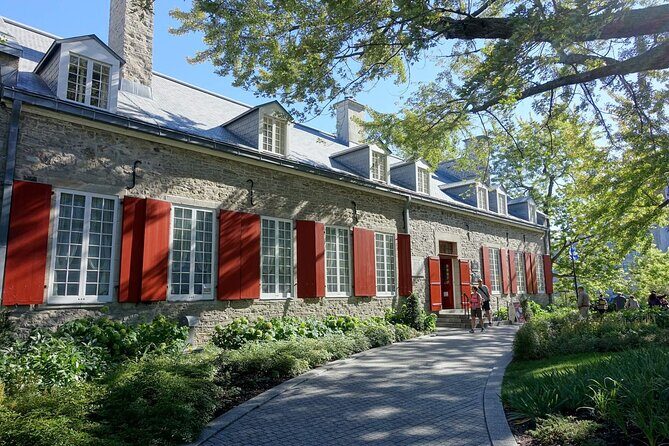
Then you’ll encounter Château Ramezay, a historic building occupied by French, British, and briefly Americans before it became a museum. Even without stepping inside, this kind of stop gives you an immediate lesson: Montreal wasn’t just one empire or one language. It kept changing, sometimes quickly, and buildings recorded those shifts.
The audio framing helps you connect the dots between street appearances and political history. And once you understand that, the neighborhood feels more meaningful—less like a set, more like a timeline.
If you do choose to enter, remember that museum tickets aren’t included in the tour. But even outside, the building’s story makes it worth slowing down.
A few more Montreal tours and experiences worth a look



Notre-Dame-de-Bon-Secours Chapel: The Sailors’ Church Moment
Next is Notre-Dame-de-Bon-Secours Chapel, often called the Sailors’ Church. This stop is a change of pace because it brings a maritime feel into the story of Old Montreal. The narration highlights its beautiful interior and mentions maritime artifacts, which signals that this isn’t only about architecture—it’s also about the people connected to the waterfront.
This is a good stop if you like museums and church interiors that explain how daily life linked to trade and the sea. It’s also a strong option if you want something more intimate than the scale of Notre-Dame Basilica.
Again, plan on possible entrance costs if you decide to go inside.
Bonsecours Market: From Institutions to Retail Space
You’ll pass by the Bonsecours Market, a building that has held multiple civic roles in the past, including housing the Parliament of the United Province of Canada, City Hall, and later the headquarters of Montreal’s Housing and Planning Department. Today, it’s used as a retail space.
I like this kind of transformation because it’s practical and real. Buildings don’t stay frozen in a single moment. They get repurposed as the city’s needs change. The audio helps you see the continuity: you’re in the same envelope, but the function evolves.
If you’re hungry, this area can work well for a break. The route layout also helps you reach multiple key corners without committing to one long indoor block.
Place Jacques-Cartier: Rest, People-Spot, and Keep Moving

From there, you’ll walk through Place Jacques-Cartier, a lively square lined with restaurants and shops and a popular meeting spot for locals and tourists. This isn’t a museum stop. It’s a chance to breathe and reset, especially if the earlier church architecture made you want to take more photos than expected.
This pause matters because self-guided tours can otherwise feel like you’re always walking. Placing a social square mid-route helps you turn the tour into a real afternoon, not a timed mission.
If you want to stop for food or drinks, it’s on you—food and drinks are not included—yet the setting makes it an easy place to do it.
Pointe-à-Callière (Museum of Archaeology and History): The Birthplace Theme
The next stop is the Montreal Museum of Archaeology and History at Pointe-à-Callière. The narration frames it as sitting on the birthplace of Montreal and sharing insights into the city’s archaeological heritage.
Even if you don’t enter the museum, the message matters. You start to connect the present-day streets to the physical ground under them. That shift in perspective is one of the main reasons audio tours can feel worth it: they train you to see what you’d otherwise miss.
If you do plan to visit an indoor museum, keep in mind there may be separate entrance fees.
The Site of Montreal’s First Hospital: Early Medicine, Mission Influence
You’ll then pass by the site of Montreal’s first hospital, opened by the Grey Nuns of Montreal. The narration specifically points to Catholic missionary influence and the early medical history theme.
This part of the walk is valuable because it breaks the pattern of only looking at big, visible monuments. A hospital site adds a human layer. It’s about care, institutions, and how communities organized essential services.
It’s also a great “quiet thinking” stop—something you can read for a minute and then move on, instead of feeling like you have to spend hours inside.
Old Port Promenade to the Clock Tower: Finish With River Views
As you near the Old Port side, you’ll pass Montreal Science Centre along the promenade. The audio frames it as a modern facility with interactive exhibits and technological innovations. It’s a nice contrast to the older architecture earlier in the walk.
Then you finish at the Clock Tower at the Old Port. This is described as an iconic feature and a reminder of Montreal’s maritime heritage, with views of the St. Lawrence River.
Why ending here works: you get payoff at the end. You don’t just leave with photos of buildings. You leave with the open feel of the waterfront and a final panoramic moment.
If you have time after, you’ll likely want to keep wandering along the area since the route ends at a place designed for lingering.
Price and Value: $11.99 for a Short, Thoughtful Walk
At $11.99 per person, this tour sits in the “good deal” category, mainly because you’re getting:
- a structured route through multiple major landmarks,
- offline audio and navigation materials,
- unlimited lifetime use tied to the tour before and after your booking date,
- and a virtual playback option if you want to listen away from the walk.
That “lifetime” part is more than marketing. It means you can use the same tour if you come back to Montreal, or if you’re sharing the general route planning with someone later. It also helps you if your schedule changes mid-trip.
The only real cost you should expect on top of the tour price is optional: museum or church entrance fees if you decide to go in. Food and drinks also remain on your list. But that’s normal for a walking tour focused on sights and stories rather than included admissions.
If you’re traveling with someone, there’s one extra value angle to consider: you’ll each want your own device for the audio experience.
What You Need for It to Work (Don’t Get Tripped Up)
This tour is easy to use, but only if your tech is ready. You’ll need:
- your own smartphone
- headphones
That’s explicitly part of the experience setup. Make sure you bring a charged phone, and consider downloading the offline assets (since you’ll have maps and geodata offline, you won’t have to rely on spotty street signal).
A practical habit I recommend with GPS audio walks: start the audio exactly at the intended meeting point so the route sync stays accurate. The tour includes directions to the starting point so you know when you’re in the right place—use that.
Also, it’s offered in English, and the experience is private, meaning only your group participates. That matters if you dislike the feeling of sharing a route with strangers.
Best Uses: Who This Tour Fits (and Who Might Want Something Else)
I think this tour is a strong match if you:
- like structure but hate rigid timing,
- want to see major Old Montreal stops without booking a full group tour,
- enjoy architecture and want help noticing details,
- or just want a cost-effective way to learn while walking.
It’s also a good option if you’re pairing Old Montreal with other activities, because the duration is short enough to fit around meals and day plans.
Where it might not be ideal:
- If you’re hoping for an included museum visit or guided entrance, this isn’t that type of experience. Tickets aren’t included.
- If you’re traveling with someone and sharing one phone, the audio experience can feel awkward.
A Quick Reality Check on Pacing
The route is designed to work at your pace, and that’s the point. You should plan for your walk to be close to about 1 hour 15 minutes to 1 hour 30 minutes, but your actual time will depend on how often you pause for photos and whether you step into any interiors.
If you want more time, it’s easy: you can extend by lingering at the big church stop, stepping into a museum, or adding a longer break around Place Jacques-Cartier.
If you want to keep it tight, treat it like a guided stroll and only add extra time for one or two stops you care about most.
Should You Book It? My Decision Checklist
Book it if you want:
- a self-guided way to learn Old Montreal without sticking to someone else’s schedule,
- offline navigation and audio for a smooth walk,
- and an affordable route that ties together the cathedral, civic buildings, waterfront heritage, and a river-view finish.
I’d think twice if you:
- don’t want to manage your phone audio setup,
- need an included museum ticket plan,
- or expect a tour guide to be physically present.
If you like planning your own stops and you want a solid first run through the neighborhood, this is a smart buy at $11.99.
FAQ
FAQ
How long is the Old Montreal self-guided tour?
It takes about 1 hour 15 minutes to 1 hour 30 minutes.
Where does the tour start and end?
It starts at Côte de la Place d’Armes and Rue Saint-Jacques in Montreal, and it ends at the Clock Tower at 1 Rue Quai de l’Horloge.
Is the tour self-guided or led by a guide?
It’s self-guided with GPS audio, so you explore at your own pace.
What language is available?
The tour is offered in English.
Do I need a smartphone and headphones?
Yes. You’ll bring your own smartphone and headphones.
Are museum entrance fees included?
No. Tickets or entrance fees for museums or attractions en route are not included.
Can I use the tour offline?
Yes. Audio, maps, and geodata are available offline.
Is there lifetime access to the tour?
Yes. You get unlimited, lifetime use of the tour before your booking date and after it.
What’s the cancellation policy?
You can cancel for free up to 24 hours in advance for a full refund. If you cancel less than 24 hours before the start time, the amount paid isn’t refunded.