REVIEW · MONTREAL
Montreal: Guided Walking Tour of Montreal’s Murals
Book on GetYourGuide →Operated by Guidatour · Bookable on GetYourGuide
Montreal walls tell stories. This guided mural walk turns street art into something you can actually read, from St-Laurent Boulevard to the Mural Festival Zone. I love that the guide doesn’t just point at walls, they connect the works to the artists, collectives, and the city’s changing mural culture.
One catch: this tour happens outdoors rain or shine, so you’ll want footwear that can handle wet pavement or sudden showers. The good news is it’s only 2 hours, and the route is paced for real viewing, not speed-walking.
In This Review
- Quick Hits You’ll Notice on This 2-Hour Mural Walk
- Meeting at Maison du développement durable: your starting point and game plan
- St-Laurent Boulevard: the main corridor for mural stories
- Rain-or-shine viewing: how to stay comfortable on a wall-hunting route
- Why the Mural Festival Zone changes how you see the city
- Side streets and alleys: where the art feels more personal
- The muralist movement in Montreal: from national themes to local identity
- Phillip Adams and David Guinn: what to look for in the Entertainment District
- How to look like you know what you’re doing (and get better photos)
- Price and value: is $25 for 2 hours worth it?
- Who this tour suits best (and who might want to think twice)
- Should you book this Montreal mural walk?
- FAQ
- How long is the Montreal murals guided walking tour?
- How much does the tour cost?
- Where do I meet the guide?
- Are tours available in English and French?
- Does the tour include hotel pickup and drop-off?
- Does the tour run in bad weather?
Quick Hits You’ll Notice on This 2-Hour Mural Walk
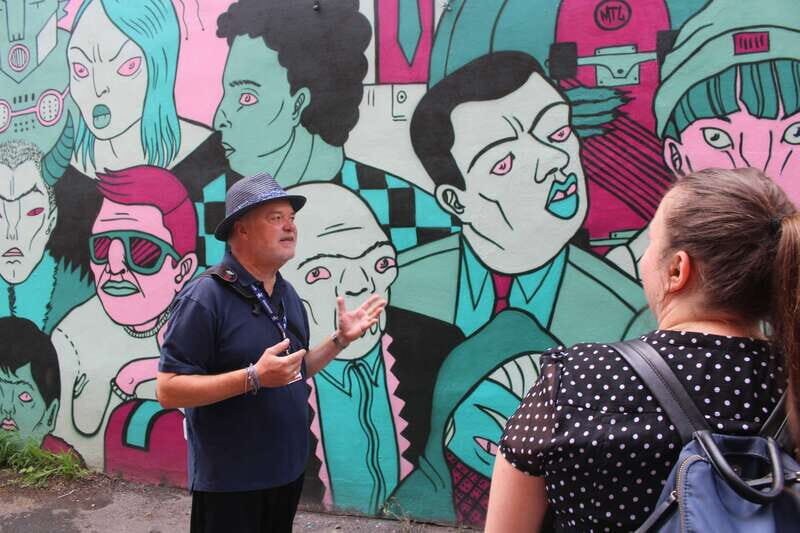
- St-Laurent Boulevard focus with detours into surrounding streets and alleys
- Artist stories and techniques explained as you walk, not dumped in one lecture
- Mural Festival Zone stops built around a key moment that helped make urban art public
- Named artists you’ll look for, including Phillip Adams and David Guinn
- Group or private options with guides in English or French
- Photo-friendly stops in areas like the festival zone and the Entertainment District
Meeting at Maison du développement durable: your starting point and game plan
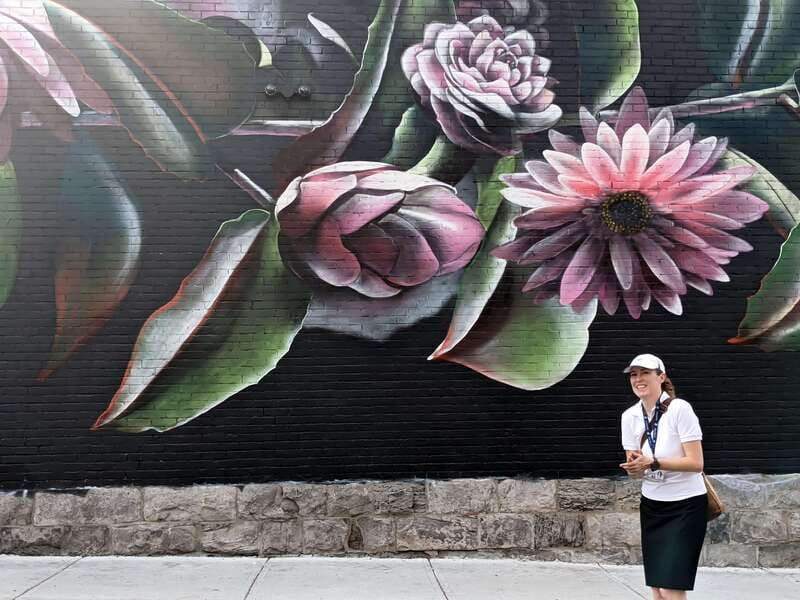
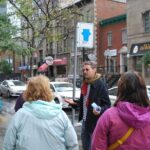
You meet in front of the Maison du développement durable building, and that first few minutes matter more than you’d think. A good street-art walk depends on context, and the guide sets that up right away so you’re not just collecting pretty pictures.
You’ll also get a quick sense of pacing. Since this is a walking tour (and not a sit-and-watch museum visit), the goal is to stop often, look closely, and keep moving when your eyes need a break.
If your guide is Sarah, or Maryse, you’ll likely get clear, friendly explanations that make the art feel understandable. That’s the vibe you want here: confident local storytelling that helps you “see” the murals, not just notice them.
You can also read our reviews of more walking tours in Montreal


St-Laurent Boulevard: the main corridor for mural stories
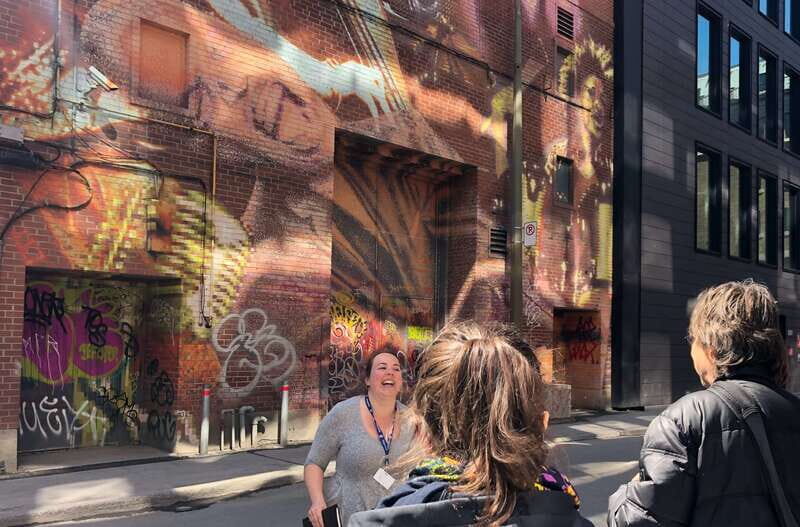
The core of the walk centers on St-Laurent Boulevard, and that’s smart. It’s one of those Montreal stretches where the city shows you layers at street level: changing neighborhoods, different audiences, and evolving wall styles all in one continuous walk.
What you’re really doing along this corridor is following how muralism works as a public conversation. You don’t just pass murals—you learn what people were trying to say, who it was for, and why the city kept giving walls a voice.
Along the way, expect the guide to point out details tied to technique and subject matter. One of the big values of this kind of tour is that it helps you connect visual choices—colors, compositions, and subject focus—to the message behind them.
Rain-or-shine viewing: how to stay comfortable on a wall-hunting route
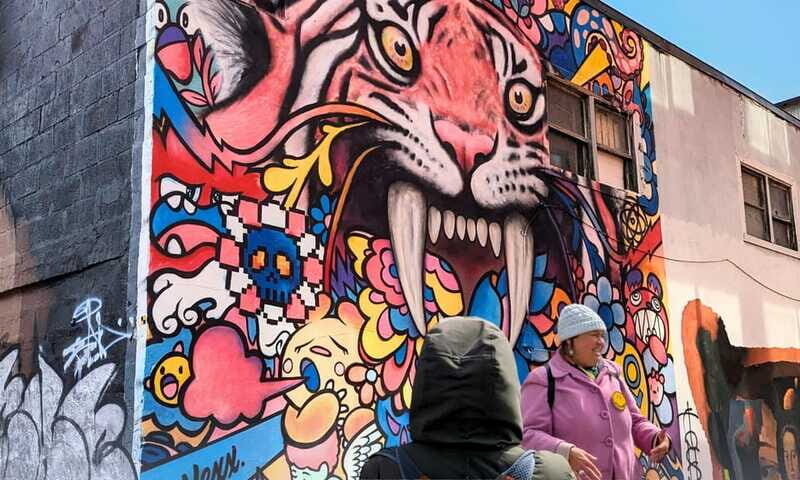
Because it runs rain or shine, you should plan for shifting conditions. Wet weather can make sidewalks slippery and increase the time you spend watching your footing instead of the art, so comfortable shoes aren’t optional.
Also, Montreal weather can flip quickly—warm days can get intense. If you’re traveling in summer, wear breathable layers and don’t rely on the morning forecast to save you. You’ll be happier if you dress for walking outdoors longer than you expect.
The good part: the tour doesn’t feel stretched out. Two hours is short enough that weather won’t dominate the experience, as long as you come prepared to move.
Why the Mural Festival Zone changes how you see the city
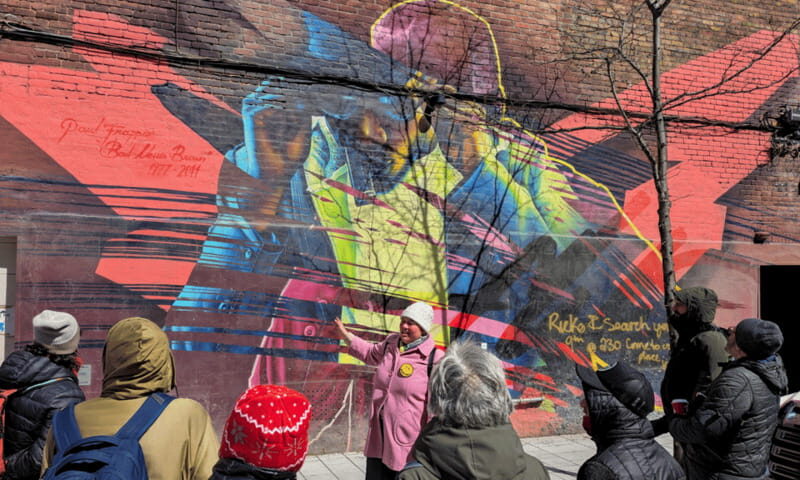
One of the most important stops is the Mural Festival Zone, named after an event that helped democratize urban art. In plain terms: this isn’t just a wall with cool paint. It’s where Montreal made a deliberate choice to give street art more public legitimacy.
This matters because it changes what you’re looking at. When street art becomes part of a bigger cultural moment, it’s no longer only a side project for whoever happens to walk by. It becomes something the city recognizes, records, and returns to.
You’ll get time to snap pictures here, but the real payoff is what the guide explains: how the mural movement grew, and how that growth shaped Montreal identity over time.
Side streets and alleys: where the art feels more personal
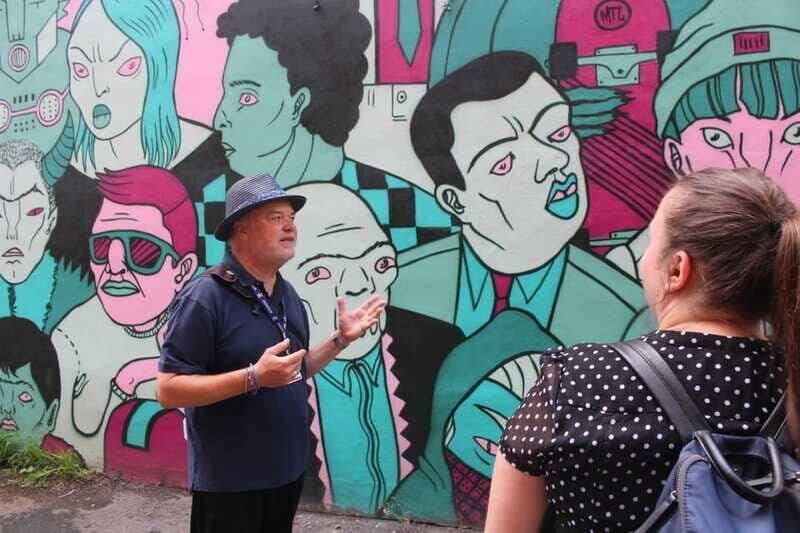
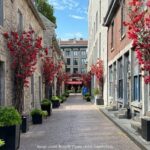
The route includes intriguing detours into surrounding streets and alleys, and that’s where the walk stops feeling like a “tourist mural checklist.” In smaller side lanes, the art often feels more tied to everyday streetscape than to a formal event zone.
Even when the pieces are famous, the alley context changes your read. You start noticing how scale works on narrow walls, how murals interact with storefronts and street traffic, and how different walls “host” different kinds of messages.
This is also where the guide’s storytelling really helps. With the detours, you’re not just moving location—you’re changing your viewpoint, which makes the history and themes the guide shares land more clearly.
You can also read our reviews of more guided tours in Montreal






The muralist movement in Montreal: from national themes to local identity
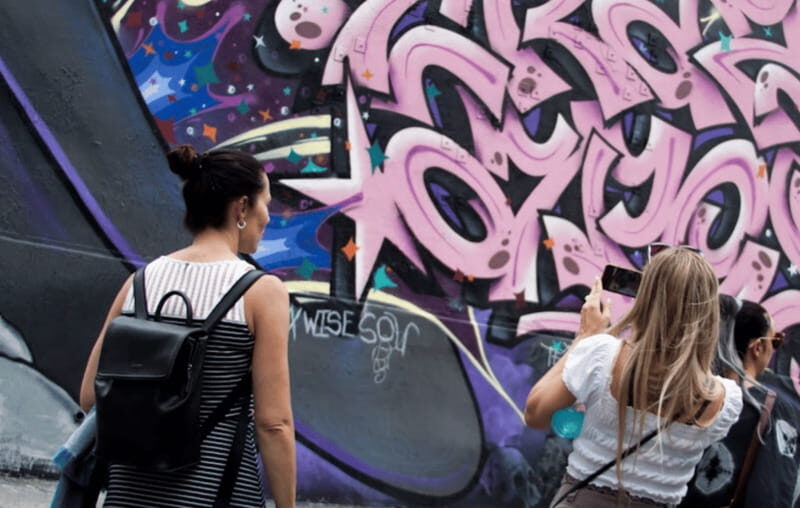
A big part of the experience is the explanation of how muralism developed in Montreal. You’ll hear that street art and mural work first took root around popular themes and national propaganda—in other words, it wasn’t only about aesthetics. It had a function, a message, and an audience.
Then the guide connects that early chapter to what happened in the city during the 1970s, when muralism developed into a more visible and organized form. The key idea is growth: mural work became significant to Montreal culture, not as an occasional trend, but as something the city kept investing in.
That historical arc is valuable because it helps you avoid the common mistake of treating murals like random art drops. Here, you learn to read them like statements—sometimes political, sometimes community-focused, sometimes both.
Phillip Adams and David Guinn: what to look for in the Entertainment District
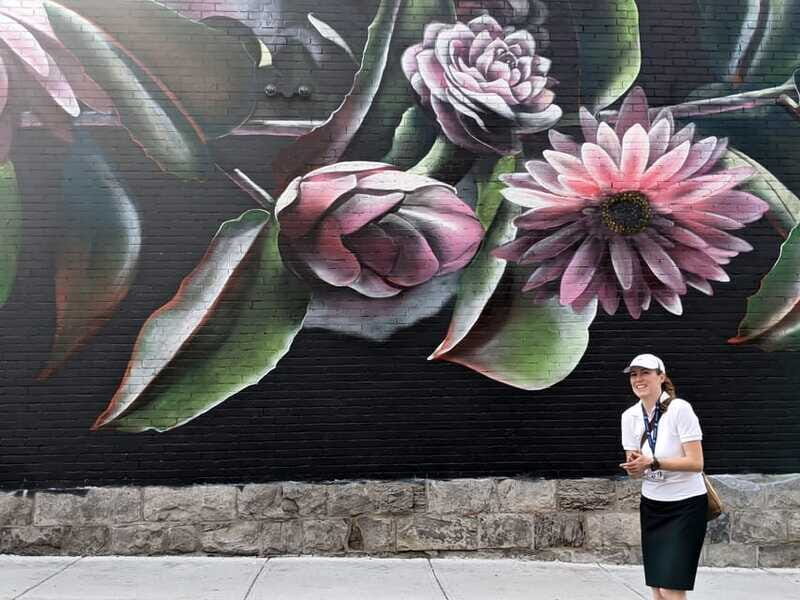
As you head further south to the heart of the Entertainment District, the tour shifts mood. The murals here come with a different energy, and you’ll focus on works by well-known street artists, including Phillip Adams and David Guinn.
Knowing the artist names ahead of time helps, because the guide will likely point out recurring themes and choices. Even if you don’t memorize every detail, you’ll start recognizing patterns: certain subject matter styles, approaches to composition, and how the mural’s message adapts to its environment.
This is also a great section for photos. You’ll get moments to step back, frame a wall properly, and capture context—because the guide will steer you toward angles that include the street setting, not just a close-up of paint.
How to look like you know what you’re doing (and get better photos)
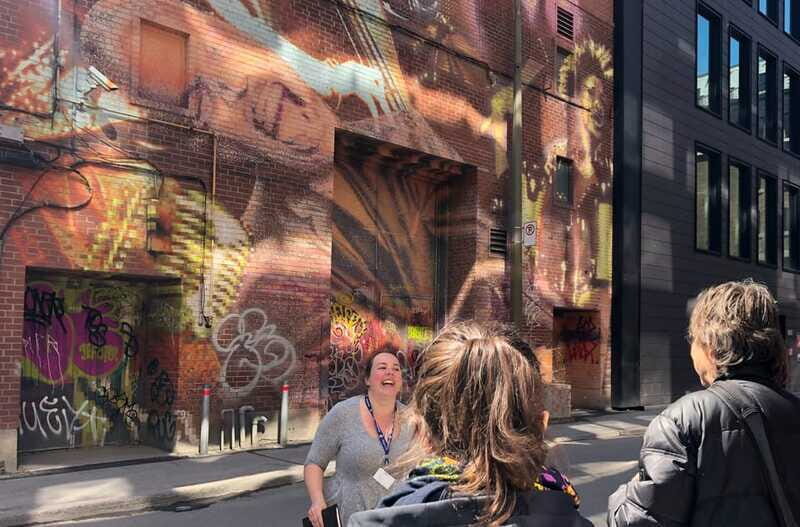
You don’t need to be an art critic. But you’ll enjoy this tour more if you switch into close-reading mode. Do that by using the guide’s prompts and slowing down at each stop.
A few practical habits help:
- Pause first, then zoom in mentally. Look at what the mural is saying before you look at technique.
- Take your photos after you’ve listened to the explanation. Your pictures will make more sense later.
- If you’re shooting on a phone, try standing far enough back to catch both the subject and the surrounding streetscape.
If the weather’s harsh, prioritize the art before the perfect shot. Wet walls can still photograph fine, but you’ll want stable footing.
Price and value: is $25 for 2 hours worth it?
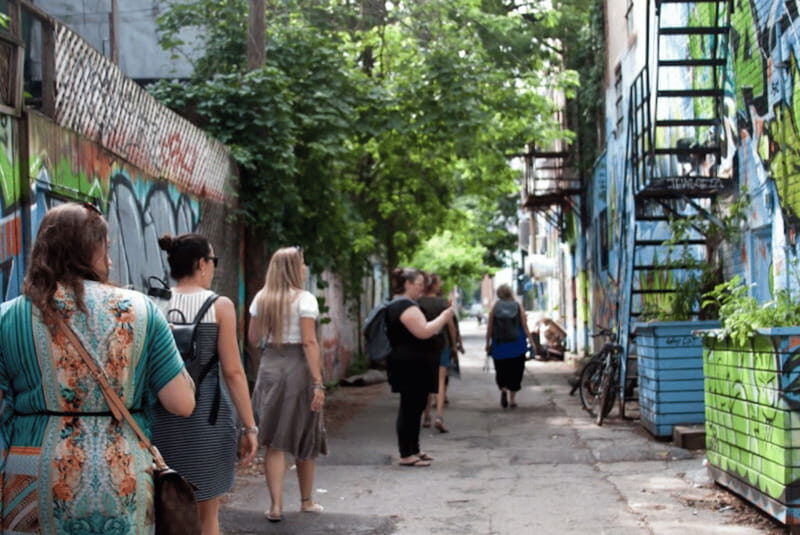
At $25 per person for a 2-hour guided walk, this is one of those deals that works if you care about context. You’re paying mainly for the route knowledge and the guide’s ability to connect walls to artists, themes, and Montreal’s mural evolution.
If you go on your own, you can still find murals. But you’ll likely miss the “why” behind them: how certain themes formed, why muralism mattered in the 1970s, and how the festival zone fits into the broader shift toward public recognition of street art.
Also, the option for a French- or English-speaking guide matters. Being able to follow clearly in your preferred language makes every stop land faster.
Hotel pickup isn’t included, so you’re relying on the meeting point and walking time. That’s normal for this kind of experience, and it keeps costs down.
Who this tour suits best (and who might want to think twice)
This mural walk is ideal if you:
- Want a guided route that hits major mural areas, not just random street corners
- Enjoy learning how art movements grow, including the social and cultural reasons
- Like photography but also want meaning behind what you’re photographing
- Prefer a short, two-hour activity with steady stops and stories
It’s not a good fit if you have mobility impairments or use a wheelchair. Since it’s a walking tour with outdoor streets and alleys, the route isn’t designed around accessibility needs listed for wheelchair users.
Should you book this Montreal mural walk?
Yes, if you want street art with context and a route you wouldn’t easily assemble on your own. The sweet spot here is the blend of artist-specific stops, an explanation of muralism’s evolution in Montreal, and photo-friendly areas like the Mural Festival Zone and the Entertainment District.
Book it especially if you like the idea of learning the meaning behind the paint—because that’s what makes this feel less like sightseeing and more like reading a city.
FAQ
How long is the Montreal murals guided walking tour?
It lasts 2 hours.
How much does the tour cost?
The price is $25 per person.
Where do I meet the guide?
Meet in front of the Maison du développement durable building.
Are tours available in English and French?
Yes, the guide is available in both French and English.
Does the tour include hotel pickup and drop-off?
No. Hotel pickup and drop-off are not included.
Does the tour run in bad weather?
Yes, the tour takes place rain or shine.
If you want, tell me when you’re visiting and what language you prefer, and I’ll help you plan how to fit the 2-hour timing into a smooth Montreal day.