REVIEW · MONTREAL
Montreal: Guided Exclusive Electric Boat Tour on Lachine Canal
Book on Viator →Operated by Le Petit Navire · Bookable on Viator
Electric boats make history feel close. This guided exclusive cruise connects Montreal’s Old Port beginnings to the working-world of the Lachine Canal, plus a stop at Silo #5 and a timed visit to Marché Atwater. I love the quiet electric ride and how it keeps the focus on what you’re seeing instead of engine noise.
I also like the small-group setup. The boat feels intimate, and the canal locks are genuinely fun to watch up close. The only drawback to plan around is that the tour needs good weather, so you may have to switch dates or get a full refund if conditions don’t cooperate.
In This Review
- Key things you’ll notice on this Lachine Canal electric cruise
- Entering the Lachine Canal story the easy way
- Old Port quays: where Montreal’s port grew up
- Silo #5 at Pointe-du-Moulin-à-vent: industrial engineering on a jetty
- Cruising the 13.5 km Lachine Canal: green park + industrial traces
- What to expect from the boat time
- Marché Atwater stop: a free hour to taste Montreal life
- Price and value: why $0.00 changes the equation
- Group size, language, and the feel of the ride
- Practical tips so your 1 hour 45 minutes goes smoothly
- Should you book this Lachine Canal electric boat tour?
- FAQ
- Is the tour offered in English?
- How long is the tour?
- How much does it cost?
- What’s included in the price?
- Are alcoholic beverages included?
- Do I need to bring a paper ticket?
- How many people are on the tour?
- Is there a stop at Marché Atwater?
- What’s the main requirement for the tour to run?
- What if I need to cancel?
Key things you’ll notice on this Lachine Canal electric cruise
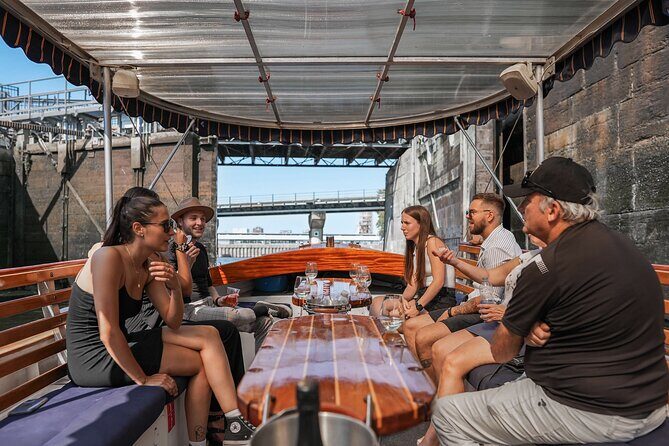
- Quiet electric power: smoother feel and less noise than you’d expect from a motorized boat.
- Small-group intimacy: capped at 20 travelers, so you’re not lost in a crowd.
- Old Port to canal entrance views: you get a guided through-line from Montreal’s early settlement days to industrial waterways.
- Silo #5 details you can’t guess from shore: positioned at Pointe-du-Moulin-à-vent, tied to the canal’s construction.
- A real food-market stop: 1 hour at Marché Atwater with free admission.
- Locks that are actually entertaining: watching the canal’s workings is part of the fun.
Entering the Lachine Canal story the easy way
Montreal’s waterfront can feel like two different cities: the historic Old Port side with its riverfront roots, and the south-west canal world with industry, green banks, and everyday activity. This tour stitches them together in about 1 hour 45 minutes (approx.), which is perfect if you want something guided but not long.
You also get a practical advantage: an electric boat tour is a great way to move through the space without fighting traffic, parking, and busy walking routes. With English offered, it’s also straightforward to join if that’s your language. And since it’s a mobile ticket experience and said to be near public transportation, you can fit it into a day without complicated logistics.
Where this really shines is in pace. You’re not stuck in a lecture. The guide takes you from stop to stop with a clear storyline—port history, canal engineering, then back toward food culture—so you leave with more than photos.
You can also read our reviews of more boat tours in Montreal

Old Port quays: where Montreal’s port grew up
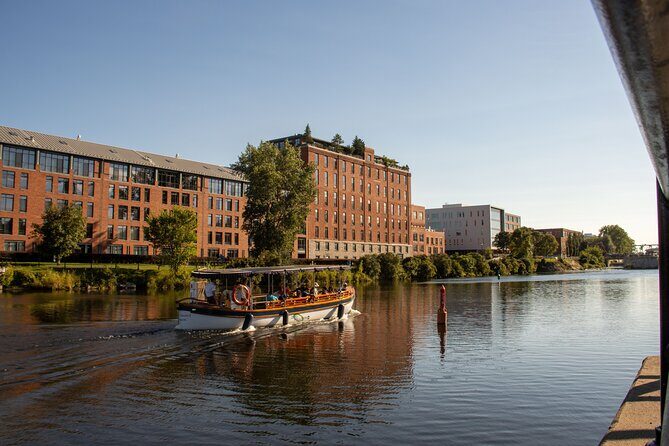
The tour’s first viewpoint anchors you at the Quays of the Old Port, where early settlers arrived along the St. Lawrence River. The key idea here isn’t just that this place is old—it’s that the port is why Montreal could expand from Ville-Marie into the international city it became.
From the water, quays like these tend to make more sense. You can connect the dots between geography and growth: why shipping mattered, why people built where they did, and why Montreal’s riverfront keeps shaping the city even today. It’s a quick stop, but it sets the context so the rest of the tour feels like more than sightseeing.
What I like about starting here is that it frames what you’ll see later on the canal. When you understand the port-to-canal link, Silo #5 and the canal locks stop feeling random and start feeling like part of the same system.
Silo #5 at Pointe-du-Moulin-à-vent: industrial engineering on a jetty
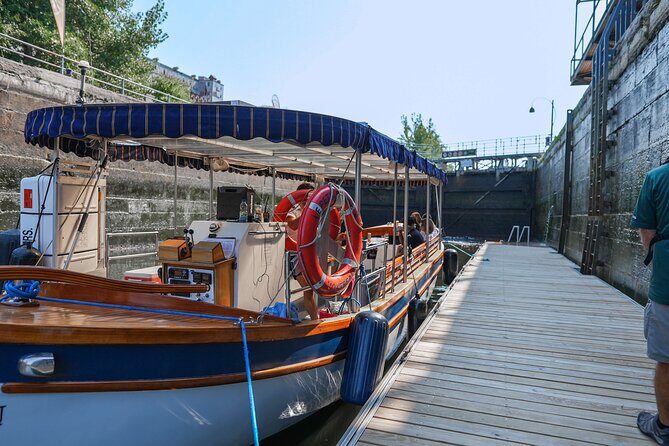
Next you’re pointed toward the entrance area of the Lachine Canal, with Silo #5 located on the jetty at Pointe-du-Moulin-à-vent. This stop is interesting because it explains a kind of reuse that’s very Montreal: the structure connects to the canal’s construction, using embankments taken from the canal work itself.
On the water, you can better appreciate how industrial features were meant to work with shipping. A silo isn’t just a building—it’s part of how goods moved and got stored. And because Silo #5 sits at a strategic entrance point, it gives you a visual checkpoint: you’re transitioning from Old Port history into the canal’s operational world.
If you like practical history—engineering, infrastructure, how cities function—this is a standout stop. If you prefer only scenery, you might still enjoy it, but the payoff is in understanding what you’re looking at.
Cruising the 13.5 km Lachine Canal: green park + industrial traces
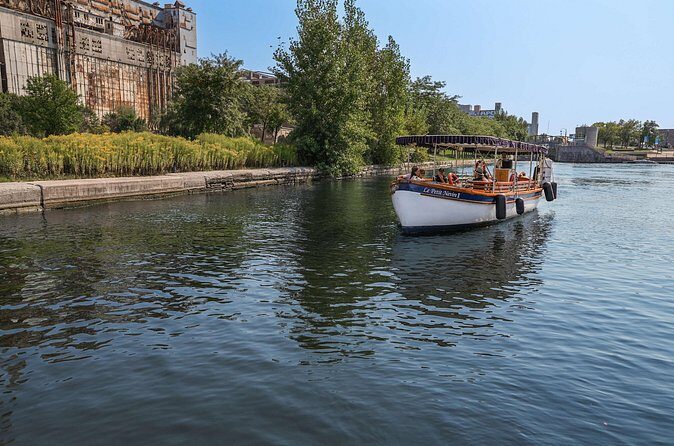
Now comes the heart of it: the Lachine Canal. This route runs about 13.5 kilometres, connecting the Old Port to Lake Saint-Louis. The tour describes the canal as both a navigable waterway and a kind of urban green park lined with industrial remnants, plus plenty happening along its banks.
That blend matters. You’re not just looking at water. You’re seeing how Montreal uses space. One minute it feels like calm greenery and a walkable shoreline; the next, industrial structures remind you this is still a working corridor with a past.
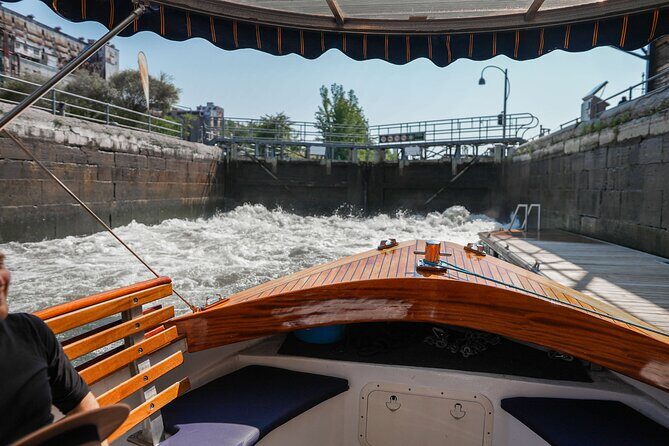
And yes, the locks are part of the show. The canal’s très écluses (locks) are one of the most praised moments in the feedback you have here, and it makes sense. Watching a lock process from a close distance is way more interesting than reading about it. It’s slow and mechanical, but it’s also visual—level changes, gates, and the sense of timing.
What to expect from the boat time
The overall duration is listed as around 1 hour 45 minutes, so don’t expect a full-day canal cruise. Instead, think of it as a guided sampler that prioritizes key stops and highlights.
If your goal is to see the canal’s personality in a compact format, this works. If your goal is long, uninterrupted time on the water, you may want a longer cruise option instead.
You can also read our reviews of more guided tours in Montreal





Marché Atwater stop: a free hour to taste Montreal life

After the water, you get a land stop at Marché Atwater (Atwater Market). This is one of Montreal’s most popular food markets, and it’s easy to see why. The market is described as having fresh produce, more than ten butcher shops, three cheese shops, a fish shop, and over a dozen specialized boutiques.
That lineup is exactly what makes it useful on a tour. You’re not only learning about Montreal—you’re stepping into a place locals rely on. And with 1 hour of free admission here, you can browse without feeling rushed into buying.
A practical tip: wear shoes you can stand in. One hour inside a market can disappear fast when you’re scanning stalls for textures and smells. If you want to keep your day flexible, treat the market time as browse-and-sniff first, buy second.
Also note the limits of the stop. The market is food-focused, but your tour doesn’t guarantee a sit-down meal. If you’re hoping for a full meal, you’ll likely need to plan that separately.
Price and value: why $0.00 changes the equation
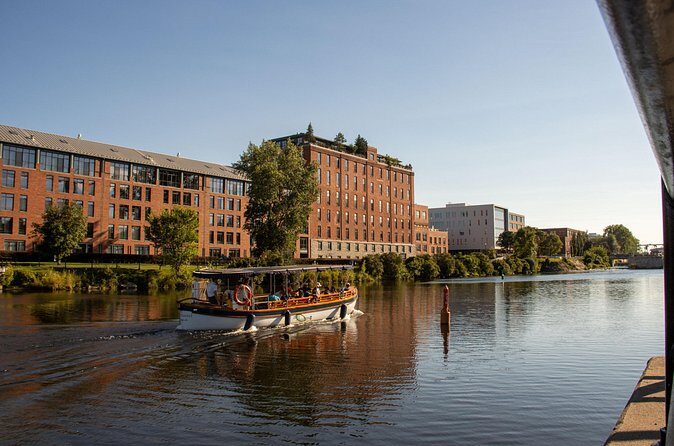
The tour is listed at $0.00 per person. If that reflects what you’ll actually pay when you book, it’s an unusual value for a guided electric boat experience plus a structured stop at a major market.
Here’s how I’d think about the value:
- You get all fees and taxes included, so there’s no surprise add-on at checkout.
- You get a guided route that ties together several distinct Montreal “chapters,” not just one photo stop.
- You get a guided time block that includes Atwater Market with free admission.
There’s one catch in the fine print: alcoholic beverages aren’t included. So if you’re imagining a drink-and-cruise scenario, you’ll either skip alcohol or plan to purchase it separately.
If the price is free for your date, this is the kind of activity that helps you spend your money on food you actually choose—rather than paying for a packaged meal you don’t want.
Group size, language, and the feel of the ride
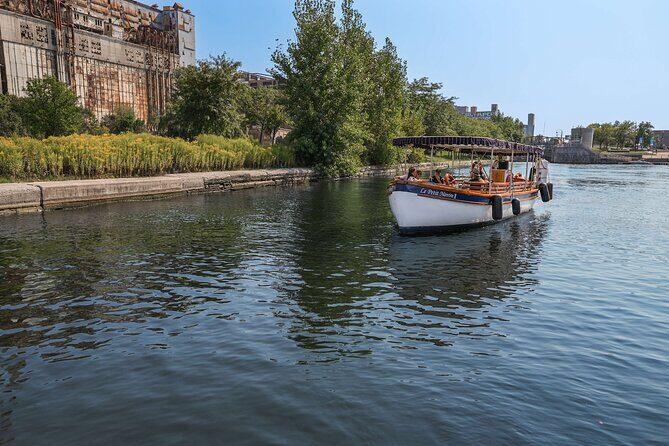
This is capped at a maximum of 20 travelers. In practice, that matters more than you’d think. A smaller group means you can actually hear the guide, and it’s easier to move when you arrive at each stop.
The tour is offered in English, and it’s described as easy for most travelers to participate. It’s also said to be near public transportation, which helps you avoid the biggest travel-day stress: figuring out how to get there last minute.
One other small point: the tour uses a mobile ticket, which is convenient. If you’re traveling light, this reduces the chance you’ll be stuck searching for a paper voucher.
Practical tips so your 1 hour 45 minutes goes smoothly
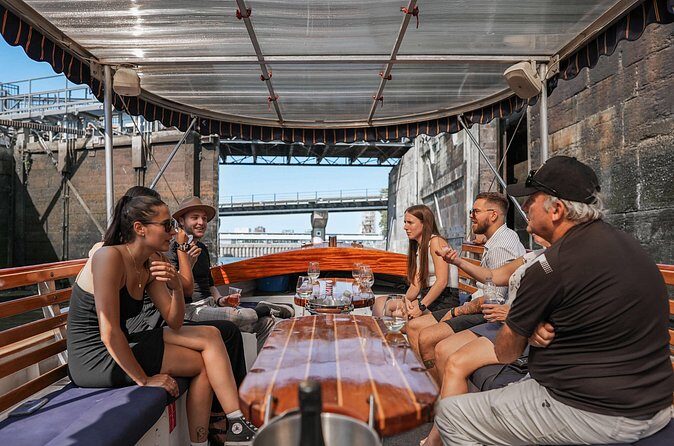
This is a “good weather needed” type of tour. That means you should have a flexible mindset. If skies look unstable, consider planning a Plan B for later in your day.
Bring:
- A light layer. Even in fair weather, waterfront wind can happen.
- Sunglasses or a hat if it’s bright.
- Water and snacks if you tend to get hungry between food stops. (The market stop helps, but it’s not a guaranteed meal.)
When you arrive, aim to be on time. With a set itinerary and limited ride duration, you don’t want to lose time settling in.
And here’s a small mindset shift that makes the experience better: try to treat this like a guided walkthrough of how Montreal works—port connections, canal engineering, and then how locals shop for real food—rather than just chasing skyline photos. The stops connect logically, and you’ll get more out of it.
Should you book this Lachine Canal electric boat tour?
You should book if you want:
- A compact guided experience (about 1h45) that still covers major Montreal themes
- The chance to see canal engineering up close, including the locks
- A mix of water views and a meaningful food stop at Marché Atwater
- A small-group feel with a cap of 20 people
Skip it or consider alternatives if:
- Weather isn’t reliable for your dates. Since it requires good weather, you’ll need flexibility.
- You’re looking for a long, slow cruise without stops. This is a sampler with multiple points of interest.
My bottom-line take: if the listed $0.00 price applies when you book, this is hard to beat. You get an electric boat, a guided storyline from Old Port to the canal, a stop at Silo #5, and an hour at one of Montreal’s best-known markets—without adding a big cost to your day.
FAQ
Is the tour offered in English?
Yes. This experience is offered in English.
How long is the tour?
The duration is listed as about 1 hour 45 minutes (approx.).
How much does it cost?
The price is listed as $0.00 per person.
What’s included in the price?
All fees and taxes are included.
Are alcoholic beverages included?
No. Alcoholic beverages are not included.
Do I need to bring a paper ticket?
No. The tour uses a mobile ticket.
How many people are on the tour?
The tour has a maximum of 20 travelers.
Is there a stop at Marché Atwater?
Yes. There’s a Marché Atwater stop with 1 hour included (admission is free).
What’s the main requirement for the tour to run?
Good weather is required. If it’s canceled due to poor weather, you’ll be offered a different date or a full refund.
What if I need to cancel?
Cancellation is free. You can cancel up to 24 hours in advance for a full refund. If you cancel less than 24 hours before the start time, the amount you paid won’t be refunded. Changes made less than 24 hours before the start time aren’t accepted.