REVIEW · ONTARIO
Layers of Natural History: Picton Nature Self-Guided Audio Tour
Book on Viator →Operated by VoiceMap Audio Tours · Bookable on Viator
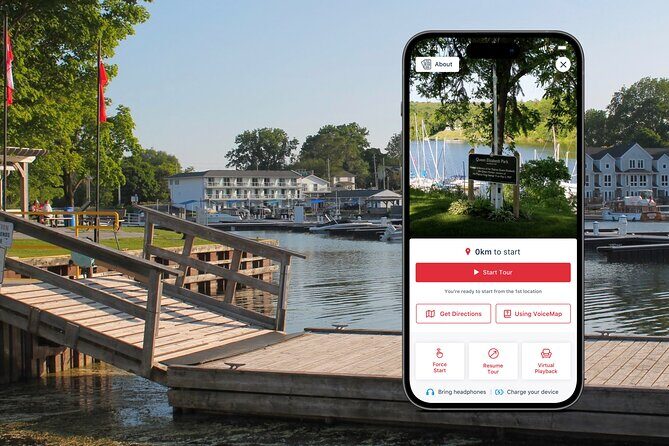
Follow the sound and learn Picton’s hidden water story. This Picton Nature self-guided GPS audio route strings together geology, wildlife, and human settlement as you stroll from Queen Elizabeth Park to Glenwood Cemetery.
What I like most is the way Ewa’s narration turns science into something you can actually enjoy while walking, and how offline audio keeps the route smooth even when cell service gets spotty. The information comes with little language boosts too, like learning the word solastalgia and hearing why biodiversity protection often starts with basic habitat coverage.
One thing to consider: you need your own smartphone and headphones. If your battery is low or you don’t like walking while watching your screen, plan accordingly.
In This Review
- Key highlights worth listening for
- Picton Nature on Foot: a self-guided walk from harbour to cemetery
- Price and what $9.99 buys you (and why it’s good value)
- Where you start and end: Queen Elizabeth Park to Glenwood Cemetery
- Stop-by-stop: harbour views, limestone, and the European settlement thread
- 1) Start at Queen Elizabeth Park: a quiet harbour introduction
- 2) Pass Picton’s Town Hall: limestone to wildflowers
- 3) A walk that frames the 1700s settlement story
- Wetlands, fish and birds: learning to watch the harbour like a naturalist
- 4) Stroll the historic harbour: wetlands and species cues
- 5) Through the serene park: flooding, water conditions, and Big fish
- Delhi Park to Glenwood Cemetery: from garbage dump to thriving wetland, then a garden-like finish
- 6) Delhi Park: from garbage dump to thriving wetland
- 7) End at Glenwood Cemetery: burial sites in a park setting
- The narrator experience: Ewa’s humour, soothing tone, and useful science words
- Logistics that actually matter on this kind of walk
- Who should book this Picton Nature audio tour
- Should you book it?
- FAQ
- How long is the Picton Nature self-guided audio tour?
- What do I need to bring with me?
- Does the tour work offline?
- Where does the tour start and where does it end?
- Is this a private tour?
- What’s the price?
- Can I cancel if plans change?
Key highlights worth listening for
- Ewa’s calm, funny science narration makes natural history easy to follow block by block
- Offline maps, audio, and geodata mean you can stay on track without internet
- A route from harbour wetlands to a garden cemetery keeps the walk varied and memorable
- Turtle-log and fault-line style details add surprise when you’re in familiar places
- Delhi Park’s turnaround story connects past land use to today’s thriving wetland
Picton Nature on Foot: a self-guided walk from harbour to cemetery
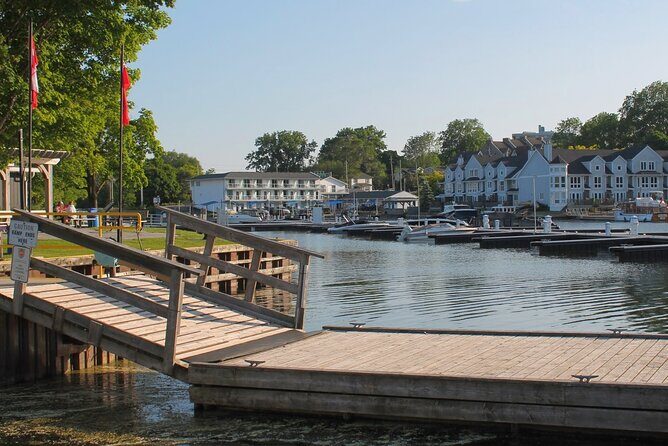
This is the kind of tour that works when you want to wander at your own speed but still feel guided. You start in a park with harbour views, and the story keeps moving—limestone to wildflowers, wetlands to fish and birds, flooding and water conditions—then you end in a cemetery designed like a calm garden space.
The route is built for listening while walking, not for staring at exhibits. And because it’s GPS-based, you’re not stuck guessing where to go next. That matters in a small town where you can easily overthink distances and miss the best parts.
You can also read our reviews of more guided tours in Ontario


Price and what $9.99 buys you (and why it’s good value)
At $9.99 per person, the cost is low enough that you can treat it like a practical add-on to a day in Picton—not a big commitment. You’re not paying for a live guide’s time; you’re paying for a well-structured, self-guided route you can repeat.
Two value boosters stand out:
- You get lifetime access to the English audio tour both before your booking date and after it. That means you can replay sections later, or go back if you want different photos or quieter timing.
- You get offline access to audio, maps, and geodata. That’s real value here because you’re moving outdoors and you don’t want the experience to depend on signal.
The one “cost” you should factor in is personal: headphones and smartphone charging. If you show up ready, you’ll feel like you got a bargain.
Where you start and end: Queen Elizabeth Park to Glenwood Cemetery
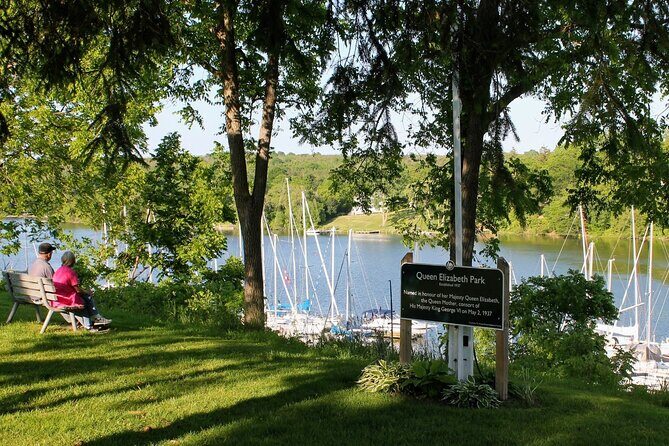
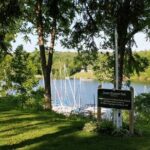
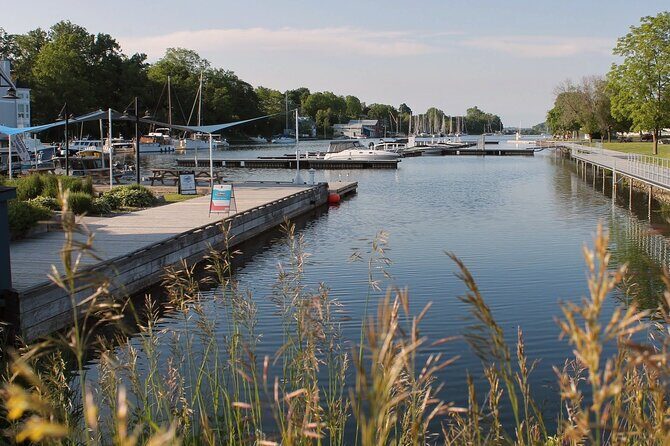
The tour starts at Queen Elizabeth Park, 17 Hill St, Picton, ON. From there, you’re set up with harbour views and a peaceful start—ideal for easing into the stories before you get into the heavier topics like flooding and habitat.
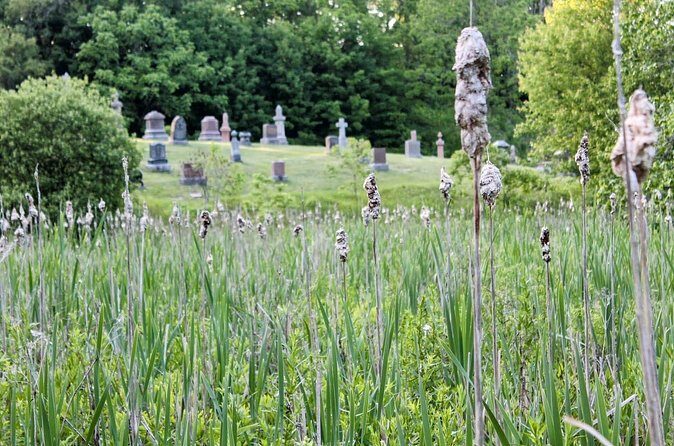
The walk ends at Glenwood Cemetery, 47 Ferguson St, Picton, ON. This ending is more than a stop on a map. It’s a park-like cemetery setting with many burial sites, glamorous trees, and rolling topography. In other words: the tour finishes in a calmer, greener mood than you might expect, which makes the final stretch feel reflective rather than rushed.
The tour is also described as private for your group, so it’s just you and whoever you book with, not a large join-in crowd.
Stop-by-stop: harbour views, limestone, and the European settlement thread
1) Start at Queen Elizabeth Park: a quiet harbour introduction
Right from the first stretch, you’re looking over the harbour while the audio sets the tone. This is where you learn how the local environment ties together—water, land, and the living stuff in between.
Tip: start early in your listening, even if you think you know the area. These first minutes are where the audio helps you build the mental map you’ll need later for wetlands, flooding, and species talk.




2) Pass Picton’s Town Hall: limestone to wildflowers
Next you pass Picton’s Town Hall and the tour shifts into “Picton Nature” basics—how the area’s natural world is shaped from limestone through wildflowers. For me, that kind of foundation makes the later wildlife segments click. When you know what kind of ground you’re on, you understand why certain plants and habitats show up.
A practical consideration: you’re moving while listening. If you like taking photos, be ready to pause the audio for a few seconds rather than trying to do everything at once.
3) A walk that frames the 1700s settlement story
Then the audio brings in the town story—history of Picton and European settlement in the 1700s—as you walk. The value here is that the narration doesn’t treat nature and people as separate topics. Instead, you get a sense that land use and settlement patterns are part of the same long story.
If you’re the type who likes context, this section is a good match. If you’re only there for wildlife, you’ll still find it helpful because it explains why the landscape looks the way it does today.
Wetlands, fish and birds: learning to watch the harbour like a naturalist
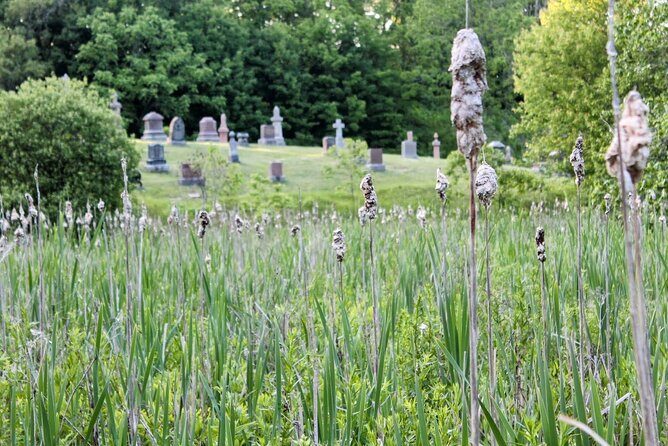
4) Stroll the historic harbour: wetlands and species cues
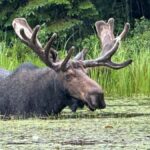
When you get to the harbour stretch, the audio turns into a wildlife listening session. You hear facts about Picton wetlands and you get pointed talk about fish and bird species.
This is where your attention matters most. Slow down your pace slightly and look for signs of life you might normally miss—motion near the waterline or activity in and around shore areas. Even if you don’t spot a particular species on cue, the narration gives you a framework so your observations make sense.
5) Through the serene park: flooding, water conditions, and Big fish
After the harbour, you walk through another serene green space where the tour focuses on Picton flooding, water conditions, and something the audio calls Big fish. I like this section because it connects everyday issues (flooding and water behaviour) to the living systems that depend on them.
One useful mindset: when the audio talks about water conditions, it’s not just trivia. It’s explaining why wetlands function the way they do and why wildlife patterns make sense in this kind of environment.
Also, one of the most memorable review details is the idea of watching for turtle logs. Even if you don’t know where to look, the narration gives you that small “wait, what’s that?” moment that makes the walk feel interactive rather than passive.
Delhi Park to Glenwood Cemetery: from garbage dump to thriving wetland, then a garden-like finish

6) Delhi Park: from garbage dump to thriving wetland
You pass through Delhi Park, and this is one of the tour’s strongest transformation stories. The audio tells you about its past as a garbage dump, and then how it has become a thriving wetland.
This isn’t just a feel-good arc. It helps you understand how habitat can recover when conditions improve—and why wetland restoration is worth caring about. If you like hearing practical cause-and-effect in nature, this section delivers.
7) End at Glenwood Cemetery: burial sites in a park setting
The final stop is Glenwood Cemetery, where the audio ends the tour. You’re walking through a well-known cemetery designed in a park-like style, with many burial sites, glamorous trees, and rolling topography.
The practical benefit of this ending is simple: it’s a quiet place to linger after the last audio segment. You can stay a few minutes to take in the trees and the terrain without feeling like you must “complete” the tour and immediately move on.
The narrator experience: Ewa’s humour, soothing tone, and useful science words

The narration by Ewa is repeatedly described as entertaining and soothing, and that combination matters more than you might think. You don’t want a voice that sounds like a textbook. You want someone who can keep you engaged while you’re walking, looking up and down, and occasionally stopping for a photo.
A few standout bits that show up in the learning:
- A biodiversity idea tied to habitat coverage: one review mentions hearing that 30% forest coverage is the bare minimum needed to protect biodiversity. Even if you don’t memorize the number, you leave with a clearer way to think about habitat protection.
- The personal-emotion side of environmental change: the word solastalgia comes up, which is a way of describing distress you can feel when your home-place changes.
- A “wait, that explains it” geography surprise: one review notes learning they lived on a fault line. That kind of detail helps you understand why the land behaves the way it does.
Logistics that actually matter on this kind of walk
Because it’s GPS-based and self-guided, your success mostly depends on how you set up your phone and headphones.
Here’s what I’d do to make it effortless:
- Download and test the app before you start, since the tour offers offline access.
- Bring comfortable walking shoes. The tour time estimate runs about 1 hour 15 minutes to 1 hour 45 minutes, and that includes walking the route plus passing attractions.
- Keep your pace flexible. The tour is designed for your group only, but it still depends on you moving along the route and listening at each stop.
Language is English, and confirmation is received at booking time. Opening hours are listed as 12:00 AM to 11:59 PM across the provided date range, which gives you flexibility for when you fit it into your day.
Who should book this Picton Nature audio tour
This tour fits best if you want:
- a low-cost way to understand Picton beyond the main drag
- a walk that teaches nature and local land-use stories in the same loop
- a self-guided format where you can pause, replay, and move at your own pace
It’s also a good option when you’re in a small town and you want to use your time wisely. At $9.99, you’re not gambling much if you decide halfway through you’d rather do something else.
If you’re not interested in walking or you dislike screen-based navigation, you might find it harder to settle in. The tour does ask you to use your phone and audio while you’re outdoors.
Should you book it?
Yes—if your ideal day includes a calm walking loop plus meaningful local learning. The best reason to book is how the route connects different layers of the place: limestone and wildflowers, harbour wetlands and species, flooding and water conditions, and even a land-use history that turns a dump into a wetland.
If you want a guided, live, Q-and-A experience, you might feel this is more “self-paced learning” than “human conversation.” But if you’re happy with audio guidance and you like discovering details on the move, this is a solid value way to spend an hour and change in Picton.
FAQ
How long is the Picton Nature self-guided audio tour?
The total time is estimated at about 1 hour 15 minutes to 1 hour 45 minutes, including walking the route and passing by the attractions.
What do I need to bring with me?
You’ll need your own smartphone and headphones. Food, drink, and transportation are not included.
Does the tour work offline?
Yes. The tour includes offline access to audio, maps, and geodata through the app on Android and iOS.
Where does the tour start and where does it end?
It starts at Queen Elizabeth Park, 17 Hill St, Picton and ends at Glenwood Cemetery, 47 Ferguson St, Picton.
Is this a private tour?
It’s described as a private tour/activity, meaning only your group participates.
What’s the price?
The price is $9.99 per person.
Can I cancel if plans change?
Free cancellation is available. You can cancel up to 24 hours in advance for a full refund. If you cancel less than 24 hours before the experience’s start time, the amount paid is not refunded.