REVIEW · ONTARIO
Smartphone Audio Driving Tour between Wasaga Beach and Toronto
Book on Viator →Operated by Tripvia Tours · Bookable on Viator
Your drive turns into a guided lesson.
This smartphone audio driving tour turns the Wasaga Beach-to-Toronto road into a story you can pause and restart at will. I like how it plays offline once downloaded (no data needed as you roll), and I like the freedom to stop where you care most. One thing to watch: the navigation and cues may feel uneven if you go the reverse direction from how it’s set up.
You’ll hear a mix of local history, regional facts, and playful brainteasers as you pass real places near Georgian Bay and along the Barrie corridor. It’s priced at $6.72 per group (up to 15 people), which makes it an easy add-on for a family road trip, a quick getaway, or a practical detour that turns into something more than just driving.
In This Review
- Key points at a glance
- How this Wasaga Beach to Toronto audio drive works (and why it fits real plans)
- Price and value: $6.72 per group for a route with real payoffs
- Entering the route: Wasaga Beach coast to the Barrie corridor
- Wasaga Beach: Nottawasaga name, fire drama, and the beach-side history you can’t get from a drive-by
- When the audio plays the lions roar: a clever reason to slow down near Georgian Bay
- Conservation area time: critters, responsibility, and why this stretch matters
- Into Barrie: downtown detours, summer energy, and the tornado memory
- Alliston and potatoes: the funniest kind of local history
- William Osler and the people behind regional development
- The lush valley and the Toronto connection: why this route isn’t just about getting there
- The Longest Road: Yonge Street and why it’s more than a line on a map
- Roller coasters, rides, and the lake front park: fun prompts for quick stops
- Georgian Bay industry and small islands: work, water, and the big stories in small spots
- Nottawasaga again, plus the call to plan a real visit
- Camp Borden and the national civic holiday: when the drive turns to public history
- The “not a point of interest” pass-by stretches: how to use them without getting annoyed
- Navigation quirks: what to test before you rely on it
- Who should book this driving tour (and who might not love it)
- Should you book this smartphone audio tour?
- FAQ
- Where do I start and where does the tour end?
- How long does the smartphone audio driving tour take?
- Do I need Wi‑Fi or mobile data to use the tour?
- Will the tour play without cell service?
- What language is the audio tour offered in?
- How many people can be in a group for one booking?
- Do I need attraction tickets included in the price?
- Can I stop and restart whenever I want?
- Is it a private tour just for my group?
- Can I cancel for a full refund?
Key points at a glance

- Offline after download: download once (Wi‑Fi/mobile helps), then listen without signal.
- Stop and start anytime: you control the pace, with no strict timing.
- Small group value: $6.72 per group for up to 15 people.
- English audio with mobile ticket access.
- Pass-by moments are flexible: some spots aren’t official stops, but you can pull over and linger.
- Directional cue quirks: navigation prompts may not match perfectly if you drive in the opposite direction.
How this Wasaga Beach to Toronto audio drive works (and why it fits real plans)

This isn’t a sit-and-wait tour. You’re in your own car, and the audio runs as you drive, with built-in pauses where you can stop, look, and then continue when you’re ready. That matters on this route because there’s a lot of “worth a glance” scenery and a lot of places where a 10-minute stop can turn a drive into a memory.
Before you go, you’ll need a good connection for the initial download. After that, the tour is designed to run with no signal required or data used during the tour, so you’re not burning your phone plan while you’re trying to find a parking spot.
The tour is also listed as private for your group. You don’t share the experience with strangers, and you only need one booking per vehicle, which is a big deal if you’re traveling with a small crew and want your own pace.
A few more Ontario tours and experiences worth a look
Price and value: $6.72 per group for a route with real payoffs
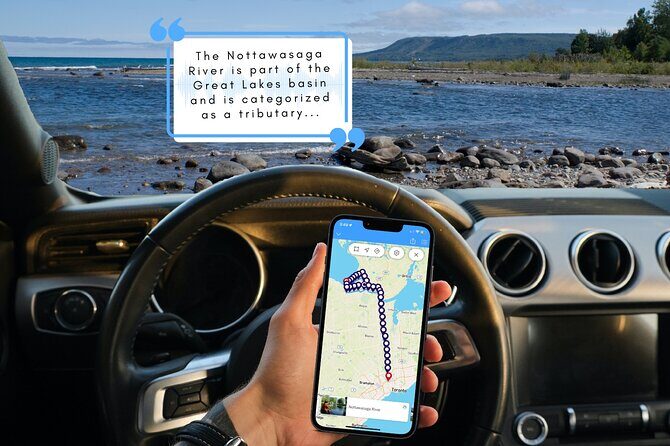
At $6.72 per group (up to 15), this is priced like an impulse buy—but it’s more than that if you treat it like part guide, part road trip soundtrack. For families, it can be the cheapest way to make a long drive feel structured without paying for a bunch of separate attractions.
The duration is listed at about 1 hour 30 minutes to 2 hours. That’s realistic for an audio tour because you’re not stuck at every stop. If you just play steadily, it’s a clean way to fill travel time. If you add a few quick walks—like a downtown stroll or a beach pause—you’ll still likely be done in a reasonable window.
One practical point: this is booked on average about 13 days in advance. That doesn’t mean you have to rush, but it does suggest people in the area know this format works.
Entering the route: Wasaga Beach coast to the Barrie corridor
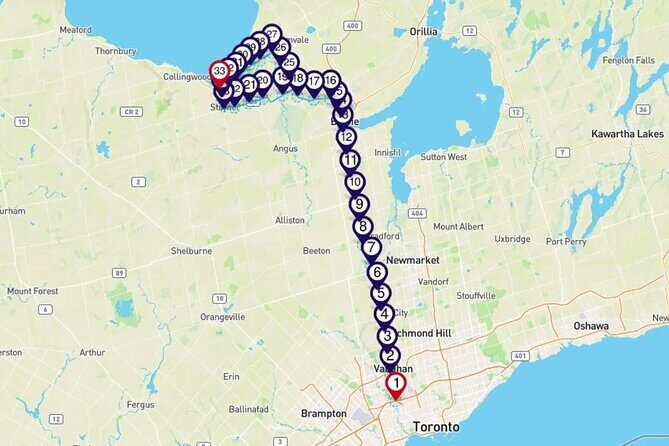
The tour starts in Wasaga Beach, Ontario and ends on Highway 400. The start/stop point is the same in either direction, but the audio cues might not be equally smooth depending on which way you drive. I’ll share the main “watch this” issue later, because it’s the one thing that can trip you up.
Once you get moving, the tour leans into three kinds of moments:
- Story stops where you learn why a place matters
- Guessing games (the repeated Popular Peeps segments are meant to make you think)
- Pass-by explanations where the audio talks while you’re still in the car
That mix is useful because you don’t need to find parking for every single minute. You can keep your momentum, and then stop intentionally when something piques your interest.
Wasaga Beach: Nottawasaga name, fire drama, and the beach-side history you can’t get from a drive-by
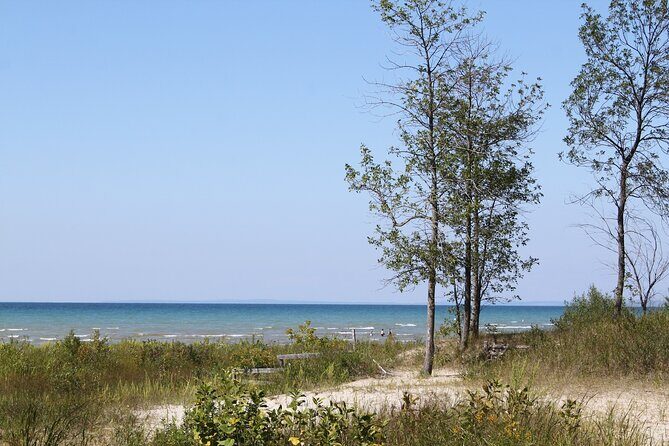
You’ll get the “core setting” pretty early—Wasaga Beach and the area’s identity tied to the Nottawasaga name. The tour includes a section on why it’s called Nottawasaga, complete with a guide impersonation style moment. Even if you’re not the type who loves trivia, the audio turns the name itself into a hook, so you start paying attention to the meaning instead of just reading street signs.
Then comes a more serious turn with the Wasaga Beach Fire. The audio sets it up as near-tragedy storytelling, and it’s presented dramatically enough that it breaks the “fun drive” rhythm in a good way. It’s one of those segments that gives you context for why a place isn’t just scenery.
You also drive along the beach (beside, not on), and the audio gives you history tied to the shoreline. This is the part I like best for first-time visitors: it helps you understand what you’re looking at instead of treating the coast like background.
When the audio plays the lions roar: a clever reason to slow down near Georgian Bay
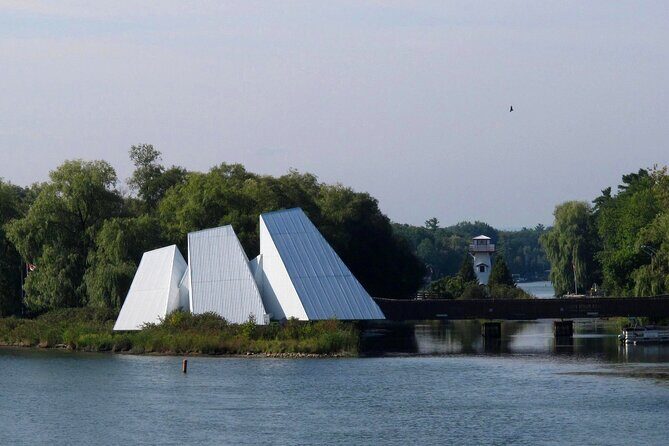
There’s a standout beat built around sound. Even though you might be a few kilometers away, the tour says you may still be able to hear the lions roar—and if not, it plays it for you anyway, with reasons to plan a visit.
Whether you hear it naturally or only through the phone speaker, it’s a smart trick. It turns a vague idea (some people talk about strange sounds in the area) into a concrete experience that you can line up with a real visit later.
I’d plan for one small stop if you can. If you’re already in the area and you’re curious, pulling over briefly during this moment can make the story land harder. At minimum, keep your volume up and don’t assume the “interesting audio” will happen quietly in the background.




Conservation area time: critters, responsibility, and why this stretch matters
As you move along, the tour points you toward a nearby conservation area and the critters that inhabit it. Even with just a drive-by moment, this part works because it shifts your mental model from “beach town” to “ecosystem with people managing it.”
The practical value here is simple: it helps you choose what to do next. If you’re the type who enjoys short walks and wildlife spotting, you’ll know to look for a real visit later. If you’d rather stay focused on beaches and viewpoints, you still get context for why the area has rules and protected spaces.
Into Barrie: downtown detours, summer energy, and the tornado memory

Once you reach the Barrie stretch, the tour becomes more “city-and-regional” than “coast-and-trivia.” You’ll pass through Downtown Barrie, and the audio explains why you might take a quick detour and walk around. That’s a great prompt because downtown drives are easy to forget—until someone tells you what to look for.
Then you’ll hear why the park and the rest of downtown become a summer hotspot for tourists and locals alike. The point isn’t to promise you a perfect stroll. It’s to guide you toward what the area considers its best season and atmosphere.
Next is the Barrie Tornado section, tied to a historic tornado in 1985. This is another serious segment that adds weight to the route. I like that the audio doesn’t treat history as a bland list—it builds it into a narrative so the place doesn’t feel generic.
Alliston and potatoes: the funniest kind of local history

As you drive, the tour points out the road toward Alliston and gives you a story about potatoes. Seriously—this is one of those segments that sounds silly until you realize it’s often how regional identities get passed on. Food and farming stories are easier to remember than dates and plaques.
The best way to use this part is to keep your eyes open for agricultural clues and signs along the way. Even without leaving the car, the audio makes you look for what’s shaping the communities around you.
William Osler and the people behind regional development
You’ll also get an audio segment on William Osler. The tour says it won’t spoil who he is right away, then explains why he mattered to the area. That’s a good storytelling approach for an audio format: it builds curiosity first, then lands the meaning when you’re already paying attention.
I’d listen carefully for this one, because it’s the type of name you may recognize from other Canadian contexts. Even if you don’t know his work now, the audio should connect him to local significance in a way that feels more relevant than a random “famous person” mention.
The lush valley and the Toronto connection: why this route isn’t just about getting there
There’s a segment where you’ll notice a lush valley while driving, and the audio explains how it was important to the development of Toronto. That’s the kind of context that upgrades a road trip from “I went from point A to point B” to “I learned how this area connects to a bigger story.”
Then you’ll get another lighter, personality-driven valley moment—described as a very happy, cartoon-sounding valley. That contrast is smart. You go from serious civic connection to playful wordplay, which helps you stay engaged over a long stretch.
The repeated “Popular Peeps” guessing segments fit into this too. They act like mental resets, keeping the audio from becoming one long lecture.
The Longest Road: Yonge Street and why it’s more than a line on a map
One of the most useful moments in the whole driving experience is the section on Yonge Street, called the longest road in the world. Even if you already knew Yonge Street is legendary, the value here is in hearing why it matters as you approach the idea of Toronto growth.
Yonge Street is a perfect “audio tour” topic because it’s hard to grasp at highway speed. The audio gives you the story behind the scale, so when you later think about your route in Toronto, you’ll remember it as a living corridor instead of a road name.
Roller coasters, rides, and the lake front park: fun prompts for quick stops
You’ll start at one point where the audio also sets you up with a jaw-dropping roller coaster and rides mention—then you’ll pass a small lakefront park where the audio explains what it is and what makes it worth your attention.
This is where the tour turns into a choose-your-own-adventure format. If you like attractions, you can use that prompt to decide whether the area is worth adding a real stop later. If you don’t, you can simply treat the segment as a way to orient yourself about what kind of community you’re rolling through.
Either way, the audio helps you avoid the common mistake of driving past places that might have been a quick win with just 20 minutes.
Georgian Bay industry and small islands: work, water, and the big stories in small spots
As you keep moving, the audio highlights Georgian Bay Industry. The core idea is straightforward: those vast waters played a large role in shaping how the region developed, and the audio connects the dots while you’re still in transit.
You’ll also pass a small island with huge history. The tour points it out, gives you the story, and helps you understand why an island that seems small from the road can matter a lot.
Then the drive returns to the beach again (history and context), and you’ll get Georgian Sands context—mentioning a golf course, go carts, and a big community development. This stretch matters because it tells you the area isn’t stuck in one era. It’s changing, and the audio frames what those changes mean.
Nottawasaga again, plus the call to plan a real visit
After the Georgian Sands part, the tour returns to Nottawasaga with its name explanation again, including that guide impersonation style bit. Repetition here works in an audio format because you’re likely listening in segments, and it re-centers the local identity as you approach the later portion of the route.
From there, the audio continues with the broader themes—tragedy and sound, conservation and wildlife, then more civic and regional development. It ties the coast-to-inland arc together, so your drive feels like one route with a point, not random facts.
Camp Borden and the national civic holiday: when the drive turns to public history
Near the later part of the tour, you’ll reach Camp Borden, where you hear about the nearby Canadian Forces Base Borden and how it came to be. It’s another shift in tone, and it adds a different layer of Canadian identity beyond beaches and downtowns.
As you pass the park, the audio tells you a bit about it and ties in the national civic holiday. Even if you don’t plan anything special for a holiday, these mentions help you understand why certain places get attention at certain times of year.
The “not a point of interest” pass-by stretches: how to use them without getting annoyed
The tour includes several moments explicitly described as not being official points of interest. In practice, that’s good news: it means you can treat them as flexible pull-over zones. The audio says you can feel free to stop and stay as long as you like, even when the main tour segment isn’t anchoring you to a specific attraction.
Use this kind of section for practical things:
- rest breaks before the next “real” story beat
- quick photo stops if weather is good
- stretching your legs if you’ve been driving for a while
If you’re the kind of person who hates feeling rushed, this design fits your style.
Navigation quirks: what to test before you rely on it
One review highlighted a practical issue: navigation didn’t work as expected, and some cues were designed to work only one direction (from Vaughan toward Wasaga Beach). If you’re planning to drive the opposite way, don’t be surprised if you notice cue timing that feels off.
My advice: before you start moving fast, check the app/audio cues early in the route. Make sure you’re hearing the right segments in the right order. If something feels wrong, you can still rely on the core idea—your audio should continue to tell you what’s ahead as you pass key places, even if the navigation component is less cooperative.
Who should book this driving tour (and who might not love it)
This fits best if you want a low-cost, flexible way to learn as you drive. You’ll enjoy it if you like:
- road trips with stop options
- audio stories that explain why places matter
- quick city/downtown prompts without committing to a full-day itinerary
It might not be ideal if you expect tight turn-by-turn navigation to be flawless. Audio driving tours work best when you treat your phone as a guide, not a guaranteed GPS replacement.
If you’re traveling with kids or a mixed group, the “Popular Peeps” guess segments can make the drive feel less like passive listening and more like a game.
Should you book this smartphone audio tour?
Yes—if your goal is a smart, affordable way to make the Wasaga Beach-to-Toronto drive feel intentional. At $6.72 per group and about 1.5–2 hours, it’s the kind of purchase that can upgrade an ordinary day into a story you’ll remember.
I’d book it if you’re okay with learning from the road, not from ticketed attractions. Attractions aren’t included, so plan to treat this as context and inspiration. And if you’re driving in the direction where navigation cues might be less perfect, test early and set expectations: the audio stories are the main event here.
FAQ
Where do I start and where does the tour end?
You start in Wasaga Beach, Ontario, Canada, and the tour ends on Highway 400 in Ontario, Canada.
How long does the smartphone audio driving tour take?
The duration is listed as approximately 1 hour 30 minutes to 2 hours.
Do I need Wi‑Fi or mobile data to use the tour?
You need a good mobile or Wi‑Fi connection for the initial download. After that, the tour is designed to work with no signal during the drive.
Will the tour play without cell service?
Yes. During the tour, no signal is required and no data is used.
What language is the audio tour offered in?
The tour is offered in English.
How many people can be in a group for one booking?
It’s priced per group up to 15 people.
Do I need attraction tickets included in the price?
No. Attraction tickets are not included.
Can I stop and restart whenever I want?
Yes. The tour is designed so you can stop and start along the way wherever you like, and there are no time constraints.
Is it a private tour just for my group?
Yes. Only your group participates, and it’s listed as a private tour/activity.
Can I cancel for a full refund?
You can cancel up to 24 hours in advance for a full refund.