REVIEW · ONTARIO
2 Hour Blacksmithing Experience in Niagara (Craft Class/Activity)
Book on Viator →Operated by Jen Lipski Fine Art · Bookable on Viator
Hot iron, real results, and a take-home keepsake. I love the hands-on payoff here: you forge your own ironwork keepsake in about two hours, with step-by-step guidance. I also like the structure for newcomers—clear demos, beginner-friendly options, and safety gear provided right when you arrive. The main thing to consider is that you’ll be around heat, sparks, and the clatter of hammers, so if you’re sensitive to noise, it’s smart to plan for ear protection (they can be purchased on site).
This class is run by Jen Lipski (of Jen Lipski Fine Art) in Wainfleet, Ontario, with a max group size of 8. Most people can participate, and the instruction is tailored—literally. If you need the project adjusted for your comfort or ability, you can ask during the session and they’ll work with you.
In This Review
- Key things to know before you strike a hammer
- Arriving in Wainfleet: the 4:00 pm blacksmithing start
- Safety gear, heat, and what the class actually provides
- Picking your project: samples, customization, and skill levels
- Inside the class: what happens during the two hours
- What you take home: a forged keepsake you can actually show off
- Price and value: how $56.01 becomes more than a hobby snack
- Who should book this Niagara blacksmithing class
- Should you book this 2-hour blacksmithing experience in Wainfleet?
- FAQ
- Where is the blacksmithing class meeting in Niagara?
- How long is the blacksmithing experience?
- What does the price include?
- Do I need to bring safety equipment?
- Are the projects beginner-friendly?
- What’s the cancellation window?
Key things to know before you strike a hammer
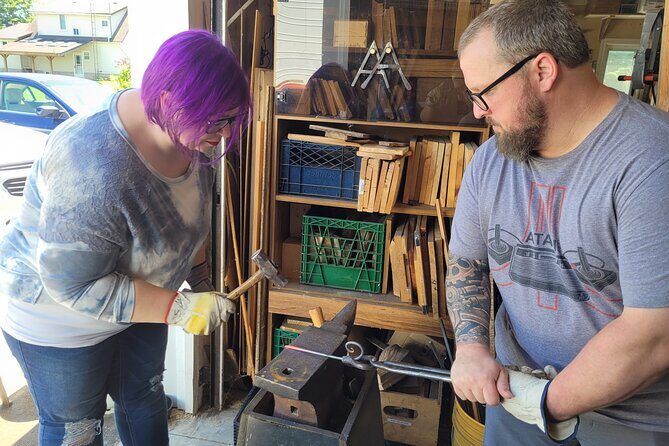
- Small group size (up to 8): you get real attention while you’re working, not a crowd shuffle.
- Your own keepsake: each participant crafts their own ironwork to take home.
- Beginner-friendly options: you can start with simple projects (samples provided) and still make it yours.
- Safety gear is included to borrow: gloves and glasses are provided for the class.
- Teaching that adjusts to you: projects can be modified for ages and abilities.
- A satisfying, creative outcome: even if you’re new, you leave with proof you made it.
Arriving in Wainfleet: the 4:00 pm blacksmithing start
Your class meets at 42438 ON-3, Wainfleet, ON L0S 1V0. The start time is 4:00 pm, and the activity ends back at the meeting point, so you’re not doing a long day of transfers or hopping between stops.
That timing matters more than it sounds. A late afternoon start gives you a calm, focused session where you’re not trying to fit forging into the middle of a packed sightseeing day. It also tends to work well if you’re already spending time in the Niagara area and want one “activity” that’s different from wineries and tours.
The setting is set up for hands-on work, not just watching. You’ll be close enough to the work to learn the process and do the actual forging yourself. With a maximum of 8 travelers, it feels like a workshop, not a theater.
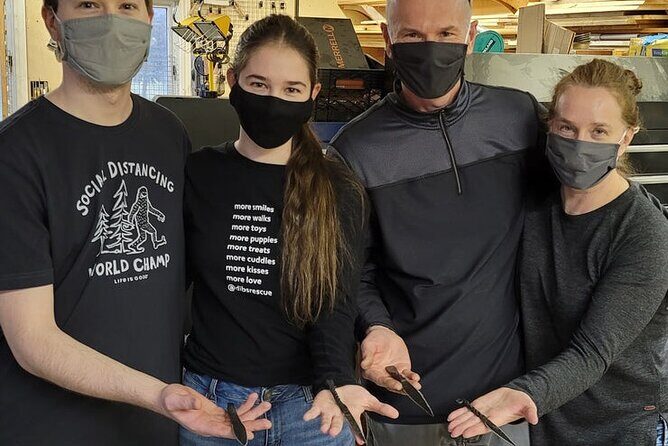
If you’re traveling with others, it can be a great option because the class is paced for the group. One parent took their three teenagers and everyone found a level they could handle, from getting involved in the process to finishing their own piece. The instruction style is also described as patient and clear, which is exactly what you want when the goal is to leave with something you made, not just hot metal experience.
You can also read our reviews of more tours and experiences in Ontario.



Safety gear, heat, and what the class actually provides
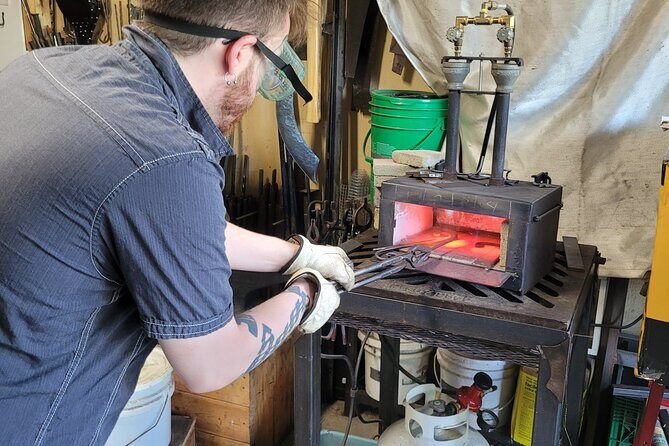
Blacksmithing is physical. There’s heat, sparks, and sharp tools involved, so this class takes safety seriously—without turning it into a lecture.
Included for the class: you can borrow safety gloves and glasses from the studio. That’s a big value point. It means you don’t have to show up hunting for the right gear. It also means the instructor can keep you moving while everyone has the basics covered.
Not included (but available to buy): brand new safety glasses, gloves, and earplugs can be purchased from the studio if you want them. That’s worth noting if you’re very noise-sensitive or if you’d rather have your own personal gear instead of borrowing.
Here’s the practical angle: if you’ve never done anything like this, the easiest way to enjoy it is to treat safety gear as part of the fun. Once you’re protected, you can focus on the technique and the satisfaction of forming your piece. And since they emphasize customizing the task to your ability, safety isn’t just about rules—it’s also about setting you up for control.
Also, service animals are allowed, and the class is described as doable for most travelers. One participant shared they use a wheelchair, and the instructor was accommodating and patient. That’s a helpful signal that the class isn’t built only for the most typical, fully mobile body.
Picking your project: samples, customization, and skill levels
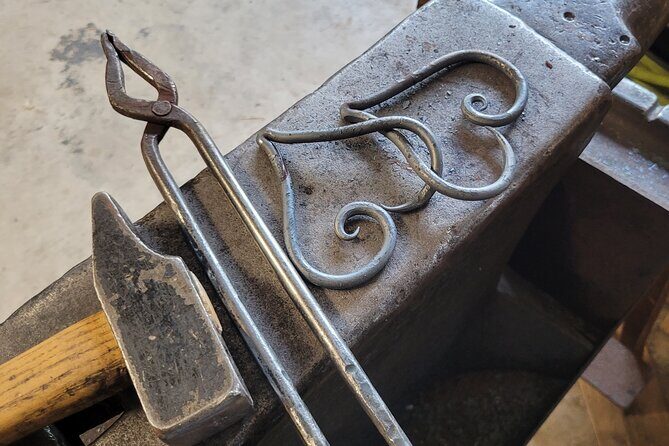
The core of the experience is simple: you forge a keepsake. The way you get there is where this class earns its excellent reputation.
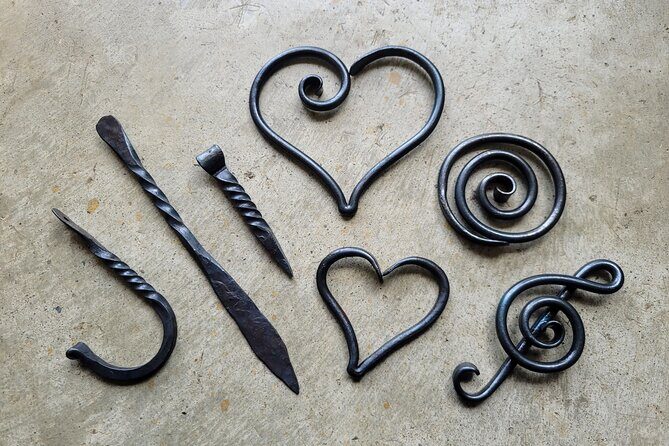
You’ll start by choosing between a set of simple beginner projects, with samples provided. If you’re new, this helps you get past the fear stage—there’s no guessing game about what to make. The instructor also provides step-by-step instructions, and the projects can be modified to suit a range of ages and abilities.
That tailoring is a quiet superpower. Blacksmithing isn’t one-size-fits-all. People have different strength, different comfort with heat and tools, and different pacing needs. The class is set up so you can ask for adjustments. One review explicitly called out that the instructor was accommodating and patient, especially for participants who may need more time or a different approach.
So you should think of your choice as two layers:
- A beginner path (based on the sample options) that still produces a real take-home result
- A custom-fit version where the instructor can adapt the task so you can successfully complete your piece
If you’re doing this with a family group, this structure helps. Teens might want a more involved version of a beginner project, while younger kids or first-timers can focus on a simpler variant. Everyone can leave with something forged by their own hands.
Inside the class: what happens during the two hours
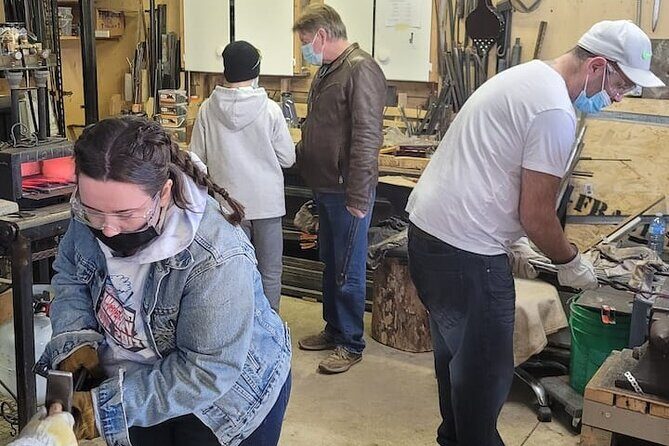
This is a 2-hour class, so everything has to be efficient. You’re not going to spend half the day reading safety signs or waiting for your turn. The session is built around you actively participating with the instructor’s guidance.
Here’s how the rhythm typically works based on what the class is described to do:
1) You start with instruction and setup.
You’ll get oriented to the space and the tools you’ll be using. Then the safety equipment is sorted (gloves and glasses borrowed for the class).
2) You follow the steps while working your own piece.
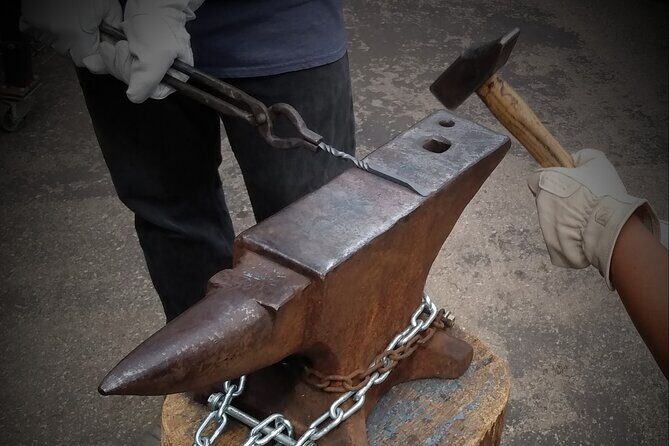
The instructor demonstrates the process step-by-step, then you do the work yourself. Reviews highlight this “watch, then try” structure. It’s the difference between a class where you mostly observe and a class where you actually forge.
3) You forge your keepsake with real guidance.
One review mentioned smashing hot iron, which tells you this is hands-on work, not just decorative crafting. The instructor keeps people engaged while ensuring everyone stays safe and progressing at a pace that works.
4) You finish and take it home.
Each participant crafts their own ironwork to take home, and the satisfaction level is part of the pitch. You leave with an object you made in a short window—one that’s not something you could easily replicate later without tools and instruction.
A nice detail: one review mentioned that Jen takes pictures. That matters because when you’re focused on working with metal, you can forget to document the moment. Having someone capture key points helps you remember the experience after the smoke clears and the hammer cools down.
What you take home: a forged keepsake you can actually show off
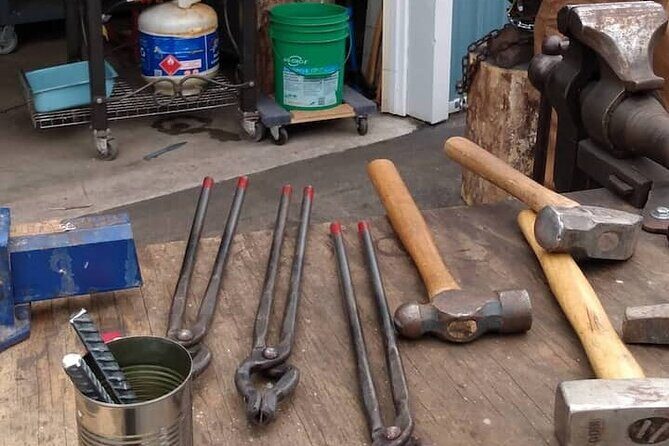
The big promise is also the big win: you forge your own piece of ironwork to take home. That means you’re not leaving empty-handed, and you’re not buying a pre-made souvenir.
In a class like this, that take-home aspect is where the value comes from. It’s the physical proof that you learned something and did something. Even if your first attempt isn’t perfect, the object is real. And with beginner projects available, you’re set up to finish with something you’ll feel proud holding up.
Think of your keepsake as three things:
- A craft object you personally contributed to
- A story you can tell because you were there during the shaping work
- A useful reminder that skills can be learned quickly with the right coaching
If you’re the type who likes handmade things—especially things that feel “earned”—you’ll get a lot out of this. It’s also a good option for visitors who want one memorable stop in the Niagara area that isn’t another tasting, another boat ride, or another photo at a viewpoint.
A few more Ontario tours and experiences worth a look
Price and value: how $56.01 becomes more than a hobby snack
At $56.01 per person for roughly two hours, the class sits in the “activity” range rather than “major tour” pricing. The real question is whether you get what you pay for—and the included items strongly suggest you do.
What you’re paying for includes:
- Tools and materials needed to craft your piece
- The class instruction and step-by-step guidance
- Borrowed safety gloves and glasses
- And the outcome: each participant makes their own ironwork to take home
That last point is the value engine. Many paid activities include watching, minor participation, or a take-home item that costs them less than you pay. Here, you’re doing the work and walking away with a forged object.
Also, the group is small (up to 8), so your time with the instructor is more likely to feel personal. Reviews specifically mention great instructions and a class that progresses while staying safe, with laughs along the way. That’s hard to replicate in a big group workshop where you’re just waiting your turn.
One more value note: the class is booked on average 55 days in advance, which usually signals steady demand. If you’re traveling during a busy season, booking early helps you lock in the 4 pm slot without having to rearrange your whole plan.
Who should book this Niagara blacksmithing class
This is one of those activities that fits more people than you’d expect.
You’ll likely enjoy it if:
- You’re a beginner who wants to try forging without needing prior experience
- You want a hands-on Niagara experience that’s different from typical sightseeing
- You’re traveling as a family with teens or mixed ages (beginner projects can be modified)
- You want something memorable that you can take home and use as a conversation piece
It also looks like a solid choice if you have mobility needs. One participant who uses a wheelchair shared that Jen was accommodating and patient, and they would do another class. While every body is different, that review is a good sign that the instructor can adjust and communicate in a supportive way.
If your idea of fun is quiet museums only, you might find the noise and motion less your style. But if you’re okay with physical, noisy, hands-on work, the whole setup is designed to get you to a successful result.
Should you book this 2-hour blacksmithing experience in Wainfleet?
I think you should book it if you want a short, high-reward activity where you leave with something you made. The class earns its reputation through clear instruction, a small-group setup, and the fact that you forge your own keepsake instead of just observing.
It’s also a smart value at $56.01 because the tools, materials, and core safety gear are handled, and the time commitment is only about two hours at 4 pm. If you’re traveling with teens, friends, or a mixed-skill group, the beginner options and instructor tailoring make it easier for everyone to participate meaningfully.
Quick decision tip: if you’re excited by the idea of forging hot metal and shaping it into an object you can bring home, this class is a strong yes. If you hate noise, sparks, or the idea of working with physical tasks, consider whether the heat-and-hammer side of blacksmithing is your comfort zone.
FAQ
Where is the blacksmithing class meeting in Niagara?
The class meets at 42438 ON-3, Wainfleet, ON L0S 1V0, Canada, and it ends back at the meeting point.
How long is the blacksmithing experience?
It lasts about 2 hours.
What does the price include?
The class fee includes all tools and materials needed to craft your piece, and each participant crafts their own ironwork to take home. Safety gloves and glasses are available to borrow for the class.
Do I need to bring safety equipment?
No. Safety gloves and glasses are provided to borrow during the class. Brand new safety glasses, gloves, and earplugs can also be purchased from the studio.
Are the projects beginner-friendly?
Yes. You’ll choose from simple beginner projects with samples provided, and the projects can be modified to suit different ages and abilities. You can ask the artist to tailor the work to your ability.
What’s the cancellation window?
Free cancellation is allowed. You can cancel up to 24 hours in advance of the experience start time for a full refund.