REVIEW · WINNIPEG
Winnipeg’s Most Haunted: a Smartphone Audio Ghost Tour
Book on Viator →Operated by Tripvia Tours · Bookable on Viator
Spooky Winnipeg, paced by your phone. This smartphone audio ghost tour uses live GPS so the guide plays when you arrive, while you wander at your own speed.
I like the price-for-content value: you pay $6.72 and get a walkable 5 km route through well-known downtown landmarks tied to ghost stories. I also appreciate the optional trivia game at each stop, plus device vibration cues that help you move on when the next chapter starts.
One thing to consider: each stop is brief (about 5 minutes of audio), so if you want long storytelling, it may feel short. And because it covers some downtown areas, you may want to keep an eye on personal comfort, especially if you are out later or with kids.
In This Review
- Key takeaways before you go
- Ghosts on your schedule: how the tour really works
- Price and value: what $6.72 covers (and what it doesn’t)
- Download and battery tips: making the GPS behave
- Starting at The Forks Market: where Winnipeg’s spooky route begins
- The Forks to St. Andrew’s on the Red: church legends and quick scares
- Fort Garry Hotel and the Demon Hotel: the haunting-luxury contrast
- Dalnavert Museum to the Manitoba Legislative Building: Victorian homes and spooky governance
- Vaughan Street Jail to Hamilton House: punishment stories and Conan Doyle curiosity
- St. Norbert Monastery to Canada Life Centre: from quiet chills to big arena energy
- Masonic Temple, Marlborough Hotel, and the theatre run: where the audio gets dramatic
- Millennium Centre and Manitoba Theatre Centre: older offices, older rumors
- Pantages Playhouse Theatre: the finale near a legendary name
- Safety and comfort: how to enjoy the spooky theme without the stress
- Who this tour is for (and who should skip it)
- Should you book Winnipeg’s Most Haunted smartphone audio tour?
- FAQ
- How long is the Winnipeg’s Most Haunted smartphone audio ghost tour?
- What does the tour cost?
- Do I need headphones to hear the audio?
- Do I need a data connection or cell service during the tour?
- Can I start and stop the tour whenever I want?
- How many devices can be used for the tour?
Key takeaways before you go

- Self-paced route: stop & start anywhere along the way, without group pressure
- Live GPS audio: commentary triggers when you get close to each location
- Optional trivia at every stop: tap your answer right on your phone
- Download on Wi-Fi first: no signal needed and no data used during the tour
- Built for small walks: about 1 to 2 hours for the full loop, depending on your pace
- A mix of big-name spots and eerie side stories: theatres, hotels, jails, churches, and parks
Ghosts on your schedule: how the tour really works
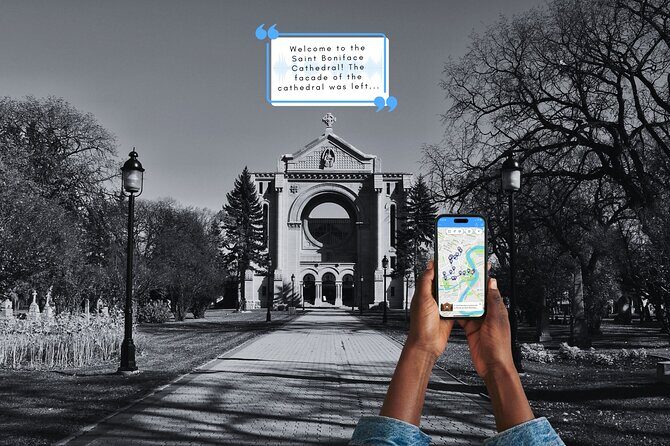
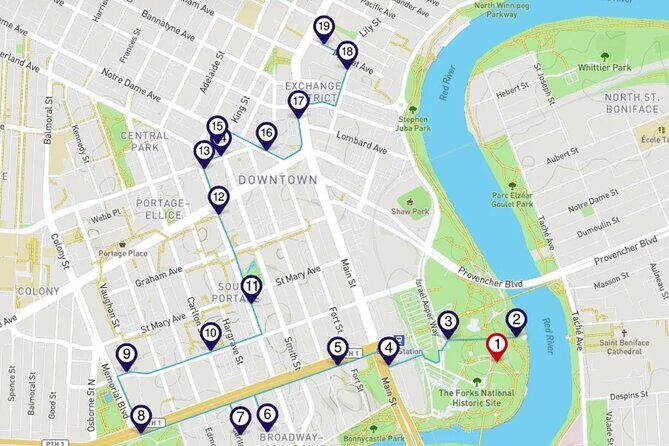
This tour is designed for people who want the vibe of a ghost walk without the tight timing and crowd shuffle. You start at The Forks Market and follow a live GPS map that tracks where you are and what’s next. When you approach a stop, the audio guide automatically plays, so you are not constantly holding your phone up to read.
The key idea is control. You can pause for coffee, backtrack a bit, or linger near a building you like. The tour is yours to keep and enjoy any time on the Tripvia platform, which means you are not tied to a specific departure window once you have it downloaded.
And yes, the spooky theme is real here, but it’s paired with city history. Many stops frame their hauntings through what Winnipeg used to be: churches, theatres, hotel rooms, jail corridors, and even Winnipeg’s underground rumors.
A few more Winnipeg tours and experiences worth a look

Price and value: what $6.72 covers (and what it doesn’t)
At $6.72 per person, the biggest value is that you are buying access to the experience itself: the mobile ticket, the audio guide, and the GPS navigation. You are not paying for entry into attractions, guides standing in the street, or special timed tickets.
The tour also notes that recommended attractions may be closed or inaccessible depending on season or other factors. That matters because some of the stops are best enjoyed from outside or from public areas. So you should plan on doing this as a streets-and-sidewalk experience, not as a museum-hopping day.
What you should not expect: attraction admissions and paid exhibits are not included. Headphones also are not included. Still, the audio can play from your device speaker, and you can bring your own headphones if you want clearer sound on windier downtown sidewalks.
Download and battery tips: making the GPS behave

This is the part that determines whether the tour feels smooth or stressful. The tour is meant to run without needing cell service: you download on Wi-Fi before you go, and it says no signal required or data used during the tour.
Do this ahead of time at home or wherever you have Wi-Fi. Then treat your phone like it’s your guidebook and compass. One of the strongest practical tips from real-world feedback is simple: start with a fully charged phone. If your battery is low, the GPS tracking plus audio playback can drain faster than you expect.
Also pay attention to the device setup. Your number of travelers is the number of devices you can download to. So if you are traveling with someone, make sure you are downloading to the right phones before you step outside.
Starting at The Forks Market: where Winnipeg’s spooky route begins
Your journey kicks off at The Forks Market on Forks Market Road. It’s a smart starting point because it’s central, easy to orient yourself, and it gives you a good “baseline” of Winnipeg street life before you head into the more supernatural-feeling stops.
From here, the tour frames the idea that Winnipeg’s ghost stories are tied to real places: theatres, hotels, museums, and places where people worked or were punished. The start sets the tone, then the GPS takes over and you follow the route through downtown.
You’ll also find that the tour is built for wandering. It’s listed as a 1 to 2 hour experience, with no time constraints. That means you can do it in an early afternoon light for comfort, or in the evening for maximum mood, as long as you are the kind of person who likes roaming downtown after dark.
The Forks to St. Andrew’s on the Red: church legends and quick scares
The first audio stop is the Forks National Historic Amphitheatre. It acts like your orientation chapter. The guide walks you through Winnipeg’s haunted past by sending you toward famous downtown buildings tied to the stories, including big names like theatres and hotels along the way.
Next is St. Andrew’s on the Red. Here, you get an urban legend connected to the oldest surviving stone church in Western Canada. Even if you are not a big believer in ghosts, legends like this work because they explain why locals repeat certain stories and how a building can become a character in the city’s memory.
Then comes a stop built for curiosity: the tour directs you to the Secret Tunnel. This segment focuses on the rumors and stories about Winnipeg’s underground past. If you like local lore that mixes real development with the what-ifs people tell each other, this is one of the more intriguing stops.
Practical note: these locations are brief stops by design. Each segment is timed for about 5 minutes, so make sure you are standing close enough for the GPS cue and audio trigger.





Fort Garry Hotel and the Demon Hotel: the haunting-luxury contrast
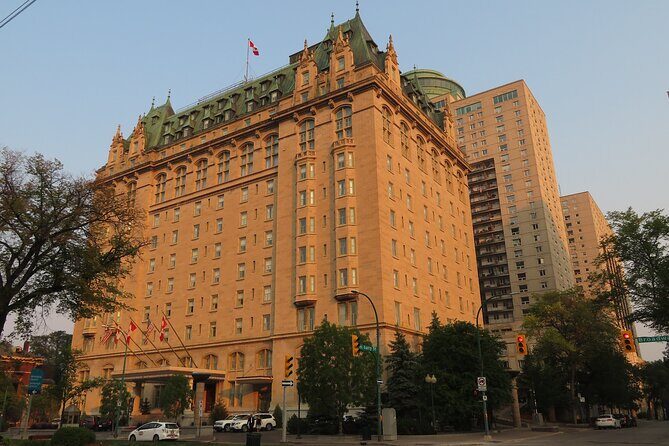
The route swings toward two of Winnipeg’s most famous names in lodging: the Fort Garry Hotel, Spa and Conference Centre and later 50 Hargrave St (the Demon Hotel).
At the Fort Garry Hotel stop, the audio promises Winnipeg’s most famous haunted location, including history tied to a particularly spooky room. This is where the tour tends to feel more dramatic, because hotels are natural story engines: staff, guests, long corridors, and rooms people only visit once.
Then you hit the Demon Hotel stop at 50 Hargrave St. This one leans into reputation. You’ll hear about a previous building on the property and the terrifying reputation it gained. The tour’s strength here is that it doesn’t only focus on the scary part. It puts the rumor in context, so the story sounds like something that grew from real events and community memory.
If you are the type who likes a good contrast, this pair works well. One stop frames haunted glamour; the next frames notorious fear. Together, they make the downtown feel like a living set of settings, not just a list of addresses.
Dalnavert Museum to the Manitoba Legislative Building: Victorian homes and spooky governance
Next up is Dalnavert Museum and Visitors’ Centre, tied to a Victorian house and the former home of Sir John A. Macdonald’s son. The tour adds a chilling twist with the idea that activity might still linger. It’s a good reminder that “haunting” stories often cling hardest to places that mattered to Winnipeg elites and power structures.
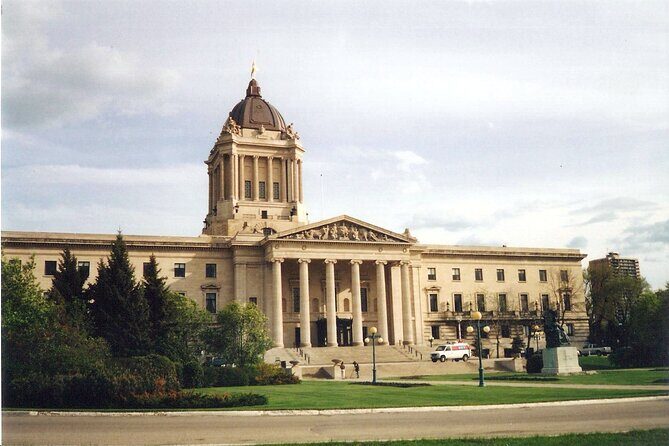
After that, you walk (or roll) toward the Manitoba Legislative Building. This stop is all about the supernatural and possibly occult features in the meeting place used by the Manitoba legislative assembly. Even if you stay skeptical, this is one of the most interesting angles of the tour because it treats architecture and civic space like storytelling tools.
This is also a good section to slow down for photos. You’ll likely be outside looking up at the building’s character, not just standing on a curb waiting for audio.
Vaughan Street Jail to Hamilton House: punishment stories and Conan Doyle curiosity

The tour then heads to Vaughan Street Jail, described as the jail that once held some of Canada’s worst criminals. You also get the idea that some prisoners may have stuck around. Jail stories land differently than hotel stories. Instead of luxury or performance, you’re dealing with confinement, consequence, and a darker kind of human drama.
Not far away is Hamilton House, paired with Sir Arthur Conan Doyle. This stop focuses on his spiritual visit to Winnipeg and the specific home he conducted research at. If you like ghost lore that connects to famous people, this is a standout moment. It gives the haunting theme a historical anchor beyond local rumor.
These are also good stops for that “did I hear that right” feeling. They are packed with names and claims, and because the audio is short per stop, you might want to repeat the audio if it said something you want to remember.
St. Norbert Monastery to Canada Life Centre: from quiet chills to big arena energy
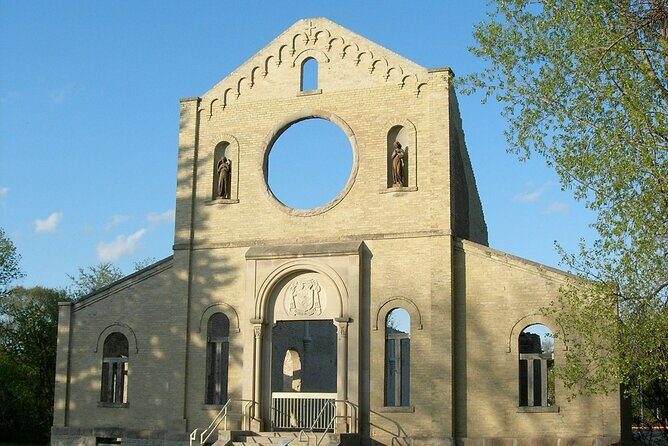
One of the quieter stops is St. Norbert Monastery. You’ll hear about a trappist monastery just outside Winnipeg and the creepy occurrences reported there. Monastery stories often feel less like urban legends and more like atmosphere. If you want your ghosts to come with stillness and silence, this is a good match.
Then the tour swings back to downtown with Canada Life Centre, which the guide frames as Winnipeg’s important arena where both spectres and spectators seem to gather. Arenas are a fun theme because they concentrate crowds, noise, and long-running events. If any place feels like it could carry old energy, it’s a venue that hosts the same kinds of human emotion over and over.
This is also where the tour’s GPS pacing becomes important. You want your phone ready, sound audible, and attention on the route. Arena surroundings can be busy, and you’ll likely be walking across wider streets than at the smaller heritage stops.
Masonic Temple, Marlborough Hotel, and the theatre run: where the audio gets dramatic
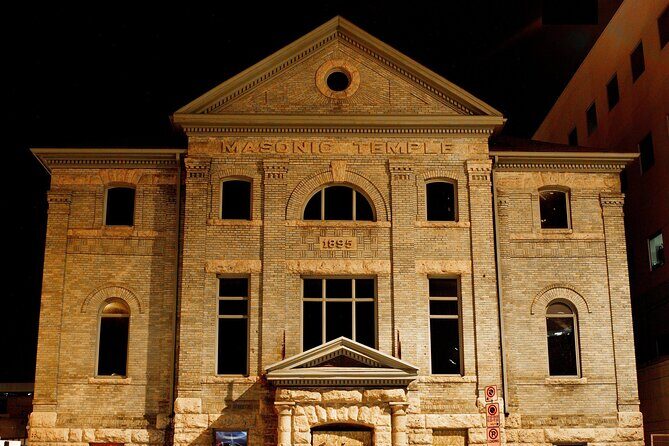
Next is the Masonic Temple, described as an abandoned former Masonic Temple that allegedly holds a few mischievous spirits. Masonic lore is a magnet for ghost stories because it’s tied to rituals, secrecy, and symbolism—things people love turning into legends.
Then you get The Marlborough Hotel, where the audio connects spooky happenings to the grisly crime that may be the source. Hotels, temples, and crime stories all share the same storytelling engine: a place that attracts people and then holds onto what happened inside.
After that, the route visits Burton Cummings Theatre for the Performing Arts. You’ll hear about the iconic theatre and the hopeless souls that may be trapped inside. Theatres are tailor-made for hauntings because of the cycle of performance: lights off, curtain down, staff leaving, and the sense that a building remembers the emotion it held.
Then it’s La Barriere Park, one of the creepiest parks on the route. The guide describes ghostly activity people have experienced there. Parks work as a pacing reset. After dense urban building stories, you can breathe and let the mood stretch out.
Millennium Centre and Manitoba Theatre Centre: older offices, older rumors
The tour continues to the Millennium Centre, described as the former Western head office of the Canadian Bank of Commerce. The audio suggests it might still house former employees. Office-building hauntings often feel different from hotel or theatre legends. They carry a vibe of routine and repetition, like the past is stuck running behind the walls.
Then comes Manitoba Theatre Centre (MTC), focused on an allegedly haunted theatre and the chilling legend associated with it. This stop reinforces what the tour does best: it turns Winnipeg’s cultural landmarks into characters with backstories.
If you want a smooth day, you can time this section for late afternoon when you can see details on the façades without freezing your fingers for long.
Pantages Playhouse Theatre: the finale near a legendary name
The last stop is Pantages Playhouse Theatre for the Vaudeville theatre stories and the idea that the owner and namesake might still haunt it. Your ending point is described as near Westbound Market at Main (Concert Hall), with the tour ending at Pantages Playhouse Theatre.
This finale works because it ties the entire tour’s theme together. You start near The Forks, you move through hotels, jails, churches, parks, and offices, and then you land at a place built for performance and spectacle. Even if you treat the ghosts as a storytelling style, the theatre setting is a satisfying capstone.
Safety and comfort: how to enjoy the spooky theme without the stress
This tour is designed to be flexible and easy to follow, but downtown space always comes with real-world factors. One piece of practical feedback suggests that some areas may feel unsafe depending on what’s happening on the street, especially for kids.
So I’d plan like this:
- Do the route when you feel comfortable, not just when the calendar says it should be spooky
- Keep your phone secured, since it’s central to the experience
- If you’re with children, set a clear time to finish and a place to regroup
You can keep the “haunted” fun while still being sensible. The goal is chills and stories, not stress.
Who this tour is for (and who should skip it)
This is a great fit if you:
- like self-guided walking instead of group schedules
- want a mix of spooky storytelling and Winnipeg landmark context
- enjoy short, timed audio segments and GPS-triggered narration
You might be less satisfied if you want:
- long, cinematic ghost stories that run for 20 to 30 minutes at a time
- a tour with formal guide interaction at each stop
It also helps if you’re comfortable using your phone for navigation and audio while you move. Bring a car charger or a power bank if you tend to eat battery life.
Should you book Winnipeg’s Most Haunted smartphone audio tour?
If you want a low-cost way to explore downtown Winnipeg with haunted history built in, this is an easy yes. At $6.72, you’re paying for convenience: GPS guidance, automatic audio, and optional trivia, with the freedom to pause and restart anytime along the route.
My main caution is expectation-setting. The audio is designed to be quick at each location, so if you crave longer narratives, you might wish for more. Also, if you are sensitive about certain downtown conditions, choose your time of day and keep your comfort front and center.
FAQ
How long is the Winnipeg’s Most Haunted smartphone audio ghost tour?
It’s listed as about 1 to 2 hours. The route is paced so each stop is roughly 5 minutes, though your total time can change based on how long you pause at each location.
What does the tour cost?
The tour price is $6.72 per person.
Do I need headphones to hear the audio?
Headphones are not included. The tour audio can play from your device speaker, though you can bring headphones if you want.
Do I need a data connection or cell service during the tour?
No. You’re instructed to download on Wi-Fi before you start, and it notes that no signal is required or data is used during the tour.
Can I start and stop the tour whenever I want?
Yes. The tour is described as yours to keep and enjoy anytime, and you can stop & start anywhere along the route.
How many devices can be used for the tour?
The number of devices you can download the tour to equals the number of travelers you select when booking.