REVIEW · WINNIPEG
Louis Riel & Red River Metis Trails Tour
Book on Viator →Operated by Wonderful Winnipeg City Tours · Bookable on Viator
Louis Riel’s story moves through Winnipeg quickly. This tour links Louis Riel sites with the Red River Metis story, moving you from cathedral ruins to museum context and onward to resistance and settlement landmarks. In about four hours, you get a guided route that’s built for making connections, not just checking boxes.
Two things I really like: the mix of places where you can see, then immediately understand what you’re seeing, and the fact that some major admissions are handled for you. You also get a guide who keeps things flowing, even when closures pop up, which is exactly what you want on a tight schedule.
The main trade-off is simple: most stops are short (around 15 minutes each), so if you’re the type who wants long museum reading time at every location, you may feel a bit rushed. Still, the pace is part of what makes the trail work in a single afternoon.
In This Review
- Key points that make this tour worth your time
- How the Louis Riel trail tells a story in five stops
- Meeting at The Forks and getting a smooth start
- Stop 1: Saint Boniface Cathedral ruins and Louis Riel burial site
- Stop 2: Le Musee de Saint-Boniface and the Red River settlement context
- Stop 3: Riel House National Historic Site and how Metis life looked
- Stop 4: La Barriere Park and the Red River Resistance heritage site
- Stop 5: Upper Fort Garry and the Hudson Bay Company connections
- The 4-hour pace: how the tour stays fun instead of exhausting
- Price and value: what $96.43 buys you in Winnipeg
- Practical tips for getting the most from each short stop
- Who this tour suits best (and who might want something else)
- Should you book the Louis Riel & Red River Metis Trails tour?
- FAQ
- Where is the meeting point for the tour?
- What time does the tour start?
- How long does the tour last?
- Is this a private tour?
- What language is the tour offered in?
- Is pickup offered?
- Do I need a printed ticket?
- Are tickets included for the museum and Riel House?
- Are service animals allowed?
- What if the weather is bad?
- What is the cancellation policy for a full refund?
Key points that make this tour worth your time
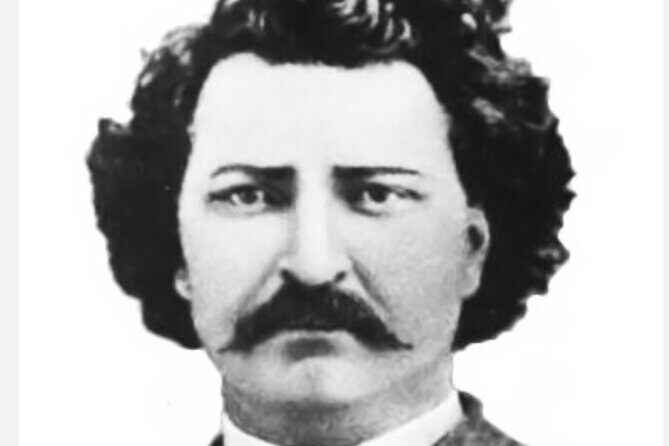
- A tight 4-hour route across five meaningful sites that connect Louis Riel, the Metis, resistance, and settlement.
- Museum + Riel House admissions included, so you spend less time sorting tickets and more time learning.
- Short, focused stops at each location, ideal for first-timers who want a structured overview.
- Flexible guide approach when closures happen, with quick adjustments to help you keep seeing the story.
- Private tour format means it’s only your group, not a crowd.
- Good-weather dependent, so plan for Winnipeg’s mood swings.
How the Louis Riel trail tells a story in five stops

This route is set up like a guided narrative. You start at a place tied to Louis Riel, then you move into museum learning that gives the political and community context behind what you just saw. After that, you shift from ideas to lived experience at the Riel House, then you pivot to conflict and resistance, and finally you end with a fortified landmark tied to settlement days.
That progression matters because you’re not only learning names and dates. You’re building a mental map of Winnipeg and the Red River area as a place shaped by rights, negotiation, and resistance. Even the extra theme you’ll pick up along the way—how Winnipeg began, different tribes, and early settlement days—fits naturally into the route.
And because each stop is fairly timed, you’re kept moving in a way that helps the story connect. You’ll likely leave with a clearer sense of how these locations fit together geographically and emotionally.
You can also read our reviews of more tours and experiences in Winnipeg.



Meeting at The Forks and getting a smooth start
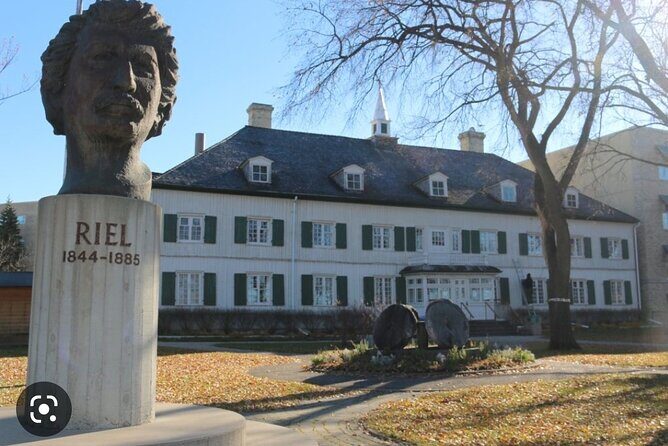
You meet at Tourist Information, 21 Forks Market Rd in Winnipeg. The tour starts at 1:00 pm, and it ends back at the same meeting point, so you’re not left figuring out transport after the last stop.
Pickup is offered, and the details come through by call or email or text. If you want the least-stress option, it’s worth coordinating that ahead of time so you’re not trying to navigate between sites solo.
This is also a private tour/activity, meaning only your group participates. That can be a big deal if you want to ask questions at a normal speaking volume and keep the pace aligned with your interests, rather than being folded into a large mixed group.
The tour duration is listed at about four hours, and that includes the time spent getting between stops. So when you plan your day, treat it like a half-day commitment, not a quick one-hour walk.
Stop 1: Saint Boniface Cathedral ruins and Louis Riel burial site
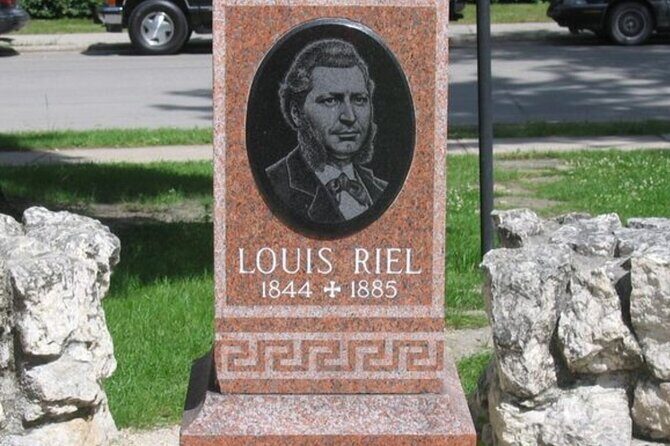
The first stop is Saint Boniface Cathedral, where you’ll see the burial site of Louis Riel. You’ll also visit the ruins of the St Boniface Cathedral, which sets a tone right away. This is the kind of place where you don’t need extra context to feel that history has weight.
Time is about 15 minutes, and admission is free for this stop. That short window can work well if you’re using it to orient yourself—look, take in the setting, and then let the later museum stop explain the why behind what you’re seeing here.
The downside to keep in mind: a 15-minute stop doesn’t allow for deep lingering. If you’re someone who likes to read every interpretive panel line-by-line at the first location, you may want to mentally save some of that for the museum and Riel House stops, where you’ll get the included admission time.
Stop 2: Le Musee de Saint-Boniface and the Red River settlement context
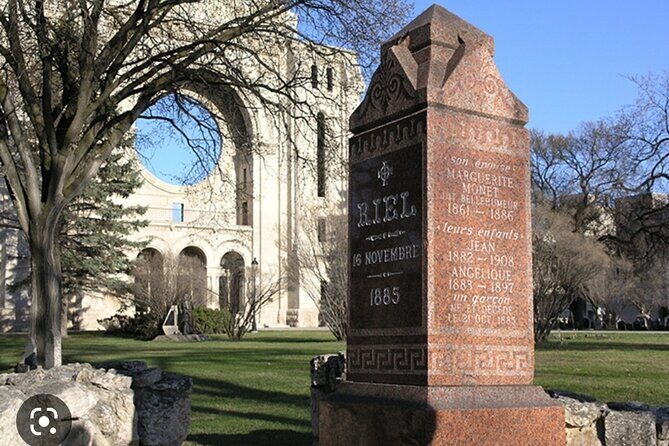
Next you head to Le Musee de Saint-Boniface Museum for about 30 minutes, and the admission ticket is included. This is where the story broadens from a single Louis Riel connection into the larger Red River Settlement and the Metis people.
The focus here includes learning about Louis Riel and how negotiated Manitoba Rights into Confederation of Canada, plus much more. That combo is useful because it turns what could be a purely memorial visit into a grounded understanding of political process and community stakes.
This is also likely the stop where you’ll get the most “ahh, that’s what this means” moments. It’s hard to overstate how helpful it is when the tour gives you context shortly after your first stop, instead of making you piece it together on your own later.
One practical note: since your time here is about 30 minutes, aim to prioritize. If you spot an area that clearly matches what you care about—Louis Riel, the Metis community, or the negotiation theme—spend extra attention there and let other sections be quick scans. The route keeps moving, and the goal is to move the story forward.
Stop 3: Riel House National Historic Site and how Metis life looked
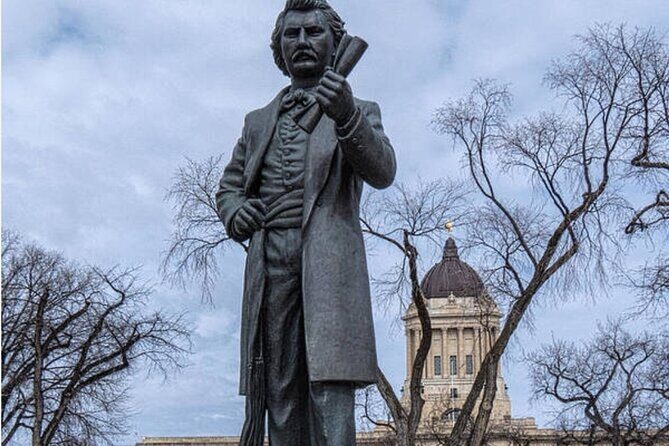
After the museum, you go to the Riel House National Historic Site. Expect about 15 minutes here, with admission included.
This is one of the most powerful stops because it shifts from interpretation to daily life. You’ll see how Red River Metis lived and you’ll also see Louis Riel house. That pairing helps because it doesn’t just say what happened. It shows where and in what kind of domestic reality a leader lived.
It’s a short stop, but the value is in focusing your eyes on the lived-experience details, not trying to memorize everything. In many historic house settings, the room-by-room feeling matters as much as the written information. Even in 15 minutes, you should be able to notice how the space is organized and what parts are being highlighted for visitors.
If you prefer longer time at indoor sites, keep this in mind: this tour is designed for a fast, connected route. You may want to come back later on your own if you fall hard for the details.




Stop 4: La Barriere Park and the Red River Resistance heritage site
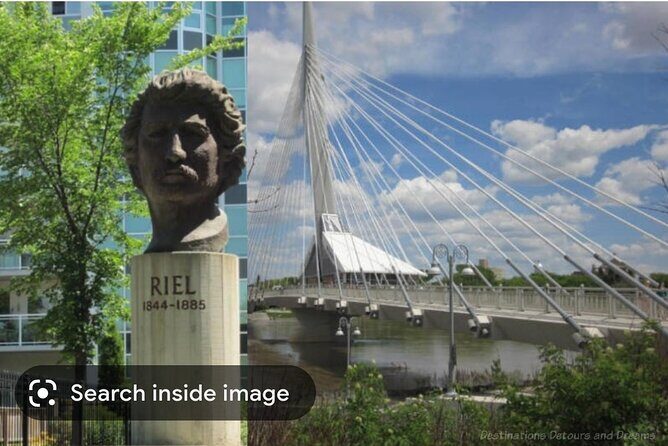
Now the tour turns toward conflict and resistance at La Barriere Park. It’s about 15 minutes, and admission is free.
This stop is described as a Red River Resistance Heritage site where Louis Riel and the Resistance fought against rebellion. That phrasing is direct, and it changes the mood from reflective to tense. Even without adding extra speculation, seeing this part of the story in a specific place helps you understand that what happened wasn’t distant or abstract.
Again, 15 minutes is brief. The best way to handle that is to treat this stop as a narrative checkpoint: you’re confirming the resistance chapter before moving on to the fort and settlement-day connections.
If you want to get the most value here, come with one simple question in mind before you arrive: what does this site help explain about the conflict? When you frame your attention, the short time feels less limiting.
Stop 5: Upper Fort Garry and the Hudson Bay Company connections

The final stop is Upper Fort Garry for about 15 minutes, with admission listed as free. You’ll stroll and enjoy the original fort entrance, described as castle-like, along with laminated walls that tell the story of the Red River Settlement and the Hudson Bay Company.
That ending location is a smart wrap-up. After you’ve seen the memorial side, the museum context, the lived-life house, and the resistance site, you finish with a setting that points back to settlement development and the broader systems involved in the region.
Because this is a stroll-through style stop with interpretive materials, it tends to feel easier to process quickly than a dense museum gallery. Still, the same timing reality applies: it’s not a long wander. You’ll cover the key points, then you’re back on the move.
If you want photos, plan for them here. People often remember the fort entrance imagery longer than they expect, and it gives you a visual anchor for what you learned across the earlier stops.
The 4-hour pace: how the tour stays fun instead of exhausting
One of the most repeated strengths in the experience’s feedback is that it’s fun, with lots to see, and that the full four hours tends to go by fast. That makes sense because the route is designed to keep giving you new scenes every short stretch.
There’s also a practical advantage when the day hits snags. In one review, the guide was described as accommodating and making quick adjustments when closures happened, finding places for the group to see instead of leaving you stuck. That’s exactly the kind of flexibility you want in a city where outdoor access and specific site hours can shift.
So here’s how I’d handle the schedule so it feels great: don’t plan to “camp out” at any single location. Instead, treat each stop like a chapter title. You’re collecting the chapters, not doing a deep research seminar.
Also, since pickup and drop-off are involved and the tour includes transportation back and forth, you’ll probably spend more time in the route flow than you would on a self-guided walk. That’s not bad. It’s part of what you’re paying for: someone else does the route coordination so you can focus on seeing and learning.
Price and value: what $96.43 buys you in Winnipeg
The price is listed at $96.43 per person, and the tour lasts about four hours. On its face, that’s not a budget option, but value comes from what’s included and what’s handled for you.
Two major inclusions stand out: admission is included for Le Musee de Saint-Boniface Museum and for Riel House National Historic Site. The other stops—Saint Boniface Cathedral ruins, La Barriere Park, and Upper Fort Garry—are listed as free. That blend is good because you’re paying for guided structure plus the time and tickets that often slow down independent sightseeing.
You also get pickup offered, a mobile ticket, and a private group format. Even without making big assumptions about additional costs, that combination reduces friction. You don’t have to figure out which lines to stand in, which places charge, or how to stitch together five stops across town in a way that still feels like a coherent story.
One more signal: the tour is often booked about 51 days in advance on average. That can mean it’s popular in the season, or that people like the structure and specific theme. If you’re traveling during busier periods, booking earlier helps you lock in a time slot.
Practical tips for getting the most from each short stop
Since most stops are 15 minutes, your attention skills matter more than your stamina. Here’s what tends to work well for this kind of route:
- Pick one theme to follow: Louis Riel, Metis life, resistance, or settlement connections. When the guide shifts scenes, you’ll know what you’re hunting for.
- Let the museum be your slow moment: you’ll get about 30 minutes there with admission included, so use that as your main reading time.
- Use photos as memory anchors: take a quick shot at each stop’s most distinctive feature so you can remember the chapter later.
- Be ready for quick changes: closures can happen, and the guide may adjust on the fly, so stay flexible and keep moving.
If you want the trail to feel meaningful rather than rushed, your best move is to keep expectations realistic. This is a focused overview route, not an all-day research project.
Who this tour suits best (and who might want something else)
This tour is a good fit if you want a guided overview of Louis Riel and the Red River Metis story with a route that keeps linking memorial, museum context, daily life, resistance, and settlement-era connections.
It’s also a strong choice if you’re new to Winnipeg and want structure. The stops are concentrated and the tour wraps back at the meeting point, which reduces “where do we go next” stress.
Where you might reconsider: if you’re someone who needs long time in museums and historic houses, the short 15-minute windows can feel limiting. You might prefer a self-paced plan where you can stay as long as you like at each site.
On the other hand, if you like an efficient, guided half-day that leaves you with clear next steps for follow-up on your own, this route matches that style well.
Should you book the Louis Riel & Red River Metis Trails tour?
If you want a guided half-day that connects five meaningful Winnipeg-area sites into one story, I’d book it. The best part is that the admissions that matter most for understanding—the museum and Riel House—are already included, and the free stops round out the full narrative.
I’d pass only if you’re aiming for slow, deep time at each location. This route is built for momentum. It’s short chapters, not a long essay.
Finally, pay attention to the weather requirement. If conditions are poor, the experience may be canceled and you’ll be offered a different date or a full refund, so having some flexibility in your schedule helps a lot.
FAQ
Where is the meeting point for the tour?
The tour meets at Tourist Information, 21 Forks Market Rd, Winnipeg, MB R3C 4T7, Canada.
What time does the tour start?
The start time is 1:00 pm.
How long does the tour last?
The duration is about 4 hours, and it includes transportation back and forth. The tour ends back at the meeting point.
Is this a private tour?
Yes. It’s listed as a private tour/activity, so only your group will participate.
What language is the tour offered in?
The tour is offered in English.
Is pickup offered?
Yes, pickup is offered. The pickup details are provided by call or email or text.
Do I need a printed ticket?
No. The tour uses a mobile ticket.
Are tickets included for the museum and Riel House?
Yes. Admission tickets are included for Le Musee de Saint-Boniface Museum and for Riel House National Historic Site. Other stops are listed as free admission.
Are service animals allowed?
Yes, service animals are allowed.
What if the weather is bad?
The experience requires good weather. If it’s canceled due to poor weather, you’ll be offered a different date or a full refund.
What is the cancellation policy for a full refund?
You can cancel up to 24 hours in advance for a full refund. If you cancel less than 24 hours before the experience’s start time, the amount you paid won’t be refunded.