REVIEW · WINNIPEG
The Forks Historic Site: a Smartphone Audio Tour
Book on Viator →Operated by Tripvia Tours · Bookable on Viator
History clicks in your pocket here. This smartphone audio tour turns The Forks Historic Site into an easy 2.5 km walk, with live GPS that starts the right audio as you approach each landmark. I love that it feels like Winnipeg history class without the crowd pressure, and I also like the pacing: short stop segments help you skim, pause, and keep moving at your own speed.
One thing to consider: you’ll want to be comfortable using the app map and following the stop order, since a few spots can feel very close together and the sequence may not match how you’d naturally walk.
In This Review
- Key highlights before you go
- Why The Forks feels perfect for an audio walk
- What makes it feel authentic
- Price and value: $6.71 for 2.5 km of guided attention
- How the app works (and why it matters for a smooth walk)
- Headphones are optional, not required
- Trivia keeps you engaged, but it’s optional
- Start at The Forks Market: your best launch point
- Stop-by-stop: from the Plaza to the riverfront stories
- Stop 1: The Plaza at The Forks
- Stop 2: Mahatma Gandhi Statue
- Stop 3: Canadian Museum for Human Rights
- Stop 4: Shaw Park (behind the scoreboard)
- Stop 5: HIVE FIVE Sculpture
- Stop 6: Red River
- Stop 7: Esplanade Riel
- Stop 8: The Forks National Historic Site
- Art, trails, and the port: where the route gets scenic
- Stop 9: Manitoba Children’s Museum
- Stop 10: Oodena Celebration Circle
- Stop 11: Forks Historic Rail Bridge
- Stop 12: Niimaamaa
- Stop 13: Niizhoziibean trail (two rivers)
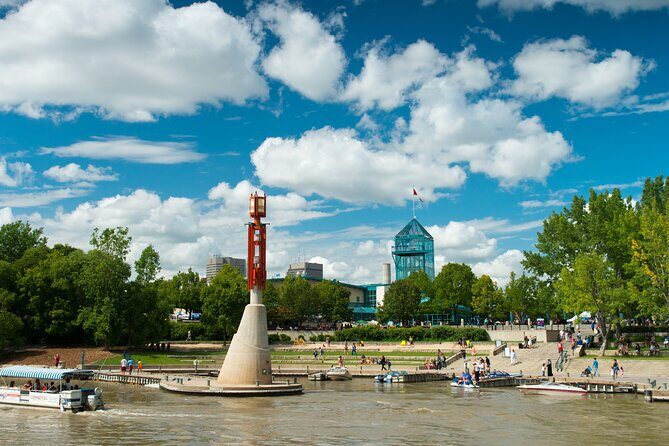
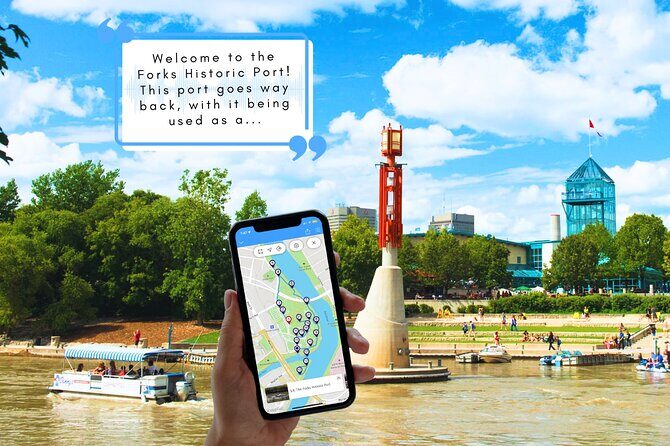
- Stop 14: The Forks Historic Port
- Stop 15: The Forks Market
- Culture and institutions: theatre, terminals, and everyday city life
- Stop 16: Manitoba Theatre for Young People (MTYP)
- Stop 17: Johnston Terminal
- Stop 18: Public Orchard & Urban Garden
- Stop 19: Variety Heritage Adventure Park
- Stop 20: Path of Time
- Finishing at CN Stage and Field
- Stop 21: CN Stage and Field
- The small “not-a-stop” time that makes this tour work
- Best for who? When this audio walk really clicks
- Quick FAQ for planning your visit
- FAQ
- Is this tour in English?
- How long does the The Forks Historic Site smartphone audio tour take?
- Where do I start and where do I finish?
- Is internet needed during the tour?
- Do I need tickets to visit the nearby attractions?
- Do I need headphones?
- How many devices can my group use?
- Does the audio play automatically?
- Is the tour private?
- Where is the tour located?
- Can I cancel for a full refund?
- Should you book this The Forks audio tour?
Key highlights before you go
- Autoplay audio starts when you get close, so you’re not hunting for directions
- Live GPS route tracking helps you stay on the right path at The Forks
- A 20+ stop circuit covers Indigenous beginnings, fur traders, bridges, art, and everyday community spaces
- Flexible pacing means you can linger near the Red River or keep it moving
- Device-per-person setup makes group use simple if everyone brings a phone or tablet
Why The Forks feels perfect for an audio walk
The Forks is one of those Winnipeg places where everything is walkable, and the history is visible even before you press play. You’re moving through plazas, bridges, murals and sculpture, the kind of spaces where a normal stroll turns into stories once you know what you’re looking at.
This tour is built for that style of sightseeing. Instead of one long talk, you get quick, topic-focused segments that guide your attention: a statue here, a museum building there, then art and bridges, then markets and local institutions. It’s ideal if you like structure but still want freedom—no line of people with the same pace.
You can also read our reviews of more tours and experiences in Winnipeg.



What makes it feel authentic
You’ll be stepping through the practical, everyday side of The Forks, not just a single attraction. That matters because The Forks isn’t only about monuments—it’s also about community spaces like the children’s museum, performance venues, gardens, and playground areas.
And because it’s self-guided, you can stop for photos when you see something that pulls you in, not when a guide says it’s time.
Price and value: $6.71 for 2.5 km of guided attention
At $6.71 per person, you’re paying for the audio guide experience, not admission to museums or attractions. In practical terms, that’s a good value if your goal is to understand what you’re seeing as you walk.
Here’s the balance I’d watch for:
- If you plan to add paid entrances (like inside museums), your total cost will go up because attraction tickets are not included.
- If you mainly want context while wandering, this price is hard to beat. You’re essentially buying a guided walkthrough that you can control.
Duration is listed at about 1 hour 30 minutes to 2 hours, which matches the scale of The Forks. If you keep your pauses reasonable, you’ll fit it into an afternoon window. If you stop to read signs and take photos, build in extra time.
How the app works (and why it matters for a smooth walk)

The big advantage here is that you don’t need to be constantly online. You download the tour on Wi‑Fi before you start, and the tour notes say no signal is required and no data is used during the tour.
Then the real magic is the live GPS map. As you approach each stop, the audio commentary plays automatically. That means your phone isn’t just a map—it becomes your cue system, so you stay oriented even if you get turned around near river paths or across streets.
Headphones are optional, not required
Headphones aren’t included. The audio will play from your device speaker too, which is fine if you’re alone or you don’t mind a bit of sound. If you want a more personal experience (and to avoid sound leaking near families), bring earbuds.
A few more Winnipeg tours and experiences worth a look

Trivia keeps you engaged, but it’s optional
Each stop includes a multiple-choice trivia question and it’s listed as optional. That’s a fun way to nudge attention at places where you might otherwise just glance and move on.
Start at The Forks Market: your best launch point
Your tour begins at The Forks Market, address: 1 Forks Market Rd, Winnipeg, MB R3C 4L9. You’ll also end back there, which is convenient if you’re grabbing snacks or using The Forks area as a meetup spot.
Starting at The Forks Market is smart because it’s a central hub. You can get your phone ready, download any remaining audio on Wi‑Fi, and orient yourself before you head into the wider grounds.
And as a bonus, the site’s listed hours are essentially open all day (Monday through Sunday: 12:00 AM to 11:30 PM). Even if you don’t need late-night sightseeing, it means you’re less likely to hit a dead zone.
Stop-by-stop: from the Plaza to the riverfront stories
The tour covers a 20+ stop route through the core of The Forks. Many stops are short—about 5 minutes each—so think of them like chapters. You’re not stuck in one place long.
Stop 1: The Plaza at The Forks
You start at the plaza and get the overall orientation. This is where the tour “sets the frame,” explaining that you’re walking through about a thousand-year heart of Winnipeg, from early Indigenous presence to later fur trade connections, then into later links like rail and modern developments.
Tip for the first few minutes: keep your phone screen handy and check that the GPS line is moving properly. The better you start, the less you’ll fiddle later.
Stop 2: Mahatma Gandhi Statue
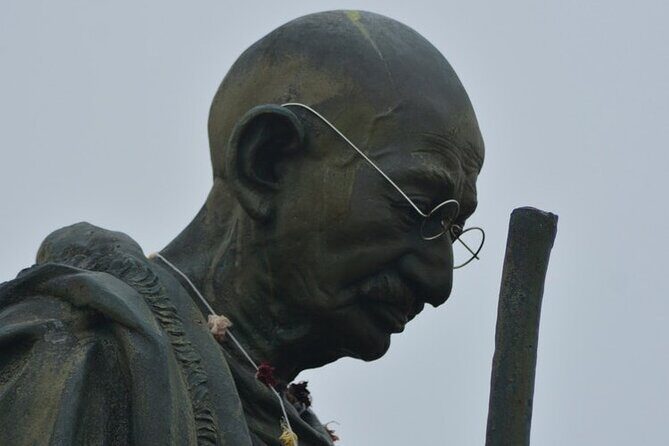
This stop is brief but purposeful. Gandhi statues often act like historical waypoints for later civic stories. Here, it’s also a chance to slow down and notice how public art sits within a lived space, not a museum pedestal.
If it’s busy, just step aside for a minute so your audio is clear and you can focus on the surroundings.
Stop 3: Canadian Museum for Human Rights
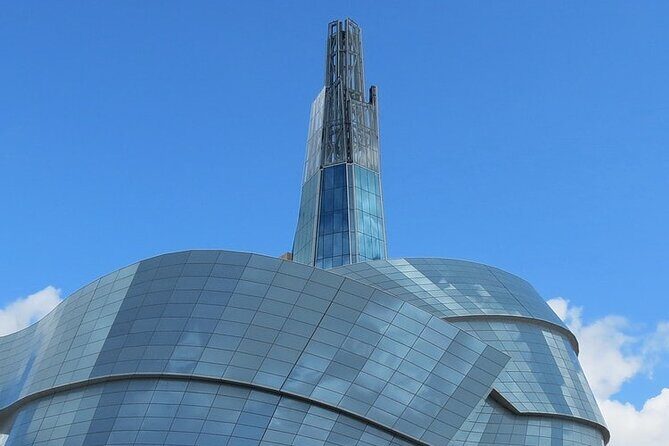
You’ll look toward the big landmark building: the one that looks like a tower wrapped in glass. The audio helps you connect the architecture to the purpose—one of those stops where the building size can distract you until the story gives it meaning.
This is a good moment to decide: if you want exterior photos only, you can keep moving. If you want to add time for photos from multiple angles, this stop is a natural pause.
Stop 4: Shaw Park (behind the scoreboard)
Across the street on your left is Shaw Park, with you positioned behind the scoreboard. It’s an example of how The Forks isn’t frozen in history—it’s also a place for sports and regular events.
Keep this in mind if you’re expecting everything to be “historic buildings.” The tour uses a real-world mix on purpose.
Stop 5: HIVE FIVE Sculpture
You’ll see what looks like five airplane wings planted in the ground—this is the HIVE FIVE sculpture. Art like this is easier to appreciate when you know what you’re looking at, and the audio gives that quick explanatory lens.
If you like modern public art, don’t rush. Stand, listen, then look again with the new meaning.
Stop 6: Red River
The tour pivots to the river. You’ll be looking at the Red River, and the audio covers the river’s origin in a way that connects geography to why Winnipeg’s heart grew here.
Practical note: river areas can be breezy. If you’re visiting in shoulder season, a light layer is worth it even if the city feels mild.
Stop 7: Esplanade Riel
Next comes the bridge area. The Esplanade Riel Pedestrian Bridge connects The Forks to Winnipeg’s broader waterfront life. Bridges make great audio stops because they control your viewpoint—suddenly you’re looking both left and right, with the story controlling the pace.
Stop 8: The Forks National Historic Site
You get a closer look at a semi-circular cement feature along the banks (sometimes partially submerged depending on water level). The audio explains what it is, and this is one of the “this is why the ground matters” stops.
If the water level is different than you expect, don’t worry. The description is already built around variation.
Art, trails, and the port: where the route gets scenic

After the core landmarks, the tour moves into artwork and river infrastructure that feel very “place-based.”
Stop 9: Manitoba Children’s Museum
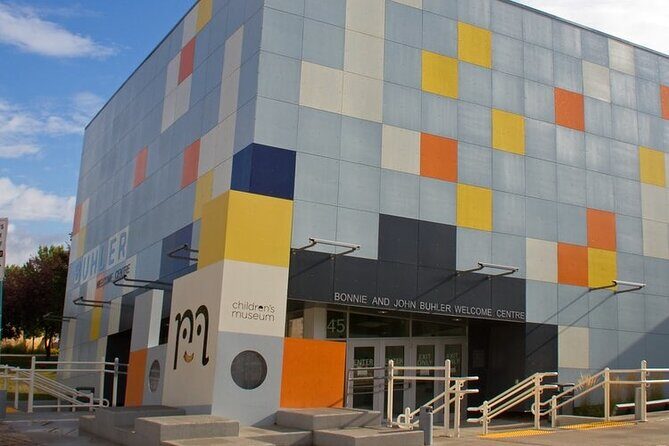
This is a family-friendly stop that also signals the tour’s broader goal: making history feel reachable. Even if you’re not traveling with kids, it adds a human scale to a site that can otherwise feel like only big institutions.
Think of it as a reset: after museums and monuments, you get something playful and local.
Stop 10: Oodena Celebration Circle
This is another distinct feature you’ll notice right away. The audio frames it in a cultural and community context, which helps you interpret the space beyond what your eye catches at first glance.
Stop 11: Forks Historic Rail Bridge
Now you’re on the connector of eras. The Forks Historic Rail Bridge traces origins back to 1888, with audio covering its early purpose as a wooden train bridge for access.
Rail history can feel abstract until you connect it to real locations. This stop does that work fast.
Stop 12: Niimaamaa
Ahead is Niimaamaa, a giant sculpture. The audio says the name means something significant (the tour text notes it as a name meaning…), and the point is to treat the sculpture like a landmark, not a roadside decoration.
Stop 13: Niizhoziibean trail (two rivers)
You enter the Niizhoziibean trail. The audio explains that “two rivers” is the meaning in Ojibwe (spelled in the tour text as Oh-jib-way) and connects it to honoring Winnipeg.
This is one of the best parts for readers who want the tour to go beyond surface-level facts.
Stop 14: The Forks Historic Port
The Forks Historic Port ties the walking route back to trade and movement. You’ll hear how this landing spot was used for earlier connections, making the river feel less like scenery and more like infrastructure.
Stop 15: The Forks Market
Finally, you loop into the market building, and the audio gives context for how it started and why it became such a visitor magnet. Even if you’ve seen markets before, this one sits in a place loaded with transportation and trade themes.
This stop is also a good time to grab a snack if you want to take advantage of the walk while you’re there.
Culture and institutions: theatre, terminals, and everyday city life
The tour keeps surprising you by mixing major institutions with smaller but meaningful spaces.
Stop 16: Manitoba Theatre for Young People (MTYP)
You’ll be introduced to Manitoba Theatre for Young People, known as MTYP. The audio notes the company was established in 1965 under an earlier name, and that origin story helps you see why a theatre belongs in a historic district.
This stop also works for adults. Theatre is part of community memory, even when it’s not the loudest landmark on the route.
Stop 17: Johnston Terminal
A beige brick building with red-paned windows marks the Johnston Terminal stop. The audio covers that it’s been around since the early days of Winnipeg’s rail era (the tour description points to its early history).
If you’re the kind of traveler who likes architecture, you’ll probably pause here longer than the average 5 minutes.
Stop 18: Public Orchard & Urban Garden
You’ll notice a cluster of trees that the tour frames as special. This stop is a reminder that the “heart” of Winnipeg also includes how people grow food, shade paths, and shape public space.
It’s a great breather after terminals and bridges—more human scale, more walking comfort.
Stop 19: Variety Heritage Adventure Park
This is the colorful playground stop. The audio frames it as a creation with an intentional purpose, which makes the park feel like part of the city’s story instead of just a place to burn energy.
If you’re traveling without kids, you can still enjoy it as a window into how the site serves multiple ages.
Stop 20: Path of Time
Look left for a circular stone area and step inside (figuratively, since you’ll still be following the tour’s directions). The audio calls it the Path of Time, a chronological way to think about what you’re walking through.
This is the stop that helps the whole route click into place. After this, the rest feels more connected.
Finishing at CN Stage and Field
Stop 21: CN Stage and Field
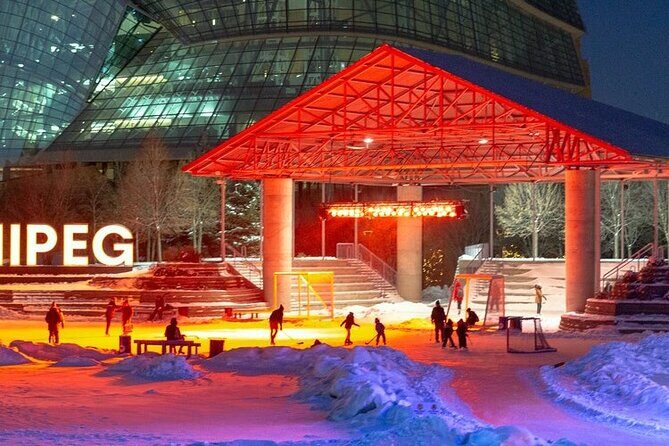
The final point is the CN Stage and Field, a large stone stage with a red roof. The audio notes this area has hosted events over time, tying the historic district to the here-and-now.
When you finish back at The Forks Market, you’ll have a satisfying sense of a complete loop, not just a random scatter of landmarks.
The small “not-a-stop” time that makes this tour work
The route notes include several nearby areas where the tour doesn’t force you to stop. That’s actually a smart design choice. It gives you room for personal pacing—linger by the river, take a longer look at a sculpture, or just rest your legs.
Use that flexibility. The tour’s strength is freedom with structure, so don’t fight the layout—flow with it.
Best for who? When this audio walk really clicks
This tour suits you if:
- You want a low-effort, self-guided way to understand what you’re seeing at The Forks
- You like shorter chapters instead of one long lecture
- You’re visiting for a limited time and want an efficient way to cover core highlights
- You prefer no crowds/time constraints over a scheduled guided tour
It’s less ideal if:
- You hate using a smartphone map while walking
- You want a traditional guided group experience with real-time answers
- You’re expecting included museum/attraction admissions
Quick FAQ for planning your visit
FAQ
Is this tour in English?
Yes. The tour is offered in English.
How long does the The Forks Historic Site smartphone audio tour take?
It takes about 1 hour 30 minutes to 2 hours, approximately.
Where do I start and where do I finish?
The tour starts at The Forks Market and ends back at the same meeting point.
Is internet needed during the tour?
No. You’re instructed to download on Wi‑Fi before, and no signal is required during the tour.
Do I need tickets to visit the nearby attractions?
Attraction tickets are not included.
Do I need headphones?
Headphones are not included. Audio will play from your device speaker too, so headphones are optional.
How many devices can my group use?
The number of travelers you select is the number of devices you can download the tour to.
Does the audio play automatically?
Yes. The audio commentary automatically plays at each point of interest when you get close.
Is the tour private?
Yes. It’s a private tour/activity, and only your group will participate.
Where is the tour located?
It’s in Winnipeg, Canada, at The Forks Historic Site, starting at The Forks Market (1 Forks Market Rd).
Can I cancel for a full refund?
Free cancellation is available. You can cancel up to 24 hours in advance for a full refund.
Should you book this The Forks audio tour?
If your goal is to understand The Forks without hiring a live guide and without being stuck in a group schedule, I’d book it. The combination of live GPS, autoplay audio, and a walking route that fits into about 1.5–2 hours makes it a smart use of time.
If you’re the type who struggles with phone maps while walking, practice before you start and download everything on Wi‑Fi. Once you’re comfortable with that, you’ll get a genuinely useful overview of Indigenous roots, trade-era changes, and modern Winnipeg community life—one stop at a time.