REVIEW · VANCOUVER ISLAND
Victoria Shore Excursion: Whale-Watching Cruise with Expert Naturalist Guides
Book on Viator →Operated by Five Star Whale Watching · Bookable on Viator
The sea can feel personal here. I like the focus on real marine science, plus the chance to spot orcas and other local wildlife with two onboard naturalist guides. The main catch: your route and sightings depend on the whales’ timing, so no one should treat this as a guaranteed whale-count day.
This is built for cruise passengers. You depart from the Victoria Harbour Airport area and you’re back with time to get onboard, thanks to a worry-free plan if anything runs late. If you get seasick easily, still plan ahead—this is designed to be smooth, but it’s still open water.
In This Review
- Key Points at a Glance
- Why This Victoria Whale Cruise Works So Well for Cruise Days
- Meeting at Victoria Harbour Airport: Simple Start, Smooth Boarding
- The Boat Experience: Fast, Stable, and Made for Whale Viewing
- Stop 1: Five Star Whale Watching and the Orca-Spotting Logic
- Stop 2: The British Columbia Sailing Portion and Better Viewing Moments
- What You’re Most Likely to See: Orcas, Humpbacks, Seals, and Friends
- The Naturalist Guides: Fast Explanations You Can Use Immediately
- Price and Value: Is $133.71 Worth It?
- Tips to Improve Your Odds (Without Overthinking It)
- Who This Tour Suits Best (and Who Might Reconsider)
- Should You Book This Victoria Whale-Watching Cruise?
- FAQ
- FAQ
- How long is the whale-watching cruise?
- Where do I meet for the Victoria shore excursion?
- Is pickup included?
- What language is the tour offered in?
- What kinds of wildlife might I see?
- Will the cruise run in bad weather?
- How many people are on the boat?
Key Points at a Glance
- Two onboard naturalist guides help you read the water fast
- Orca researcher Ron Bates may join on some departures
- Route changes daily based on where whales are active
- Indoor and outdoor seating for comfortable viewing
- Small group size (max 40 travelers) keeps the experience from feeling chaotic
- Worry-Free return helps protect your cruise schedule
Why This Victoria Whale Cruise Works So Well for Cruise Days
This tour is short on paper—about 3 hours—but it’s designed to fit a ship day without turning your schedule into a stress fest. The biggest win is how straightforward it is: you start near the cruise area and you end back at the same meeting point, with built-in help to get you safely to your ship on time.
I also like that the operation keeps the group to 40 travelers max. Smaller groups tend to mean fewer bottlenecks at the best viewing spots and less time waiting around when the boat is searching for animals. You’ll feel the crew’s rhythm: find the whales, stop, explain, then move again.
One practical consideration: the sea and the whales decide the day. Your cruising route can shift based on whale activity, so you’ll want to keep expectations flexible. That doesn’t make it worse—nature is the whole game—but it helps you stay calm if the first stop isn’t the action show you hoped for.
You can also read our reviews of more boat tours in Vancouver Island
Meeting at Victoria Harbour Airport: Simple Start, Smooth Boarding
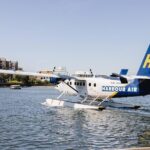
You’ll meet at 950 Wharf St, Victoria, BC (Victoria Harbour Airport), and the activity ends back at the same meeting point. That “back to where you started” setup matters on cruise days, because it reduces the odds you’ll get stranded by confusion, traffic, or a last-mile scramble.
The tour notes also emphasize easy logistics: it runs in English, it allows service animals, and it’s in a spot that’s near public transportation. Plus, with smooth boarding mentioned by passengers, you’re not standing around forever before the boat even leaves the dock.
What I’d do: wear layers and keep a dry layer handy. Even on a “good weather” day, ocean air can turn chilly fast, and comfortable shoes help when you’re moving between deck areas.
The Boat Experience: Fast, Stable, and Made for Whale Viewing
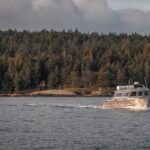
This isn’t a sleepy sightseeing ferry. The boats are designed specifically for whale watching, and the ride is described as smooth, fast, and stable, with comfortable indoor and outdoor seating.
That mix is a big deal for two reasons. First, you can switch to warmth when the wind picks up. Second, when you’re hunting animals, you don’t want to be stuck indoors waiting for a miracle moment—you want to be able to step outside when the captain signals that something’s happening.
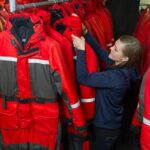
From the onboard comforts mentioned in passenger feedback, it’s also the kind of outfit that thinks about the “small but important” things: warm jackets on cooler trips, and hot drinks like coffee or hot chocolate. That’s not glamorous, but it keeps you focused on the whales instead of fighting the weather.
Stop 1: Five Star Whale Watching and the Orca-Spotting Logic
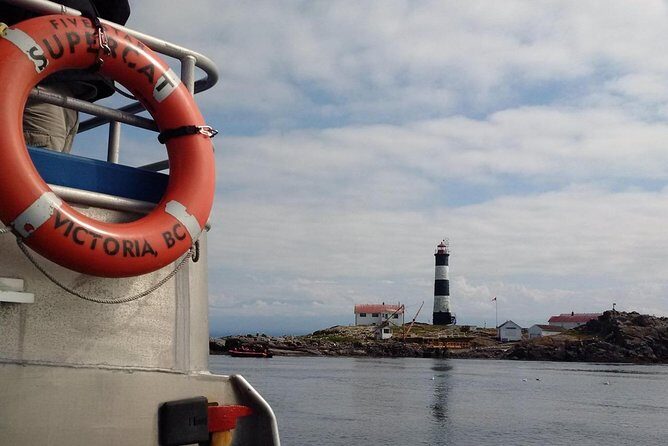
Your first segment is the actual wildlife search—about 1 hour tied to Five Star Whale Watching. The day starts with the understanding that the route changes daily depending on whale activity, and it often includes visits to smaller islands off Victoria before the crew settles into the most promising waters.
Here’s what makes this stop feel meaningful: the guides aren’t just pointing at animals after the fact. They explain the marine ecosystem as you go, from things like jellyfish to seabirds and, of course, whales. If you like learning while you watch, this is where the tour earns its place.
One standout possibility: Ron Bates, a Pacific Northwest orca researcher, may be along for the ride on some trips. If he’s on board, it adds a level of real-world insight that you don’t always get on cruise excursions. Even if he’s not there, the guides are clearly trained to connect what you see to how the ecosystem works.
Passengers also noted that the crew sometimes brings you close to the food chain foundation. One example given in the tour description: the guides may pull kelp onboard so you can see where many marine food webs start. It’s a simple move, but it helps you stop treating “whales” as the only story.
Stop 2: The British Columbia Sailing Portion and Better Viewing Moments
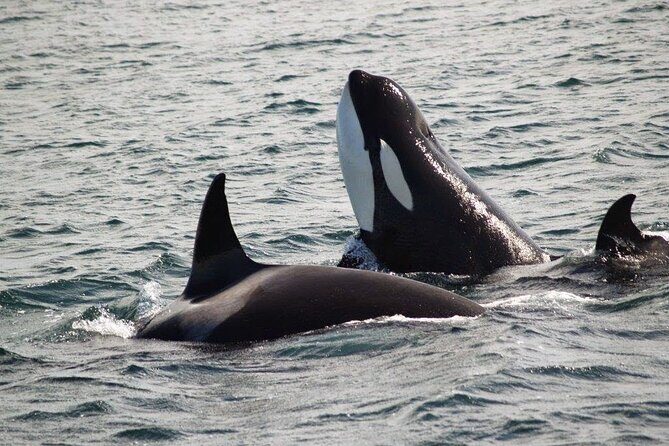
The second segment is where the ride becomes full-on viewing time—about 2 hours in the British Columbia portion of the cruise. The goal here is to keep you in the right places long enough to spot behavior, not just a quick flash of a fin and then nothing.
The tour notes emphasize panoramic views of the Pacific Northwest. I like that because it affects how you watch: you’re not only scanning one direction. You’re checking the horizon, the surface activity, and the areas where birds are reacting.
Passengers have also highlighted how the crew keeps things interesting during travel between stops, instead of treating movement time as dead time. That matters on a short excursion. You want the “in-between” moments to still feel like part of the experience.
You can also read our reviews of more whale watching tours in Vancouver Island
What You’re Most Likely to See: Orcas, Humpbacks, Seals, and Friends
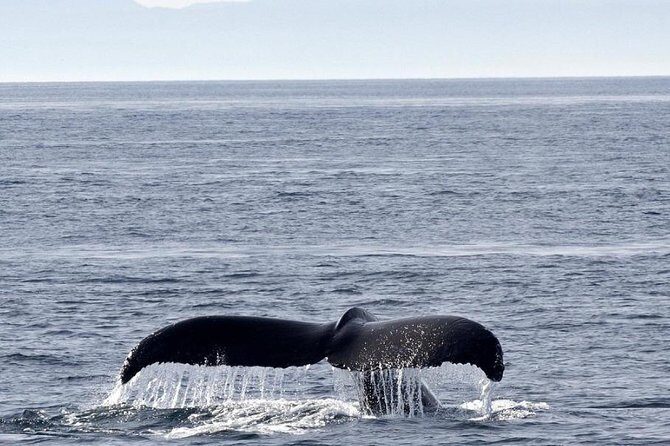
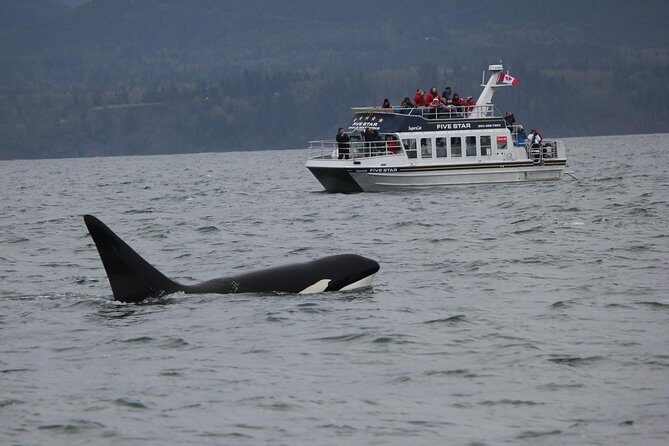
The headline target is killer whales (orcas), but the tour is set up to find more than one species. Based on what’s been reported and what the tour is designed around, you can reasonably expect a good chance at a mix like:
- Orcas and other pod behavior
- Harbor seals
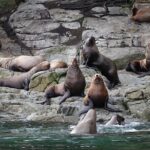
- Sea lions
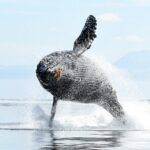
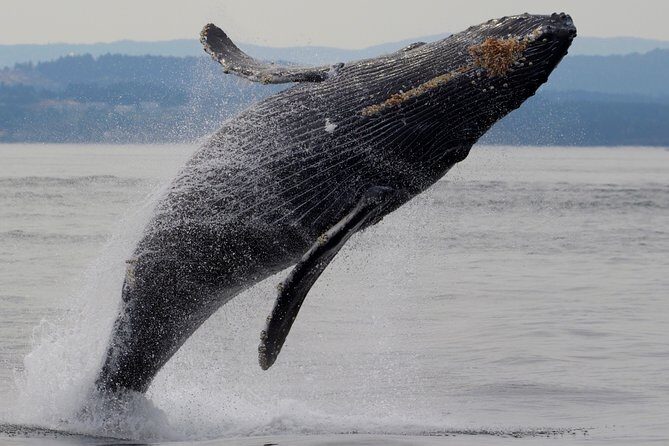
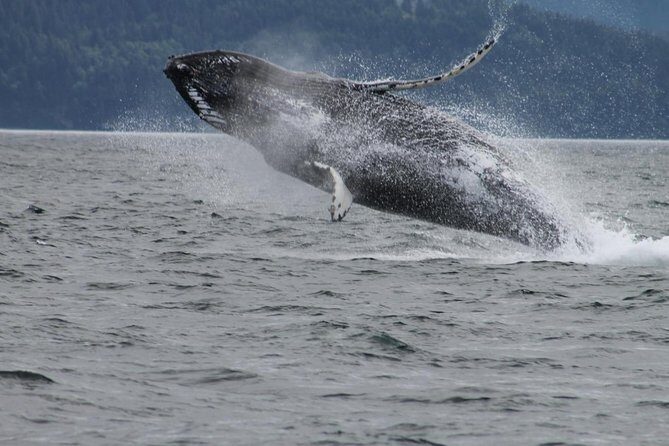
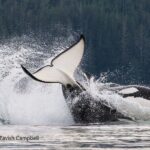
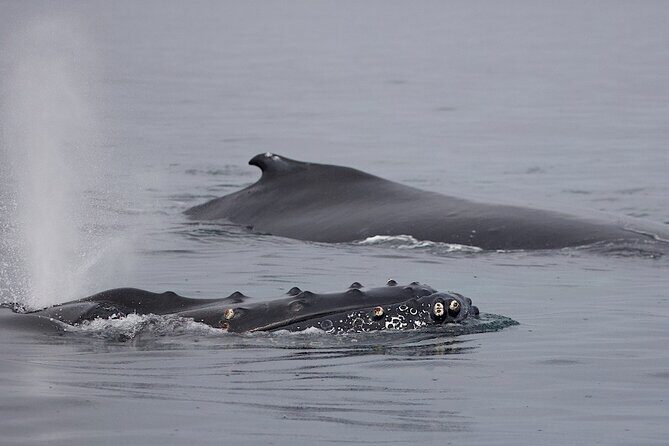
- Humpback whales (including notable diving and tail shows on some trips)
- Minke whales (listed by the tour)
- Plenty of birds and smaller marine life, explained by the guides
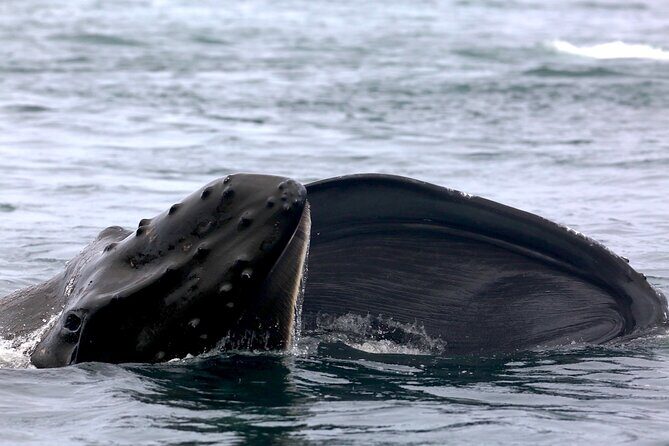
One of the most praised moments in feedback was lunge feeding. That’s the kind of behavior you don’t forget: whales rising with sudden intent, then the splash and the follow-through. It’s not something you can demand from nature, but when it happens, you’ll understand why people plan their whole day around this kind of excursion.
Also, don’t ignore the smaller signs. Guides are there to help you read movement on the water—like where activity is starting, what direction animals are traveling, and what to watch for next. Even if you’re not an expert, they help you become one by the end of the trip.
The Naturalist Guides: Fast Explanations You Can Use Immediately
Two naturalist guides are included onboard, and that’s a smart setup. With two people, one can scan and track, while the other keeps the explanation clear and timely. Passengers praised how quickly the guides point out action and how personal the interaction feels, not robotic or lecture-only.
Names that came up in passenger feedback include Capt Dave and a guide named Emma. The general theme is the same either way: the crew is quick to interpret what you’re seeing and helpful at answering questions while the boat is stopped.
This is where the tour earns its value beyond just “go see whales.” If you want the science part—the why behind the what—this crew helps you connect it on the water, in plain language, without turning it into a classroom.
Price and Value: Is $133.71 Worth It?
At $133.71 per person for roughly 3 hours, the price is not bargain-basement. But it can still feel like good value, mainly because the tour includes the real “ingredients” that usually cost extra on cruise days: time on a whale-focused boat, two guides, and a safety net for getting back to your ship.
The big value multiplier is the worry-free plan. The tour is described as ensuring you return to the Victoria port with ample time for your ship departure. In the extremely unlikely case your ship has departed, they arrange transportation to the next port-of-call. And if your ship is delayed and you can’t make it, money is refunded (per the tour’s terms).
You’re also not paying for a long pre-tour transfer. The departure is within walking distance of the cruise terminal area, so you spend your time on the water instead of in transit. For many cruise travelers, that alone makes the price easier to swallow.
Finally, small-group feel matters. With up to 40 travelers, you’re more likely to have space to move and find a decent angle when the crew locates animals.
Tips to Improve Your Odds (Without Overthinking It)
You can’t control whale behavior, but you can control your comfort and your attention. Here’s how to set yourself up for the best experience:
- Dress in layers. Wind off the water can shift fast.
- Wear comfortable shoes with grip, especially if you’re moving decks.
- Bring a warm layer even if the dock looks mild. People in feedback praised warm jackets, but having your own layer helps.
- Stay alert when the guides call attention to movement. The difference between a “saw something” day and a “wow” day is often timing.
- Ask questions while the boat is stopped. The guides are set up for Q&A and explanation, from jellyfish to seabirds to whale behavior.
If you’re sensitive to motion, plan ahead for seasickness. The boat is described as stable, but ocean conditions still vary by day.
Who This Tour Suits Best (and Who Might Reconsider)
This tour fits a lot of people:
- Couples who want a high-impact wildlife outing without a full-day commitment
- Families looking for an active, guide-led experience that still fits cruise timing
- Whale lovers who care about behavior and ecosystem context, not just distant spotting
It may be less ideal if you want a guaranteed, guaranteed-by-name animal sighting. The route and the encounter timing depend on whale activity, and the tour works with that reality.
If you’re someone who hates any time on the water, even short trips, you’ll want to think twice. Otherwise, it’s a solid, cruise-friendly way to experience the Salish Sea with real interpretation.
Should You Book This Victoria Whale-Watching Cruise?
If your priority is seeing whales from Victoria with a plan that respects cruise schedules, I’d book this. You’re getting two naturalist guides, a whale-focused boat, and a worry-free return approach that’s meant to protect your day.
I’d especially lean toward booking if you want more than a generic wildlife glance. The tour is set up to explain what you’re watching and why it’s happening, and the chance that Ron Bates could be onboard adds a fun layer for orca fans.
The only reason to hold back is if you’re unwilling to accept that nature runs the show. If you can live with route changes and variable sightings, this is a smart value-for-time way to spend a few hours on the Pacific searching for killer whales and friends.
FAQ
FAQ
How long is the whale-watching cruise?
The tour is about 3 hours.
Where do I meet for the Victoria shore excursion?
You meet at Victoria Harbour Airport, 950 Wharf St, Victoria, BC V8W 1T3, Canada.
Is pickup included?
Port pickup and drop-off are not included, though pickup is offered.
What language is the tour offered in?
The experience is offered in English.
What kinds of wildlife might I see?
The tour focuses on orcas and also lists the possibility of spotting harbor seals, minke whales, sea lions, and other native marine species.
Will the cruise run in bad weather?
The tour operates in all weather conditions, so you should dress in layers and wear comfortable shoes.
How many people are on the boat?
The tour has a maximum of 40 travelers.