REVIEW · MONTREAL
Montreal: Discover Reso – The Underground City
Book on GetYourGuide →Operated by Explora Montreal · Bookable on GetYourGuide
If your trip timing is messy, this tour turns Montreal’s indoors into an adventure. You’ll see Montreal’s largest underground network firsthand, plus 33 km of connected spaces—cool on a heat wave, dry on rainy days, and warm when it’s cold outside. I especially love the photo-ready moments the route is built around, like the big indoor landmarks and quick stops for fresh angles and memorable shots. And I really like how Misha, a native Montreal guide, uses real local experience to show you how to move through RESO without getting lost.
Here’s the one drawback to plan for: the route includes a lot of walking and stairs, so it’s not a fit if you have low fitness or mobility needs. It also isn’t set up for strollers, luggage, or wheelchair access.
In This Review
- Quick hits before you go
- Why the Underground City feels like a second Montreal
- Meeting at Complexe Desjardins: the fountain start that keeps you on track
- Desjardins to souvenirs: the quick way to understand how RESO works
- World Trade Centre stops: Berlin Wall piece and God of the Sea
- Metro 101 and a short ride: learn the system, not just the sights
- Cathcart Terrace and Biergarten: comfort breaks that don’t derail the pace
- Central Station and the ice rink at 1000 de la Gauchetière
- Eaton Centre Time Out Market and Place Montreal Trust: practical stops for real breaks
- Cathcart Terrace to Les Cours Mont-Royal: architecture you can feel
- The Ring window: stepping outside for a historical frame
- Barbie Expo and selfie zone: the funny, light side of RESO
- Espresso and juice in the tunnels: tiny fuel, big momentum
- What makes the 2 hours feel worth it
- Who should book this tour (and who shouldn’t)
- Price and logistics: simple, flexible, and beginner-friendly
- Should you book Discover RESO Underground City?
- FAQ
- Where does the tour meet?
- How long is the Underground City tour?
- What languages are offered?
- How big is the group?
- Is ice skating included at the 1000 de la Gauchetière rink?
- What are the main restrictions for participants?
Quick hits before you go
Small group (10 or fewer) with a real local guide
A photo-focused route with selfie-friendly zones and big visual landmarks
Metro 101 crash course plus a short ride so you can keep exploring afterward
Weather-proof convenience: cold, rain, and heat waves are the whole point
Stop highlights include the Berlin Wall piece, Central Station, and the Ring window
Ice rink time at 1000 de la Gauchetière, plus an espresso or juice recharge in the tunnels
Why the Underground City feels like a second Montreal
Montreal’s underground network is not just a shelter from winter. It’s a whole grid of malls, transit connections, public spaces, and surprises—so you can explore more of the city with less stress. This tour is built around that idea: you get an organized route through major “read me fast” zones, plus the storytelling that makes the place feel more human than just corridors.
The big value here is orientation. RESO can look confusing even when you try to follow maps. With a guide, you learn what to notice, where the key hubs are, and how to connect back to surface Montreal when you want the skyline or architecture. You also get lots of camera chances, which matters because the underground city isn’t one long hallway. It’s windows, fountains, artworks, station halls, and playful photo stops.
And yes, weather is a major selling point. On a day when walking outside sounds unpleasant, this tour keeps you moving indoors without feeling like you’re stuck in a food court.
You can also read our reviews of more city tours in Montreal

Meeting at Complexe Desjardins: the fountain start that keeps you on track
The tour begins at Complexe Desjardins (175 René-Lévesque Boulevard West) and it’s one of the easiest meeting points in the downtown core. Once you’re inside, you go downstairs to the main atrium near the large water fountain, where you’ll find your guide waiting by the benches.
This matters more than it sounds. In underground spaces, “meet near the entrance” can turn into a scavenger hunt. The fountain is a clear landmark, and it’s also right by the food court area where you’ll find coffee spots and restrooms. For a first-timer, that reduces stress fast and makes the tour feel smoother from minute one.
What I like about this start: it keeps the tour practical even if you arrive cold, wet, or flustered.
Desjardins to souvenirs: the quick way to understand how RESO works
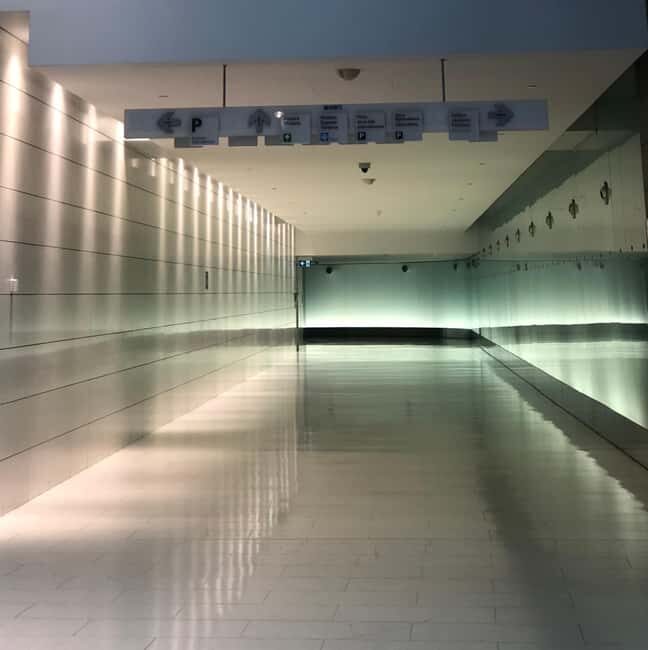
After the meeting area, you’ll move into the parts of the network that help you understand how it’s organized. The tour includes a visit to a local souvenir shop, which is a smart early stop—because it gives you a sense of what kinds of places RESO connects you to, not just monuments.
You’ll also see a historic bank turned café. That kind of adaptive reuse is one of Montreal’s quiet talents. It’s not only about looking at a building; it’s about noticing how older spaces get a new daily life. It makes RESO feel less like a transit tunnel and more like a real neighborhood, just under the street.
Tip for your photos: early in the tour, your camera skills are still at full power. Use this segment to practice angles and wide shots before you get tired later in the route.
World Trade Centre stops: Berlin Wall piece and God of the Sea
One of the most memorable cultural stops is at the World Trade Centre of Montreal. Here you’ll see a piece of the Berlin Wall—a heavy, historic object placed in a very everyday downtown setting. It’s the kind of moment that makes the underground city feel connected to larger world history.
The tour also includes the God of the Sea statue. That combination works well: the Berlin Wall gives context and weight, while the statue gives you visual identity. Together, they remind you that RESO isn’t only shopping and stairs—it’s also art, symbols, and curated moments.
One practical consideration: underground lighting can vary by hall, so if you like night-style photos or very crisp details, keep your camera settings in mind (or use portrait/wide modes that handle mixed indoor light).
Metro 101 and a short ride: learn the system, not just the sights
This tour includes a quick Metro 101 crash course, followed by a short Metro ride. That’s a big deal for value because it turns your 2-hour experience into ongoing usefulness. Once you understand basic routes and station logic, you’ll feel less dependent on taxis or rideshare for short hops.
The underground city is easiest when you know how transit connects the dots. This segment gives you that mental map, so you don’t just come away with photos—you come away with the ability to navigate confidently.
From the way Misha runs the route, the focus stays on helping you keep going afterward, not just seeing highlights and leaving. In my view, that’s what separates a good tour from a checklist.




Cathcart Terrace and Biergarten: comfort breaks that don’t derail the pace
Next up, the tour takes you through Cathcart Terrace restaurant and Biergarten. This is one of those places that helps you picture daily life in RESO: people stop, meet friends, grab a drink, and keep moving. Even if you don’t stop for a meal right here, it’s useful to see the social side of the network.
It’s also a natural checkpoint in the route. After long corridors and major architectural stops, you’ll appreciate locations that feel less like transit and more like hangout spaces.
If you tend to get hungry or low-energy, plan your energy around the tour’s scheduled recharge stop later in the tunnels. You don’t need to overthink meals during the tour because food is available at various points, even though meals aren’t included.
Central Station and the ice rink at 1000 de la Gauchetière
The tour includes Central Station, the city’s transit hub. Seeing it as part of RESO navigation is practical. You learn the junction points—the places that help you switch between underground routes and other lines without guesswork.
Then comes 1000 de la Gauchetière Ice Rink. The rink is described as indoor and open year-round, and the tour includes ice skating there. If ice skating is your priority, check the rink’s schedule in advance, since timing can affect what you can do during your visit.
What I like here: it’s a genuine Montreal detail. Even when you’re indoors, the city still carries the seasons. In winter, it’s a classic. In shoulder seasons, it’s a fun twist.
Photo tip: the rink area often gives you strong visuals—people, movement, reflections. If you’re bringing a camera, this is one of the best spots to get action shots.
Eaton Centre Time Out Market and Place Montreal Trust: practical stops for real breaks
The itinerary also includes Eatons Center (Time Out Market). This is useful for two reasons. First, it’s a recognizable place where you can refuel on your own after the tour. Second, it helps you understand RESO as a day-to-day route, not just a set of monuments.
You’ll also explore Place Montreal Trust, another component of the downtown underground ecosystem that helps you connect different sections of the network. You start noticing how the underground paths link commercial spots, transit, and landmark areas.
If you’re the type who wants a plan for later meals or a place to grab a quick bite on your own time, Time Out Market is exactly that kind of anchor.
Cathcart Terrace to Les Cours Mont-Royal: architecture you can feel
After the transit and shopping zones, you’ll shift into a more architectural mood with Les Cours Mont-Royal. This part of RESO feels more elegant. The tour focuses on the stunning architectural environment, and it’s a good counterbalance to the busier transit segments.
Why it matters: when you only travel by street level, you might miss how Montreal designs indoor public space. Here you see that indoor doesn’t mean boring. It can feel airy, polished, and designed for lingering—just not always in the way you’d expect from a mall.
If you care about style and details, this is one of the segments where you’ll slow down just to look.
The Ring window: stepping outside for a historical frame
Then you step outside to see The Ring, a historical window that frames 200+ years of downtown history. This is one of those “you’ll understand it faster in person” moments. The Ring gives you a visual storyline that links old downtown to the present, and stepping outside makes the whole underground experience feel less like a sealed world.
Because it’s a brief exterior moment, dress accordingly even if the rest of the tour is indoors. You may also want your camera ready, since the outdoor shot can be the easiest one to get clean and well-lit.
Barbie Expo and selfie zone: the funny, light side of RESO
Not everything down here needs to be serious. The tour includes the infamous Barbie Expo, which is described as a photo-lover’s paradise, plus access to a selfie zone.
This is a smart move for a 2-hour tour. After historic objects and station halls, the Barbie Expo gives you playful energy. You get a break from the “look but don’t touch” feeling. And if you’re traveling with friends, this is often where laughter happens and photos get shared on the spot.
If your idea of travel photography includes silly or unexpected scenes, you’ll enjoy this part more than you expect.
Espresso and juice in the tunnels: tiny fuel, big momentum
In the tunnel segments, the tour includes an espresso or juice tasting stop. This is small but effective. Underground walking can wear you out faster than you think, and a quick drink keeps you from fading before the final stops.
I like this approach because it doesn’t turn the tour into a meal event. It keeps the pace steady while acknowledging real energy needs.
Also, it’s a good time to ask Misha questions about what to do next. With the map in your mind from earlier Metro 101 moments, you’re more likely to remember and act on suggestions afterward.
What makes the 2 hours feel worth it
The tour is about 2 hours, and it covers plenty of ground. For $29 per person, the value comes from the mix of:
- Major landmarks (Complexe Desjardins, Central Station, World Trade Centre)
- Distinct visual moments (Berlin Wall piece, God of the Sea, The Ring)
- Practical skills (Metro 101 and orientation through RESO)
- Photo-friendly stops (Barbie Expo, selfie zone, fountain landmark)
- A fun Montreal element (year-round indoor rink included in the plan)
This isn’t a museum-only experience. It’s a practical walkthrough that still feels story-driven, guided by lived city knowledge.
One reason the reviews (and repeat bookings) make sense is that the group size stays small—10 participants or fewer—so you’re not lost in a crowd. With a smaller group, you can ask questions, get pointed to the right routes, and keep up with the guide’s pacing.
Who should book this tour (and who shouldn’t)
You’ll love this if:
- You want a fast way to understand RESO without wandering.
- You’re traveling in cold, rainy, or very hot weather and you want to stay comfortable.
- You like photography and want clear, scenic moments rather than random stops.
- You want to learn just enough Metro logic to keep exploring after the tour.
You should skip or choose something else if:
- You use a wheelchair or need wheelchair-friendly routing (this tour isn’t suitable).
- Your fitness level is low, or you don’t want a route with walking and stairs.
- You need to bring a stroller or large luggage, since these are not allowed.
- You’re traveling with young kids; it’s not suitable for children under 5.
- You need unaccompanied-minor care; the tour doesn’t accept unaccompanied minors.
Price and logistics: simple, flexible, and beginner-friendly
At $29 per person for 2 hours, this is priced like a practical city orientation stop, not a splurge. What makes it feel fair is the combination of guided navigation plus multiple major stops. You’re not paying just to see one building. You’re paying to learn how to move through a system.
There’s also a free cancellation option up to 24 hours in advance for a full refund, plus a reserve now and pay later style of flexibility. If your Montreal weather depends on the day, that kind of flexibility helps you plan without panic.
Should you book Discover RESO Underground City?
Book it if you want to feel confident navigating downtown Montreal’s underground maze in a short time. The tour is built for comfort in bad weather, and it adds value by teaching Metro basics, not just pointing at landmarks. The small group size and Misha’s friendly, story-focused approach also make it feel personal rather than rushed.
Skip it if stairs and lots of walking are hard for you, or if you need accessibility accommodations. If that’s your situation, you’ll likely get more frustration than enjoyment.
If you’re arriving in Montreal for the first time and want a smart first-day activity, this is one of the best bets for getting your bearings fast.
FAQ
Where does the tour meet?
The meeting point is Complexe Desjardins, 175 René-Lévesque Boulevard West, Montréal, QC H2X 3Y2. After you enter, head downstairs to the main atrium near the large water fountain.
How long is the Underground City tour?
The tour lasts about 2 hours.
What languages are offered?
The tour is offered in English and French.
How big is the group?
The group is limited to 10 participants.
Is ice skating included at the 1000 de la Gauchetière rink?
Ice skating at the 1000 de la Gauchetière Ice Rink is included, and the rink is described as open year-round. You should check the rink schedule in advance if you’re specifically interested in skating.
What are the main restrictions for participants?
Baby strollers, luggage or large bags, and unaccompanied minors are not allowed. It’s not suitable for children under 5 years old, wheelchair users, or people with low level of fitness.