REVIEW · TORONTO
Toronto’s Waterfront: a Smartphone Audio Walking Tour
Book on Viator →Operated by Tripvia Tours · Bookable on Viator
Smartphone audio makes Toronto feel like yours. This GPS-led waterfront walk strings together Sugar Beach, the Music Garden, and iconic skyline spots, with narration that triggers as you get near each point of interest. GPS-led directions and self-paced stopping make it feel less like a scheduled “tour” and more like a smart walk you can shape around your day.
I love the low price for what you get, especially since many stops are free to enjoy on your own. I also like that the audio comes with location-based trivia, so your eyes stay on the waterfront instead of drifting to your phone screen.
The main drawback is you’ll need your own smartphone, and you should plan on paying separately if you want to go inside CN Tower or Rogers Centre since those tickets aren’t included.
In This Review
- Key highlights you’ll feel right away
- Why a phone-guided waterfront walk works so well
- Getting started at Sugar Beach (and why the route feels easy)
- How the GPS audio tour actually plays out
- What you’ll see stop-by-stop along the waterfront trail
- Stop 1: Sugar Beach
- Stop 2: Lower Jarvis Street & Queens Quay East
- Stop 3: Redpath Sugar Toronto
- Stop 4: One Yonge Street
- Stop 5: Yonge Street & Queens Quay West
- Stop 6: Statue of Jack Layton
- Stop 7: York Street & Queens Quay West
- Stop 8: The Power Plant
- Stop 9: Simcoe WaveDeck
- Stop 10: CN Tower (ticket not included)
- Stop 11: Rogers Centre (ticket not included)
- Stop 12: HTO Park
- Stop 13: Spadina Avenue & Lake Shore Boulevard West
- Stop 14: Toronto Music Garden
- Stop 15: Queens Quay West & Bathurst Street (view of Billy Bishop Airport)
- Stop 16: Little Norway Crescent
- Stop 17: Waterfront Trail
- Stop 18: HMCS NCSM York
- Stop 19: Martin Goodman Trail
- Stop 20: Princes’ Gates (end)
- Price and value: why $8.21 feels fair here
- Practical tips to make it smooth
- Who should book this (and who might not)
- Should you book the Toronto Waterfront smartphone tour?
- FAQ
- How long is the Toronto Waterfront Smartphone Audio Walking Tour?
- Where does the tour start and end?
- How much does it cost?
- What language is the audio tour offered in?
- Do I need a live internet connection during the walk?
- Does the tour include headphones?
- Is this a group tour with other people?
- Are attraction tickets included for CN Tower and Rogers Centre?
- Can I start and stop the tour when I want?
- Is there any interactive part?
Key highlights you’ll feel right away
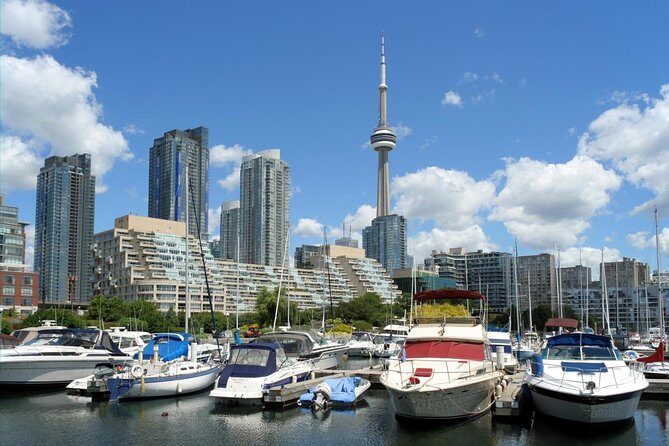
- Autoplay when you reach each spot: the guide plays automatically as you get close.
- Live GPS map: you can see where you are and what’s next without guessing.
- Pay less, see more: most major photo stops are included with free entries at those sites.
- Trivia game built into the route: tap your guess once the commentary finishes.
- No time pressure: take it slow, pause, or restart whenever you want along the route.
Why a phone-guided waterfront walk works so well
Toronto’s waterfront can be visually loud. You’ve got the skyline, parks, stadiums, art installations, and constant motion from people and transit. This tour works because it gives you structure without forcing you into a crowd.
You’re not chasing a guide’s stride. Instead, you follow the route at your own pace, and the narration plays at each stop when you’re close. That turns the walk into a set of “headlights”—you’ll know what you’re looking at and why it matters, without standing in one place for too long.
And at about $8.21 per person, the value is hard to ignore. Even if you only catch half the stops, you’re still paying for a simple way to connect the dots between waterfront history, architecture, and modern Toronto sights.
You can also read our reviews of more walking tours in Toronto



Getting started at Sugar Beach (and why the route feels easy)
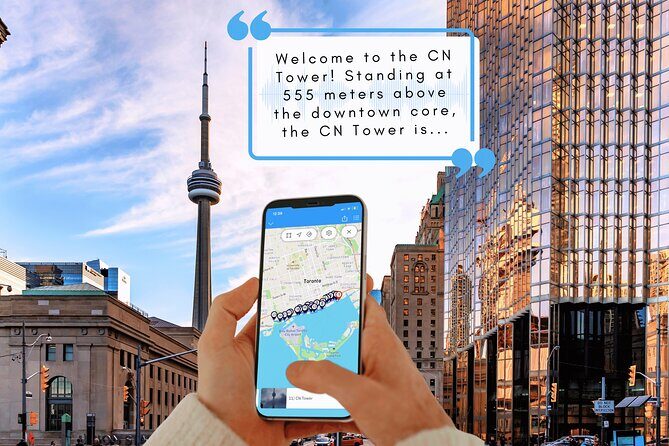
The tour starts at Sugar Beach, in the St Lawrence-East Bayfront / The Islands area (M5A 1J1). The end point is Princes’ Gates at 800 Lake Shore Blvd W (M6K 0E1), the entrance area for the Canadian National Exhibition (CNE).
One nice practical touch: the experience is very similar whether you go in one direction or the other. So if you’re starting your day on the east side and want to work your way west—or the reverse—you’re not locked into one single flow.
Also, this is listed as running 12:00 AM to 11:30 PM. That matters because the waterfront looks different at different times, and you can pick the lighting that suits you. Morning gives you calm views. Late afternoon can give you that “Toronto postcard” look. Either way, you’re not fighting a tight schedule.
How the GPS audio tour actually plays out

You download the tour before you go using Wi‑Fi, and the walk itself doesn’t require signal or data use. That’s a relief in a city where you might lose service between towers or under certain stretches.
Once you start, the system shows your route and your current location. As you near a stop, the audio guide kicks in automatically. After the narration plays, you’ll get a location-based trivia prompt and you’ll tap your answer on your device.
A small but real decision point: headphones aren’t included. The tour can play audio from your device speaker too, which is handy if you want to stay hands-free and you’re in a quieter pocket. If you want privacy, bring headphones.
Finally, this is private in the sense that only your group participates. You’re not joining a mixed crowd and waiting your turn to hear the next line.
What you’ll see stop-by-stop along the waterfront trail

Most stops are designed as short “hit points”—the descriptions reference about 5 minutes per stop—but the big promise is that there are no time constraints. If you linger at a view, you can. If you want to speed up, you can. The audio doesn’t feel like a sprint.
Here’s what the route covers as you move from Sugar Beach toward Princes’ Gates:
Stop 1: Sugar Beach
This is the launch pad. You begin with the waterfront views and an orientation to what you’re really looking at. The narration sets the scene and points toward major sights nearby—think CN Tower, Rogers Centre, and the general skyline framing you’ll see as you walk.
You’ll also get a mix of elements: water, urban parks, statues, and the kind of waterfront design Toronto is known for. It’s a good first stop because it helps you stop treating the waterfront as scenery and start treating it as a story.
A few more Toronto tours and experiences worth a look




Stop 2: Lower Jarvis Street & Queens Quay East
Now you shift from pure scenery to Toronto’s industrial past. This is where the tour starts explaining how industry helped shape the city’s waterfront, not just how things look today.
If you like walking with a little context—why a street is where it is, why a waterfront developed where it did—this stop is one of the “thread points.”
Stop 3: Redpath Sugar Toronto
You get an iconic factory moment right on the waterfront. The narration points it out and shares the history behind it, tying an old industrial landmark to the modern waterfront around it.
This stop is ideal for photos because the factory vibe gives a different texture than the glass-and-steel views nearby.
Stop 4: One Yonge Street
The tour turns to architecture and media history with a nod to the Toronto Star Building. You’ll learn about the building and its long-time tenant that has produced newspapers since 1892.
Even if you’re not a “newspaper person,” this kind of stop makes the city feel less random. It’s the Toronto you don’t get just by snapping skyline photos.
Stop 5: Yonge Street & Queens Quay West
This stop is all about a famous claim. The narration points out Yonge Street and references a Guinness World Record for longest road.
It’s a quick hit, but it helps explain why Yonge Street is such a big deal in Toronto’s city map—not just a street name.
Stop 6: Statue of Jack Layton
Next, you meet Jack Layton’s statue, along with the Jack Layton Ferry Terminal. The guide connects the waterfront to his legacy and why this location has meaning.
It’s a nice balance: you’re not only learning about buildings and companies—you’re also learning about local public life.
Stop 7: York Street & Queens Quay West
This is where you pause for a viewpoint moment. The narration takes you to a great view of the island, turning the walk into something more like a slow “look here” experience.
If the weather is decent, this kind of stop can be your favorite because it’s less about information and more about perspective.
Stop 8: The Power Plant
The Power Plant Contemporary Art Gallery is next. The tour doesn’t just point it out; it explains why you might want to visit it.
If you’re an art fan, you’ll get enough context to decide whether it’s worth a detour. If you’re not, it still adds variety to the walk—art institutions make the waterfront feel like a working cultural zone, not just a promenade.
Stop 9: Simcoe WaveDeck
This one is visual and a little surprising. The narration points out the Simcoe WaveDeck and tells you about the art piece you can walk on.
This is a stop where you’ll probably spend extra time, because it’s hard to see it and not want to test what you’re standing on—literally.
Stop 10: CN Tower (ticket not included)
CN Tower is the big obvious one. The guide covers it while you stare upward, giving you facts so your attention has something to hold onto besides the height.
Plan your expectations: the tour includes the exterior experience and narration, but the CN Tower admission ticket isn’t included. If you want to go up, you’ll have to buy separately.
Stop 11: Rogers Centre (ticket not included)
You’ll then move to Rogers Centre, home of the Blue Jays. The audio ties it into the waterfront view and why this stadium matters in Toronto’s modern identity.
Same deal as CN Tower: you’ll enjoy the stop from outside or around the area, but tickets to go inside aren’t included.
Stop 12: HTO Park
You stroll through HTO Park and learn about the interesting origin of the name. It’s a small history lesson that makes the park feel intentional, not random.
This stop is helpful when you want “green break” time—an easy moment to slow down and let your legs catch up.
Stop 13: Spadina Avenue & Lake Shore Boulevard West
You get a view of one of Toronto’s most popular and busiest streets. Then you’ll also get the chance to listen to a song from the 80s about the Spadina Bus.
That’s a fun idea because it turns the waterfront walk into something a bit more personal and playful. Not every audio tour mixes facts with culture that directly.
Stop 14: Toronto Music Garden
This is a “meander” stop. You’ll learn about the unique story behind the garden’s design, and the narration helps you understand what you’re looking at while you walk through.
Even if you’re short on time, this is one place where it pays to pause. Gardens are the kind of attraction where context makes the walk feel more meaningful.
Stop 15: Queens Quay West & Bathurst Street (view of Billy Bishop Airport)
Next you get a view of Billy Bishop Airport from the waterfront area. The guide points it out and explains it, so you’re not just spotting planes—you’re placing them in the bigger waterfront picture.
It’s one of those odd Toronto details that feels very specific to the city, which makes it worth including.
Stop 16: Little Norway Crescent
You stop at this small park and learn how it was created to commemorate World War Two. It’s a reflective pause in the middle of the walk.
If you prefer tours that include more than just modern highlights, this stop gives the waterfront a deeper human dimension.
Stop 17: Waterfront Trail
The narration talks about the waterfront trail itself. This is less about a single landmark and more about helping you understand the broader route you’re walking.
It’s a good “keep going” moment. You’ll feel like you’re not just moving between stops—you’re traveling along a waterfront corridor.
Stop 18: HMCS NCSM York
You’ll point out a naval fixture since 1959 and learn about its purpose. It’s history with a real sense of place—waterfront + naval connection tends to make everything feel grounded.
This stop can be a strong one if you enjoy military history or simply want one more side of Toronto beyond the skyline.
Stop 19: Martin Goodman Trail
Now it’s walking rhythm. The tour covers the Martin Goodman Trail, noting that this portion spans the waterfront for over 20 km.
That distance detail helps you appreciate why locals treat these trails as more than attractions—they’re actual walking and commuting space.
Stop 20: Princes’ Gates (end)
You finish at Princes’ Gates. The guide shares details about the gates and the CNE, which takes place annually inside them.
This ending matters because it’s not just a finish line. It sets you up with a ready next step if you’re visiting during the fair season, and it gives your whole walk a logical “arrival” feeling.
Price and value: why $8.21 feels fair here
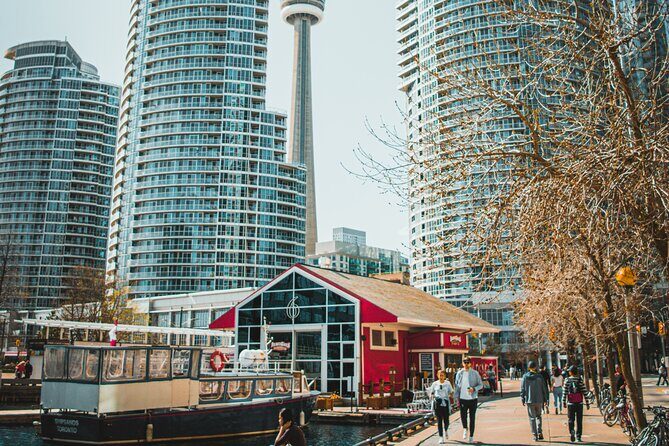
At $8.21 per person, you’re basically paying for three things: (1) a GPS route, (2) guided audio that plays automatically, and (3) a set of curated stops you might not connect on your own.
Most stops are marked as free to experience (many include free admission tickets). So your “cost to learn” stays low, while your “benefit to understand” goes up.
The only extra costs you might face are attraction tickets you choose to add later—CN Tower and Rogers Centre are called out as not included. If you were already thinking about those, plan for that. If you’re not, you can still complete the walk and feel like you got a full waterfront orientation.
Practical tips to make it smooth

- Download the tour on Wi‑Fi before you start, since the experience is designed to work without signal/data during the walk.
- Use the live GPS map to keep your place, especially if you pause for photos.
- Bring headphones if you want quiet audio control, but know the tour can also play through your phone speaker.
- Pick footwear for sidewalks and waterfront paths. This is a walk you’ll notice in your legs if you linger.
- Don’t stress about doing every single stop at exactly the audio timing. There are no time constraints, so slow down where it feels right.
Also, the booking selection matters: the number of travelers you select is the number of devices you can download the tour onto. So if you’re traveling as a couple and want each person to have their own device, set it up accordingly.
Who should book this (and who might not)

This smartphone audio walk is a great fit if you:
- Prefer independent exploring over joining a group
- Want a first-time orientation to Toronto’s waterfront
- Like short, focused stops instead of one long lecture
- Are comfortable following GPS navigation and listening to audio
It may not be your best choice if you:
- Want a fully live, in-person guide who can answer questions on the spot
- Don’t like using your phone for navigation and audio
- Plan to pay for CN Tower or Rogers Centre and want those admissions included (they aren’t)
If you enjoy history mixed with modern Toronto sights—factoids, architecture, public landmarks, and those waterfront art moments—this format matches your style.
Should you book the Toronto Waterfront smartphone tour?
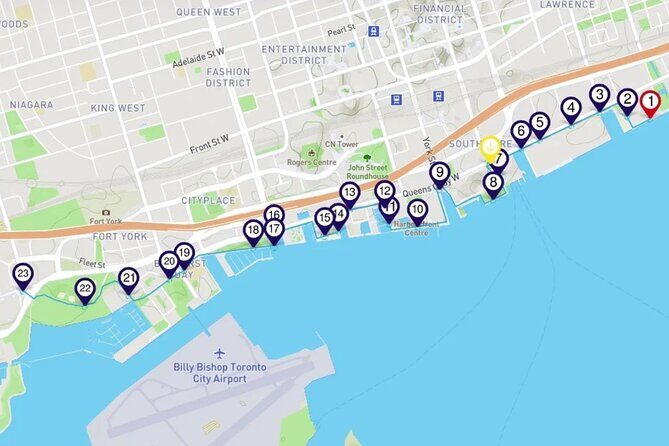
I’d book it if you want a low-cost way to turn the waterfront into a guided story without the rigid pace of a group tour. The autoplay audio, live GPS map, and free-to-enjoy stops make it easy to get real value for the money, and the trivia game is a smart way to keep your attention.
I’d skip it if you only want one or two major attractions and you’re not interested in the rest of the route. Since CN Tower and Rogers Centre tickets aren’t included, you might end up spending extra for the big-ticket items you actually care about.
If your plans are flexible, the tour supports free cancellation up to 24 hours before start time, which is handy if weather or schedules change.
In short: for $8.21, this is one of those practical city walks that helps you see more than you would on autopilot.
FAQ
How long is the Toronto Waterfront Smartphone Audio Walking Tour?
The duration is about 45 minutes to 1.5 hours, though you can take as long as you like with no time constraints.
Where does the tour start and end?
It starts at Sugar Beach (St Lawrence-East Bayfront-The Islands area) and ends at 800 Lake Shore Blvd W, finishing at Princes’ Gates.
How much does it cost?
The price is $8.21 per person.
What language is the audio tour offered in?
The tour is offered in English.
Do I need a live internet connection during the walk?
No. You download the tour on Wi‑Fi before you start, and the tour is designed to work without signal or data during the walk.
Does the tour include headphones?
Headphones are not included. Audio can play from your device speaker too.
Is this a group tour with other people?
It’s a private tour/activity, meaning only your group will participate.
Are attraction tickets included for CN Tower and Rogers Centre?
No. Admission tickets for CN Tower and Rogers Centre are not included.
Can I start and stop the tour when I want?
Yes. The tour is described as stop & start anywhere along the route, and there are no time constraints.
Is there any interactive part?
Yes. After each commentary plays, there’s a location-based trivia game where you tap your guess on your device.