City history walks right in. This smart two-hour Toronto route mixes major landmarks with a few street-level surprises, all guided by Kieran, who turns facts into something you can spot with your own eyes.
I especially like the way the tour keeps moving—about two hours at an easy pace—so you get context fast without feeling stuck. I also like the value: all the listed stops have free admission, so your money goes to the guide, not entry fees.
One thing to consider: since the tour is mainly outdoors and includes a couple of short stops, weather and your comfort with walking will matter. If you hate crowds at downtown intersections, you may want to time your expectations around Dundas Square.
In This Review
- Key highlights you’ll actually feel on the street
- A downtown Toronto walk that gives you bearings fast
- Old City Hall: Romanesque Revival with a clock tower attitude
- Dundas Square (formerly Yonge-Dundas Square): a high-energy intersection with a past
- St. James Cathedral: Gothic Revival lines reaching into Toronto’s skyline
- Market Street and the surprise streets your guide keeps for later
- Kieran’s storytelling: why this tour gets top marks
- Price and value: how $32 turns into a real deal
- Timing, meeting spot, and how to make the start painless
- Who this tour suits best (and who should look elsewhere)
- Should you book this Toronto walking tour?
- FAQ
- How long is the Toronto walking tour?
- What is the price per person?
- What are the main stops on the tour?
- Are there admission fees for the listed stops?
- What time does the tour start and where does it meet?
- Is the tour offered in English?
- How big is the group?
- What is the cancellation window for a full refund?
Key highlights you’ll actually feel on the street
- Small group size (max 15) keeps the walk interactive
- Kieran’s Q-and-A style means you can ask what you genuinely care about
- Free-admission stops let you focus on the stories, not ticket lines
- Landmarks plus added surprises, so the experience doesn’t feel like a checklist
- Downtown focus makes it great for first-timers and short stays
A downtown Toronto walk that gives you bearings fast

If you’re trying to get your bearings in downtown Toronto, a walking tour like this is a practical shortcut. You’re not just looking at buildings. You’re learning what to look for: architectural details, city-planning clues, and why certain places became important.
This one is built around four planned stops, each about 30 minutes, plus a bit of extra wandering where your guide keeps the final streets as a surprise. That structure matters. You’ll spend enough time at each main site to notice the details, but the whole route still fits into a manageable 2-hour window.
There’s also a real value angle here. The listed sights are marked as admission ticket free, which means your cost mostly covers the professional guide and the walking plan that saves you time.
You can also read our reviews of more walking tours in Toronto


Old City Hall: Romanesque Revival with a clock tower attitude
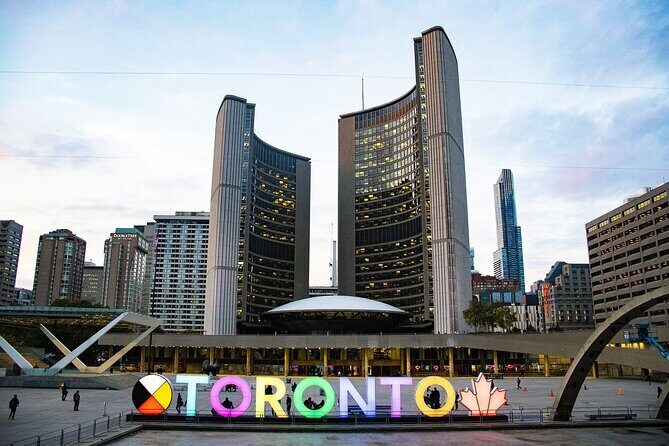
Your first stop is Toronto City Hall’s old home base, completed in 1899. It served as Toronto’s city hall for over 60 years, long before the modern downtown complex you may picture today.
What makes this stop work is that Old City Hall is more than a pretty facade. It’s a snapshot of how power and civic pride were designed in the late 1800s. The building’s Romanesque Revival style shows up in the heavy stone feel and the sense of permanence you get even from street level. The clock tower and the stone carvings are the kinds of details you’ll miss if you walk past without a guide.
You’ll also get a useful bit of present-day context: today, the building is home to courtrooms. That connection—old civic government turning into legal space—helps you understand how downtown reuse shapes a city over time.
Practical tip: if you’re standing outside, slow down for the facade details. Look for the design rhythm around the entry areas and the way the tower dominates the skyline line you’re seeing.
Dundas Square (formerly Yonge-Dundas Square): a high-energy intersection with a past
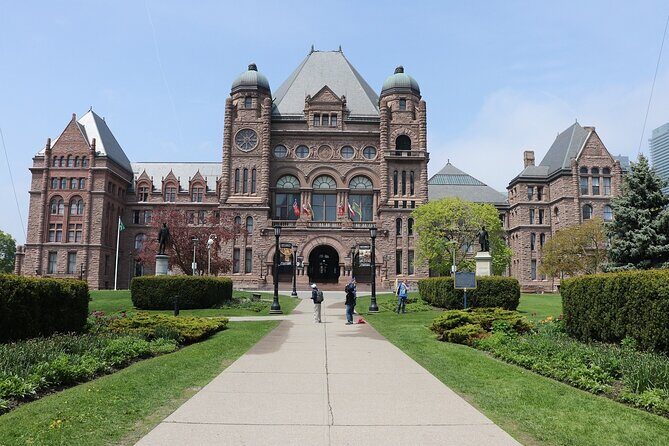
Next is Sankofa Square, which is the area many people still associate with Dundas Square (previously Yonge-Dundas Square). This is at the busy intersection of Yonge and Dundas—one of the easiest places to orient yourself in the core.
Dundas Square opened in 2003, and your guide will frame it as a hub for events, concerts, and public gatherings. If you’ve ever been to Times Square in New York, you’ll understand the comparison—big screens, lots of attention, and a constant flow of people.
Here’s the part I find most useful for visitors: this isn’t just a flashy place to take photos. It’s a case study in how cities create public squares to manage crowd energy. When you look at the surrounding blocks—shopping, dining, and entertainment—you can see why Toronto wanted a central, high-visibility gathering point.
Drawback to keep in mind: this area can feel intense, especially if you’re sensitive to loud visuals or heavy foot traffic. If you want calmer photos, I’d focus on angles that reduce the billboard glare and keep your attention on the plaza edges rather than trying to stand dead center.
St. James Cathedral: Gothic Revival lines reaching into Toronto’s skyline
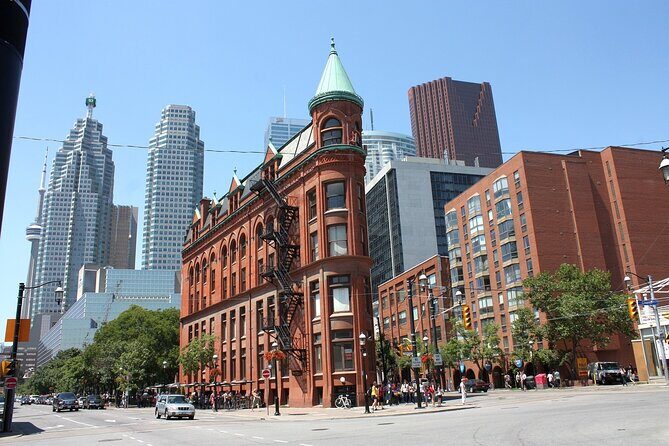
Then it’s time for a change of pace: The Cathedral Church of St. James. This is one of Toronto’s standout religious landmarks, completed in 1853 and built in Gothic Revival style.
Outside, the spire is a defining feature of the skyline—your guide will point out that it’s one of the tallest in Canada. Even if you’re not a “cathedral person,” you’ll notice how the architecture pulls your eyes upward.
Inside, the cathedral shifts the experience from street-level movement to quiet attention. You can expect to see stained-glass windows, intricate woodwork, and a historic organ. The value here is that your guide can connect those details to what the building has represented over time—St. James Cathedral is home to the Anglican Diocese of Toronto.
Practical tip: if you’re taking photos, don’t rush the stained glass. Spend an extra minute scanning the window patterns and colors before you press the shutter. The effect is stronger when you’ve found the light and not just the subject.
Also, since this is a working cathedral, it helps to keep your voice low and your attention on the space itself.
Market Street and the surprise streets your guide keeps for later
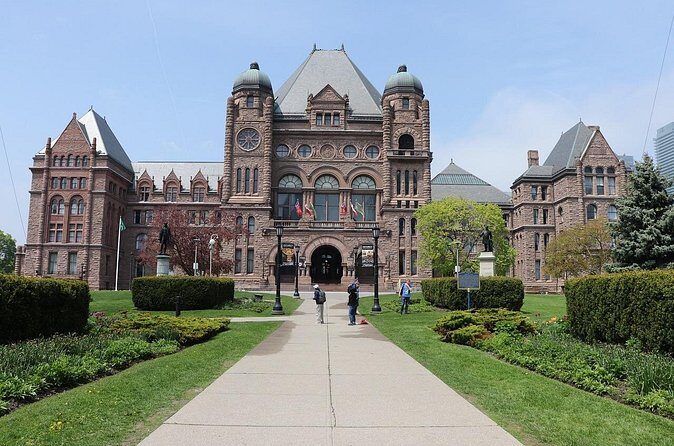
After St. James Cathedral, you’ll move toward Market Street. Even though the tour guide keeps some of the in-between stops as a surprise, this portion is where the tour often feels most “Toronto.”
Market Street is the kind of corridor where downtown life shows up in smaller ways—street textures, storefront rhythms, and the practical shape of city blocks. It’s a reminder that great cities aren’t only made of monuments. They’re made of the routes between them.
What’s also smart is the way the itinerary leaves flexibility. Your guide can adjust to what’s happening outside—crowd flow, light direction, and the best spots to make your next stop easier. That keeps the tour from feeling rigid, especially on a short walk.
If you like tours that don’t feel like a script, this “surprise streets” approach is one of the better parts of the format.






Kieran’s storytelling: why this tour gets top marks
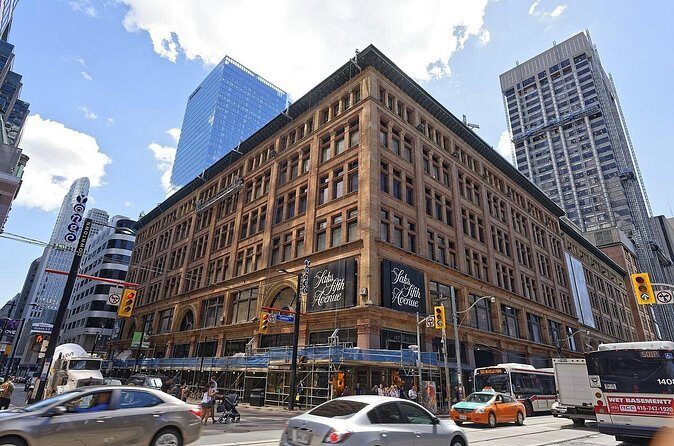
This tour has one clear pattern in its praise: Kieran. The reviews highlight how he brings Toronto history to life, answers questions patiently, and adds humor without derailing the information.
That matters more than people think. A walking tour is only as good as its guide’s ability to translate what you’re seeing into why it matters. When a guide can answer follow-ups and keep momentum, you end up with a tour that feels personal—even in a small group.
You’ll also benefit from the guide’s style if you’re the type who likes asking “why did it become that?” or “what am I supposed to notice here?” With a max group size of 15, you’re more likely to get your questions answered rather than watched over from the back.
If you’re a history nerd, this is basically your comfort zone. But even if history isn’t your main thing, the guide’s street-level explanations make the city feel less random.
Price and value: how $32 turns into a real deal
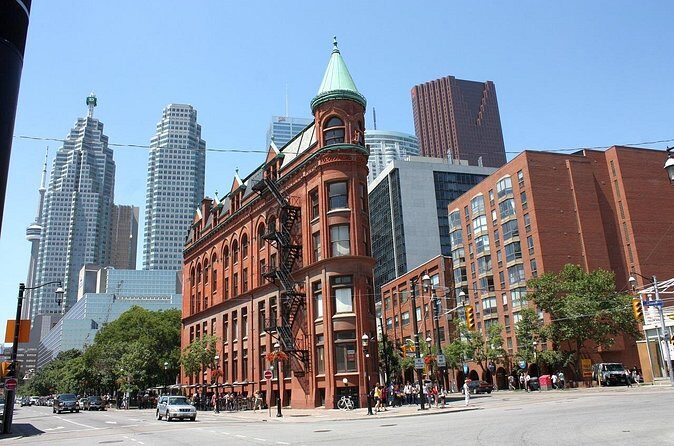
At $32 per person for about 2 hours, the price is reasonable—especially because the planned stops are marked as free admission. That’s not a small detail. Many tours charge extra just to stand near the most famous buildings.
Here, your money buys:
- a professional guide (not just a self-guided map)
- a timed route that strings the sites together logically
- time to learn what you’re seeing at each main landmark
- a group size limited to 15, which keeps it interactive
If you were to do this alone, you’d still find the buildings—but you’d likely miss the architectural signals and the civic context. This is where the guide earns the fee: the stories turn “I saw it” into “I understand why it’s there.”
For short-stay visitors, this price point is also easier to justify. You can spend one morning learning the core layout of downtown, then explore on your own with better instincts.
Timing, meeting spot, and how to make the start painless
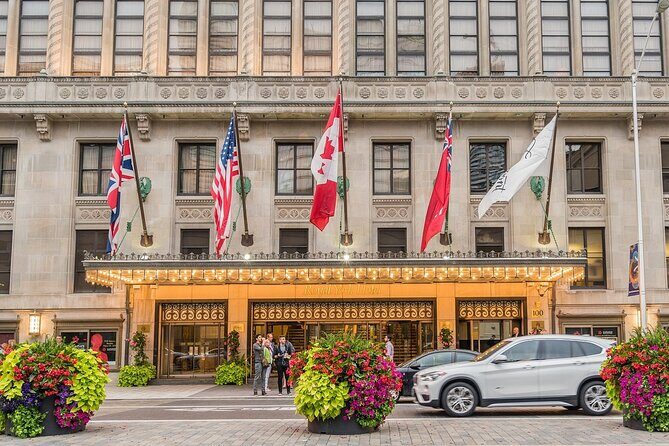
The meeting point is Toronto City Hall, 100 Queen St W, and the tour starts at 10:30 am. Your tour ends back at the same meeting point.
That out-and-back design is helpful. It reduces the stress of ending somewhere far from transit or your hotel. You can plan the rest of your day knowing you’ll still be in the heart of downtown.
One more real-world note: this tour is often booked about 28 days in advance on average. If you’re traveling during peak weeks or on a weekend, I’d book ahead so you’re not stuck hunting for alternatives last minute.
Who this tour suits best (and who should look elsewhere)
This is a strong fit if you:
- want a short, structured downtown walk
- like architecture and civic history
- want a guide who answers questions and keeps the tone friendly
- appreciate that the planned sights don’t require paid entry
It might be less ideal if you:
- want a very long, slow day with lots of museum time (this is about outdoor landmarks and streets)
- dislike busy downtown areas, especially around major intersections
- need a highly flexible itinerary with no walking segments (it’s still a walking tour, and weather can affect comfort)
Also, it’s listed as available in English, near public transportation, and most travelers can participate. Service animals are allowed, so if that’s relevant to you, you should feel comfortable planning around it.
Should you book this Toronto walking tour?
I’d book it if you want a smart way to connect a few famous downtown landmarks to the bigger story of Toronto. You’ll get Old City Hall’s civic design, St. James Cathedral’s Gothic Revival scale, and a real sense of how Dundas Square became a downtown gathering point. The Market Street portion and the guide’s surprise additions help it feel like an actual walk through the city, not a staged museum loop.
The biggest reason to choose it is the guide quality. With Kieran handling questions patiently and adding humor, the tour is built for people who like explanations—not just sightseeing.
If you only have a couple of hours and want the best ROI for orientation and context, this fits nicely.
FAQ
How long is the Toronto walking tour?
It’s approximately 2 hours.
What is the price per person?
The price is $32.00 per person.
What are the main stops on the tour?
The tour includes Old City Hall, Sankofa Square (Dundas Square), The Cathedral Church of St. James, and Market Street, plus additional streets your guide reveals during the walk.
Are there admission fees for the listed stops?
Each listed stop is marked as admission ticket free.
What time does the tour start and where does it meet?
It meets at Toronto City Hall, 100 Queen St W and starts at 10:30 am. It ends back at the meeting point.
Is the tour offered in English?
Yes, it’s offered in English.
How big is the group?
The tour has a maximum of 15 travelers.
What is the cancellation window for a full refund?
You can cancel up to 24 hours before the experience starts for a full refund.