REVIEW · TORONTO
Toronto Discovery District 2hr Walking Tour
Book on Viator →Operated by Vancouver Toonie Tours Ltd. · Bookable on Viator
Toronto’s core has layers, and this walk helps you see them. In just 2 hours, you move from civic power to university memory, with stops timed for photos and quick questions.
I like that it’s a small-group tour, capped at 15 people, so the guide can answer you without rushing. I also love the photo-focused approach: you’ll get help spotting the best angles at major landmarks, not just hearing facts on repeat.
One watch-out: the route relies on finding the right meeting spot at the right time. If you arrive late or can’t spot the guide quickly, you can waste time before the first stop.
In This Review
- Key things to know before you go
- Price and value for a 2-hour walking tour in Toronto
- Meeting at Nathan Phillips Square: starting where the city announces itself
- Stop-by-stop: the walking route from City Hall energy to ROM architecture
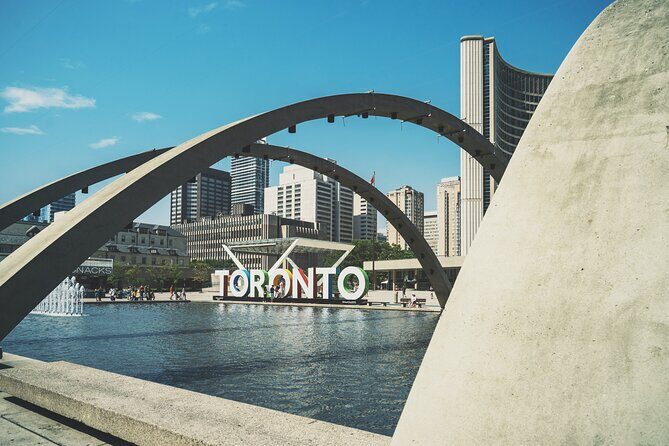
- Stop 1: Nathan Phillips Square and the Toronto sign selfie moment
- Stop 2: College Place—medical history and the meaning of the building design
- Stop 3: Queen’s Park—Ontario’s story compressed into a park
- Stop 4: University of Toronto—war efforts and remembrance
- Stop 5: Convocation Hall—rising from the 1890 fire
- Stop 6: Soldiers’ Tower—First and Second World War remembrance
- Stop 7: Philosopher’s Walk—where campus connects to culture
- Stop 8: Koerner Hall—Royal Conservatory elegance plus a snack break
- Final stop: Royal Ontario Museum (ROM) architecture outdoors
- Guides, pacing, and how your questions actually get answered
- Practical tips that make the walk easier (and more fun)
- Who should book this walking tour
- Should you book the Toronto Discovery District 2-hour walking tour?
- FAQ
- Is this tour a walking tour, and how long is it?
- What does it cost?
- How big is the group?
- Where do I meet the guide?
- Where does the tour end?
- Do I need tickets for the stops?
- What language is the tour offered in, and do I need printing?
- Can I get a refund if I cancel?
Key things to know before you go
- Small group (max 15): more Q&A, less waiting your turn
- Photo help at iconic sites: your guide actively points out the best moments
- Free admission at each stop: you pay for the tour, not for entry fees
- A direct route across Toronto’s core: built for seeing more in less time
- Finish at the Royal Ontario Museum: convenient if you’re continuing your day
Price and value for a 2-hour walking tour in Toronto
At $34.99 CAD per person, this is priced like a proper “guided experience,” not just a long stroll with a map. The big value is what you’re paying for: a local English-speaking guide, researched history and culture, a simple route that keeps momentum, and local recommendations you can use after the tour.
You also don’t hit the typical snag of paying entry fees mid-walk. The tour lists free admission for the stops along the way, so your money stays focused on the guide and your time.
A small group matters here. When you’re paying for guidance, you want interaction, not a lecture you can’t interrupt. With a maximum of 15 travelers, you get a better shot at asking questions as you go—especially useful with a topic like Toronto’s civic, medical, and university history, where the “why” is often the interesting part.
And yes, you should plan for a gratuity. The tour data suggests $10 per person if you want to thank your guide for a great experience.
You can also read our reviews of more walking tours in Toronto

Meeting at Nathan Phillips Square: starting where the city announces itself
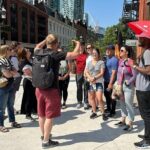
The tour begins at Nathan Phillips Square, 100 Queen St W, right at the address people use when they’re meeting downtown. This is one of the easiest places in Toronto to orient yourself because it’s a major public landmark and a common meetup point.
Nathan Phillips Square is also the kind of place that shows you Toronto’s personality fast. The square can be busy with markets, festivals, and even protests, so you’ll likely see a living city right away—not a staged “tour set.”
Practical tip: arrive early enough to get oriented and find the group without stress. One of the most frustrating ways to start a walking tour is standing around in a cold pocket waiting for a guide you can’t spot yet. Give yourself a buffer, especially if weather is ugly.
Stop-by-stop: the walking route from City Hall energy to ROM architecture
This is structured as a series of short, focused segments. Each stop is around 10 minutes, which keeps the whole thing from turning into a slow crawl. It also helps if you like information but don’t want a nonstop history class.
Stop 1: Nathan Phillips Square and the Toronto sign selfie moment
You’ll start with the Toronto sign, the classic photo magnet. It’s an obvious shot, but the point is more than the selfie: you’re stepping into a civic space that’s tied to how Toronto celebrates itself.
Your guide will point out what to look for and likely share why the square feels central to city life. It’s also a good moment to ask your first questions before the story threads start stacking up.
Why I think this opener works: it’s memorable and visual, so the rest of the tour doesn’t feel like random sightseeing.
Stop 2: College Place—medical history and the meaning of the building design
From there you head to College Place, where the story shifts from civic branding to public service and how institutions evolve.
You’ll hear how this building area was once home to the third iteration of Toronto’s General Hospital, and how it was described as the most complete and modern hospital in the world at the time. The guide should connect that to the bigger question: how did Toronto become a place where medical innovation mattered enough to build like it did?
This stop also includes the artistic and cultural gardens around the building. That’s not window dressing. Gardens and outdoor spaces often tell you how institutions see their mission—care isn’t only clinical, it’s also humane.
One small consideration: the value here is mostly interpretive. If you’re expecting dramatic exterior visuals at every angle, you might find this stop less “wow” than the next ones. But the payoff is the story.






Stop 3: Queen’s Park—Ontario’s story compressed into a park
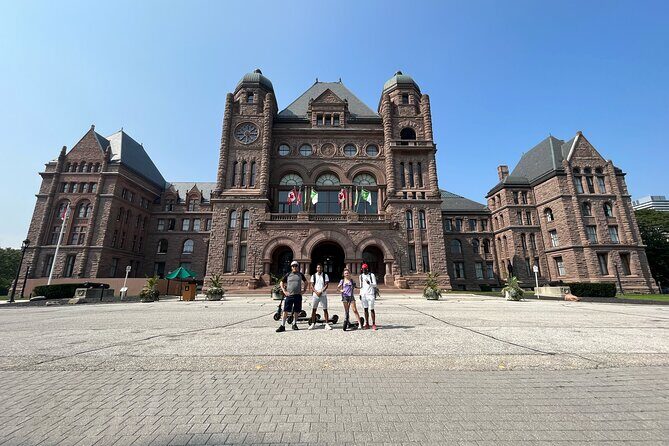
Queen’s Park is where you get that Ontario-and-Canada “big picture” feeling, but delivered in a human scale: a large park with statues and standout architecture.
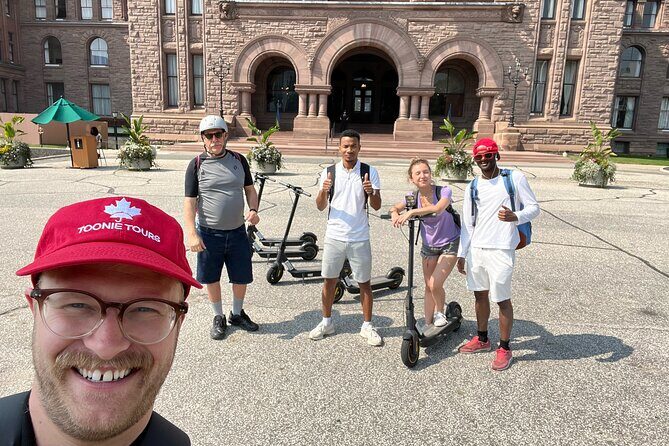
You’ll have time to photograph an important architectural feature in the middle of the park, and your guide will tell you tales about how Ontario became Ontario. This stop is ideal if you like history, but you also want to look around, not just listen.
Why it’s useful: it bridges civic power (where laws and decisions come from) with the rest of the district, which includes institutions that shaped people’s lives—health, education, remembrance.
Stop 4: University of Toronto—war efforts and remembrance
At the University of Toronto, the atmosphere changes from government-to-street to campus-to-life.
Your guide will share about U of T war efforts and how the university remembers those who made the ultimate sacrifice. It’s handled as part of the campus story, not as a separate lecture topic.
This is one of the stops where you may want to pay attention to details you’d normally walk past. Memorials and plaques often feel quiet, but they carry a lot of meaning once you know what they’re referencing.
Stop 5: Convocation Hall—rising from the 1890 fire
Convocation Hall brings in an origin story with real drama: its rise and significance after the 1890 fire.
You’ll learn where it came from historically and why it matters. Then you’ll also see how the University honors graduates with Alumni Plaza, which ties the building to ongoing life at the school—education isn’t just past tense.
This stop is a great checkpoint for photos. If you’ve been taking pictures since the start, this is one more chance to capture architecture with a story behind it.
Stop 6: Soldiers’ Tower—First and Second World War remembrance
Soldiers’ Tower is a straightforward, respectful stop: a monument honoring those lost in the First and Second World War.
If you like your history facts connected to place, this is one of the most direct stops. The guide should explain the memorial’s purpose and how it contributes to the university and city’s public memory.
Possible drawback: if you’re short on patience for somber topics, this may slow your emotional momentum. Still, the pacing of the tour makes it bearable because it’s one compact segment, not an hour-long focus.
Stop 7: Philosopher’s Walk—where campus connects to culture
Philosopher’s Walk winds through the campus and is described as a beautiful path that connects people to art, history, music, and culture.
This is where the tour turns from “important sites” into something more enjoyable: walking a route that was designed for human-scale movement and thought. You’re not just seeing a landmark; you’re experiencing a path that shapes how people move through the campus.
It’s also a good moment to slow down slightly for photos, because your guide’s explanations make the physical space easier to read.
Stop 8: Koerner Hall—Royal Conservatory elegance plus a snack break
Koerner Hall is a major cultural stop: it’s known as the crown jewel of the Royal Conservatory of Music. Your guide should explain the impact of the hall on Toronto’s culture and discuss how the architecture blends new elements with classic preservation.
And yes, this is also where the tour allows for a washroom and snack break. That matters more than you’d think on a two-hour outing, especially if you’re going to keep exploring after the walk.
This stop is ideal for anyone who wants Toronto to feel artsy, not only administrative. It’s a reminder that culture has physical anchors, not just performances.
Final stop: Royal Ontario Museum (ROM) architecture outdoors
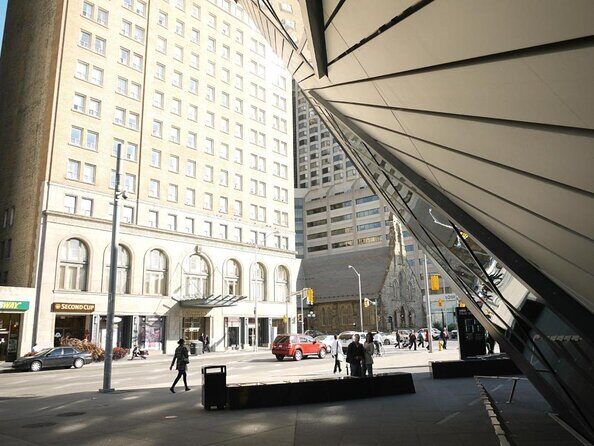
The tour ends at the Royal Ontario Museum, 100 Queens Park. The stop is outdoors and focused on the architecture—the kind of photo opportunity you can enjoy even if you aren’t ready to go inside yet.
The timing works well: you finish here because many people want to either (a) continue into the museum on their own or (b) use it as a landmark to plan the rest of the day.
If you’re museum-curious, note this: the tour itself doesn’t list museum entry as part of the experience. So plan any indoor time separately.
Guides, pacing, and how your questions actually get answered
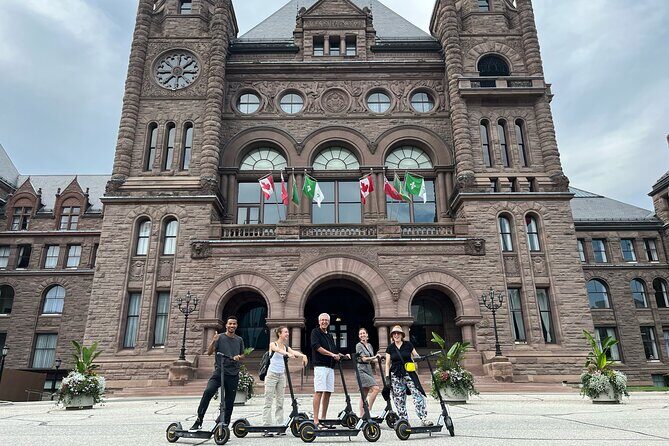
A big reason this tour earns praise is interaction. The experience is built around a guide who’s available for questions and who can point out the best photo moments. You’re not stuck with a one-way talk.
The guide style can vary by person, but the recurring theme from the guide names associated with this route is adaptation. For example, Joel has been praised for being funny, kind, and knowledgeable, with the ability to adapt to what people care about. Tai has been highlighted for keeping the energy up and sharing strong food recommendations. Joshua has been noted for making the experience comfortable while still covering lots of ground in the time you have.
What you should expect from me-to-you perspective: if you’re the type who asks small questions—Why was this built? What should I notice?—you’ll get a lot out of this. If you prefer a strict sightseeing script with no back-and-forth, you can still enjoy the route, but the tour’s biggest advantage is the conversation.
Practical tips that make the walk easier (and more fun)
Here’s how to set yourself up for a smooth two hours:
- Wear comfortable walking shoes. It’s only about 2 hours, but you’ll be moving between stops.
- Bring something for weather. Toronto can turn fast; you’ll be outside the whole time.
- Use the Koerner Hall break strategically. If you need to recharge before heading into the museum or continuing elsewhere, that’s your moment.
- If you’re picky about photos, tell your guide early. The tour is set up for landmark photo help, so ask at the start if you have a specific shot in mind.
And one real-world logistics tip: meeting spots can be tricky. If you’re worried about finding the exact start point, pin the address in your phone map ahead of time and give yourself extra minutes. The tour ends at ROM, so you won’t have to solve a complicated ending—just make the start.
Who should book this walking tour

This is a strong fit for you if:
- You want a guided overview of Toronto’s core in a short time
- You like learning the “why” behind buildings, not just what they look like
- You enjoy a small-group format where you can ask questions
- You want a convenient end point at the Royal Ontario Museum
It’s also a good option if you’re juggling a busy itinerary. Two hours is short enough to plug into a day without eating your whole afternoon.
If you’re the kind of visitor who already knows Toronto well and wants only the most famous wow-factors, you might find some stops feel more story-led than visually dramatic. Still, that’s also what makes the walk rewarding.
Should you book the Toronto Discovery District 2-hour walking tour?

I’d book this if you want an efficient, story-first way to understand Toronto’s civic life, medical history, and campus memory, with photo help built in. At $34.99, you’re paying for a guide who can connect landmarks to meaning, and the “free admission at stops” structure keeps costs predictable.
Skip it only if you strongly dislike walking, you need long museum time inside ROM as part of the tour, or you want a very flexible, unstructured itinerary. This experience is designed to be direct and timed, so it works best when you’re okay following the route.
If you decide to go, I recommend booking soon. This tour is often reserved about 32 days in advance, which tells you it’s popular enough to plan ahead.
FAQ

Is this tour a walking tour, and how long is it?
Yes. The Toronto Discovery District tour is described as a 2-hour walking tour (approx.).
What does it cost?
The price is $34.99 per person.
How big is the group?
The tour has a maximum of 15 travelers.
Where do I meet the guide?
Meet at Nathan Phillips Square, 100 Queen St W, Toronto, ON M5H 2N3.
Where does the tour end?
The tour ends at the Royal Ontario Museum, 100 Queens Park, Toronto, ON M5S 2C6.
Do I need tickets for the stops?
The tour lists admission ticket free for the stops on the route.
What language is the tour offered in, and do I need printing?
It’s offered in English and you’ll use a mobile ticket.
Can I get a refund if I cancel?
Yes. You can cancel up to 24 hours in advance for a full refund. If you cancel less than 24 hours before the start time, the amount paid is not refunded.