REVIEW · WHISTLER
The Summit Helicopter Sightseeing Tour
Book on Viator →Operated by No Limits Heli Adventures · Bookable on Viator
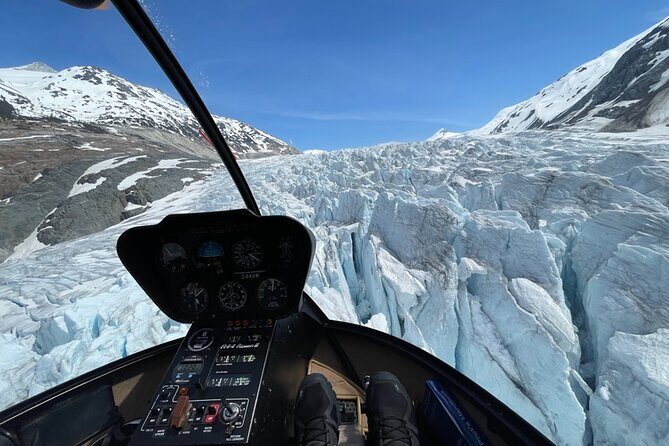
Hovering above Whistler beats photos from the ground, and this tight helicopter loop is built for big views fast. I love the chance to fly over Cheakamus Lake and the iconic Black Tusk Peak, and I especially enjoy hearing pilot Dave explain what you’re seeing below. The one drawback to plan around is that the ride depends on good weather, so clouds or wind can change the timing.
You’re not looking at a long tour here. You’re getting a compact, high-impact aerial snapshot of the Whistler Blackcomb area and nearby wilderness in about 39 minutes total, with headsets provided.
In This Review
- Key Highlights You’ll Care About
- First Lift Off From 9910 Heliport Rd
- Why This Whistler Helicopter Route Feels Efficient
- Whistler Blackcomb to Provincial Park: The Big Picture Change
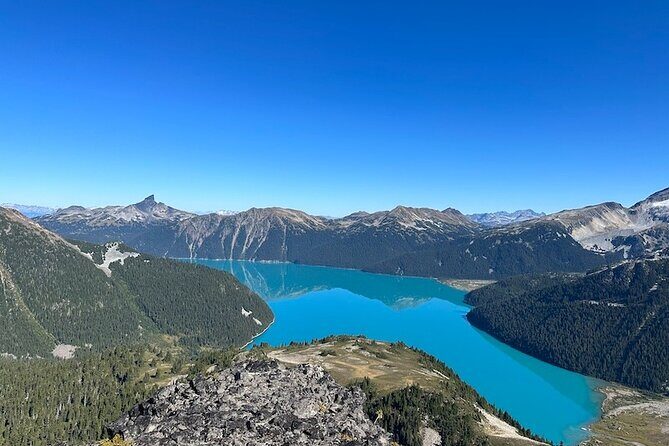
- Cheakamus Lake From Above: Color, Shape, and Scale
- Garibaldi Lake Views: A Different Vibe, Same Drama
- Pinnacle Mountain: The Stratovolcano Moment
- Black Tusk Peak: Why This Ending Makes People Say Wow
- Pilot Dave’s Commentary and the Headset Advantage
- The Brief River-Bed Stop: One Surprise Highlight
- Price and Value: What You’re Really Paying For
- Practical Tips: Weight Limit, Comfort, and Expectations
- What a 39-Minute Flight Feels Like on Your Day
- Weather, Rescheduling, and the Calm Way to Handle It
- Should You Book the Summit Helicopter Sightseeing Tour?
- FAQ
- How long is the Summit Helicopter Sightseeing Tour?
- What does the tour cost, and is GST included?
- Where does the tour start and end?
- What’s included in the ticket price?
- Is the tour offered in English?
- How many people are in a group?
- Is there a weight limit?
- What happens if the weather is poor?
- Can I bring a service animal?
Key Highlights You’ll Care About
- About 39 minutes total with roughly 24 minutes in the air, so it works even if your day is tight.
- Cheakamus Lake and Garibaldi Lake from above, including the contrast between their colors and shapes.
- Pinnacle Mountain’s volcanic presence seen in context, not as a single distant silhouette.
- Black Tusk Peak at the end, the kind of landmark that makes cameras and conversations stop.
- Max 5 travelers, which keeps the cabin feeling less crowded.
- Pilot commentary can be a major part of the value, and this one comes with real local insight.
First Lift Off From 9910 Heliport Rd
Your flight starts and ends at 9910 Heliport Rd, Whistler, BC V8E 0G5. That matters because you can plan the rest of your day around one simple location, instead of coordinating multiple transfers.
This tour is offered in English, and you’ll ride in a very small group (up to 5 travelers). Headsets are included, so you can actually hear the pilot’s directions and the in-flight commentary without shouting.
The helicopter segment is weather-dependent. If the day is gray, foggy, or windy, expect the operator to hold off until conditions are safe.
A few more Whistler tours and experiences worth a look
Why This Whistler Helicopter Route Feels Efficient
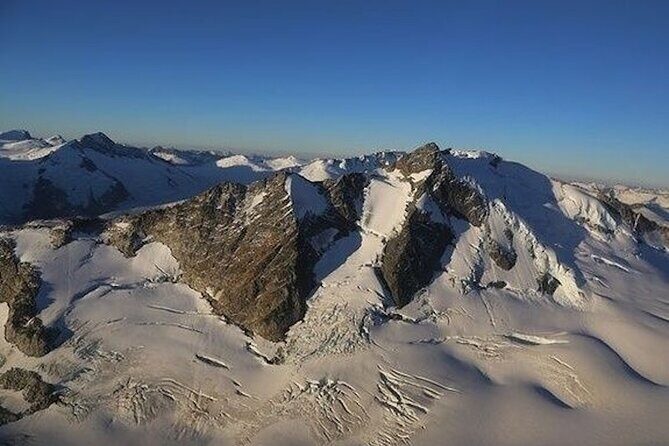
This isn’t a half-day helicopter marathon. You’re getting an aerial tour that packs major landmarks into a short timeline.
The flight description focuses on a loop over the Whistler Blackcomb Resort area, then out over Provincial Park country. That routing is part of what makes it efficient: you get both the “resort side” view and then the more remote, less-developed terrain that people come to British Columbia for.
Also, the total flight time is listed as about 39 minutes, while the aerial portion is described as about 24 minutes. Translation: you’ll spend enough time airborne to feel like you earned the cost, without turning your whole day into a waiting game.
Whistler Blackcomb to Provincial Park: The Big Picture Change
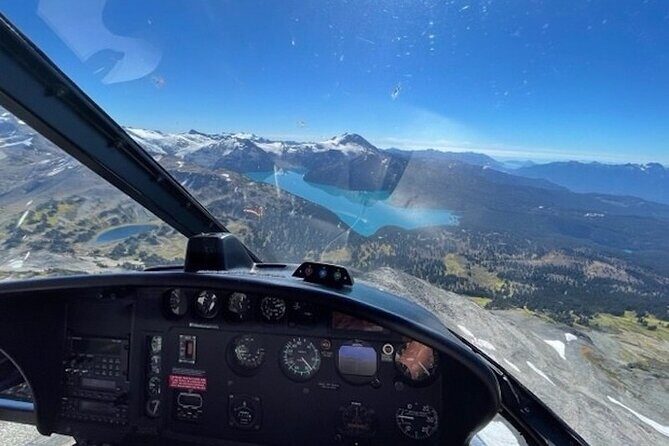
Right after takeoff, you get that immediate shift in scenery that you simply cannot replicate from chairlifts or gondolas. From above, Whistler Blackcomb stops looking like just a set of runs and becomes a patchwork of ridges, valleys, and drainages.
Then the scenery pivots toward Provincial Park. From the air, you can see where the developed areas end and where the terrain starts speaking a different language: thicker forest blocks, open alpine bowls, and long, unbroken stretches of land.
The practical benefit for you is that you’re learning the region with your eyes, not just staring at names on a map. Even if you’ve been to Whistler before, flying this route helps you get your bearings fast.
Cheakamus Lake From Above: Color, Shape, and Scale
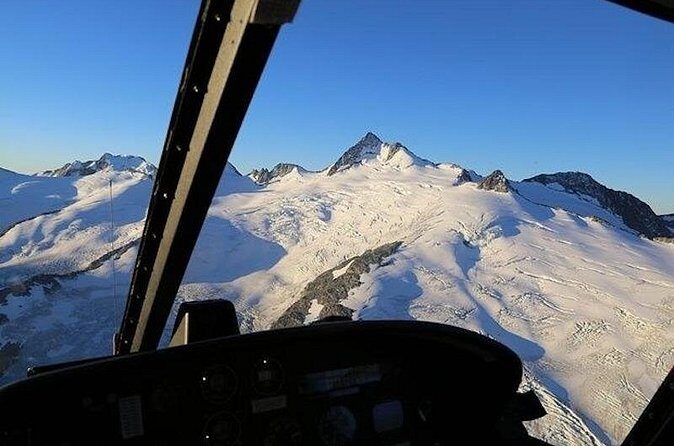
If you love water views, this is one of the best parts of the flight. Cheakamus Lake is called out specifically, and seeing it from the air makes the lake feel bigger and more structured than it ever does at ground level.
From the pilot’s perspective, this is also a natural storytelling point: lakes in this region sit inside distinct valleys and drainages, and the shoreline curves often match the underlying rock and glacial history you can’t easily “read” from the highway.
One more reason I like this stop in particular: it helps you orient the rest of the route. Once you’ve seen how Cheakamus Lake sits in the broader valley system, the other water bodies make more sense as part of a connected landscape.
Garibaldi Lake Views: A Different Vibe, Same Drama
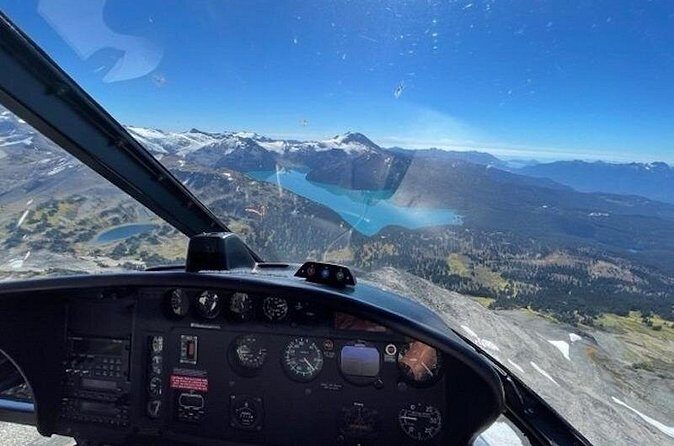
Not far from the Cheakamus Lake moment is Garibaldi Lake, described as part of the main aerial arc. The value here is not only the view itself, but the contrast.
When you’re in the air, you can compare the way each lake sits, how the surrounding land rises, and how the shadows fall as the helicopter changes direction. You’re not just collecting pretty pictures. You’re building a visual map of how water, rock, and elevation interact around Whistler.
Garibaldi Lake is also one of those names that many visitors recognize. Seeing it from above helps you understand why it’s memorable even without a hike.

Pinnacle Mountain: The Stratovolcano Moment
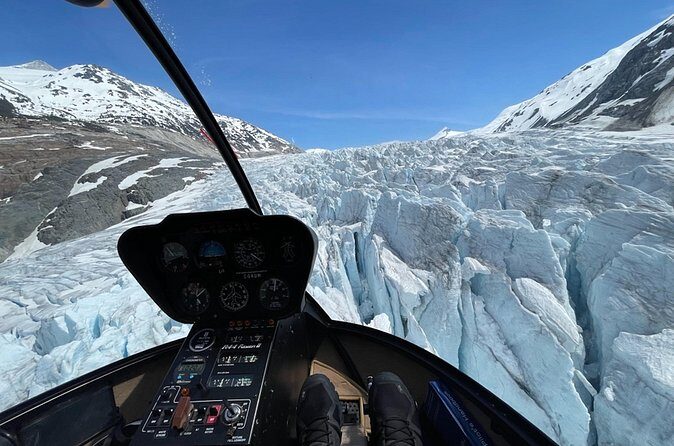
The flight description calls out Pinnacle Mountain, specifically as a stratovolcano. That’s the kind of detail that sounds technical until you see what a volcanic shape looks like from the air.
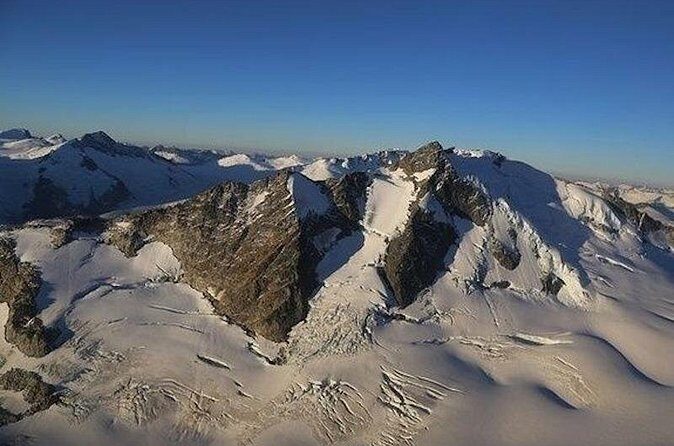
You’re getting the mountain in context here, not as a single summit line. From above, you can often spot how the slopes wrap around the shape and how adjacent ridgelines relate to the main mass.
This is where a good pilot makes the difference. In these cabins, the views are the headline, but the pilot’s explanations help the scenery land in your brain in a way that lasts longer than the flight.
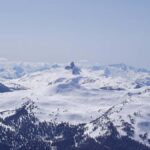
Black Tusk Peak: Why This Ending Makes People Say Wow
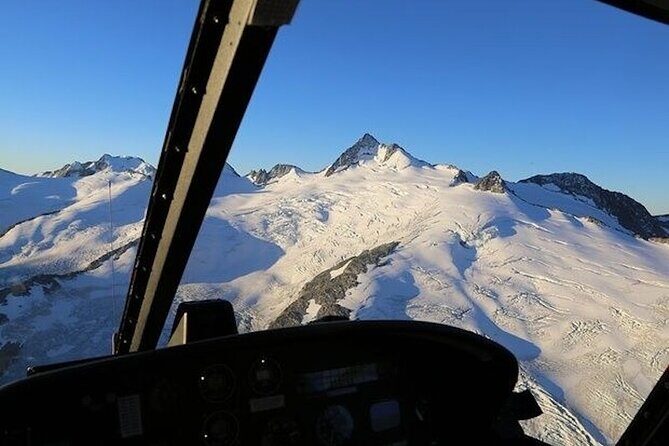
Every Whistler helicopter description gets one or two big-name landmarks. Here, the finale is Black Tusk Peak, described as an iconic natural wonder.
The practical reason it’s such a strong ending: you’re still fresh in your seat. You’ve had time to settle in, the cabin noise becomes familiar, and your eyes have learned what to look for in the terrain. Then the route finishes with a peak that hits like a visual punch.
Even if you’re not a geology person, this kind of landmark works on everyone. It’s not only about height. It’s the shape that stands out and the way it crowns the view like a signature.
If you’re the sort of traveler who prefers fewer stops with more payoff, the fact that this tour emphasizes Black Tusk at the end is a smart design.
Pilot Dave’s Commentary and the Headset Advantage
In the reviews, pilot Dave comes up in a positive way, described as friendly, knowledgeable, and confidence-inspiring during the flight. That matters, because on a helicopter tour you’re trusting the pilot to make the ride smooth and the timing right.
Headsets (included) are the other key ingredient. Without them, you’d miss a lot. With them, you can actually track what the pilot is pointing out as the helicopter angles toward each water body and peak.
The best value you can get from a tour like this is simple: listen closely on the approach lines. Peaks and lakes look obvious in the air, but the pilot often gives the “why it matters” context right as you’re passing over key points.
You’ll probably leave with more than images. You’ll leave with a clearer mental map.
The Brief River-Bed Stop: One Surprise Highlight
One account mentions a short stop on a river bed as a memorable moment. That suggests the flight route may include a brief touch point on the ground at least sometimes, likely when conditions allow.
I wouldn’t plan your expectations around it like it’s guaranteed every single time. Still, it’s a good reminder that this tour isn’t just a drive-by. You may get at least one added moment that makes you feel closer to the terrain instead of only looking at it from above.
If you’re the kind of traveler who likes “one extra little moment” that turns a great flight into a story you’ll repeat, keep this on your mental wishlist.
Price and Value: What You’re Really Paying For
At $208.77 per person, this is not a budget activity. And that’s fine. A helicopter sightseeing tour is mostly about saving time while seeing places that are very hard to reach on foot.
So, how do you judge value? I look at three things:
First, you’re paying for access to multiple named landmarks in one compact window: Whistler Blackcomb area, Provincial Park country, Cheakamus Lake, Garibaldi Lake, Pinnacle Mountain, and Black Tusk Peak.
Second, the group size cap of 5 helps keep the experience personal. You’re not fighting for attention or feeling like you’re part of a cattle-car line.
Third, the pilot’s commentary seems to be a real part of the value here. When the pilot can explain what you’re seeing, the tour becomes educational without turning into a lecture.
The cost also lines up with the reality that you’re flying in short order over a region with strong natural draw. If your goal is to tick off one big aerial highlight, this is a tidy way to do it.
Practical Tips: Weight Limit, Comfort, and Expectations
There’s a listed total weight per passenger limit of 300 lbs. If you’re close to that number, it’s worth planning ahead so you don’t run into problems on the day of flight.
This tour includes headsets, so you can focus on sitting comfortably rather than bringing your own audio gear. Still, dress for cooler air than you might expect. Helicopters can feel chilly even when it’s warm at ground level.
You should also expect that the operator requires good weather. If the forecast is iffy, try to keep a little flexibility in your schedule. That’s not “nice to have”; it can directly affect when you fly.
Finally, service animals are allowed. If you’re traveling with one, it’s a useful reassurance for planning.
What a 39-Minute Flight Feels Like on Your Day
A short helicopter tour is a special kind of luxury. It doesn’t eat your whole day, but it gives you enough motion and view changes that you feel like you saw something real, not just a single pass.
Because the activity ends back at the meeting point, you won’t be scrambling to coordinate a new plan mid-trip. It’s easy to pair with a meal, a scenic stop, or a relaxed afternoon after the flight.
If you’re traveling with friends or family, this tour is also psychologically simple. Everyone gets the same big landmarks, and the group is small enough that it’s easy to compare notes after landing.
Weather, Rescheduling, and the Calm Way to Handle It
This experience requires good weather, and if it’s canceled due to poor weather, you’ll be offered either a different date or a full refund.
That policy is worth paying attention to because helicopter tours can’t control wind and cloud cover. The best strategy is to treat your booking as a plan with options, not a fixed point carved in stone.
If you’re the type who gets stressed waiting for weather updates, you might want to schedule this earlier in your trip window. Then you have time to rebook if conditions force a change.
Should You Book the Summit Helicopter Sightseeing Tour?
Book it if you want a high-impact Whistler helicopter experience that hits multiple top sights in under an hour. It’s especially worth it if you care about the named landmarks: Cheakamus Lake, Garibaldi Lake, Pinnacle Mountain, and Black Tusk Peak.
Skip it or think twice if you’re allergic to weather uncertainty or if you’re hunting for a long, multi-stop adventure. This is a compact flight. You get big views, not hours of onboard exploring.
My bottom line: if you can handle the possibility of rescheduling and you want a small-group flight with strong pilot guidance, this tour is a smart way to turn Whistler into a “from above” story you’ll actually remember.
FAQ
How long is the Summit Helicopter Sightseeing Tour?
The tour is listed at about 39 minutes.
What does the tour cost, and is GST included?
The price is $208.77 per person, and GST is not included.
Where does the tour start and end?
The tour starts at 9910 Heliport Rd, Whistler, BC V8E 0G5, Canada, and it ends back at the meeting point.
What’s included in the ticket price?
Headsets are included.
Is the tour offered in English?
Yes, the tour is offered in English.
How many people are in a group?
This activity has a maximum of 5 travelers.
Is there a weight limit?
Yes. The total weight per passenger limit is 300 lbs.
What happens if the weather is poor?
The experience requires good weather. If it’s canceled due to poor weather, you’ll be offered a different date or a full refund.
Can I bring a service animal?
Yes, service animals are allowed.