REVIEW · KAMLOOPS
Smartphone Audio Driving Tour between Kamloops and Vancouver
Book on Viator →Operated by Tripvia Tours · Bookable on Viator
If you love road trips, this adds a twist.
This Kamloops–Vancouver smartphone audio drive turns your car time into a game of stories and trivia tied to real places along the route. I like that you can start from either end—the audio works the same—and you move at your own pace without a strict schedule. One watch-out: the audio can include sudden sound effects, so keep your volume ready and be prepared to pull over if you need a quiet moment.
I also like the value math. At $8.22 per group (up to 15), it’s one of the rare tour styles where one booking covers a whole vehicle. The best practical bonus is offline playback and lifetime access, so you’re not stuck hunting for data in the mountains. Still, you’ll need your own smartphone/tablet (not included) and your own vehicle, and you may find some suggested stops are seasonal or inaccessible.
In This Review
- Key highlights to look forward to
- Price and what $8.22 per group really means
- The smartphone audio setup: offline, English, and no data anxiety
- Road trip pacing: 28 audio points plus lots of stop-and-go freedom
- Stop-by-stop: Vancouver to the Fraser Valley
- Coquitlam (Stop 1)
- Port Mann Bridge (Stop 2)
- Serpentine River (Stop 3)
- Langley (Stop 4)
- Fort Langley (Stop 5)
- Fort Langley National Historic Site (Stop 6)
- Abbotsford (Stop 7)
- Mount Baker – Snoqualmie National Forest (Stop 8)
- Burnaby Village Museum / Heritage Village (Stop 9)
- Sumas Lake (Stop 10)
- Chilliwack (Stop 11)
- Trans-Canada Highway & Gibson Road (Stop 12)
- Fort Langley and the Fraser River: Harrison, Bridal Falls, and salmon stories
- Harrison Hot Springs (Stop 13)
- Bridal Falls (Stop 14)
- Fraser River (Stop 15)
- Mountain View Summer Camp (Stop 16)
- Sasquatch Provincial Park (Stop 17)
- The Hope Slide (Stop 18)
- Hope (Stop 19)
- Cultus Lake (Stop 20)
- CMPV+JV Hope (Stop 21)
- Coquihalla Highway and provincial parks: summits, creeks, tunnels, and that canyon feeling
- Coquihalla River Provincial Park (Stop 22)
- Ladner Creek Bridge (Stop 23)
- Coquihalla Highway (Stop 24)
- Coquihalla Summit Recreation Area (Stop 25)
- Britton Creek (Stop 26)
- Coldwater River Provincial Park (Stop 27)
- Murray Lake (Stop 28)
- Brookmere (Stop 29)
- Kettle Valley Railway Trail (Stop 30)
- Kettle Valley Steam Railway (Stop 31)
- Coquihalla Canyon Provincial Park (Stop 32)
- Toward Kamloops: Merritt music, lakes, and park-hopping cues
- Merritt (Stop 35)
- Nicola Lake (Stop 36)
- Monck Provincial Park (Stop 37)
- Thompson Plateau (Stop 38)
- Cascade Range (Stop 39)
- Timber Lake (Stop 40)
- Inks Lake Road (Stop 41)
- Thompson River (Stop 42)
- Walloper Lake Provincial Park (Stop 43)
- The many pass-by areas with no numbered “point”
- Practical tips: how to get the best experience without the annoying parts
- Who this is best for (and who should skip it)
- Should you book this Kamloops–Vancouver audio drive?
- FAQ
- How much does the smartphone audio driving tour cost?
- How long is the tour?
- Can I use it without mobile data or signal?
- Is the tour available in English?
- Does it work if I’m driving from Vancouver to Kamloops instead of Kamloops to Vancouver?
- What do I need to take part?
- Is this a private experience?
- Is there free cancellation?
Key highlights to look forward to

- Same audio both directions: Vancouver to Kamloops or Kamloops to Vancouver, you’ll hear the same style of points.
- Offline and lifetime access: download once, then use it whenever you want.
- Move at your own pace: no timed push. Stop when something catches your eye.
- A lot of road-side learning points: the route includes 28 audio points of interest plus many extra cue markers.
- Group-friendly pricing: one booking per vehicle, up to 15 people.
- Road trivia and special guest characters: extra entertainment, not just facts.
Price and what $8.22 per group really means

For $8.22 per group (up to 15), you’re not paying for a bus, guides, or entry fees. You’re paying for the audio experience tied to the drive. That’s why the price feels fair: it’s basically a low-cost add-on to a trip you’d likely make anyway.
Duration is listed as about 1 to 2 hours, but the big practical point is this: you’re not locked into that window. The tour is built for a real drive pace, where you can stop for views, stretch legs, and replay a section if you miss a detail. If you’re doing the full Kamloops–Vancouver run, think of it as a “guided soundtrack” for part—or all—of your day.
If you’re a solo driver, it can still be worth it. Even if you’re doing it mostly for the storytelling, the per-group price keeps it from feeling like a luxury detour.
A few more Kamloops tours and experiences worth a look
The smartphone audio setup: offline, English, and no data anxiety
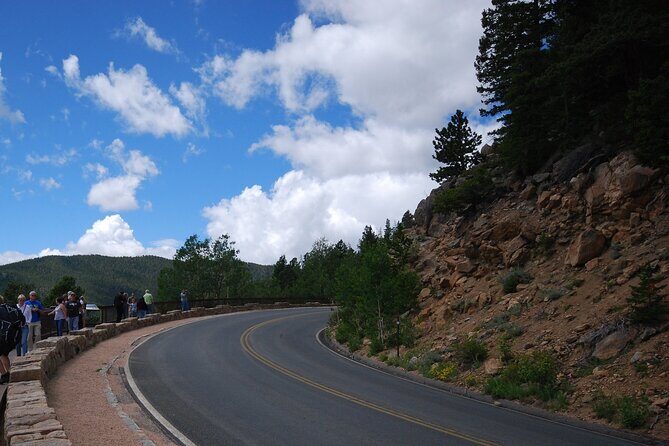
This is a smartphone audio driving tour. That means the essentials are simple: bring a smartphone or tablet (not included) and use your own car. Language is English, and the format is a mobile ticket.
The standout tech win is offline functionality. The route crosses areas where cell service can get spotty, so offline matters more than it sounds. With offline audio, you can focus on the road, not the loading wheel.
You also get lifetime tour access, which is handy if you want to re-run sections on a future trip, or if you’re taking multiple drives between Vancouver and Kamloops over the years. The audio prompts are designed to work while you drive past each point.
One more practical note: opening hours are essentially all-day (12:00 AM to 11:30 PM daily). So you can fit it around your own start time.
Road trip pacing: 28 audio points plus lots of stop-and-go freedom
The tour is structured around 28 audio points of interest—the big named moments like Harrison Hot Springs, Bridal Veil Falls, Hope and the Hope Slide, and the Coquihalla Canyon area with its famous railway tunnels mentioned in the tour description. The cue list you’ll see includes many numbered markers beyond that, so you’ll likely get a steady rhythm of prompts rather than just a few “hit moments.”
The best fit here is a drive where you don’t mind being slightly slower on purpose. Even if you don’t do long detours, the audio gives you reasons to look at pullouts and road features you’d otherwise pass.
You also get “no time constraints.” That’s travel-speak for: you can pause for photos, walk around briefly, or linger at a viewpoint. It’s still on you to drive safely and choose legal pullouts—especially on mountain roads where stopping can be tricky.
Stop-by-stop: Vancouver to the Fraser Valley
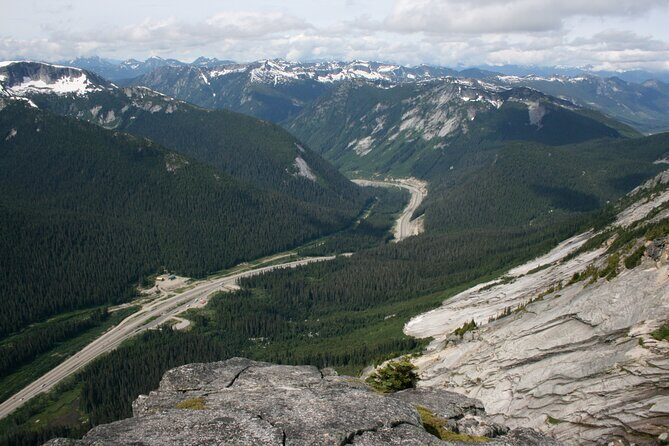
Below is how the story beats line up as you move east (or west) toward Kamloops. Most stops are roadside “drive-past” learning, with quick context on what you’re seeing and why it matters locally.
Coquitlam (Stop 1)
You pass through and get a quick story about the Coast Salish people and the area’s origins. It’s a good warm-up: short and grounded.
Port Mann Bridge (Stop 2)
Cross the Port Mann Bridge, then hear about the bridge and Surrey. This kind of intro works well because it anchors the drive to something you can immediately look at.
Serpentine River (Stop 3)
You’ll travel alongside the river for a bit. Expect small facts that make the scenery feel less random.
Langley (Stop 4)
A light origin story for Langley. This is the “slow down and pay attention” kind of stop.
Fort Langley (Stop 5)
You get the distinction between Fort Langley and the Town of Fort Langley. Even if you don’t stop, it gives you a clearer mental map.
Fort Langley National Historic Site (Stop 6)
The audio notes you pass pretty close to the National Historic Site. You may want to plan a visit later—this one reads like a “bookmark it” moment.
Abbotsford (Stop 7)
The focus is Abbotsford’s importance to British Columbia. It’s useful context if you’re driving through quickly and want a reason beyond geography.
Mount Baker – Snoqualmie National Forest (Stop 8)
This is a neat twist: it’s in Washington, but it dominates the skyline. Hearing that while you look at the mountain helps the view make sense across the border.
Burnaby Village Museum / Heritage Village (Stop 9)
You pass by the museum and learn what it’s been doing for decades (1890 to 1920). If you like “place-based history,” this is the kind of stop that may make you detour someday.
Sumas Lake (Stop 10)
You’ll learn what the lake is now versus what it used to be—and where it went. It’s the kind of fact that turns a casual roadside view into a land-use story.
Chilliwack (Stop 11)
Chilliwack’s name origin is the hook here. Simple, but it helps you remember the place.
Trans-Canada Highway & Gibson Road (Stop 12)
Here the tour turns to trivia-style “Popular Peeps.” It’s meant to keep you alert during the longer driving stretches. If you guess wrong, you still learn something.
Fort Langley and the Fraser River: Harrison, Bridal Falls, and salmon stories
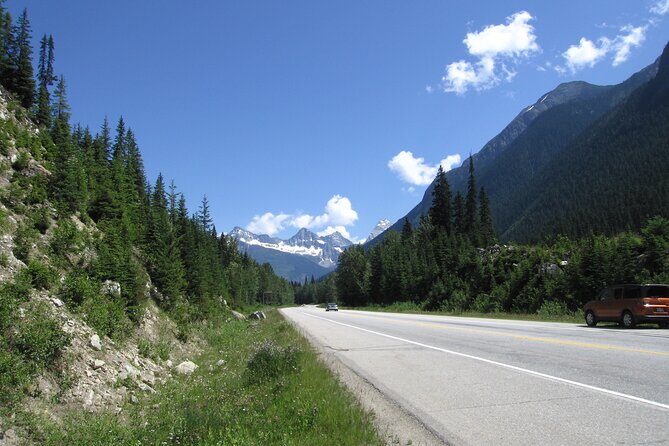
This next set of stops leans into watery places and seasonal life—plus a few “character” bits that keep it from feeling like a lecture.
Harrison Hot Springs (Stop 13)
You’ll hear about the road to the hot springs and why people treat it as a draw. This is the kind of stop where the audio basically points to a future day trip.
Bridal Falls (Stop 14)
This is one of those “you’ll want a detour” moments. The audio is built around the idea that you should stop after you hear what you’re passing.
Fraser River (Stop 15)
You drive alongside the river and learn about it. Expect broad context that makes the Fraser feel like more than scenery.
Mountain View Summer Camp (Stop 16)
Sockeye salmon and the historic salmon runs on the Fraser River. This pairs well with Stop 15 because it turns the river into a living system.
Sasquatch Provincial Park (Stop 17)
A playful one: keep your eyes peeled for a Sasquatch glimpse. Even if you don’t believe in it, the audio gives the park an identity you can carry in your head.
The Hope Slide (Stop 18)
This one is serious. The audio explains why the Hope Slide was one of the worst natural disasters in the area. You might not think about disaster history when you’re driving, so it’s a grounding pause.
Hope (Stop 19)
The town’s name comes with an explanation. It’s quick, but it gives meaning to what might otherwise feel like just another dot on the map.
Cultus Lake (Stop 20)
You’ll point out the lake and recreational area and get reasons it’s worth visiting. It’s a “file this away for summer” stop.
CMPV+JV Hope (Stop 21)
Another “Popular Peeps” trivia moment. This is a pattern the tour uses to break up long stretches with short entertainment hits.
Coquihalla Highway and provincial parks: summits, creeks, tunnels, and that canyon feeling
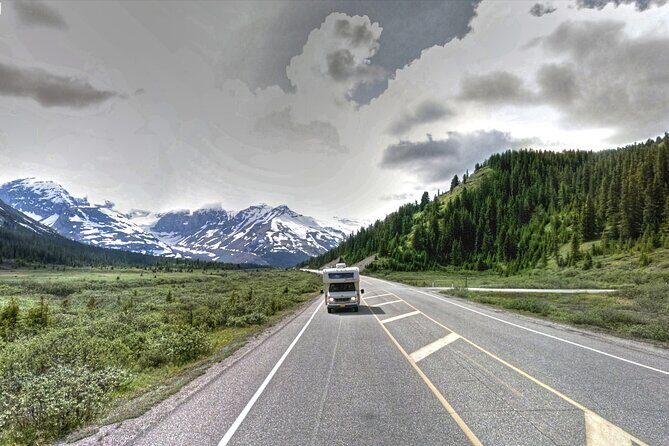
Once you’re on the Coquihalla side, the scenery does the heavy lifting, and the audio explains the “how and why” behind what you’re seeing.
Coquihalla River Provincial Park (Stop 22)
You pass by and learn about the park. This is a good reminder that the drive isn’t just about speed—it’s about ecosystems.
Ladner Creek Bridge (Stop 23)
A quick detour is suggested for an old trestle bridge. Even if you skip it, the audio makes you look for the structure more carefully.
Coquihalla Highway (Stop 24)
You drive it for hours, so the tour shifts to creation stories—how the highway came to be. When you’re stuck in long curves, a “how it was built” narrative keeps your brain awake.
Coquihalla Summit Recreation Area (Stop 25)
The audio explains why it’s important, plus a fun angle. Summit areas tend to be windy and photo-heavy, and the narration gives you talking points if you’re traveling with someone.
Britton Creek (Stop 26)
A creek with a bigger history, including gold. This is the kind of stop that turns a small water feature into a link to the region’s past.
Coldwater River Provincial Park (Stop 27)
You’ll get fun facts about steelhead fish. This is the “small nature detail” approach, which can be more rewarding than big general statements.
Murray Lake (Stop 28)
The tour points out the road and tells you about this popular fishing spot. It’s practical if you’re the type who likes knowing where you might stop later.
Brookmere (Stop 29)
You pass a few kilometres west of this small town and get its interesting history. Short, but it keeps the drive from feeling like just freeway.
Kettle Valley Railway Trail (Stop 30)
This stop is for hikers. You’ll learn why the trail is a hot spot.
Kettle Valley Steam Railway (Stop 31)
Right near the trail, the audio talks about the railway that used to be there. It gives you a sense of how “walkable today” used to be “rail travel then.”
Coquihalla Canyon Provincial Park (Stop 32)
You’ll get a pointer toward the park and what you can do there. This is one of the “big nature payoff” zones where the audio acts like a teaser.
Toward Kamloops: Merritt music, lakes, and park-hopping cues

As you head further east, the audio switches to towns, plateaus, and more province-style geography.
Merritt (Stop 35)
Merritt’s musical reputation is the focus. Even if you don’t stop, it adds personality to a town that might otherwise feel like a drive-through.
Nicola Lake (Stop 36)
You’ll pass a few kilometres west of the lake. The audio makes you want to stop later, which is often what you need on a long drive day.
Monck Provincial Park (Stop 37)
Another park pass-by moment. The audio gives context so you can appreciate it even from the road.
Thompson Plateau (Stop 38)
Geography gets explained here. This helps you connect what you see with the bigger shape of the region.
Cascade Range (Stop 39)
You hear about the mountain range that highlights the Coquihalla. It’s the “labeling game” that makes distant ridges feel more real.
Timber Lake (Stop 40)
A small picturesque lake with another trivia prompt. It’s a nice break from bigger roadside landmarks.
Inks Lake Road (Stop 41)
Yellow-bellied marmots are the featured animal. If you like quirky wildlife names, this one will stick.
Thompson River (Stop 42)
You drive a few kilometres south of the Thompson River west of Kamloops. The audio is a roadside primer, helping you connect the river to the region before you even park.
Walloper Lake Provincial Park (Stop 43)
You’ll point out the park and also learn about three more in close vicinity to it. This is useful because it turns one stop into a small cluster idea.
The many pass-by areas with no numbered “point”
You’ll also see several segments that are explicitly not a single audio point of interest, but you can stop there as long as you like. That’s smart design. It gives you breathing room for photo stops or restroom breaks without feeling like you’re missing “the one thing” you paid for.
Practical tips: how to get the best experience without the annoying parts
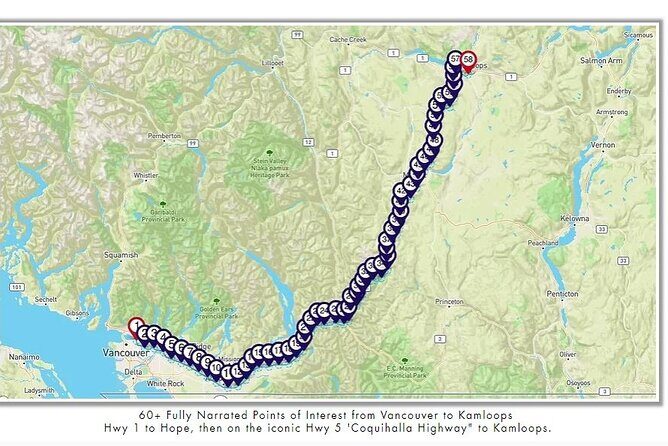
This tour is built to keep your eyes moving, your ears busy, and your patience intact. Still, the format comes with a few realities.
First, keep control of the sound. A past customer noted the sound effects could be sudden and loud enough to startle them while driving through mountain roads. I’d take that seriously. Use your phone volume control. If your car stereo is connected via Bluetooth, make sure the volume isn’t boosted.
Second, expect short gaps rather than nonstop narration. Another note from a past user was that they wanted music between points of interest. Since the tour is primarily spoken audio with trivia moments, plan for stretches where you’ll mostly hear driving ambience. If you’re the kind of person who loves constant background sound, you might prefer your own playlist ready to take over.
Third, remember that “recommended attractions” can be closed. The tour includes prompts that may tempt you to detour, but closures can happen for seasonal or operational reasons. I’d treat the audio as inspiration, not a guarantee.
Who this is best for (and who should skip it)
This fits best if you:
- want a low-cost way to make a long drive more interesting
- like trivia and short stories more than deep museum-style lectures
- want to drive your own way without a group schedule
- are traveling as a group in one vehicle (up to 15 people per group)
It might be less ideal if you:
- hate sudden sound effects
- want a strictly guided itinerary with planned stops and set durations
- don’t want to manage your own tech (you provide the phone/tablet and handle audio playback)
If you’re a frequent driver between Vancouver and Kamloops, the lifetime access is also a big deal. It’s easy to re-listen on a future trip without paying again.
Should you book this Kamloops–Vancouver audio drive?
Yes—if you want a fun, flexible way to learn while you drive and you’re okay handling the “self-guided” part. The standout value is hard to ignore: $8.22 per group, one booking per vehicle, plus offline playback and lifetime access. That combination makes it low-risk and easy to fit into your own travel rhythm.
I’d book it with one mindset: treat it like a road companion, not a chore list. Use it to catch stories you’d otherwise miss, and pull over when the audio tells you something is worth seeing up close. If sudden sound effects would annoy you, set your volume thoughtfully before you hit the curves. If you do that, this tour can turn highway miles into something you’ll remember.
FAQ
How much does the smartphone audio driving tour cost?
It costs $8.22 per group, up to 15 people.
How long is the tour?
The duration is listed as about 1 to 2 hours.
Can I use it without mobile data or signal?
Yes. It includes offline functionality, so it does not rely on cell or data connection.
Is the tour available in English?
Yes, the tour is offered in English.
Does it work if I’m driving from Vancouver to Kamloops instead of Kamloops to Vancouver?
Yes. You can start from either side, and the audio works the same.
What do I need to take part?
You’ll need your own smartphone or tablet (not included) and your own vehicle (transportation not included).
Is this a private experience?
Yes. It’s listed as a private tour/activity, with only your group participating.
Is there free cancellation?
Yes, free cancellation is available. You can cancel up to 24 hours in advance for a full refund.