REVIEW · TORONTO
PATH – A Walking Tour of Toronto’s Underground City
Book on Viator →Operated by Buzz Tours · Bookable on Viator
Toronto’s streets go underground fast. This guided walk helps you make sense of Toronto’s PATH system, where corridors, shops, and transit connections can otherwise feel like a maze. You’ll also pop outside at key landmarks so the city doesn’t feel hidden and forgotten.
I especially like two things: the tour is built for weather-proof exploring, and the group stays small (max 10 travelers) so questions don’t get lost. If you’re there in winter, you’ll understand why the mostly-underground route is such an easy win, and the guide can point you to local places to use later in your visit.
One heads-up: this isn’t a gentle stroll. Expect lots of stairs and escalators, so it’s not recommended for people with mobility issues.
In This Review
- Key highlights you’ll feel right away
- Toronto’s PATH Underground City: Why This Tour Works
- Price and Logistics: What $29.97 Really Covers
- Meeting at Union Station: Beat the Size Problem
- Stop 1: Union Station, Old and New in One Massive Place
- Stop 2: Scotiabank Arena Area, Hockey Icons and Maple Leaf Square
- Stop 3: Brookfield Place Architecture Through a Relocated Piece of History
- Stop 4: The Financial District, Pop Up to the Tall Buildings
- Stop 5: Toronto City Hall Finale with the Old and New Together
- What Makes This Tour a Winter Win (and a Bad-Weather Plan)
- Small-Group Feel: Why It Changes the Quality
- Getting Your Bearings After: How to Use PATH Like a Local
- Who This Tour Suits Best
- Timing Tip: Start Time and Duration Planning
- Should You Book the PATH Walking Tour of Toronto?
- FAQ
- How much does the PATH walking tour cost?
- How long is the tour?
- What time does the tour start?
- Where do I meet the guide?
- Where does the tour end?
- Do I get a mobile ticket?
- What group size should I expect?
- Is the tour okay for people with mobility issues?
- Is the tour mostly underground?
- What happens if the weather is bad?
Key highlights you’ll feel right away
- Mostly underground walking that keeps you out of wind and snow when Toronto turns on the cold
- Max 10 people means you’re not just standing in a crowd
- Above-ground pop-outs at Union, Maple Leaf Square, Brookfield Place, the Financial District, and City Hall
- Guide-led orientation so you can navigate PATH like locals after the tour
- Free-to-see landmarks along the route, with a clear history thread connecting them
Toronto’s PATH Underground City: Why This Tour Works
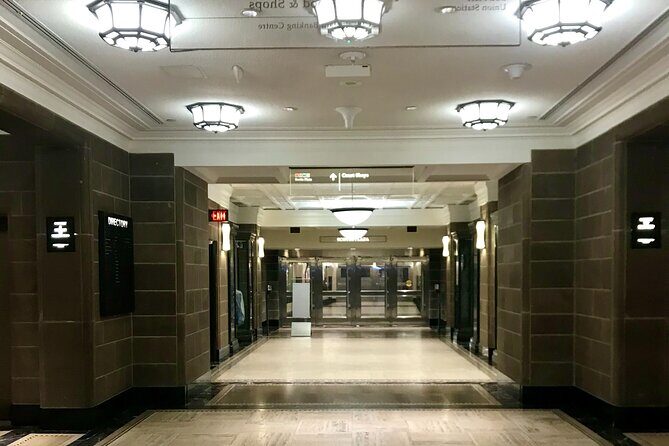
Toronto’s PATH is one of those smart city ideas you only fully appreciate once you’re inside it. It links buildings and transit points with covered walkways, so moving around the core downtown area can be faster and less weather-dependent than trying to cross streets.
On this tour, you’re not just walking in the dark. You get a guided route through the network, plus deliberate moments of daylight at major stops. That mix matters because it keeps your brain oriented: you see where you are above ground, then you learn how to get there underground next time.
This is also one of the easiest ways to learn the logic of downtown without hiring multiple plans. Instead of wandering corridors at random, you follow a route that connects places people actually care about: transit, sports/landmarks, business architecture, and government icons.
You can also read our reviews of more walking tours in Toronto



Price and Logistics: What $29.97 Really Covers
The cost is $29.97 per person, and GST is included. For a tour running roughly 1.5 to 2 hours with a small group, that’s a practical value if you want more than just “steps” and actually want context.
A few practical points that affect value:
- There’s no hotel pickup or drop-off, so you’ll start where the tour starts (Union Station) and finish at City Hall.
- Some stops don’t require extra entry fees, so you’re not hit with surprise costs during the walk.
- You’ll likely do a fair bit of moving, including stairs and escalators, which makes this less “sit and watch” and more “walk and learn.”
If you’re trying to stretch your day efficiently, the fact that the route ends near a central downtown landmark (City Hall) is handy. It means you can roll into sightseeing from the finish instead of backtracking across the core.
Meeting at Union Station: Beat the Size Problem
Your starting point is Union Station, 55 Front St W. Union Station is huge, so the tour asks you to arrive at least 10 minutes early. That timing matters more than you’d think. If you’re late, you lose the calm start that makes the rest of the tour smooth.
The meeting setup is straightforward, and it’s near public transportation. The extra logistics note about signage for the UP Express platform is useful if you’re arriving by transit and need to find your way quickly through the station.
Once you’re inside, the guide’s job is to help you build a mental map. That’s the real benefit at the beginning: after this tour, you’ll spend less time guessing which corridor level to take and more time moving confidently.
Stop 1: Union Station, Old and New in One Massive Place
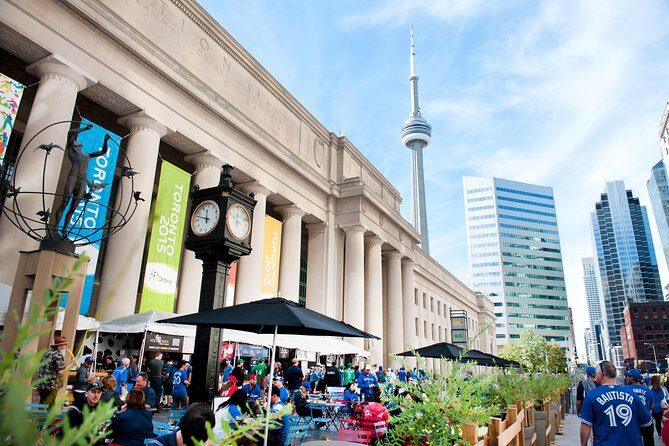
Union Station is your first real orientation anchor. You’ll look at both the station’s history and its ongoing evolution, including how long the station’s expansion effort has been underway.
Why this matters: Union Station isn’t just a transit hub here. It’s a symbol of how Toronto grows—keeping old structure in conversation with new planning. Standing inside a place like this, you can see why downtown navigation (including PATH) exists at all.
Time at this stop is about 20 minutes. It’s long enough to settle in, ask questions, and understand the station layout before you move into the underground network proper.
Stop 2: Scotiabank Arena Area, Hockey Icons and Maple Leaf Square
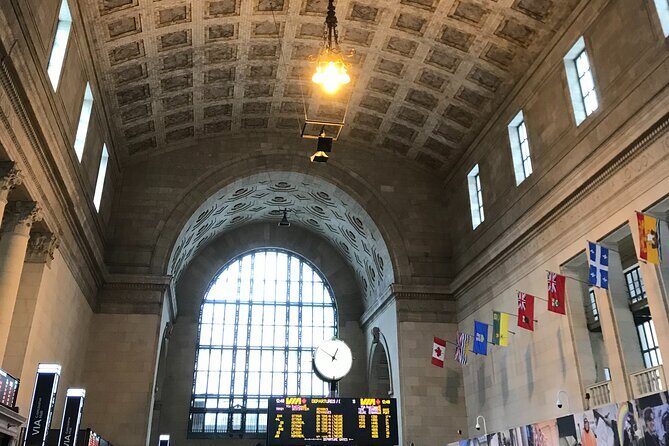
Next you head to the Scotiabank Arena area, specifically the zone around Maple Leaf Square. Here, you’ll see statues of hockey players who played in Toronto, and you’ll connect that sports identity to what you’re seeing in the downtown landscape.
This stop also nods to pop-culture touchpoints around Maple Leaf Square, including references tied to Jurassic Park. Even if you don’t know every detail yet, the point is simple: Toronto’s downtown isn’t only corporate or institutional. It’s also entertainment and community space.
You’ll spend about 15 minutes here. It’s a smart pacing choice—enough time to appreciate the outdoor landmarks before you return to the underground flow.
You can also read our reviews of more city tours in Toronto




Stop 3: Brookfield Place Architecture Through a Relocated Piece of History
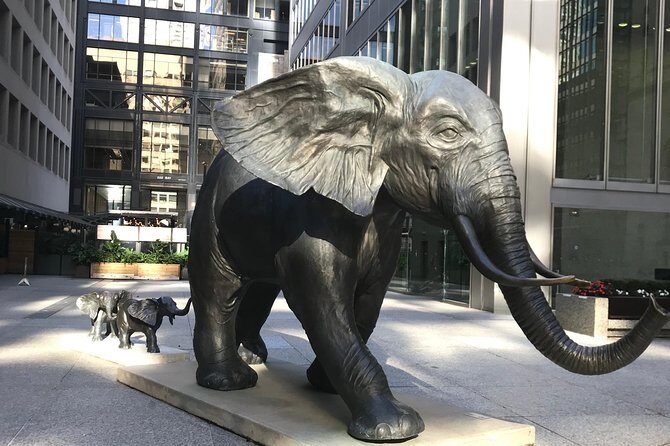
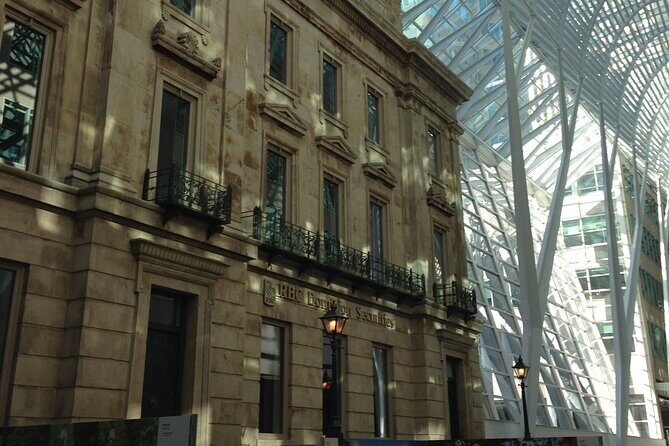
At Brookfield Place, you’ll focus on architecture and a specific kind of preservation story. The tour highlights a historic building that was relocated into a dramatic atrium space.
This is where PATH starts to feel less like a “tunnel system” and more like a functional urban lobby. Atriums, connecting corridors, and building redesigns make the downtown experience more walkable, even when weather isn’t friendly.
Time is about 10 minutes, so don’t expect a long photo stop. Instead, treat it like a quick architecture orientation: look up, notice the atrium scale, then remember where the underground connections lead from here.
Stop 4: The Financial District, Pop Up to the Tall Buildings
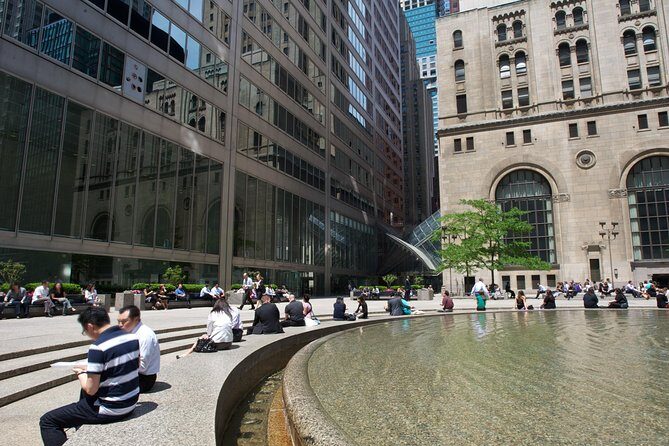
After you’ve been underground most of the time, you’ll pop out into the Financial District area. This segment is about scale—standing among major banks and the tall downtown skyline.
It’s also a good mental reset. You’ll get a sense of direction: underground corridors can make you feel horizontally “stuck,” but seeing the towers and the street-level feeling tells you where you are.
This stop is about 15 minutes. It’s timed well in the overall route because it breaks the underground rhythm before you wrap up at Toronto’s most recognizable government landmark.
Stop 5: Toronto City Hall Finale with the Old and New Together
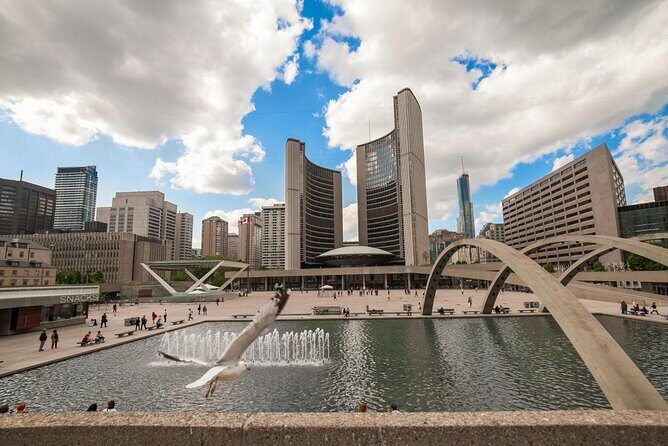
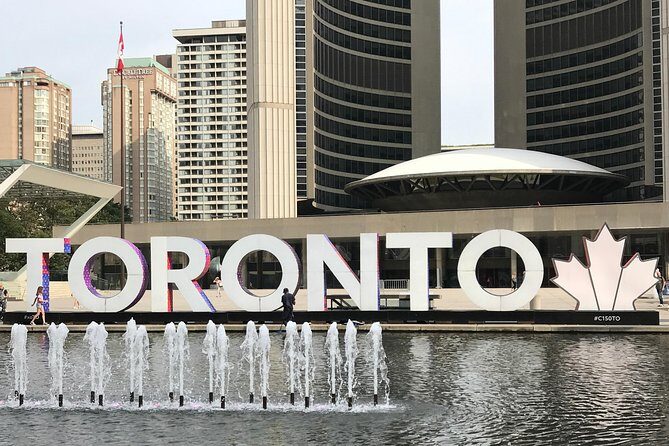
The tour ends at Toronto City Hall (100 Queen St W), about 2 km (1.5 miles) from the start. You’ll see the old and new City Halls side by side, plus the famous Toronto sign.
This is a strong closer for two reasons. First, City Hall gives you a clear “civic center” moment—Toronto’s downtown isn’t just transit and business; it’s governance and identity too. Second, it pairs nicely with everything you learned underground about how downtown spaces connect.
You’ll spend around 15 minutes here. Once you finish, you can continue exploring on foot or use transit nearby, since you’re still in the core downtown area.
What Makes This Tour a Winter Win (and a Bad-Weather Plan)
The big selling point is that it’s mostly underground, which helps a lot when Toronto weather is unpleasant. You’re not gambling on comfort, and you’re not forced into long street crossings during the coldest months.
But it’s not only about avoiding rain or snow. Underground routes also help you learn the city in a different way. Corridors connect buildings so closely that the city feels like one system rather than disconnected attractions.
If you want an easy day plan, this is the kind of tour that protects your schedule. The route keeps momentum, and the guide can also share local recommendations so your time above ground feels more targeted after the tour.
Small-Group Feel: Why It Changes the Quality
This tour caps at 10 travelers, and that’s meaningful. When you have a guide who can talk with you instead of just broadcasting, you get better answers and a smoother pace.
In particular, guides referenced for this tour style have been described as:
- engaging and easy to relate to (not stiff or lecturing),
- responsive to questions,
- and good at including everyone in conversation, even if the group has solo visitors and families together.
I like that mix because it turns the walk into something interactive. You’re not only collecting facts; you’re building a usable picture of downtown flow—how to move, what to look for, and what places matter to Toronto’s story.
Getting Your Bearings After: How to Use PATH Like a Local
Here’s the practical payoff you should expect. Even after the tour ends, you’ll walk away with a sense of which buildings and zones connect through PATH and why certain routes make sense.
The underground city can feel confusing at first, especially because there are levels, stairs, and escalators. The guide’s explanations help you translate what you’re seeing into a plan you can repeat.
A simple strategy: after the tour, pick one landmark from the day and try to find your way back toward it using PATH connections you now understand. Don’t aim for perfection. Aim for confidence.
That’s the real value of a guided “orientation walk” rather than just wandering.
Who This Tour Suits Best
This works well if you:
- visit in winter or want to avoid long exposure to bad weather,
- like city history told through real places, not museum audio,
- want a guided path through a complex transit-and-shopping network,
- and enjoy small-group pacing.
It’s also a good solo plan if you like meeting people while still getting answers that fit your questions. The tour’s structure makes it easy to participate without feeling like you’re blocking anyone.
If you dislike stairs and escalators, you should skip this one. The tour itself notes that it’s not recommended for people with mobility issues due to the number of steps and escalators you’ll use.
Timing Tip: Start Time and Duration Planning
The tour starts at 1:00 pm. It runs about 1 hour 30 minutes to 2 hours, depending on pacing and questions.
Because it ends at City Hall, plan what you’ll do next. A nearby attraction or dinner spot in the downtown core works well. It also makes it easier to connect with other plans without needing to retrace your steps.
If you’re the kind of traveler who likes to keep the day flexible, this time window is a good middle block: early enough to still enjoy daylight, late enough that you’re not rushing out the door.
Should You Book the PATH Walking Tour of Toronto?
If your goal is to understand Toronto’s downtown connections in a way that’s comfortable and efficient, I think this is an excellent bet. The price is reasonable, the group size keeps it personal, and the underground focus is genuinely useful in winter or in messy weather.
Book it if you want:
- a guided route through PATH without getting lost,
- a mix of underground walking and above-ground landmarks,
- and a guide who can point you toward local recommendations for the rest of your trip.
Skip it if you:
- need an accessibility-friendly route,
- or prefer fully above-ground sightseeing with minimal stairs.
FAQ
How much does the PATH walking tour cost?
It costs $29.97 per person, and GST is included.
How long is the tour?
The tour runs about 1 hour 30 minutes to 2 hours.
What time does the tour start?
The start time is 1:00 pm.
Where do I meet the guide?
You meet at Union Station, 55 Front St W, Toronto, ON M5J 1E6.
Where does the tour end?
The tour ends at Toronto City Hall, 100 Queen St W, Toronto, ON M5H 2N2, about 2 km (1.5 miles) from the starting point.
Do I get a mobile ticket?
Yes. The tour uses a mobile ticket.
What group size should I expect?
The tour has a maximum of 10 travelers.
Is the tour okay for people with mobility issues?
The tour is not recommended for people with mobility issues because it involves many stairs and escalators.
Is the tour mostly underground?
Yes, it’s designed as a mostly-underground walk through PATH, with some stops above ground.
What happens if the weather is bad?
This experience requires good weather. If it’s canceled due to poor weather, you’ll be offered a different date or a full refund.