REVIEW · MONTREAL
Montreal: Downtown and Old Montreal Highlights Bike Tour
Book on GetYourGuide →Operated by Fitz Montreal · Bookable on GetYourGuide
Few cities suit biking like Montreal. This tour strings together Old Montreal icons and local back streets, with a guide who explains what you’re seeing every short stop. I especially like the small-group feel and the frequent story breaks that keep the ride from turning into nonstop pedaling. I also like how you get a mix of big landmarks and quieter laneways, so the city feels lived-in instead of staged. One possible drawback: it’s a popular highlight route, so on busy days parts of the Old Port and central stops can feel crowded even though the pace stays relaxed.
In This Review
- Key reasons this Montreal bike tour scores so high
- Old Montreal starts at 87 Rue de la Commune Est
- The 3-hour plan: easy pace, smart rhythm, real stops
- Old Port and Place des Festivals: where Montreal’s energy shows up fast
- Habitat 67 and Place d’Armes: architecture you’ll notice more than you expect
- Notre-Dame Basilica and the Lachine Canal approach: major landmarks, then a shift
- Farine Five Roses and the Gay Village: quieter laneways, then street life
- Guides make or break a bike tour: why this one gets praised
- Price and value: why $87 can make sense on day one
- What to wear and pack so the ride stays fun
- Who this Montreal highlights tour is best for
- Should you book the Montreal Downtown and Old Montreal Highlights Bike Tour?
- FAQ
- Where is the meeting point?
- How long is the bike tour?
- How far will we ride?
- Is the route mostly flat?
- How big is the group?
- What language is the tour guide?
- What’s included in the price?
- What should I bring?
- Are sandals allowed?
Key reasons this Montreal bike tour scores so high
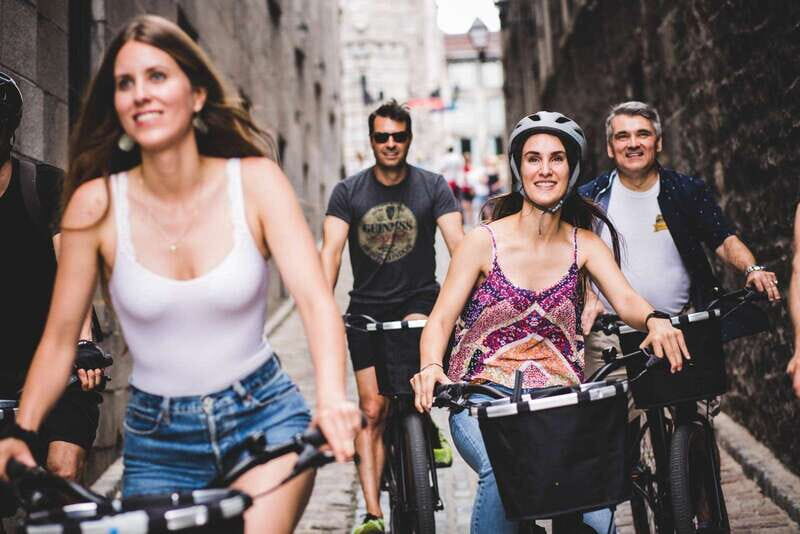
- Small group (max 10) means easier conversation and safer handling at intersections.
- Frequent stops every ~15 minutes for real context, not just photo ops.
- Mostly flat bicycle paths with about 2 hours of riding for most of the 3-hour experience.
- A hit list that spans Old Montreal, downtown energy, and the Lachine Canal side of the city.
- Off-the-beaten-path lanes and parks to see more than the usual downtown loop.
- Included bike setup (bike, helmet, and a basket) keeps you from scrambling with gear.
Old Montreal starts at 87 Rue de la Commune Est
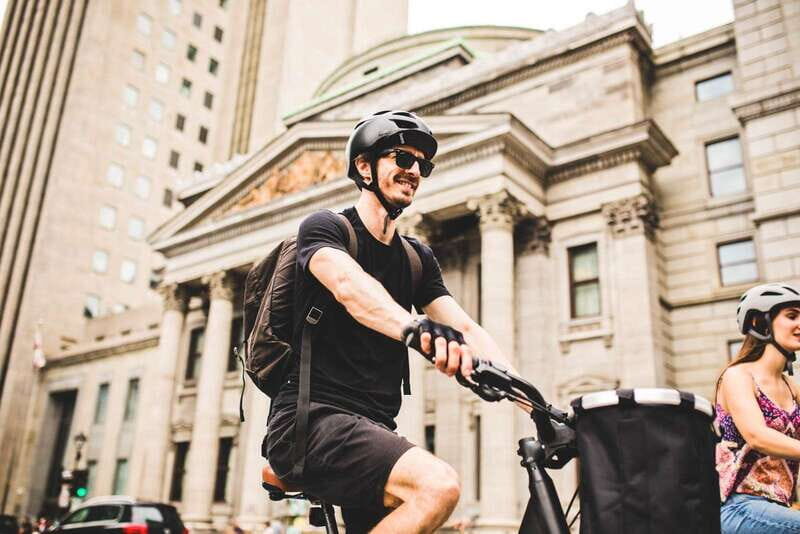
The tour meets at 87 Rue de la Commune Est, right in the heart of Old Montreal. That location matters because you begin where the city’s story is most visible: history-heavy streets, river energy, and a lot of iconic landmarks packed close together.
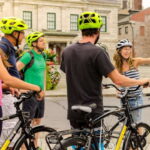
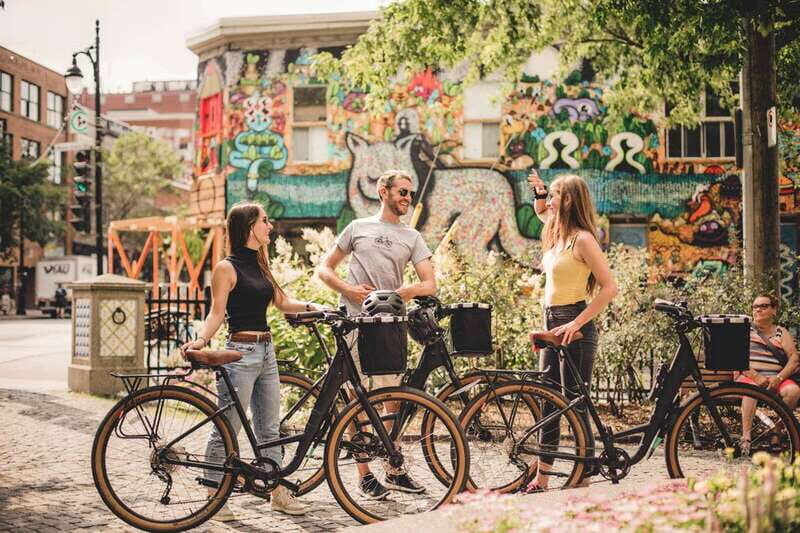
You’ll arrive and get fitted on a “stylish city bike,” plus a helmet and a basket. The basket is a small thing, but it changes how you carry water, a layer, or your phone without balancing everything on your back.
If you come in with the wrong footwear, you’ll have a problem. Sandals or flip flops aren’t allowed, so wear closed-toe shoes you can walk in too, since there are regular pauses.
You can also read our reviews of more cycling tours in Montreal
The 3-hour plan: easy pace, smart rhythm, real stops
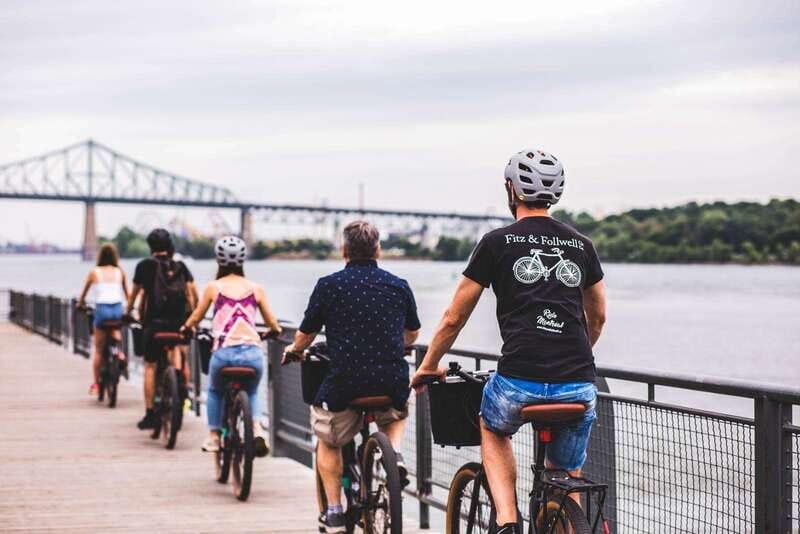
This runs for 3 hours total, with roughly 10 miles (15 km) covered and about 2 hours of actual riding. What you’re really buying is the pacing: short rides, short explanations, then moving again.
Expect 4–5 short breaks for stories and orientation, plus one longer break around 30 minutes. On a highlight tour, that rhythm is the difference between “I saw stuff” and “I understand what I’m seeing.”
The route is described as mostly flat and on bike paths suited for all riders. The age minimum is 13+, which also hints at the balance: enough structure to keep the group together, but not so intense that it turns into a training ride.
Old Port and Place des Festivals: where Montreal’s energy shows up fast
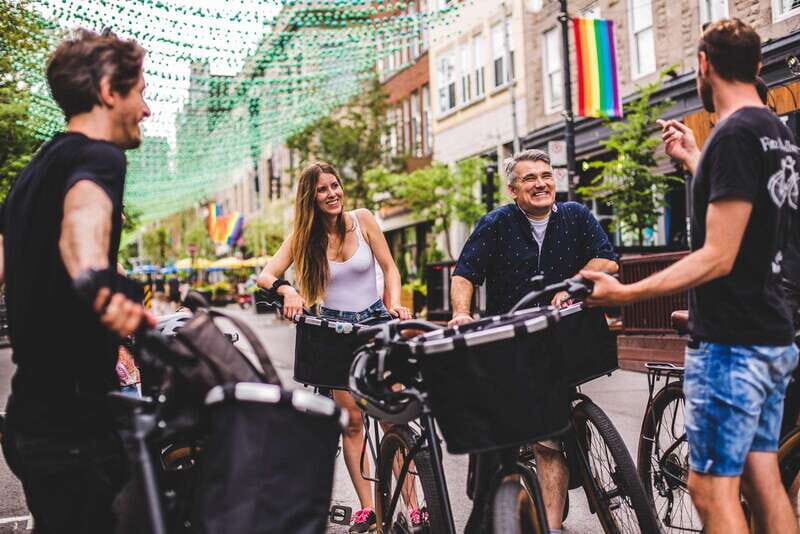
After you roll out of Old Montreal, you’ll hit the Old Port area and then Place des Festivals. These stops work early in the tour for a reason: you get a quick sense of how Montreal moves—tourism, public space, and cultural momentum—without spending hours just grinding forward.
The guide tells stories as you go, and the cadence is frequent enough that you’re not trying to memorize a lecture while biking. You get repeated opportunities to ask questions or reset your attention before the next stretch.
A practical note: because this is a “best of” zone, you’ll likely share sidewalks and crossings with other pedestrians. The advantage of a small group and a guide who keeps you together is that you can focus on riding, not on guessing your way through.
Habitat 67 and Place d’Armes: architecture you’ll notice more than you expect
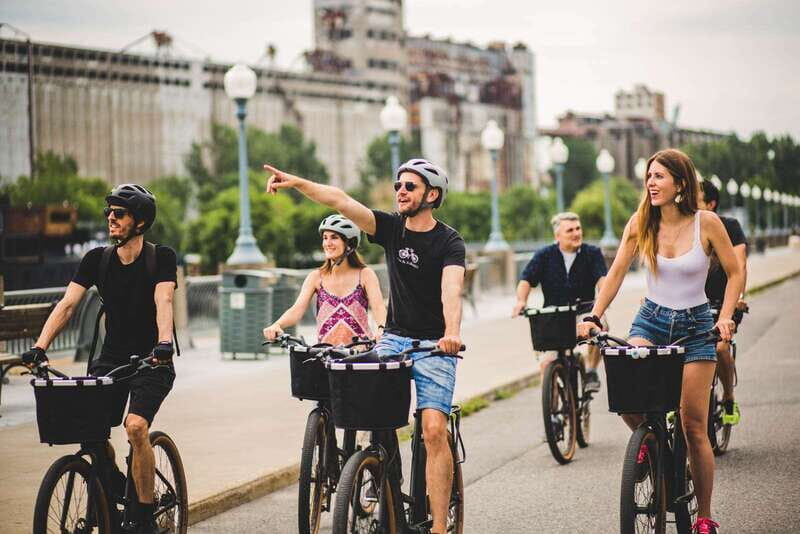
One reason this tour feels different from a basic downtown loop is that it doesn’t treat the city as one style. You stop at Habitat 67 and Place d’Armes, and the tour is built to help you notice how Montreal’s layers sit side by side.
This is where the guide’s storytelling really matters. You’ll hear how the city’s founding shaped what you see now, and you’ll learn about the First Nations heritage plus the way French and British architecture coexist in the same general areas. Those concepts are easier to grasp when you’re physically moving between spaces.
Even if you don’t consider yourself an architecture person, you’ll probably leave with a better eye. The tour doesn’t ask you to become a historian. It teaches you where to look and what to pay attention to.
Notre-Dame Basilica and the Lachine Canal approach: major landmarks, then a shift
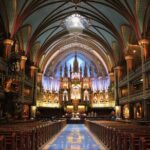
The route includes a stop at Notre-Dame Basilica. That’s the kind of location where it’s easy to either speed past for photos or stop long enough to understand why people care. With this tour, the explanation comes as part of the ride, so you don’t just stare—you get context in real time.
From there, you start moving toward the Lachine Canal area. The canal section is a nice contrast: you get away from the most tour-busy blocks and shift into a more practical, everyday Montreal feel. The guide also discusses the economic impact of the Old Port, which gives the city’s riverfront role more meaning than you’d get from a quick photo stop.
If you’re the type who likes your sightseeing “with a purpose,” the way the tour connects history and place is the point. It’s not random stops. It’s a guided sequence.




Farine Five Roses and the Gay Village: quieter laneways, then street life
You’ll also visit the Farine Five Roses sign—a landmark that’s easy to recognize once you’re near it, and the kind of thing you’d miss if you were only using a straight-line walking plan. The tour balances those recognizable moments with the less obvious stuff.
And then there’s the Gay Village. This part of the itinerary matters because it shows Montreal beyond postcard culture. You’ll get a dose of local lifestyle while riding through areas that feel more like real neighborhoods than a museum of buildings.
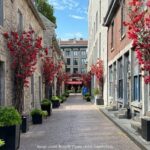
The tour also repeatedly goes off the beaten path: parks, quiet streets, and laneways. That’s where you tend to feel “Montreal” the most—the small-scale street texture and the sense that people actually live and move through these blocks.
Guides make or break a bike tour: why this one gets praised
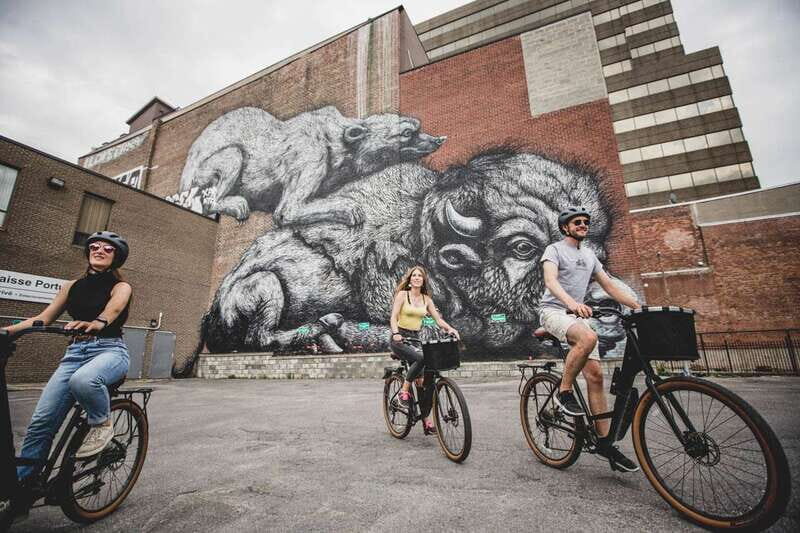
The biggest strength here is the human part: the guides. Multiple guides are praised for being passionate, organized, and focused on safety. Names you may encounter include Rod, JF, Rene, Darren, Martin, Jeff, Mahar, and Catherine—and the theme is consistent.
The ride structure supports that. You’re stopping often enough that you don’t feel left behind, and you’re not spending all your energy trying to keep up. Several experiences also mention guides making the group feel comfortable, including helping riders get to know each other in a small group.
Safety comes up a lot too. The route is on bike paths that are mostly flat, but there are still intersections, crossings, and pedestrian-heavy areas. When the guide keeps the group tight, the ride feels calm rather than chaotic.
And yes, bike quality matters. You’ll be on a city bike with a helmet, and there’s mention of bikes in great condition and comfortable helmets. That’s exactly what you want on a 3-hour tour where you’ll be paying attention to places—not fiddling with gear.
Price and value: why $87 can make sense on day one
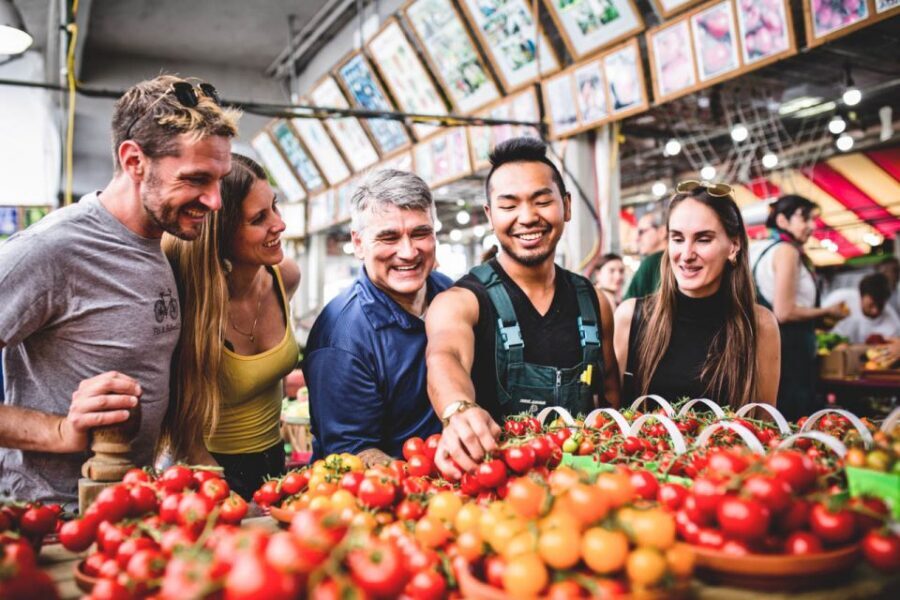
At $87 per person for a 3-hour guided bike tour, the value is strongest if you want structure. You’re not just getting transportation—you’re getting:
- a local guide with frequent stops,
- a bike and helmet included,
- a route that covers multiple areas instead of just a single downtown circuit,
- and time spent understanding how the city works culturally and economically.
Because there’s no hotel pickup, you’re responsible for getting to Old Montreal on your own. That can lower the value slightly if your lodging is far from the meeting point, but the payoff is that you start in the exact zone that makes the city easiest to explore.
Also consider what you’re saving. If you tried to replicate this by yourself, you’d likely spend time figuring out bike lanes, planning stops, and finding the right “why this matters” context. Here, the guide handles that part while you ride.
What to wear and pack so the ride stays fun
This tour is meant to be easy, but you’ll feel better if you prepare like a cyclist, not a tourist in flip-flops.
Bring:
- Water (explicitly recommended)
Wear:
- Comfortable clothes and closed-toe shoes
- A jacket or layer you can adjust (Montreal weather can shift)
Don’t bring:
- Sandals or flip flops
In the reviews, people also note that the ride is approachable and the stops feel well timed. One practical benefit: the longer break gives you a real chance to regroup rather than just getting off the bike for a quick photo and back on immediately.
Who this Montreal highlights tour is best for
This is a great pick if you want a first-day orientation to Montreal and you like moving at a relaxed pace. You’ll get the downtown-meets-Old Montreal contrast, plus neighborhoods and quieter lanes that help you build a mental map fast.
It’s also a strong choice for people who want local food and culture without committing to a full food tour. The guide’s role isn’t limited to landmarks; the ride includes culture talk and practical ideas, like where to eat near the starting area.
You might not love it if:
- you want total freedom with no scheduled stops,
- you dislike biking enough that you’d rather walk at your own pace the whole time,
- or you’re traveling with very specific interests that aren’t represented by the core list.
Should you book the Montreal Downtown and Old Montreal Highlights Bike Tour?
If your goal is to understand Montreal quickly while enjoying a fun, mostly-flat ride, I’d book it. The combination of small group size, a guide who tells stories often, and a route that spans Old Port, downtown, and the canal-side neighborhoods is a high-value way to make day one feel confident.
Choose it especially if you want more than a checklist. The route’s real strength is the context—history, culture, and the way architecture and economic life connect—delivered in short, manageable chunks while you’re moving through the city. If you show up with water, proper shoes, and a willingness to stop and listen for a few minutes at a time, you’ll get a lot out of those three hours.
FAQ
Where is the meeting point?
The tour meets at 87 Rue de la Commune Est in the heart of Old Montreal.
How long is the bike tour?
The duration is 3 hours.
How far will we ride?
The riding distance is approximately 10 miles (15 km), with about 2 hours of riding.
Is the route mostly flat?
Yes. Most of the ride is on bicycle paths that are mostly flat and suitable for all riders.
How big is the group?
It’s a small group limited to 10 participants.
What language is the tour guide?
The tour guide is English.
What’s included in the price?
The tour includes the bike tour, a local guide, bicycle and helmet, and a basket.
What should I bring?
Bring water.
Are sandals allowed?
No. Sandals or flip flops aren’t allowed.