REVIEW · MONTREAL
Montreal: City Architecture Guided Bike Tour
Book on GetYourGuide →Operated by Ca Roule Montreal On Wheels · Bookable on GetYourGuide
A Formula 1 lap in Montreal? It works. You’ll pedal a guided route that mixes major landmarks, fun city facts, and a surprisingly real Formula 1 track moment. It’s a sharp way to see the St. Lawrence area and understand how Montreal grew along the water.
I especially like how the tour connects the architecture to time periods, with three intentional stops that cover the 1800s, the early 1900s, and modern-day Montreal. And you also get small, worthwhile extras like a food tasting, bottled water, and a complimentary drink.
One consideration: the e-bike and the included gear can feel heavy. A couple riders noted the lock is weighty and there isn’t a handlebar phone support, so plan to stash your phone in a pocket or small bag and keep your grip steady.
In This Review
- Key things that make this tour worth your attention
- Three Hours on Two Wheels: What the Experience Feels Like
- Entering The Ride: Meeting at RentaBikeNow and Getting Ready
- Old Montreal and the Early Stops: Getting Oriented Fast
- Atwater Market, Griffintown, and the Industrial-Era Feel
- Habitat 67 and the Biosphere: Modern-Day Montreal in View
- Crossing the Jacques Cartier Bridge: The St. Lawrence Moment
- Parc Jean-Drapeau and the Island Ride: Setting Up for the Formula 1 Section
- Riding a Real Formula 1 Track Segment on Notre-Dame Island
- E-Bike Upgrade, Age Rules, and How Comfort Really Works
- Drinks, Food Tasting, and the Little Extras That Improve the Day
- Price and Value: Why $68 Can Make Sense
- Who This Tour Suits Best
- Should You Book This Montreal Architecture Bike Tour?
- FAQ
- FAQ
- How long is the Montreal architecture guided bike tour?
- How much does the tour cost?
- Where do I meet for the tour?
- Is the Formula 1 track included?
- Can I choose an electric bike?
- What are the e-bike age and permit requirements?
- What age is the tour suitable for?
- What’s included during the tour?
- What language options are available?
- What do I need to bring?
- Can I cancel and get a full refund?
Key things that make this tour worth your attention
- A route built around Montreal’s waterfront growth and a St. Lawrence River crossing that changes how you see the city
- Three architecture stops tied to different eras, so you’re not just collecting photos
- A genuine Formula 1 track section on Notre-Dame Island, short but memorable
- Certified guide commentary in English or French, with guides like Julien, Julian, and Michael bringing the story in different styles
- Bike basics included (helmet, lock, repair kit) plus a drink and a food tasting
- You can keep the bike until closing time, so the tour doesn’t end your day
Three Hours on Two Wheels: What the Experience Feels Like
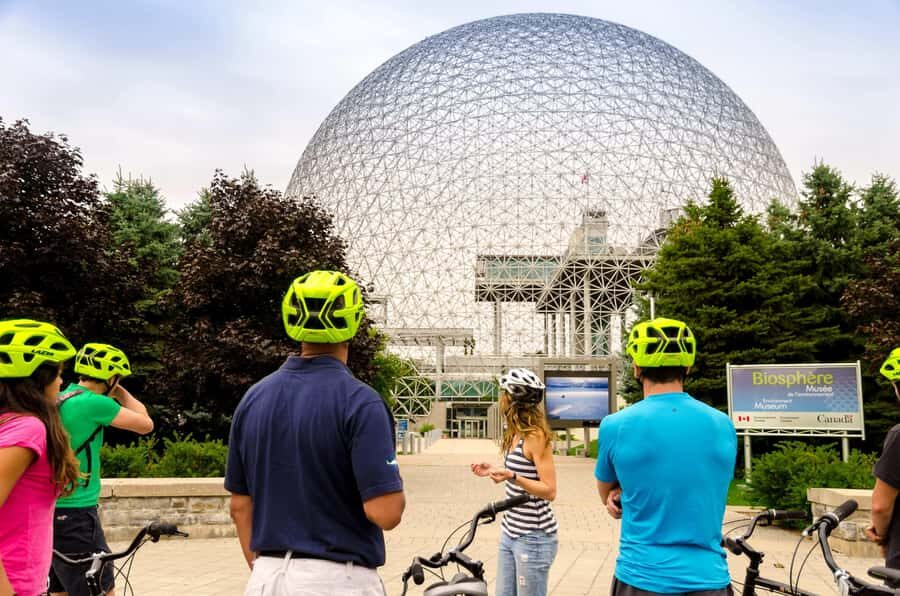
This isn’t a “sit and learn” tour. It’s an active, guided ride where you stop just long enough to look, listen, and move on. In about three hours, you cover a lot of ground: waterfront views, architectural checkpoints, and a big river moment over the Jacques Cartier Bridge.
The best part is that the tour is structured, not random. You’re guided through Montreal in a way that helps you read the city: where the water shaped development, how different time periods left different building styles, and why the parks and islands matter when you’re trying to understand Montreal’s outdoor rhythm.
It also has that fun “only in Montreal” quality. A real Formula 1 track segment on Notre-Dame Island isn’t something you can fake with a museum sign. It’s the kind of experience that turns an ordinary bike ride into a story you’ll repeat later.
You can also read our reviews of more cycling tours in Montreal

Entering The Ride: Meeting at RentaBikeNow and Getting Ready
You start at RentaBikeNow, Store #264, at 27 Rue de la Commune E. That’s also where the tour ends, with two drop-off options listed, but the address you’ll plan around is the Commune E location.
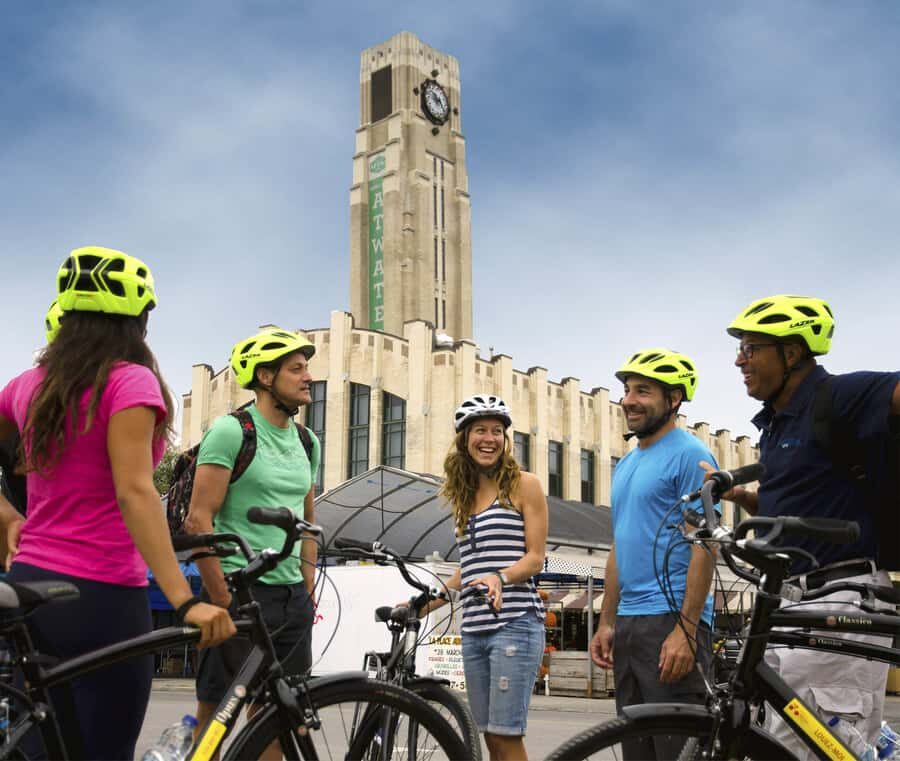
Before you roll out, expect the essentials to be handled for you: you’ll get a helmet, a lock, and a repair kit. The bike is included (either standard or electric, depending on what you choose). That matters because it keeps you from spending time figuring out local bike logistics, and it lets you focus on the route and the stops.
One small practical note from rider feedback: a phone mount may not be part of the setup. If you rely on your phone for photos or navigation, keep it secured in a pocket or small crossbody. You’ll want both hands for smooth control around turns and near-station traffic.
Old Montreal and the Early Stops: Getting Oriented Fast
Your first stretches are about orientation and momentum. There are short sightseeing moments at Old Montreal and at Pointe-à-Callière Museum. The timing is tight—about 10 minutes at each—so the guide’s pacing matters.
Why this works: these early stops help you set the mental map. Once you know where you are and what the guide is trying to connect (city building and the river), later architecture stops land better. Instead of “look at that building,” it becomes “this is how that era fits into the city’s growth.”
You’ll also pass through classic waterfront-adjacent areas, including the Old Port area and sights along the way such as Silo no. 5. Even if you don’t linger long, you’ll start to feel the city’s geography: waterlines, old industrial edges, and the way Montreal uses parks and promenades to soften the urban hard edges.
If you like your tours with clear direction—where you’re told what to look for and why—these early checkpoints are a strong start.
Atwater Market, Griffintown, and the Industrial-Era Feel
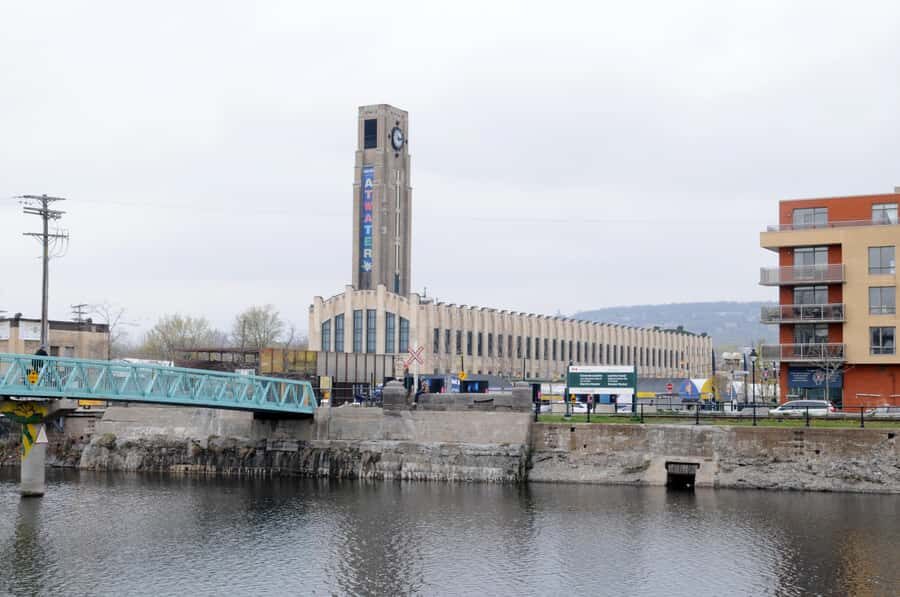
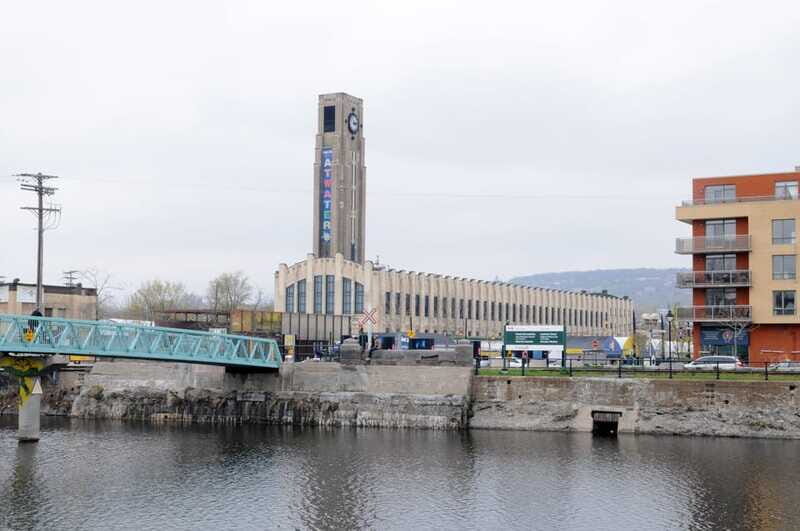
A mid-ride stop at Atwater Market gives you a useful break in both scenery and energy. You’ll get about 10 minutes to look around and listen before you continue. It’s a good place to reset your senses because markets tend to reflect daily life rather than just architecture.
From there, the ride threads through areas connected with Montreal’s working-city story, including Griffintown and the canal side of town. The route description specifically includes the Lachine Canal area, which is exactly the kind of “this is why Montreal looks like this” setting that makes an architecture tour feel grounded.
Here’s the value of this part of the route: it’s where the tour’s era theme starts to make more sense. When the guide points out building styles and city planning choices tied to earlier development, you can actually see how the setting influenced the design and the flow of people and goods.
A drawback to be aware of: this is a bike ride, so even at short stops you’re never fully “in museum mode.” If you want long indoor exploration or deep architectural analysis without moving, this may feel too fast. The trade-off is that you see far more of the city than you would in an all-walking format.
Habitat 67 and the Biosphere: Modern-Day Montreal in View
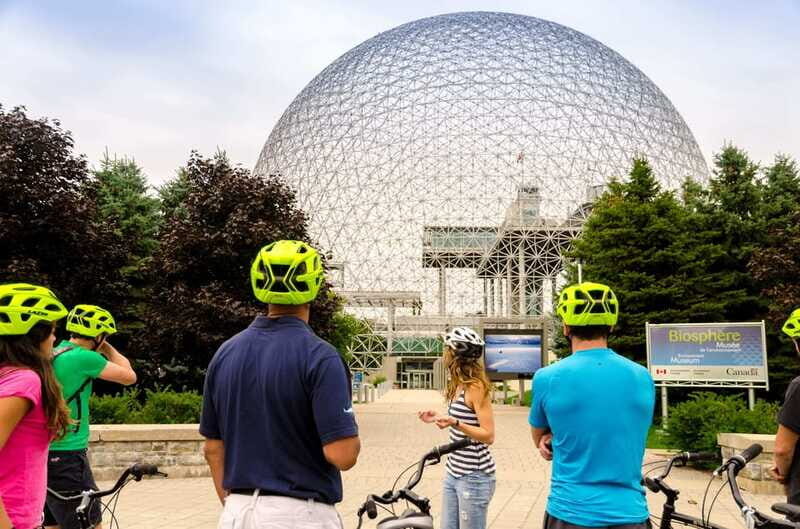
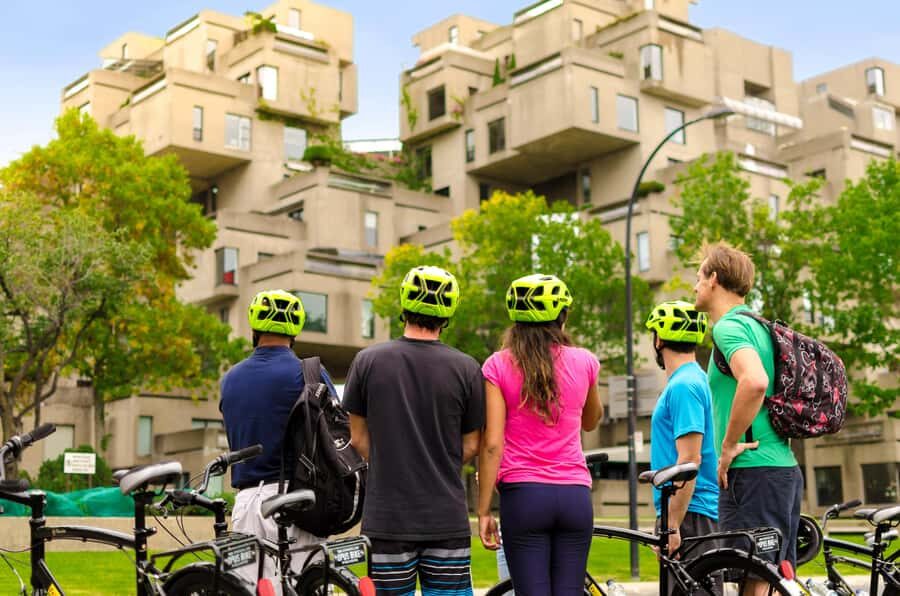
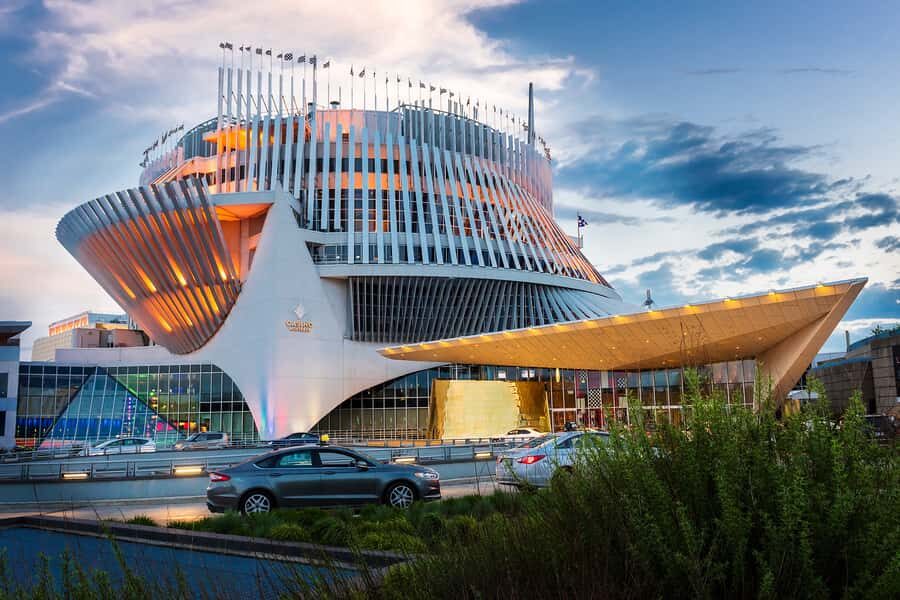
Later on, you’ll hit two modern iconic stops: Habitat 67 and the Biosphere (with Parc Jean-Drapeau in the mix). These are big visual statements, and the tour uses them to represent the modern-day portion of its architecture timeline.
Expect short sightseeing windows—again, around 10 minutes at each scheduled stop—so the guide’s commentary is doing the heavy lifting. The goal isn’t for you to memorize every detail. It’s to help you recognize the idea: Montreal has changed its building language over time, and you’re riding through those changes in a few concentrated moments.
If you’re the type who likes photos, this is where you’ll want your camera ready—because modern structures and waterfront park settings naturally create strong frames. And since the tour is designed around time periods, the modern section doesn’t feel random. It’s meant to be the “now” chapter after older city layers.
You can also read our reviews of more guided tours in Montreal




Crossing the Jacques Cartier Bridge: The St. Lawrence Moment
One of the most memorable segments is the ride across the Jacques Cartier Bridge and the emphasis on the importance of the St. Lawrence River. The tour is explicit about this being a highlight: it’s not just transportation. It’s a story point.
Why this matters: seeing Montreal from a distance changes how you interpret everything you’ve been told. Architecture stops become less like stand-alone photo targets and more like pieces in a bigger city plan. You can sense where neighborhoods sit, where the water influences development, and why the river keeps showing up in Montreal’s identity.
Expect that the guide will tie this crossing back to earlier parts of the tour, so the bridge isn’t a “skip ahead” moment. It’s part of the overall logic of the route.
Also, because you’re on bikes, you can keep moving even during the scenic stretch. That helps if you’re trying to fit a lot into a short visit window.
Parc Jean-Drapeau and the Island Ride: Setting Up for the Formula 1 Section
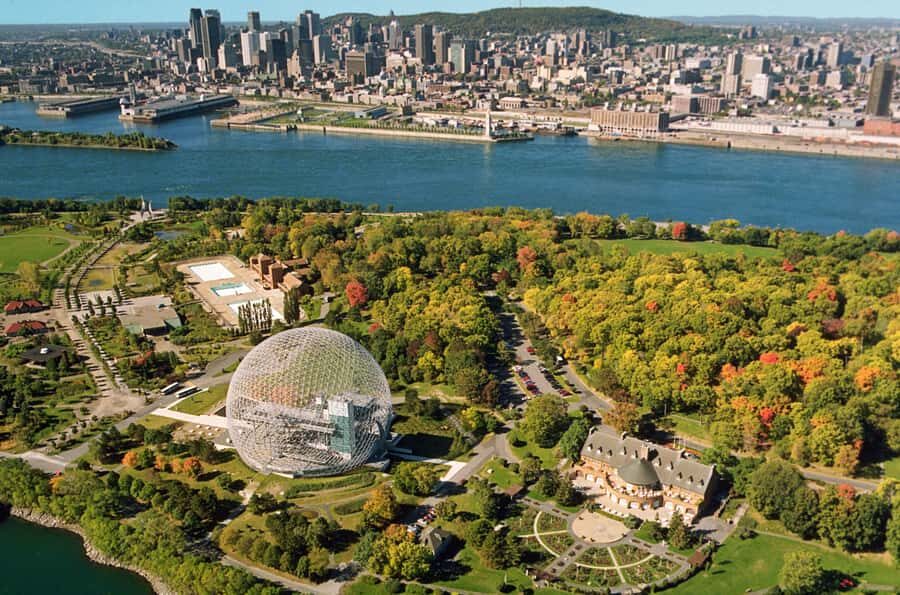
As you move toward the parkland and island areas, the vibe changes. Parc Jean-Drapeau appears in the route as one of the scheduled sightseeing moments. This is where the city’s outdoor side shows up—more space, more open views, and a sense that Montreal uses these areas as both recreation and identity.
Then you’re guided onto Sainte-Hélène’s Island and onward to Notre-Dame Island. The tour description calls out that this unique circuit is tied to the water and the way Montreal’s parks built its reputation. Whether you care most about architecture or scenery, the island approach makes the ride feel like a real escape without leaving the city.
And that sets up the showpiece: the next section is where the tour becomes truly distinctive.
Riding a Real Formula 1 Track Segment on Notre-Dame Island
Here’s the moment you’ll tell friends about: the tour includes the opportunity to ride on a real Formula 1 racetrack on Notre-Dame Island. The ride itself is part of the loop, not a separate bus-transfer day, so you keep the momentum of the bike tour while still landing on something unusual.
In plain terms: it’s thrilling because it’s concrete. You’re not just watching race footage. You’re rolling along a track environment that’s designed for speed and focus, and it’s a fun contrast against the relaxed pace of a guided bike morning.
How to enjoy it: keep your attention on the surroundings and the guide’s instructions. Even if the segment is manageable, you’ll likely experience the track as a different kind of space than roads and parks. That’s exactly why it’s special.
If you’re considering this for the Formula 1 factor alone, you’re not wrong. But I’d still recommend going for the full route, because the track section hits harder when you’ve already seen how the city’s water-and-architecture story builds toward that point.
E-Bike Upgrade, Age Rules, and How Comfort Really Works
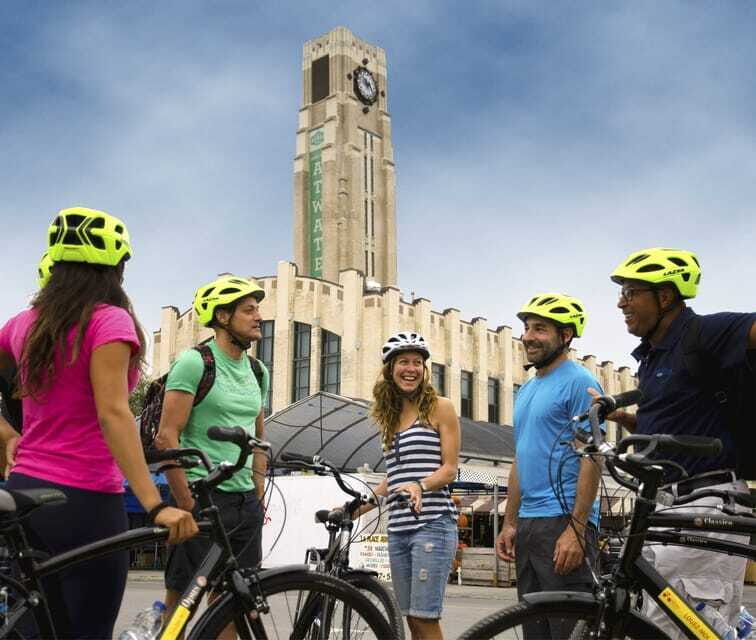
You can upgrade to an electric bike option. This helps a lot if you’re not comfortable with longer or slightly tougher stretches. The rider experience you’ll get is still guided and structured, but the e-bike reduces the effort needed to keep pace with the group.
There are also clear age rules:
- For e-bikes, the minimum age is 14.
- Ages 14–17 require a moped or scooter permit.
- Age 18+ doesn’t require a permit.
The overall tour minimum age is 13, but that’s for the tour itself, not necessarily for e-bike eligibility.
A practical comfort point: one rider specifically noted the e-bike can feel heavy, and another mentioned the lock is heavy too. That’s not a deal-breaker for most people, but it’s worth knowing so you don’t feel surprised when you carry the lock or shift the bike.
Also, you’ll want to wear your helmet properly and keep your phone secure. With no phone support mentioned in the gear setup, you’ll likely rely on pockets or a small bag. For photos, bring a plan that doesn’t require holding your phone up while riding.
Drinks, Food Tasting, and the Little Extras That Improve the Day
This tour includes more than just motion. You get a complimentary beverage, bottled water, and a food tasting. Those breaks are small, but they change how the three hours land: you’re not just riding between photo stops, you’re also getting a taste of Montreal’s daily rhythm.
One rider noted that at the start there was already a bottle of water opened, and there was a coupon for a fresh drink at a nearby Italian restaurant. I can’t promise that same exact coupon detail applies to every departure, but it’s a nice example of the kind of “extras” you might see.
Because the route includes both older and modern areas, a food moment helps you connect to the city in a more personal way. It’s also a good reset for energy before you hit the bridge and island segments.
Price and Value: Why $68 Can Make Sense
At $68 per person for a 3-hour guided ride, the value comes from what’s wrapped into the price—not just the fact that you’re biking.
You’re getting:
- a local professional guide
- a bike or e-bike hire
- helmet, lock, and repair kit
- bottled water, a complimentary beverage, and a food tasting
- and access to a Formula 1 track segment as part of the circuit
Bike rentals alone can quickly eat up time and money once you add gear and guidance. Here, the guide does the real value work: keeping the route cohesive, connecting architecture eras, and making sure you understand what you’re seeing instead of just passing it.
Also, the freedom to keep the bike for the rest of your day until closing time changes the math. You’re essentially borrowing the bike for more than just three hours. If you’re the kind of visitor who plans an extra neighborhood loop after a tour, that can turn the cost into a better deal.
Who This Tour Suits Best
This tour fits well if you want:
- a guided architecture experience without spending your whole day indoors
- a bike day that includes both waterfront views and modern landmarks
- a standout activity like the Formula 1 track segment
- a route that teaches through structure: 1800s, early 1900s, modern-day
It’s also a good choice for people who like their guides to talk and adapt. Guides like Julien, Julian, and Michael are mentioned with styles that keep the group engaged and help fit the commentary to what riders care about.
On the flip side, it’s not ideal if you want long stops or deep museum time. The scheduled look-and-listen moments are brief by design, so you’ll be doing a lot of seeing on the move.
Should You Book This Montreal Architecture Bike Tour?
Book it if you want a three-hour ride that actually teaches something, not just “pedal past stuff.” The mix of architecture eras, St. Lawrence views, and a real Formula 1 track segment is exactly the kind of Montreal combo that feels both practical and memorable.
Skip it (or at least think twice) if you’re uncomfortable biking for an entire three-hour loop, or if you’re expecting long, sit-down explanations at each stop. This is built for motion: quick stops, clear commentary, and a smooth route.
FAQ
FAQ
How long is the Montreal architecture guided bike tour?
The tour lasts 3 hours.
How much does the tour cost?
It costs $68 per person.
Where do I meet for the tour?
You meet at RentaBikeNow, Store #264, 27 Rue de la Commune E. This is also listed as a drop-off location.
Is the Formula 1 track included?
Yes. The route includes a ride on a real Formula 1 racetrack on Notre-Dame Island.
Can I choose an electric bike?
Yes. You can opt for an electric bike as an upgrade, and bike or e-bike hire is included in the experience.
What are the e-bike age and permit requirements?
For e-bikes, the minimum age is 14. Riders aged 14–17 need a moped or scooter permit, while riders 18 and up do not need a permit.
What age is the tour suitable for?
The tour minimum age is 13. It is not suitable for children under 13.
What’s included during the tour?
Included items are the bike or e-bike hire, helmet, lock, repair kit, a local professional guide, bottled water, a complimentary beverage, and a food tasting.
What language options are available?
The guide offers English and French.
What do I need to bring?
Bring a passport or ID card.
Can I cancel and get a full refund?
Yes. Free cancellation is available up to 24 hours in advance for a full refund.