REVIEW · MONT TREMBLANT QUEBEC
Ice Climbing Initiation in Mont-Tremblant
Book on GetYourGuide →Operated by The Tremblant Activity Centre · Bookable on GetYourGuide
Frozen waterfalls meet ski-resort views. This ice climbing initiation lets you tackle real ice formations right on the Tremblant Resort with hands-on coaching. I like the hands-on setup and the focus on learning belay and basic technique fast, plus the bilingual guidance that keeps instructions clear. One thing to plan for: you must bring alpine ski boots, and the cold outdoors can be real.
What makes this worth your time is the short, practical format. In 3 hours you’ll go from safety basics to an actual climb experience, even if you’ve never done this before. I also like that the group stays small, limited to 9 participants, so you’re not lost in the crowd.
The main consideration is fit and safety limits. You’ll need to dress for winter conditions, and the activity lists specific measurements and restrictions (including no climbing for children under 8, no pregnancy, and a weight limit). If you’re on the edge, check the requirements before you show up.
In This Review
- Key things to know before you go
- Where the day starts at Tremblant (base of the ski hill)
- Getting geared up: helmets, crampons, and the ski-boot rule
- The lesson that actually keeps you safe: safety protocol and belay basics
- Walking out to the ice: frozen waterfalls, real technique, real stakes
- What the climb feels like in 3 hours (and why that timing works)
- Small-group coaching with bilingual guides (English and French)
- Price and value: is $88 worth it?
- Who should book this ice climbing initiation
- Who should skip or think twice
- Pair it with ski days: Tremblant visibility advantage
- Should you book this ice climbing initiation?
- FAQ
- How long is the ice climbing initiation at Mont-Tremblant?
- Do I need prior ice climbing experience?
- What equipment is included?
- What do I need to bring?
- Where do we meet if we can’t drive to the Activity Centre?
- Is this suitable for children?
- Are there any restrictions for safety?
Key things to know before you go
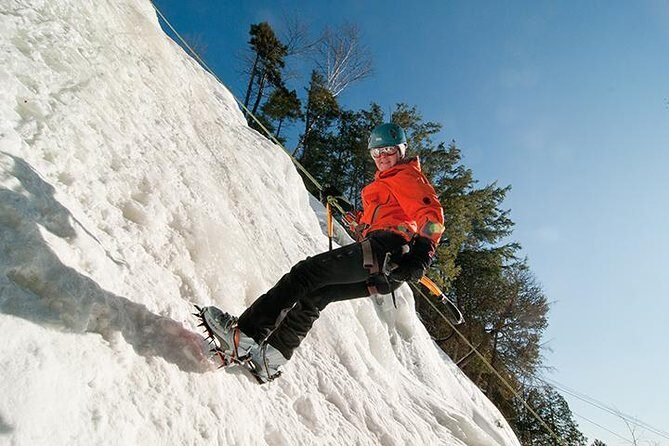
- Small group size (up to 9) means more time with your guide and better coaching
- Helmet, crampons, and ice axes provided so you can focus on learning
- Bilingual instruction (English/French) for clear safety guidance
- No experience needed, with safety protocol and belay technique taught first
- On-resort location makes it easy to pair with ski days
Where the day starts at Tremblant (base of the ski hill)
Your morning (or afternoon) begins at the Tremblant Activity Centre at the base of the ski hill. One practical detail matters: you can’t drive right up to the Activity Centre. You’ll park first, then walk over on foot inside the resort area. That alone can save you stress—if you’re coming with a full winter kit, give yourself extra time to move carefully in boots and cold air.
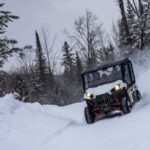
You’ll know you’re in the right place because there’s a dune buggy outside. It’s a small thing, but on a busy resort day, it helps you get oriented quickly.
This location is more than convenient. Being right at Tremblant means you’re surrounded by the mountain infrastructure you’re already used to—gondolas, ski runs, and built-in winter logistics. It’s not a remote survival experience where you’re waiting around in the middle of nowhere.
You can also read our reviews of more tours and experiences in Mont Tremblant Quebec.
Getting geared up: helmets, crampons, and the ski-boot rule
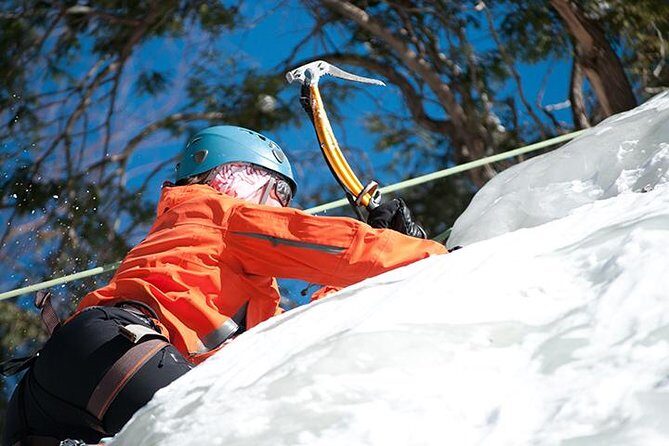
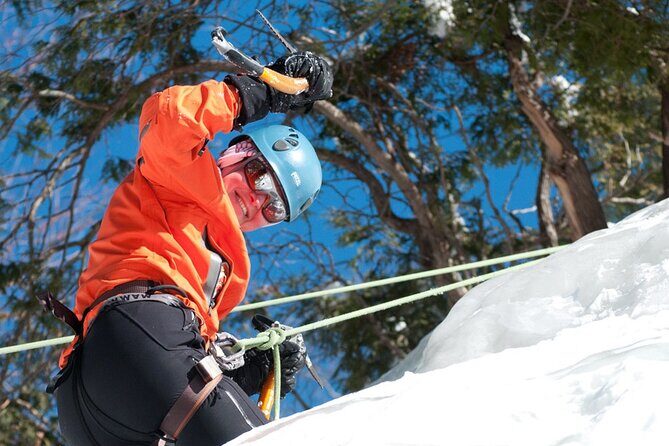
Ice climbing is all about traction and control, so gear fit matters. You’ll be given the essentials: a helmet, crampons, and an ice axe. That’s a real value point because buying or renting those items separately can get pricey fast.
The key catch is that you must bring your own alpine ski boots. The activity doesn’t provide them. If you don’t travel with ski boots, plan for rentals nearby. One of the standout lessons from the field is that you can miss this requirement if you assume crampons go on any boots. Don’t gamble. Bring boots that are meant for ski binding style, or make sure you can rent them right next door.
Also, take note of the fit requirements listed for waist (58–107 cm / 23–42 in) and thigh circumference (43–71 cm / 17–28 in). Those numbers aren’t random. They help ensure the provided climbing gear and safety setup fits properly. If you’re close to the limits, check your measurements at home so there’s no last-minute problem outdoors in freezing air.
The lesson that actually keeps you safe: safety protocol and belay basics
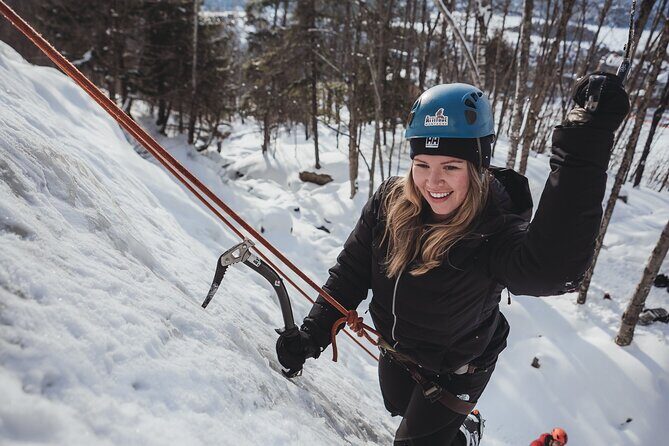
Before you climb, you’ll get a structured safety lesson. The guide teaches safety protocol and belay techniques, plus basic ice climbing techniques so your first attempt isn’t just a hop-and-pray moment.
This is where small-group size really pays off. When you’re limited to 9 participants, the guide can correct how your hands and feet move—things you might not notice until you’re on ice. You’ll also be able to ask questions in the moment, which matters because ice climbing has a few rules that don’t feel intuitive at first.
The coaching style seems consistent: clear, patient instruction with a strong emphasis on safety. More than once, the vibe described is that the guide is both fun and serious at the same time. That combo helps beginners relax enough to focus.
Walking out to the ice: frozen waterfalls, real technique, real stakes
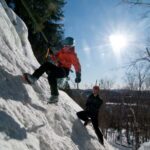
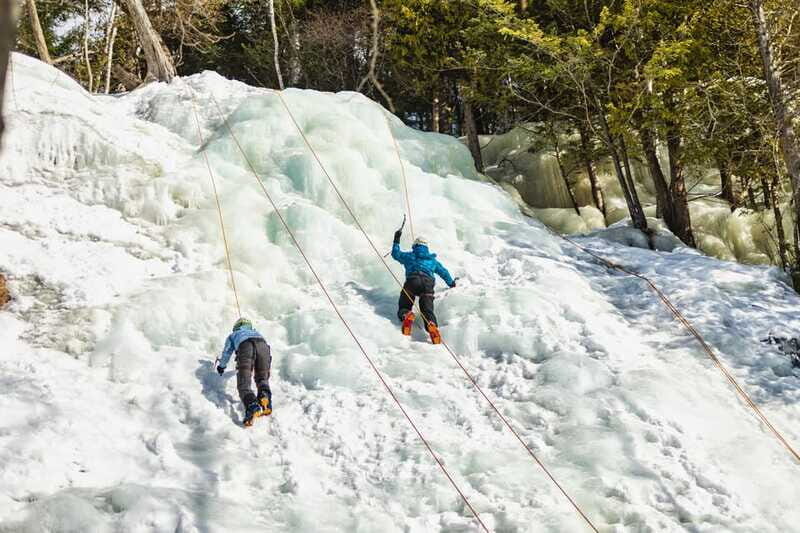
Once the basics are down, you’ll move to the climbing areas and begin the actual ice work: climbing frozen waterfalls. This is the part most people are imagining, and it’s also the part that turns theory into muscle memory.
Expect to work on controlled steps with your crampons, while your ice axe and body position help you stay stable. Even when you’re new, the guide’s role is to help you find the right rhythm: where your weight goes, how to keep balance, and how to move without wasting energy.
One useful detail from recent experiences: even with changing conditions—like after rain—the guide still finds workable ice spots. In at least some cases, there are adjacent areas at different difficulty levels, so you can do something that fits your comfort without feeling like you’re stuck with only one option.
That flexibility is valuable. Ice conditions don’t care about your itinerary. Having an instructor who can adjust the exact spot (while still teaching the planned skills) makes the experience feel grounded and safe.
What the climb feels like in 3 hours (and why that timing works)
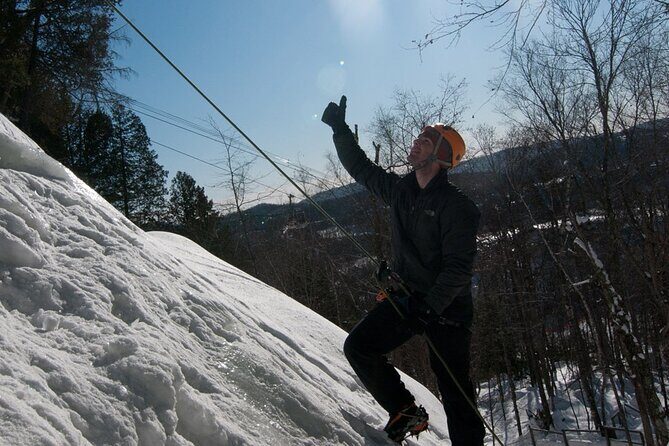
The full experience runs about 3 hours. That’s a smart length for first-timers because it’s long enough to learn, gear up, get moving, and still complete a meaningful climb. It’s also short enough that you’re not standing around for hours in winter gear while waiting for the next group step.
The flow usually looks like:
- gear and fit checks
- safety and technique coaching
- practice on climbing movements (so you’re not figuring it out mid-climb)
- climbing frozen waterfall sections with guide support
- wrapping up when you’ve done the main learning and climbing goals
During the climb, you’ll likely feel the challenge fast. Ice is hard, cold, and unforgiving. The best part of the format is that you’re not thrown in alone. Support stays active—line adjustments and encouragement come from the instructor, not from you figuring out problems in your own head.
And yes, it can be cold enough that you’re thinking about gloves, layers, and staying warm. Dress appropriately, and plan to keep your energy steady once you start climbing. The goal is progress, not suffering.

Small-group coaching with bilingual guides (English and French)
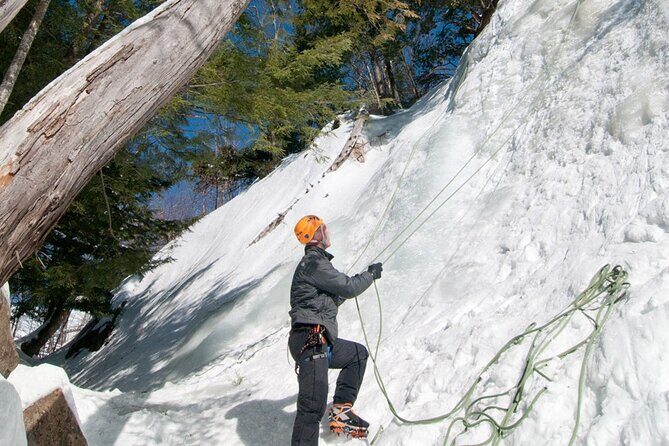
Instruction is English and French, and that bilingual setup matters more than people expect. When safety protocol is involved, you want to understand everything the first time. Clear communication reduces confusion and helps you focus on the ice instead of translating.
The guide also brings a personality that fits beginners. Several instructors who’ve led the experience were described as funny and patient, with safety always in the front seat. That style helps because ice climbing has a learning curve, and confidence grows when the guide keeps things calm and controlled.
With a group limited to 9, you can usually get more direct attention. That’s the difference between watching someone else climb and actually getting your own turn with feedback.
Price and value: is $88 worth it?
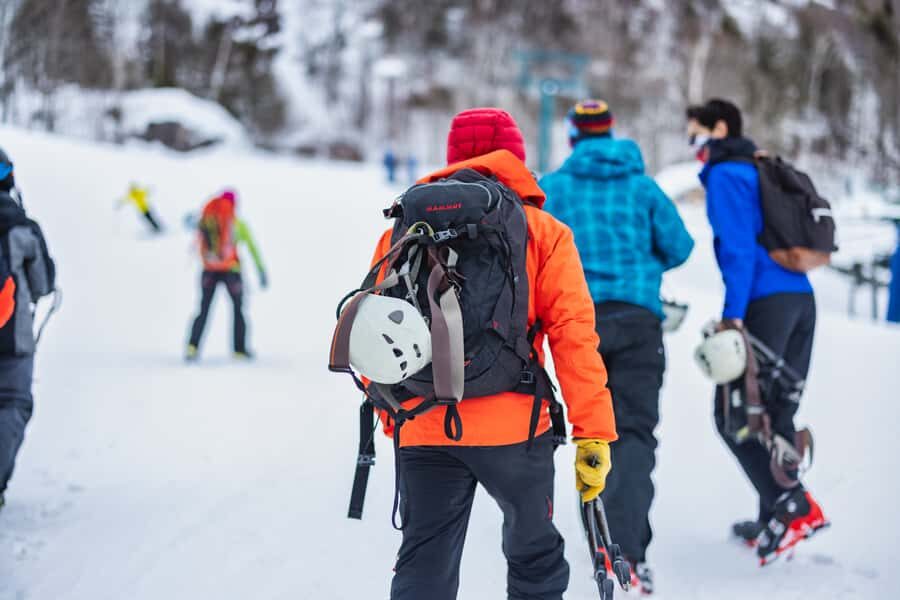
At $88 per person for around 3 hours, this activity is priced like a true instruction package, not a casual outdoor walk. Here’s why the value works if you’re a first-timer:
- A certified guide is included, and you’re not doing this without hands-on coaching.
- Key equipment is provided: helmet, crampons, and ice axes.
- You get taught safety protocol and belay basics, then you apply them on real frozen waterfall climbing.
Your only missed piece is the alpine ski boots, which you must bring. If you’re already planning a ski weekend at Tremblant, that requirement is manageable, and you’re likely to have boots in your rental or on-site rotation anyway.
If you were planning to try ice climbing somewhere else, the biggest hidden cost is usually equipment and guided time. This format bundles the essentials so you can spend your money on the experience itself.
Who should book this ice climbing initiation
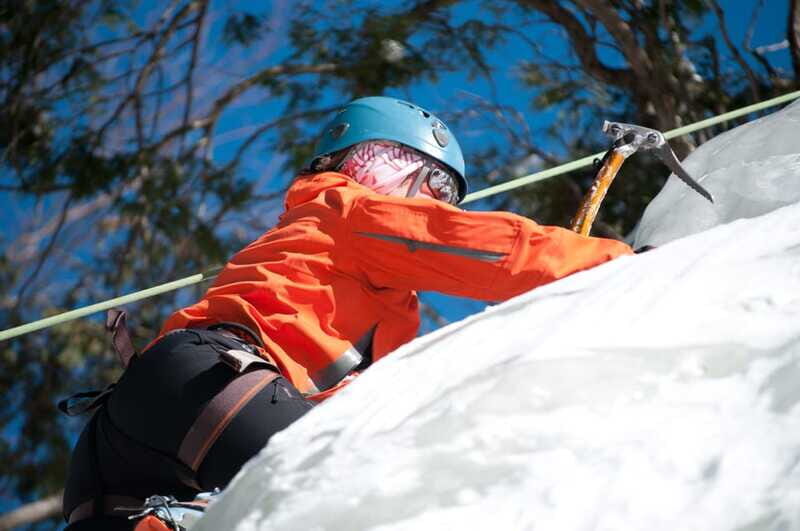
This experience is a strong match if you want:
- a beginner-friendly introduction to ice climbing without needing prior experience
- a guided, safety-first way to try climbing frozen waterfalls
- a short winter activity that pairs well with a Tremblant ski day
It’s also described as good for families, with one important rule: children ages 8–12 must be accompanied by an adult (participating or not). That means kids can be part of the plan, but adults still need to be there for supervision.
Who should skip or think twice
You should not book if any of these apply:
- Children under 8
- Pregnant women
- People over 250 lbs (113 kg)
Also, take the gear-fit numbers seriously (waist and thigh circumference). If you don’t match the required ranges, the experience may not be comfortable or feasible.
Finally, if you’re unsure about winter clothing or hate being outdoors in serious cold, plan your layers carefully. Ice climbing is active, but you still spend time outside before and after.
Pair it with ski days: Tremblant visibility advantage
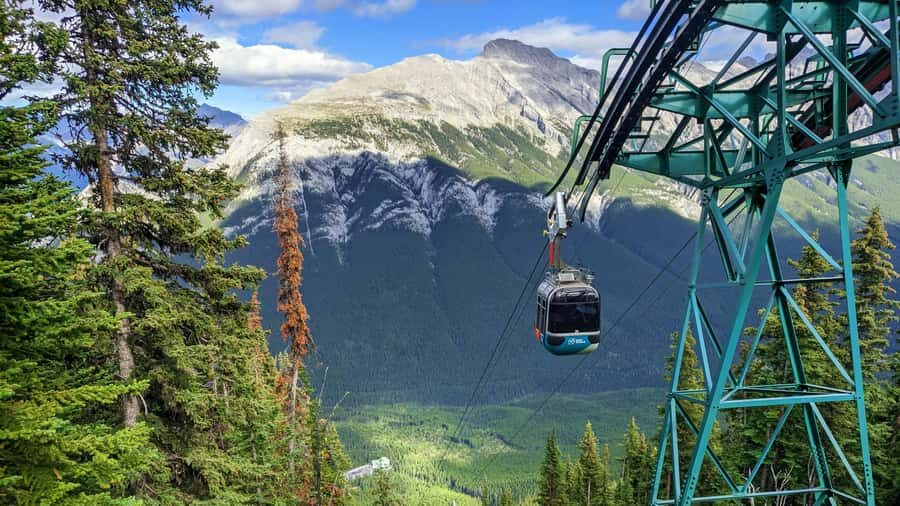
Because the climbing areas are within Tremblant’s ski-resort world, you can plan your day so it doesn’t feel like a separate vacation. One neat bonus is that some people are able to view the climbing areas from the ski gondolas while they’re in ski mode. That turns the activity into something you can see from the resort perspective, not just a dark corner of the mountain you never notice.
In plain terms: it feels integrated into the resort day, which is exactly what you want when you’re juggling skiing, meals, and schedules.
Should you book this ice climbing initiation?
If you want a guided first taste of frozen waterfall climbing without sourcing your own ice kit and without needing experience, I think this is a good booking choice. The biggest reasons are practical: safety coaching, included gear, bilingual instruction, and a schedule that’s short enough to fit into a ski weekend.
Book it if:
- you’re comfortable with cold weather and winter layers
- you can bring or rent alpine ski boots
- your group size works for a small up-to-9 format
Pass or double-check if:
- you fall into the age/health/weight limits
- you’re not sure about fit measurements
- you’re expecting casual photos only instead of real technique practice
FAQ
How long is the ice climbing initiation at Mont-Tremblant?
The experience lasts 3 hours, with starting times based on availability.
Do I need prior ice climbing experience?
No. The experience is designed for beginners, and the guide teaches safety protocol, belay techniques, and basic ice climbing techniques.
What equipment is included?
You’ll receive a helmet, crampons, and ice axes as part of the activity.
What do I need to bring?
You must bring your own alpine ski boots. Dress appropriately for cold weather as well.
Where do we meet if we can’t drive to the Activity Centre?
You meet at the base of the ski hill at the Tremblant Resort activity area. You can’t drive directly to the Activity Centre, so you’ll park first and then walk from there. There is a dune buggy outside.
Is this suitable for children?
Children under 8 are not suitable. Children 8–12 must be accompanied by an adult, who may participate or not.
Are there any restrictions for safety?
Yes. It’s not suitable for pregnant women and it’s limited to people 250 lbs (113 kg) and under. The activity also lists waist and thigh circumference ranges for fit of gear.