REVIEW · VICTORIA
Historical Chinatown Walking Tour
Book on Viator →Operated by Walking Tours by Discover the Past · Bookable on Viator
Victoria’s Chinatown tells a big story in tight space. I like how this walk sticks to historic research while still showing you what Chinatown offers today. I also love the mobile listening aids, which keep the narration clear even when street noise kicks up. One thing to plan for: you’re outside for about 90 minutes, so dress for wind, rain, or damp sidewalks.
You start on Government Street and finish near Fan Tan Alley. With a maximum of 10 people and a local guide, the pace stays friendly and question-friendly, not rushed. Guides I’ve seen referenced for this route include John Adams (who studied the Chinese experience in Victoria and helped found the Chinese Museum) and Chris, known for connecting history to what’s still here.
In This Review
- Key points you’ll care about
- Price and logistics: a small-group walk that fits your day
- Starting at Government Street: why the meeting spot matters
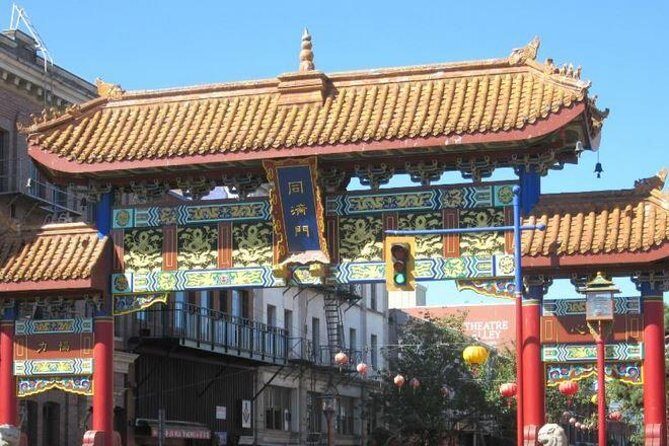
- Chinatown National Historic Site: the gold-rush link you’ll never unsee
- The Chinese Public School: ornate details explained like a puzzle
- Fan Tan Alley: the lane that still feels like a secret
- Mobile listening aids: how this tour stays clear in real street noise
- Optional Tam Kung Temple donation: what to know before you go
- Who this Chinatown walking tour suits best
- Final call: should you book this tour?
- FAQ
- How long is the Historical Chinatown Walking Tour?
- What does it cost, and does it include entry tickets?
- What’s included in the tour?
- Where do I meet, and where does the tour end?
- What should I wear or bring for the weather?
- Is there any recommended donation during the tour?
Key points you’ll care about
- Mobile listening aids help you hear the guide clearly, even on noisier corners.
- 90 minutes is a solid time block for history without eating your whole day.
- Fan Tan Alley still carries the feel of older gambling-den lanes, with a chance of a fan tan demo.
- Chinese Public School gets explained beyond what you see at first glance, including why it was built and the meaning behind the ornate details.
- Small group size (max 10) makes it easier to ask questions and stay engaged.
- Free access at key stops keeps the value strong for an $18.01 ticket.
Price and logistics: a small-group walk that fits your day
This tour costs $18.01 per person, which is a good match for a 90-minute walking experience led by a local guide. You’re not paying for a big museum admission. Instead, you’re paying for interpretation, timing, and a route that makes the neighbourhood’s past make sense.
Expect a 1 hour 30 minutes walk (approx.), run in all weather. It starts at 10:30 am, with the meeting point at 1681 Government St and the end at 3 Fan Tan Alley. You’ll also get a mobile ticket, so you can keep everything simple on your phone.
The tour is in English, and most people can participate. If you’re travelling with kids, children must be with an adult.
You can also read our reviews of more walking tours in Victoria
Starting at Government Street: why the meeting spot matters
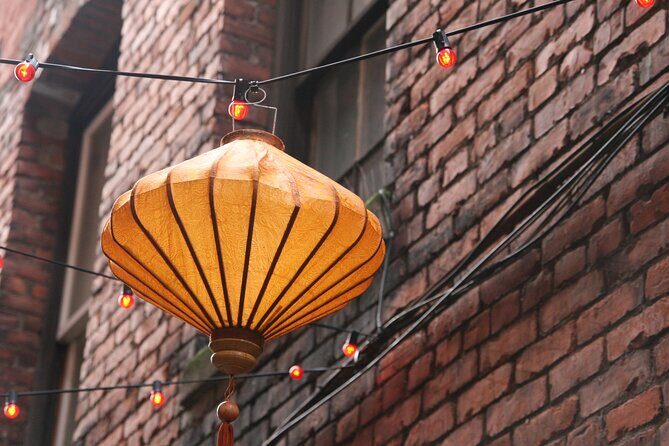
You begin at 1681 Government St, right in the part of Victoria where it’s easy to orient yourself fast. That’s useful because Chinatown here isn’t huge. The story is spread across a small area, and the tour helps you connect the dots without wandering in circles.
You’ll likely notice right away that the guide isn’t treating this like a checklist of landmarks. The early framing sets expectations: Victoria’s Chinatown grew from the gold-rush era and shaped itself around survival, work, and community building. That makes the later stops hit harder.
If you like history that explains how real people lived—not just dates—this format works. The narration ties the street-level details to a bigger picture.
Chinatown National Historic Site: the gold-rush link you’ll never unsee
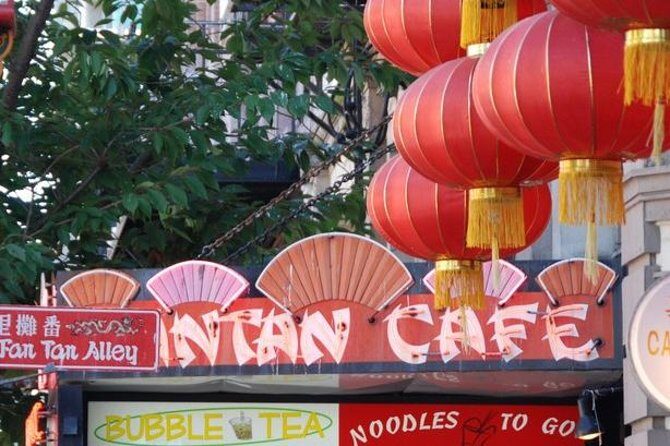
Stop 1 centers on Victoria’s Chinatown National Historic Site, and that’s where the tour’s backbone shows up. Victoria was a supply centre for the gold rush, then grew into British Columbia’s largest city before Vancouver took off in the 1880s. In that era, Victoria’s Chinatown became the home base for thousands of Chinese residents.
Here’s the key context the tour gives you: Chinatown wasn’t one single story. Some Chinese residents set up stores, restaurants, laundries, and farms inside the city. Others found work as gardeners, servants, and cooks in non-Chinese households. Outside the city, many worked for others in gold fields, coal mines, logging camps, and fish canneries.
That labour map is what I think makes this stop so valuable for you. It turns Chinatown from a name on a map into an economic reality. You start seeing why certain buildings, streets, and community institutions made practical sense.
You also learn the long arc. For many years, Victoria had the largest Chinese population in Canada. Today it’s smaller compared with other Canadian cities, but Victoria still holds a special distinction: it’s home to Canada’s oldest Chinatown.
A consideration: if you’re hoping for “only pretty streets and photos,” this stop may feel heavy at times. The guide approaches the topic with sensitivity, including the realities of discrimination and hard work. It’s still worthwhile, just know the emotional tone is part of the point.
The Chinese Public School: ornate details explained like a puzzle
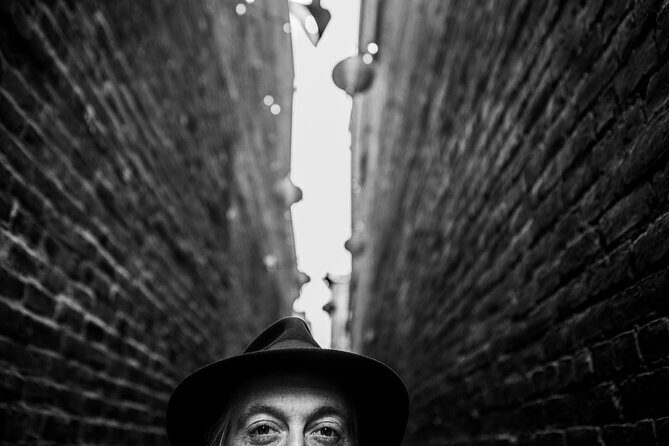
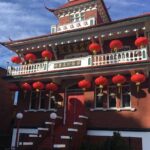
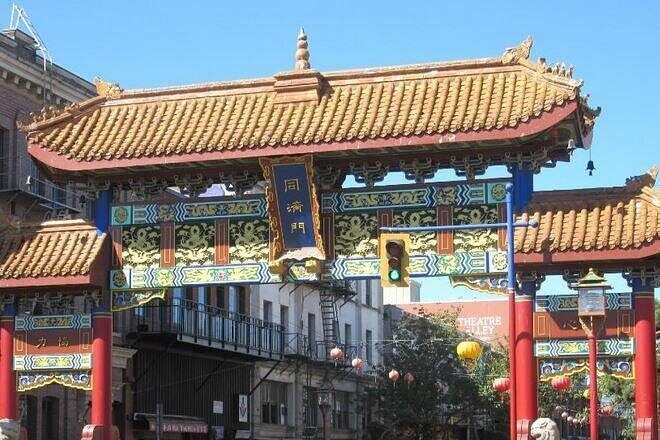
The tour’s most intriguing building stop is the Chinese Public School. The exterior draws your attention because the architecture is ornate and easy to overlook as mere decoration. The guide’s job is to show you why the building was built and why the details matter.
That’s a big difference from many sightseeing walks. You’re not just reading plaques. You’re getting a guided interpretation of meaning—why something looks the way it does, and what that suggests about community aspirations and public life at the time.
I like this stop because it teaches you a new way to look at Victorian-area architecture in general. You start noticing layers: function, identity, public visibility, and the statement a building makes even when you’re only passing by for a few minutes.
You’ll likely spend time taking it in as the guide explains the reasoning behind the design. If you’re the type who enjoys noticing small visual cues, you’ll get more out of this stop than you expected.
Fan Tan Alley: the lane that still feels like a secret
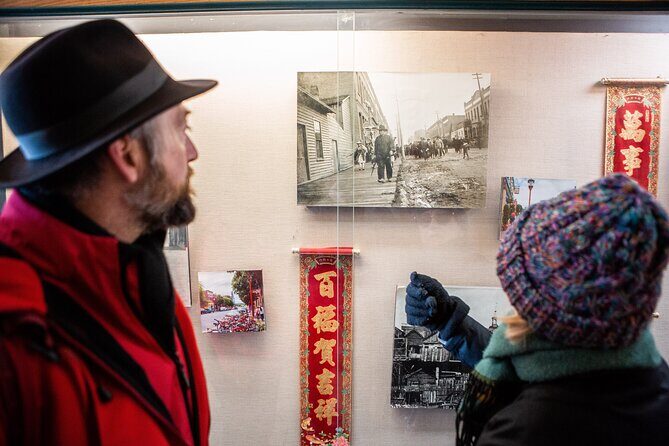
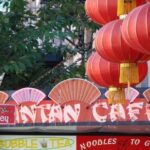
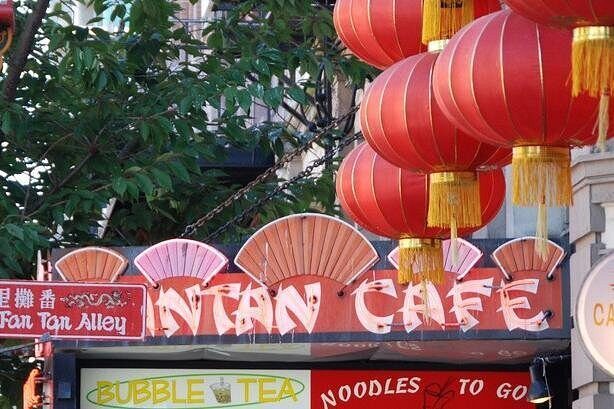
Then you shift to Fan Tan Alley, a place that’s hard to mistake once you see it. It’s often described as the most famous spot in Victoria’s Chinatown, and for good reason. The alley still has a sense of what life and business could feel like in older times, including remnants of former gambling dens.
In practical terms, this stop works well because it’s compact. You can hear the guide and focus without having to constantly relocate. The narration also benefits from the setting: narrow lanes help you imagine foot traffic, quick meetings, and the feeling of “you have to know it’s here.”
The tour is also set up to include a bit of hands-on culture. A demonstration of how to play fan tan may be included. That’s a fun break from talking-only history. Even if you know nothing about fan tan now, you’ll leave with a concrete sense of how games worked and why they belonged in the social fabric of the time.
One note: because this part is very atmosphere-driven, it’s a better fit if you like stories tied to places. If you only want broad historical context, you might wish for more time at the earlier site. The trade-off is that Fan Tan Alley gives you a vivid close to the walk.
You can also read our reviews of more historical tours in Victoria

Mobile listening aids: how this tour stays clear in real street noise
A huge practical win here is the audio. The tour includes mobile listening aids, and that matters because Victoria’s sidewalks aren’t silent. Cars, buses, and occasional street chatter can make listening hard on walking tours.
From what I’ve picked up from this style of operation, the mobile setup is meant to keep you from straining. You’re meant to hear the guide without stepping off to the side every time a truck passes.
This is especially helpful when the guide is doing the sort of storytelling this tour leans on: linking the gold-rush period, community work, and architecture to what you’re seeing right now. If you miss a few sentences, the connections feel fuzzy. Better audio keeps the whole chain intact.
Optional Tam Kung Temple donation: what to know before you go
If the route includes a visit to the Tam Kung Temple, the tour recommends an optional donation of $1 per person. Since it’s optional and only mentioned conditionally, I treat this as an “if it’s part of your tour, be ready” kind of moment.
If you carry a small amount of cash and you’re comfortable with it, you’ll be set. If you’d rather not, the tour doesn’t require it in the information I have—just recommends it.
Who this Chinatown walking tour suits best
This is a strong choice if you:
- Want history with names, jobs, and everyday survival, not just general timelines.
- Enjoy small groups and the chance to ask questions.
- Like architecture that has a backstory, not just a pretty facade.
- Are curious about how one neighbourhood can reflect wider Canadian and Chinese history.
It may be less ideal if you’re:
- Looking for a very photo-heavy route with lots of downtime.
- Sensitive to topics that include discrimination and tough working conditions.
- Planning to do this tour as your only sightseeing that day and you have very limited walking tolerance. The tour runs about 90 minutes outside.
Final call: should you book this tour?
Yes, I’d book it if you want a meaningful Chinatown orientation in a short window. The value is strong for $18.01, and the structure hits the right mix: a major historic site, a standout building (Chinese Public School), and the unforgettable lane of Fan Tan Alley.
If you’re coming to Victoria and you only have time for one Chinatown activity, this is one of the better ways to understand what you’re seeing. The mobile listening aids help you get the full story without turning it into a struggle.
FAQ
How long is the Historical Chinatown Walking Tour?
It runs for about 1 hour 30 minutes (approx.).
What does it cost, and does it include entry tickets?
The tour price is $18.01 per person. Admissions at the mentioned stops are listed as free (for example, the Chinatown National Historic Site stop notes admission ticket free).
What’s included in the tour?
You’ll have a local guide, and the tour includes mobile listening aids to help you hear clearly.
Where do I meet, and where does the tour end?
Meet at 1681 Government St, Victoria, BC. The tour ends at 3 Fan Tan Alley, Victoria, BC.
What should I wear or bring for the weather?
The tour operates in all weather conditions, so dress for rain, wind, and cooler temperatures as conditions require.
Is there any recommended donation during the tour?
If the tour includes a visit to the Tam Kung Temple, an optional donation of $1 per person is recommended.